What is the importance of maintaining high pressure during the composite material press-molding process? Key to Integrity
Updated 5 months ago
High pressure is the fundamental driver of structural integrity in composite molding. It is required to force trapped air and gases out of the mold cavity, effectively eliminating the internal voids and bubbles that lead to material failure. By maintaining a continuous high-pressure environment, the matrix material achieves the mechanical interlocking and strong interfacial adhesion necessary to prevent delamination and stress concentrations in the final product.
Maintaining precise, high pressure ensures the complete elimination of internal porosity while maximizing material densification. This process is the foundation for achieving superior mechanical strength, dimensional accuracy, and long-term durability in composite structures.
Eliminating Microstructural Defects
The Removal of Trapped Air and Voids
The primary role of high pressure is to physically displace air from the mold cavity and the gaps between reinforcements. Without sufficient force, residual air becomes trapped, creating internal pores that act as initiation points for cracks.
Managing Curing Gases and Moisture
During the heating cycle, resin curing reactions and residual moisture can generate internal gases. Strategic pressure management, including short decompression intervals, allows these volatiles to vent, preserving the continuity of the composite’s microstructure.
Preventing Stress Concentrations
Internal bubbles and voids create localized areas of high stress under load. By ensuring a void-free cross-section, high pressure distributes mechanical loads uniformly across the material, significantly increasing its impact strength and peel resistance.
Optimizing Interfacial Bonding and Infiltration
Forcing Matrix Infiltration
In fiber-reinforced or abrasive composites, the matrix must fully saturate the reinforcements while in a molten or liquid state. High pressure, often ranging from 12 MPa to 50 bar depending on the material, ensures the matrix infiltrates every gap between fibers or grains.
Overcoming Internal Friction
In powder-based composites, high pressure (up to 500 MPa) is required to overcome the friction between particles. This force facilitates the rearrangement and plastic deformation of particles, leading to a highly dense "green body" before final treatment.
Strengthening Mechanical Interlocking
High pressure promotes optimal contact between hydrophobic polymers and hydrophilic fillers. This tight bonding at the molecular and mechanical levels is essential for the material to act as a single, cohesive unit rather than a collection of loosely bound layers.
Ensuring Dimensional Stability and Precision
Reducing Sintering Shrinkage
For materials requiring subsequent high-temperature treatment, such as ceramics or C/SiC components, high-pressure pressing creates a denser initial body. This density significantly reduces volume shrinkage and deformation during the sintering process.
Controlling Cooling and Warping
Maintaining pressure during the cooling phase is vital for controlling the crystalline morphology of the polymer matrix. This constant force prevents the material from warping or deforming as it transitions from a molten state to a solid at room temperature.
Achieving Geometric Accuracy
Precise pressure control allows for the production of components with strict dimensional tolerances. By eliminating the "spring-back" effect and internal gaps, manufacturers can guarantee the geometric uniformity of complex technical parts.
Understanding the Trade-offs
Pressure vs. Gas Entrapment
While high pressure is necessary to eliminate voids, applying maximum pressure too early or without venting intervals can trap curing gases inside the matrix. This requires a balanced "pressure profile" that includes scheduled stress releases to ensure gas escape.
Reinforcement Damage
Excessive pressure can potentially crush or damage sensitive reinforcements, such as hollow glass microspheres or certain brittle fibers. The pressure must be calibrated to the specific crush strength of the reinforcement to avoid degrading the composite's mechanical properties.
Tooling and Equipment Costs
Achieving and maintaining extreme pressures requires precision-engineered steel molds and high-capacity hydraulic presses. These requirements increase the initial capital investment and maintenance costs compared to low-pressure vacuum bagging or hand lay-up methods.
How to Apply Pressure Control to Your Project
Recommendations for Process Optimization
- If your primary focus is Maximum Mechanical Strength: Maintain a continuous, high-pressure hold (e.g., 25 kN or higher) throughout the entire curing cycle to ensure absolute interfacial adhesion.
- If your primary focus is Dimensional Precision: Prioritize pressure stability during the cooling phase to prevent material warping and ensure the part matches the mold geometry exactly.
- If your primary focus is Preventing Internal Cracking: Incorporate short decompression intervals (e.g., 30 seconds) during the heating phase to allow curing volatiles to escape without forming permanent pores.
- If your primary focus is Powder Densification: Utilize high-pressure compaction to overcome particle friction, which will minimize shrinkage and micro-defects during subsequent sintering.
Precise and sustained pressure is the most effective tool for transforming a raw mixture into a high-performance, defect-free composite material.
Summary Table:
| Key Benefit | Primary Mechanism | Impact on Final Product |
|---|---|---|
| Defect Elimination | Displaces trapped air and curing gases | Prevents internal voids and stress concentrations |
| Optimal Bonding | Forces matrix infiltration into reinforcements | Maximizes interfacial adhesion and mechanical strength |
| Precision Control | Reduces sintering shrinkage and warping | Ensures strict dimensional accuracy and uniformity |
| Material Density | Overcomes particle friction in powders | Produces high-density bodies with minimal micro-defects |
Elevate Your Material Research with Precision Compaction Solutions
Achieving the perfect composite requires more than just pressure—it requires precision and reliability. At KINTEK, we provide complete laboratory sample preparation solutions tailored for material science. Whether you are focusing on powder processing or advanced composite molding, our extensive equipment line is designed to meet the most rigorous standards.
Our specialized solutions include:
- Advanced Hydraulic Presses: Cold/Warm Isostatic Presses (CIP/WIP), standard lab presses, XRF pellet presses, hot presses, and vacuum hot presses.
- Powder Processing: High-performance crushers (jaw/roll), liquid nitrogen cryogenic grinders, and diverse mills (planetary ball, jet, rotor).
- Material Refinement: Sieve shakers, powder mixers, and defoaming mixers for consistent sample preparation.
Don't let internal voids or warping compromise your results. Partner with KINTEK to access the tools that ensure structural integrity and dimensional precision in every sample.
Contact our technical experts today to find the ideal pressing solution for your lab!
References
- Farhana Afroz, M. A. Gafur. Synthesis of Hybrid Composites from Bio-Based Fillers: Chicken Feather, Groundnut Shell, Sawdust. DOI: 10.37934/mjcsm.13.1.126135
Mentioned Products
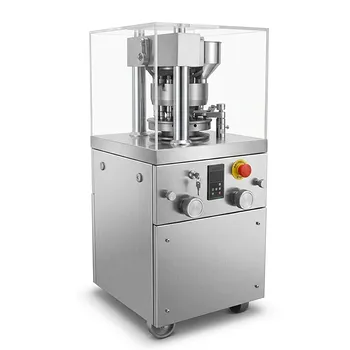
- 实验室旋转式压片机 多冲模单压式自动连续压片
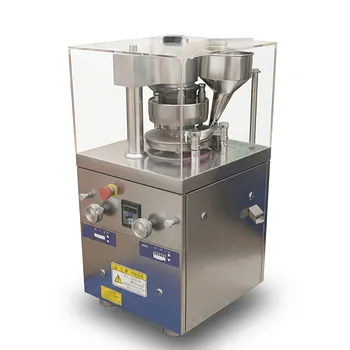
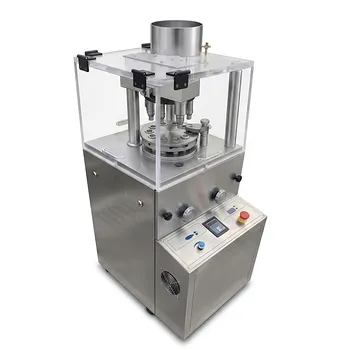
- Enhanced 9 Punch Rotary Tablet Press for Powder Compaction
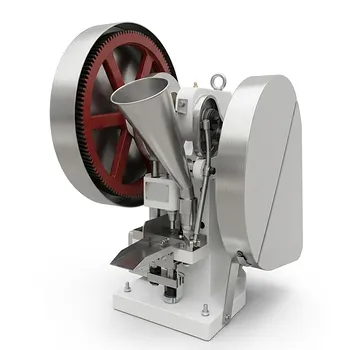
- 6-Ton Small Single-Punch Tablet Press — Laboratory Powder & Granule Tableting Equipment / Tablet Forming Machine
- Ordinary Type Rotary Tablet Press for Pharmaceutical Chemical Food Electronic Industries
People Also Ask
- What is the role of a laboratory uniaxial hydraulic press in the preparation of alumina ceramic samples? Key Benefits
- What are the advantages of double-action pressing equipment? Master Uniform Density in High-Aspect-Ratio Ceramics
- What is the function of a laboratory hydraulic forming press in CRSS rubber prep? Ensure Superior Material Integrity
- What role does a laboratory hydraulic press play in the forming of Ce-TZP/Al2O3 green bodies? Maximize Density & Strength
- How does a laboratory hydraulic press ensure the quality of high-entropy cathode H-SOFC single cells? Optimize Performance

Tech Team · PowderPreparation
Last updated on May 14, 2026