What is the function of standard test sieves in AC-WC? Ensure Precise Aggregate Gradation & Pavement Durability
Updated 4 months ago
The primary function of standard test sieves is to verify that the aggregate gradation aligns perfectly with the Job Mix Formula (JMF) requirements for the asphalt mixture. By physically separating raw materials into discrete particle size groups, these sieves allow technicians to construct a precise gradation curve. This process is the fundamental step in ensuring the resulting Asphalt Concrete Wearing Course (AC-WC) possesses the necessary density, stability, and structural integrity to perform under traffic loads.
Standard test sieves provide the empirical data required to control particle size distribution, which is critical for minimizing air voids and maximizing the interlocking strength of the asphalt skeleton. Without this precise screening, the durability and fatigue resistance of the pavement cannot be guaranteed.
Achieving Optimal Gradation for AC-WC
The Role of the Job Mix Formula (JMF)
The JMF acts as the master blueprint for the asphalt mixture, specifying the exact proportions of stone, sand, and filler. Standard test sieves are used to conduct a sieve analysis, ensuring the raw materials match these specifications before production begins.
Classifying Coarse and Fine Aggregates
Sieves establish a clear boundary between material types, typically using a 4.75mm aperture as the dividing line. Particles retained on this sieve are classified as coarse aggregates, while those passing through are categorized as fine aggregates or mineral fillers.
Constructing the Gradation Curve
By weighing the material retained on each sieve in a stacked column, technicians determine the percentage passing for each size. This data is plotted to create a gradation curve, which must fall within specific regulatory envelopes to ensure the mixture is neither too coarse nor too fine.
Impact on Physical Performance
Optimizing Packing Density
Properly graded aggregates allow smaller particles to fill the interstitial spaces between larger stones. This maximizes packing density and reduces the void ratio, which is essential for a water-resistant and stable wearing course.
Enhancing Structural Stability
The interlocking of different particle sizes, verified by sieve analysis, creates internal friction within the mix. This mechanical interlock is what provides the AC-WC with the compressive strength and resistance to rutting required for high-traffic surfaces.
Controlling Binder Content
When the aggregate grading is optimized through precise sieving, the amount of asphalt binder required is stabilized. Excessively fine mixtures have a high surface area that demands more bitumen, while poorly graded mixes may lack the film thickness necessary for durability.
Understanding the Trade-offs and Pitfalls
The Risk of Sieve Overloading
Loading too much material onto a single sieve can lead to "blinding," where particles block the mesh openings. This results in false readings, as smaller particles fail to pass through, potentially leading to an incorrectly balanced mix.
Wear and Calibration Issues
Sieve meshes are precision instruments that can stretch or degrade over time due to mechanical vibration. Using uncalibrated or worn sieves introduces significant errors into the gradation curve, which can lead to premature pavement failure such as cracking or stripping.
How to Apply Sieve Analysis to Your Project
Making the Right Choice for Your Goal
- If your primary focus is pavement longevity: Use standard test sieves to strictly enforce a continuous gradation curve, as this minimizes internal voids and prevents moisture damage.
- If your primary focus is structural load-bearing: Ensure that the coarse aggregate fractions are accurately classified to maintain a strong stone-on-stone skeleton that resists permanent deformation.
- If your primary focus is material cost-control: Utilize precise sieving to optimize the fineness modulus of your sand, which helps prevent the over-usage of expensive asphalt binder.
Ensuring rigorous aggregate grading through standard test sieves is the single most effective way to guarantee the long-term performance of an asphalt wearing course.
Summary Table:
| Key Function | Role in AC-WC Preparation | Primary Benefit |
|---|---|---|
| Gradation Control | Aligns raw materials with the Job Mix Formula (JMF) | Guarantees structural integrity |
| Particle Classification | Separates coarse (>4.75mm) from fine aggregates | Optimizes aggregate interlocking |
| Void Minimization | Identifies optimal particle size distribution | Increases water resistance & density |
| Binder Optimization | Stabilizes surface area for bitumen coating | Reduces material waste & costs |
| Quality Assurance | Detects sieve wear or overloading issues | Prevents premature pavement failure |
Optimize Your Material Testing with Precision Solutions
Achieving the perfect Job Mix Formula requires equipment that delivers accuracy without compromise. At [Company Name], we provide complete laboratory sample preparation solutions for material science, specializing in high-performance powder processing and compaction equipment.
Whether you need to refine aggregates for AC-WC or process advanced materials, our extensive product line includes:
- Sieving Excellence: High-precision sieve shakers (vibratory/air-jet) and a full range of standard test sieves and meshes.
- Size Reduction: Robust jaw/roll crushers, liquid nitrogen cryogenic grinders, and various mills (planetary ball, jet, sand, disc, and rotor).
- Advanced Compaction: A full spectrum of hydraulic presses, including Cold/Warm Isostatic Presses (CIP/WIP), XRF pellet presses, and vacuum hot presses.
- Mixing Technology: Specialized powder and defoaming mixers for uniform material distribution.
Ready to enhance your lab's efficiency and ensure pavement longevity? Contact our experts today to find the right equipment for your project!
References
- Kamaluddin Lubis, Irwan Irwan. THE PERFORMANCE EVALUATION OF LASTON AC-WC UNIT ASPHALT MIXING PLANT, FOR NATURAL RUBBER RESULTS DAKTALITAS & MARSHALL TEST. DOI: 10.21009/jpensil.v12i1.30867
Mentioned Products
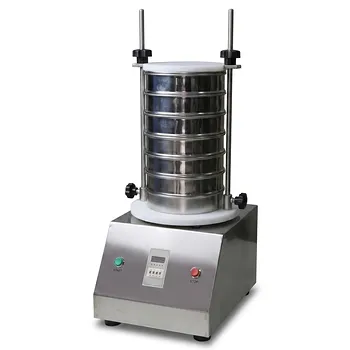
- Laboratory Vibratory Test Sieve Shaker for Precision Particle Size Analysis and Powder Grading
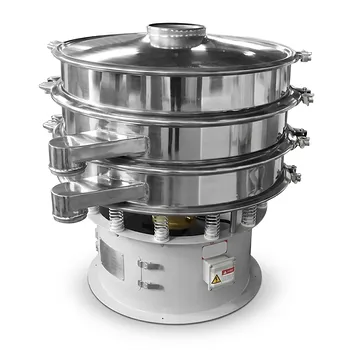
- Three Dimensional Rotary Vibrating Sieve
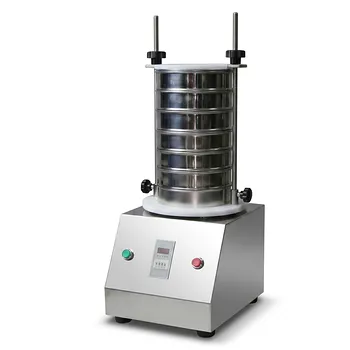
- Small Laboratory Vibratory Sieve Shaker for Powder Gradation and Particle Size Analysis
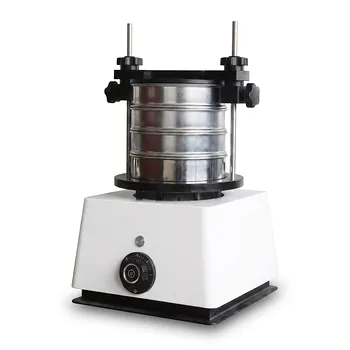
- Small Laboratory Vibrating Sieve Shaker for Precise Particle Size Analysis
People Also Ask
- What role does a laboratory sieve shaker play in determining PDI? Achieve Precision in Biomass Quality Testing
- What are the functions of sieve shakers for coconut shell powder? Achieve Precise Particle Size & Quality Control.
- What function does a laboratory sieve shaker perform in the PSD analysis of residual soil? Ensure Precise Grading
- What is the role of a laboratory sieve shaker in the preparation of plantain peel adsorbents? Standardize Particle Size
- What is the function of a laboratory vibratory sieve shaker? Enhance Coal Particle Size Distribution (PSD) Analysis

Tech Team · PowderPreparation
Last updated on Jun 03, 2026