What is the function of precision test sieves in sand compression studies? Optimize Research Accuracy & Repeatability
Updated 5 months ago
Precision test sieves serve as the fundamental tool for isolating specific particle size fractions to ensure experimental repeatability in sand compression research.
In the grading of natural sand for compression studies, these sieves—typically ISO 3310 or BS 410 compliant—are used to extract "single-component" sand gradations by filtering material through precise apertures like 0.6 mm and 0.425 mm. This process minimizes unknown variables during numerical simulations and provides a standardized material base to accurately analyze how specific particle size ranges respond to compressive loads.
Precision test sieves eliminate geological variability by isolating specific grain sizes, allowing researchers to quantify how particle distribution directly dictates the mechanical behavior and compression response of granular materials.
Establishing Experimental Control
The primary function of precision sieving is to transform raw, heterogeneous natural sand into a controlled laboratory reagent.
Defining Standardized Raw Materials
Researchers use precision sieves to isolate single-component gradations, ensuring that every grain in a sample falls within a narrow, predictable size range. By adhering to standards like ISO 3310, the industry ensures that results from one lab can be accurately compared to another.
Minimizing Variables in Numerical Simulations
In computational modeling, such as Discrete Element Method (DEM) simulations, knowing the exact particle size is critical for accuracy. Precision sieving removes the "noise" of random grain sizes, allowing the simulation to focus purely on the compression response of the material.
Determining Particle Size Distribution (PSD)
Beyond isolation, sieves are used to plot the particle size distribution curve. This curve is essential for calculating the Coefficient of Uniformity (Cu) and the Coefficient of Curvature (Cc), which categorize whether the sand is well-graded or poorly graded.
Analyzing Mechanical and Structural Behavior
Once the sand is graded, the specific distribution of particles dictates how the bulk material will behave under physical stress.
Evaluating Silt Content and Particle Ratios
Precision sieves are used to strictly separate sand from silt particles (those smaller than 75 micrometers). This allows researchers to create artificial mixtures with exact silt percentages to study how the particle size ratio (d50/D50) influences the movement of the Critical State Line (CSL).
Optimizing Packing Density
In studies related to concrete and structural fill, sieves help identify the gradation that achieves the highest packing density. By reducing porosity through optimized grading, the mechanical performance and compressive strength of the final material are significantly enhanced.
Assessing Soil Physical Structures
Sieving classifies bulk samples into micro-aggregates and macro-aggregates. This classification is a prerequisite for understanding how micro-pore structures within the sand influence nutrient retention and chemical exchange capacities.
Understanding the Trade-offs
While precision sieves are the industry standard, researchers must account for specific technical limitations to maintain data integrity.
The Risk of Screen Blinding and Wear
Overuse or improper cleaning of sieves can lead to "blinding," where particles become lodged in the mesh, effectively changing the aperture size. Regular calibration is required to ensure that wear and tear do not compromise the 0.6 mm or 0.425 mm precision boundaries.
Limitations of Two-Dimensional Mesh
Sieves grade particles based on their second-smallest dimension (width). For highly elongated or flat sand grains, a sieve may provide an inaccurate representation of the grain's true volume, which can lead to discrepancies in numerical simulation results.
Applying Grading Standards to Your Project
To achieve the most accurate results in sand compression studies, your choice of sieving protocol should align with your specific research objective.
- If your primary focus is numerical simulation accuracy: Utilize precision sieves to isolate a single-component gradation (e.g., 0.6 mm to 0.425 mm) to eliminate size-related variables.
- If your primary focus is structural load bearing: Focus on achieving a well-graded distribution with high Cu and Cc values to optimize packing density and minimize porosity.
- If your primary focus is silt interaction: Ensure a strict cutoff at the 75-micrometer mark to accurately quantify the impact of fine particles on the Critical State Line.
By meticulously controlling particle gradation, you ensure that your compression data reflects the inherent properties of the material rather than the inconsistencies of the sample.
Summary Table:
| Function | Key Role in Research | Impact on Results |
|---|---|---|
| Particle Isolation | Extracting specific sizes (e.g., 0.6-0.425mm) | Minimizes unknown variables in simulations |
| PSD Determination | Calculating Cu and Cc coefficients | Categorizes sand grading for structural analysis |
| Silt Separation | Strict cutoff at 75 micrometers | Quantifies fine particle impact on Critical State Line |
| Density Optimization | Identifying optimal grain distribution | Reduces porosity to enhance compressive strength |
| Quality Control | Compliance with ISO 3310 / BS 410 | Ensures cross-laboratory experimental repeatability |
Elevate Your Material Science Research with Precision Preparation
Achieving accurate data in sand compression and material behavior studies starts with flawless sample preparation. At [Your Brand Name], we provide complete laboratory sample preparation solutions tailored for material science professionals.
Whether you need to isolate specific particle fractions or produce high-density test pellets, our extensive product line has you covered:
- Sieve Analysis: High-precision vibratory and air-jet sieve shakers equipped with a wide range of certified test sieves and meshes.
- Size Reduction: Advanced crushers (jaw/roll), liquid nitrogen cryogenic grinders, and various mills (planetary ball, jet, sand, disc, and rotor).
- Material Mixing: Specialized powder mixers and defoaming mixers for homogeneous samples.
- Compaction Solutions: A full spectrum of hydraulic presses, including Cold/Warm Isostatic Presses (CIP/WIP), XRF pellet presses, and vacuum hot presses.
Ready to optimize your laboratory workflow? Contact our experts today to find the perfect equipment configuration for your specific material processing needs and ensure your research is built on a foundation of precision.
References
- Šarūnas Skuodis, Česlovas Aksamitauskas. EXPERIMENTAL AND NUMERICAL INVESTIGATION OF SAND COMPRESSION PECULIARITIES. DOI: 10.3846/13923730.2013.756164
Mentioned Products
- Laboratory Vibratory Test Sieve Shaker for Precision Particle Size Analysis and Powder Grading
- Stainless Steel Rotary Vibrating Sieve High Precision Circular Vibratory Separator Industrial Powder Grading Machine Multi Layer Sifting Equipment
- Small Laboratory Vibratory Sieve Shaker for Powder Gradation and Particle Size Analysis
- Precision Soil Disc Mill for Laboratory Fine Grinding and Environmental Sample Preparation
- Small Laboratory Vibrating Sieve Shaker for Precise Particle Size Analysis
People Also Ask
- What role does a laboratory sieve shaker play in determining PDI? Achieve Precision in Biomass Quality Testing
- What are the functions of sieve shakers for coconut shell powder? Achieve Precise Particle Size & Quality Control.
- What function does a laboratory sieve shaker perform in the PSD analysis of residual soil? Ensure Precise Grading
- What is the role of a laboratory sieve shaker in the preparation of plantain peel adsorbents? Standardize Particle Size
- What is the function of a laboratory vibratory sieve shaker? Enhance Coal Particle Size Distribution (PSD) Analysis

Tech Team · PowderPreparation
Last updated on May 14, 2026
Related Products

Laboratory Vibratory Test Sieve Shaker for Precision Particle Size Analysis and Powder Grading

Stainless Steel Rotary Vibrating Sieve High Precision Circular Vibratory Separator Industrial Powder Grading Machine Multi Layer Sifting Equipment

Small Laboratory Vibratory Sieve Shaker for Powder Gradation and Particle Size Analysis
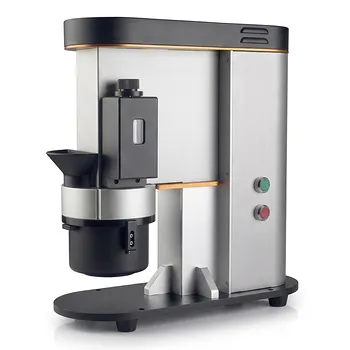
Precision Soil Disc Mill for Laboratory Fine Grinding and Environmental Sample Preparation

Small Laboratory Vibrating Sieve Shaker for Precise Particle Size Analysis

Three Dimensional Rotary Vibrating Sieve
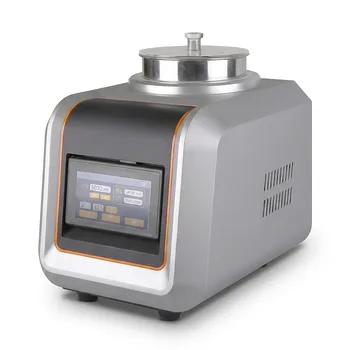
Laboratory Air Jet Sieving Machine for Fine Powder Particle Size Analysis and Deagglomeration

Tapping Oscillating Sieve Shaker for Dry and Wet Particle Size Analysis