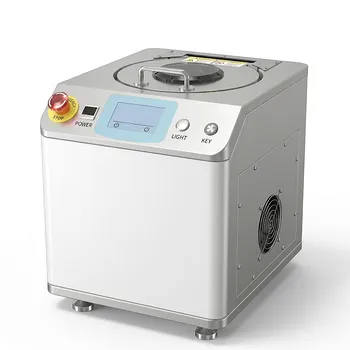
What is the function of digital mechanical mixers in geopolymer synthesis? Achieve Perfect Chemical Homogeneity
Updated 3 months ago
Digital mechanical mixers serve as the primary instrument for achieving chemical homogeneity in geopolymer synthesis. They provide the constant rotational speeds and high-intensity shear forces necessary to blend high-concentration alkaline hydroxides with high-viscosity silicates. This precise mechanical action ensures that the resulting activator solution is uniform, allowing for the stable dissolution of silicon and aluminum monomers and the formation of a consistent geopolymer gel.
The central takeaway is that digital mechanical mixers eliminate local concentration gradients and material agglomeration. By providing forced mechanical shear, these devices create a physical foundation for synchronized, uniform geopolymerization across the entire material matrix.
Overcoming Rheological and Chemical Barriers
Managing High-Viscosity Fluid Dynamics
The preparation of alkaline activators often involves mixing high-concentration sodium hydroxide (NaOH) with high-viscosity sodium silicate solutions. These materials naturally resist blending, requiring the constant rotational speed of a digital mixer to maintain momentum.
Eliminating Local Concentration Gradients
Without forced mechanical shear, "pockets" of high alkalinity can form, leading to uneven chemical reactions. Digital mixers ensure that the activator components are thoroughly contacted and uniformly dispersed, which is critical for a predictable polycondensation reaction.
Stabilizing Monomer Dissolution
A uniform activator solution is the prerequisite for the stable dissolution of silicon and aluminum monomers. By ensuring the activator is consistent at the molecular level, the mixer enables the formation of a uniform geopolymer gel during the subsequent polymerization phase.
Ensuring Microstructural Integrity
Preventing Precursor Agglomeration
When solid precursors like fly ash, metakaolin, or glass powder are introduced, they tend to clump or "agglomerate." High-efficiency mixing uses mechanical force to break these clusters, ensuring every particle is in full contact with the alkaline activator.
Facilitating Uniform Pore Distribution
In specialized applications involving foaming agents (like aluminum powder), mechanical mixers ensure an equivalent distribution of the foaming agent within the matrix. This leads to the uniform nucleation of hydrogen gas bubbles, resulting in a porous material with a consistent internal structure.
Foundation for Synchronized Geopolymerization
For a geopolymer to achieve maximum structural strength, the reaction must occur simultaneously throughout the system. Constant-speed stirring provides the physical homogeneity required for this synchronized dissolution-polycondensation process.
Understanding the Trade-offs
Shear Force vs. Heat Generation
High-speed shearing is effective for mixing but can generate significant internal heat due to friction. In temperature-sensitive geopolymer formulations, excessive mixing speeds may prematurely accelerate the setting time or alter the reaction kinetics.
Energy Consumption and Scaling
While digital mixers offer high precision for laboratory settings, scaling these results to industrial levels requires forced mechanical shear equipment that can maintain consistency in much larger volumes. The energy required to maintain constant speed increases exponentially with the viscosity of the mix.
Maintenance of High-Alkalinity Equipment
Digital mixers used in this field are subject to extreme chemical corrosion from strong alkaline solutions like potassium or sodium hydroxide. Using high-grade stainless steel or specialized coatings is necessary, but this increases the initial capital cost of the equipment.
How to Apply This to Your Project
Recommendations for Equipment Selection
Depending on your specific synthesis goals, the way you utilize mechanical mixing will vary:
- If your primary focus is high-strength structural gels: Prioritize a mixer with high-torque capabilities to maintain constant rotational speed as the viscosity increases during the initial dissolution phase.
- If your primary focus is lightweight porous geopolymers: Focus on high-speed shearing capabilities to ensure the aluminum powder or foaming agent is perfectly dispersed for uniform bubble nucleation.
- If your primary focus is reactive precursors like metakaolin: Use constant, low-speed stirring to ensure full contact between the powder and activator while preventing the entrapment of unwanted air bubbles.
Precision in the mixing phase is the single most important factor in moving geopolymer synthesis from a variable chemical experiment to a repeatable industrial process.
Summary Table:
| Mixing Challenge | Mixer Function | Impact on Geopolymer Matrix |
|---|---|---|
| High Viscosity | Constant rotational speed | Ensures thorough blending of silicates and hydroxides |
| Local Gradients | High-intensity forced shear | Eliminates "pockets" of alkalinity for stable reaction |
| Agglomeration | Mechanical cluster breaking | Increases precursor surface contact for faster dissolution |
| Pore Distribution | Uniform foaming agent dispersal | Creates consistent internal structure and nucleation |
Elevate Your Geopolymer Research with Precision Mixing
Achieving repeatable results in material science requires equipment that can handle the toughest rheological challenges. We provide complete laboratory sample preparation solutions, specializing in high-performance powder processing and compaction equipment tailored for advanced material synthesis.
Our extensive product line includes:
- Mixing & Grinding: High-shear digital mixers, defoaming mixers, and advanced mills (planetary ball, jet, and cryogenic grinders).
- Crushing & Sieving: Jaw/roll crushers and vibratory/air-jet sieve shakers for precise particle size control.
- Compaction Excellence: A full spectrum of hydraulic presses, including Cold/Warm Isostatic Presses (CIP/WIP), vacuum hot presses, and XRF pellet presses.
Whether you are managing high-viscosity alkaline activators or developing lightweight porous structures, our solutions ensure your geopolymerization is synchronized and structurally sound.
Ready to optimize your lab's efficiency? Contact us today to find your perfect equipment solution!
References
- Mohd Na’im Abdullah, Tamer A. Sebaey. Thermal Properties and Drying Shrinkage Performance of Palm Kernel Shell Ash and Rice Husk Ash-Based Geopolymer Concrete. DOI: 10.3390/ma17061298
Mentioned Products
- Three-Dimensional Motion Mixer for Laboratory Powder and Granule Blending
- Multi Dimensional Universal Mixer for High Uniformity Powder Blending
- V-Type Powder Mixer for Uniform Blending of Dry Powders and Granules
- High-Speed Simple Disperser for Efficient Mixing, Dispersion, and Emulsification
- Horizontal Trough Mixer for Uniform Powder and Paste Blending
People Also Ask
- Why is a 3D Motion Mixer employed when preparing binary powder mixtures for tableting? Achieve Superior Homogeneity
- What role does an industrial 3D mixer play in the preparation of diamond tool segment raw materials? Achieve Homogeneity
- What is the role of a 3D mixer in Ti2SnC synthesis? Optimize Precursor Homogeneity for High-Purity MAX Phases
- How does a 3D mixer with tungsten balls contribute to magnesium composite mixing? Achieve Superior Macro-Homogeneity
- What are the advantages of using a 3D powder mixer? Boost Tablet Consistency with Advanced Mixing Technology

Tech Team · PowderPreparation
Last updated on Jun 03, 2026
Related Products
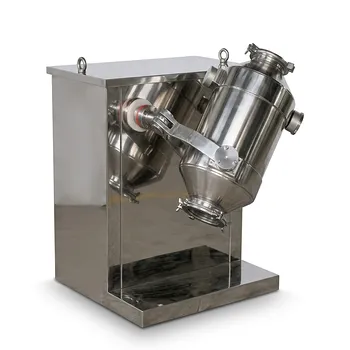
Three-Dimensional Motion Mixer for Laboratory Powder and Granule Blending
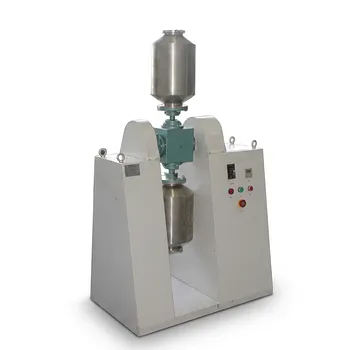
Multi Dimensional Universal Mixer for High Uniformity Powder Blending
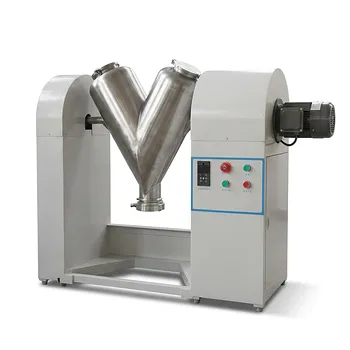
V-Type Powder Mixer for Uniform Blending of Dry Powders and Granules
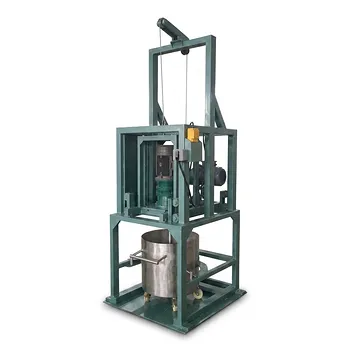
High-Speed Simple Disperser for Efficient Mixing, Dispersion, and Emulsification
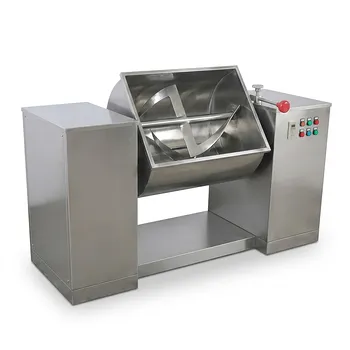
Horizontal Trough Mixer for Uniform Powder and Paste Blending
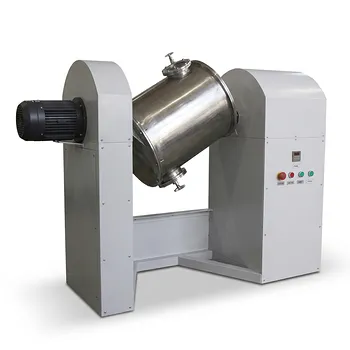
Inclined Mixer for Homogeneous Powder Blending and Grinding
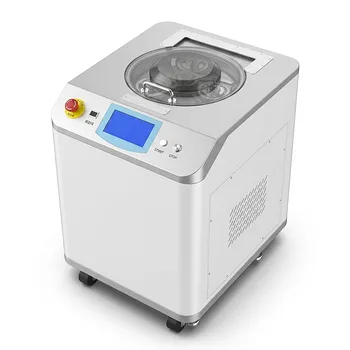
Dual Cup Vacuum Centrifugal Mixer Planetary Paste Defoaming Machine Industrial Material Processor
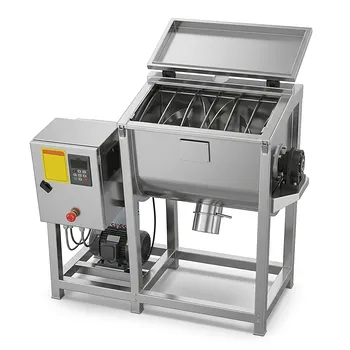
Horizontal Ribbon Mixer for Uniform Powder and Slurry Mixing
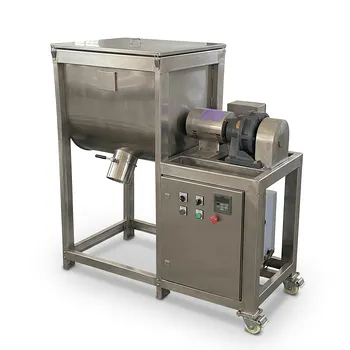
Horizontal Ribbon Mixer for Dry Powder and Slurry Blending
非介入式材料均质机真空脱泡行星搅拌高粘度混合设备
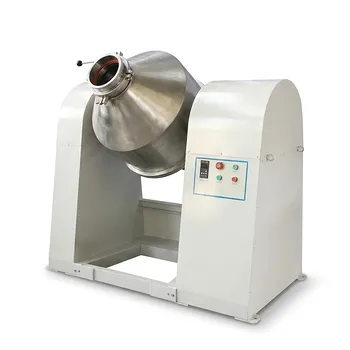
Industrial Double Cone Mixer for Powder Blending and Homogeneous Mixing
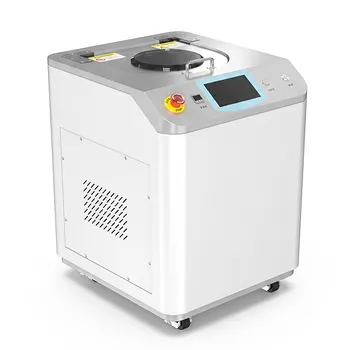
High Speed Vacuum Planetary Centrifugal Mixer and Defoamer for Industrial Paste Processing