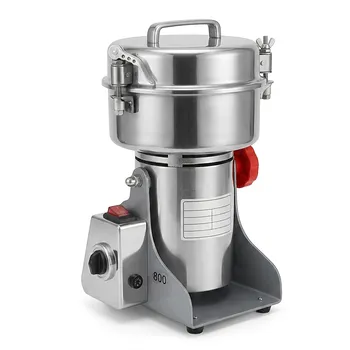
What is the function of an industrial-grade grinder or blade mill in WPC pretreatment? Unlock Superior Material Bonding
Updated 4 months ago
Industrial-grade grinders and blade mills function as the primary mechanical catalyst in WPC pretreatment, converting bulk raw materials like wood chips, stalks, and plastic waste into precise, high-surface-area particles. This process is the critical first step for ensuring that organic fibers and polymer matrices can bond effectively during subsequent molding or extrusion stages.
Core Takeaway: Grinding and milling go beyond simple size reduction; they are essential for increasing specific surface area and mechanical activity, which directly dictates the chemical reactivity and physical interlocking of the final composite material.
Optimizing Physical Morphology and Surface Area
Maximizing Specific Surface Area
The most immediate function of a blade mill is to pulverize large-volume waste into fine powder or small particles. By reducing the particle size, the equipment exponentially increases the specific surface area, allowing adhesives and polymer matrices to cover the fiber surfaces more thoroughly and uniformly.
Precision Size Control for Downstream Processing
Industrial grinders ensure dimensional consistency by processing raw materials into specific ranges, such as 20–50 mm shavings or fine 1 mm particles. This uniformity is vital for preventing clumping in downstream equipment and ensuring a steady, predictable flow during the final composite mixing and molding phases.
Improving Physical-Mechanical Interlocking
Mechanical grinding transforms smooth or coarse structures into refined fibers with high surface activity. This physical refinement creates a more complex texture that facilitates mechanical interlocking, allowing the polymer matrix to "grip" the wood fibers more effectively, resulting in a stronger structural bond.
Chemical Activation and Material Pre-conditioning
Enhancing Chemical Reactivity
The high-energy impact of milling disrupts the compact lignocellulosic structure of biomass, such as wood veneers or agricultural waste. This disruption exposes hidden hydroxyl groups on the fiber surface, providing more active sites for chemical reactions like acetylation or the application of coupling agents.
Integrated Moisture Management
High-energy grinding equipment can transfer enough mechanical energy to break hydrogen bonds in water molecules. This allows for the simultaneous drying and pulverization of materials, as the heat generated promotes moisture evaporation, simplifying the production line by potentially removing the need for separate drying stages.
Facilitating Uniform Component Dispersion
In wood-plastic composites, the goal is a homogenous blend of disparate materials. Industrial mills provide the high-speed agitation necessary to ensure deep, uniform mixing of wood flour and plastic particles (like PS or PP), preventing the phase separation that weakens the final product.
Understanding the Trade-offs
Balancing Energy Consumption and Particle Size
While finer particles generally improve bonding, achieving extreme fineness requires significantly higher energy expenditure. Professionals must calculate the point of diminishing returns where the cost of extra grinding outweighs the marginal gains in composite strength.
Risk of Thermal Degradation
The high-speed friction inherent in blade mills generates substantial heat. If not managed correctly, this can lead to thermal degradation of wood fibers or the premature melting of plastic waste, which can foul the equipment or negatively alter the material's chemical properties.
Wear and Maintenance Requirements
Processing abrasive materials like wood and contaminated plastic waste leads to rapid blade wear. Maintaining the sharpness and tolerances of the grinding mechanism is essential; dull blades result in inconsistent particle sizes and increased heat generation.
Strategic Application in Pretreatment
How to Apply This to Your Project
- If your primary focus is maximizing structural strength: Prioritize a multi-stage grinding process to reach a fine, uniform particle size (approximately 1mm) to ensure maximum mechanical interlocking.
- If your primary focus is chemical modification (e.g., Acetylation): Use high-energy milling to disrupt the lignocellulosic structure and expose the maximum number of hydroxyl groups for chemical reagents.
- If your primary focus is reducing process complexity: Invest in high-energy mills capable of simultaneous grinding and drying to eliminate independent moisture removal steps.
- If your primary focus is processing diverse waste streams: Utilize industrial-grade blade mills with high-speed rotors to handle the varying densities of pine chips, hemp stalks, and plastic polymers simultaneously.
By treating the grinding stage as a precision activation process rather than simple waste reduction, you ensure the foundational integrity of the wood-plastic composite.
Summary Table:
| Key Function | Technical Benefit | Impact on Final Composite |
|---|---|---|
| Size Reduction | Increases specific surface area | Ensures uniform polymer coating and matrix dispersion |
| Morphology Refinement | Creates high surface activity | Enhances mechanical interlocking for higher strength |
| Chemical Activation | Exposes hidden hydroxyl groups | Improves reactivity with coupling agents and adhesives |
| Moisture Management | Mechanical heat generation | Enables simultaneous drying and pulverization |
| Uniform Mixing | High-speed agitation | Prevents phase separation between wood and plastic |
Optimize Your WPC Research with Precision Sample Preparation
Achieve the perfect material consistency and bonding strength with [Brand Name]’s complete laboratory solutions. We specialize in advanced powder processing and compaction equipment designed for rigorous material science applications.
Whether you are refining biomass fibers or developing high-performance polymers, our extensive product line supports your entire workflow:
- Size Reduction: High-performance crushers (jaw/roll), liquid nitrogen cryogenic grinders, and specialized mills (planetary ball, jet, sand/bead, disc, rotor).
- Classification: Sieve shakers (vibratory/air-jet) with precision test sieves.
- Mixing: Advanced powder mixers and defoaming mixers for homogenous blends.
- Compaction & Molding: A full spectrum of hydraulic presses, including Cold/Warm Isostatic Presses (CIP/WIP), XRF pellet presses, and vacuum hot presses.
Ready to enhance your lab's efficiency and material performance? Contact our experts today to find the right solution for your project!
References
- Felipe Reis Rodrigues, Sérgio Augusto Mello da Silva. Particleboard Composite Made from Pinus and Eucalyptus Residues and Polystyrene Waste Partially Replacing the Castor Oil-Based Polyurethane as Binder. DOI: 10.1590/1980-5373-mr-2022-0594
Mentioned Products
- Heavy Metal Free RoHS WEEE Testing Sample Pretreatment Cutting Mill Industrial Solid Waste Grinder for Plastics and Electronics
- Small Laboratory Knife Crusher for Plastic Sample Preparation and Material Grinding
- Cross Beater Mill for Brittle Material Grinding and Continuous Fine Crushing Industrial Sample Preparation
- Laboratory Disc Mill for Fine Sample Preparation of Hard and Brittle Materials
- Stainless Steel Coarse Crusher for Pharmaceutical Food and Plastic Material Processing
People Also Ask
- What is the role of a cutting mill equipped with a 1 mm screen in the preliminary preparation of Maguey fibers?
- What is the purpose of using a laboratory cutting mill for two-stage grinding? Optimize WPC Particles for 3D Printing
- What role does an industrial cutting mill play in sea buckthorn waste processing? Efficient Biomass Pretreatment
- How does an industrial-grade plastic scrap grinder contribute to the initial stages of the PVC recycling process?
- Why use high-efficiency grinding for E-waste in soil stabilization? Enhance structural integrity and shear strength.

Tech Team · PowderPreparation
Last updated on May 14, 2026
Related Products
Heavy Metal Free RoHS WEEE Testing Sample Pretreatment Cutting Mill Industrial Solid Waste Grinder for Plastics and Electronics
Small Laboratory Knife Crusher for Plastic Sample Preparation and Material Grinding
Cross Beater Mill for Brittle Material Grinding and Continuous Fine Crushing Industrial Sample Preparation
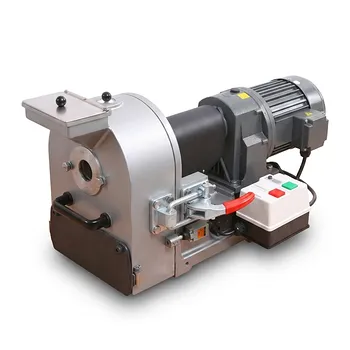
Laboratory Disc Mill for Fine Sample Preparation of Hard and Brittle Materials
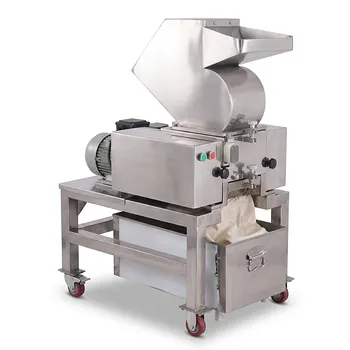
Stainless Steel Coarse Crusher for Pharmaceutical Food and Plastic Material Processing
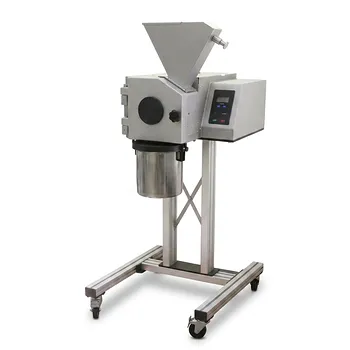
Industrial Cutting Mill for Tough Fibrous and Soft Materials
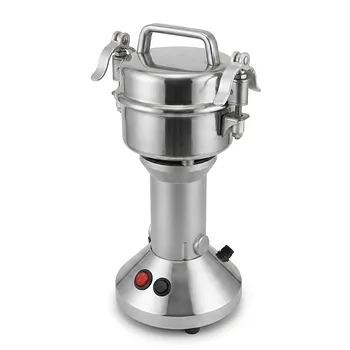
Continuous Feeding Grinding Mill for Dry Fibrous Tough and Hard Materials in Laboratory and Small Production
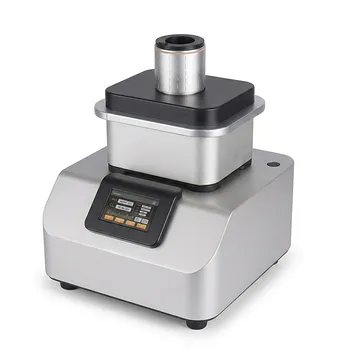
Ultra Centrifugal Mill High Speed Laboratory Grinder for Fibrous and Brittle Sample Preparation
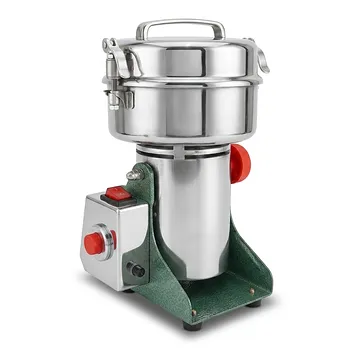
Small High-Speed Laboratory Grinder for Powder Processing

Industrial Knife Mill for Food and Biological Sample Preparation High Speed Laboratory Homogenizer
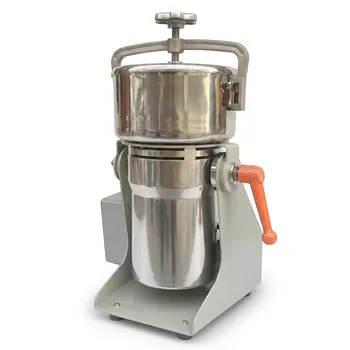
High Speed Laboratory Grinder Efficient Stainless Steel Powder Pulverizer Universal Material Science Mill for Sample Preparation
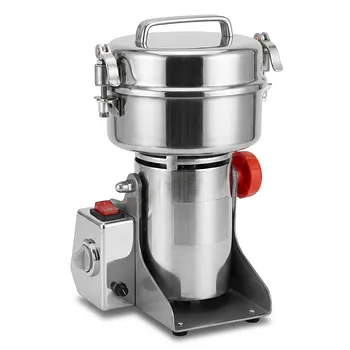
High Speed Laboratory Powder Grinder Small Batch Sample Preparation Mill
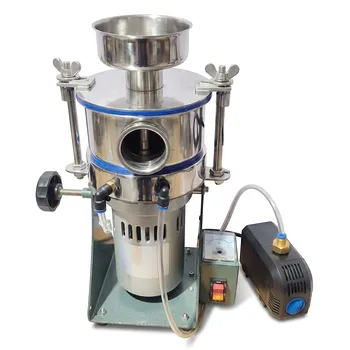
Water Cooled Airflow Ultra Fine Grinder for Low Temperature Material Processing
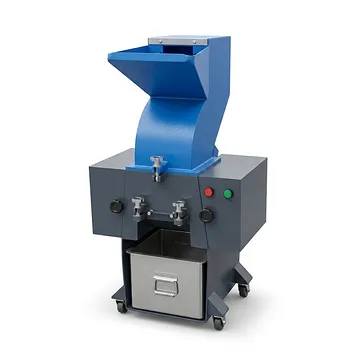
Heavy-Duty Crusher for Laboratory and Industrial Material Size Reduction
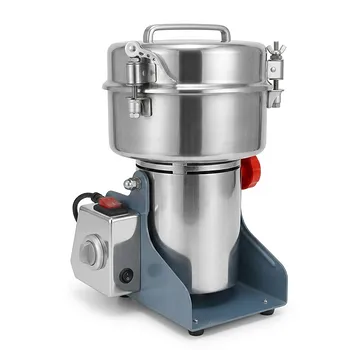
Small High-Speed Grinder for Efficient Laboratory Sample Preparation
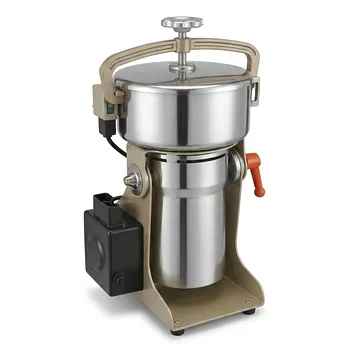
Multifunctional High Efficiency High Speed Laboratory Grinder
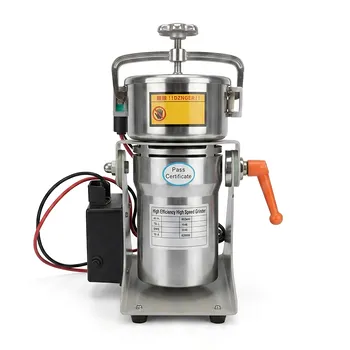
High Efficiency High Speed Grinder Laboratory Mill 1300W 25000rpm
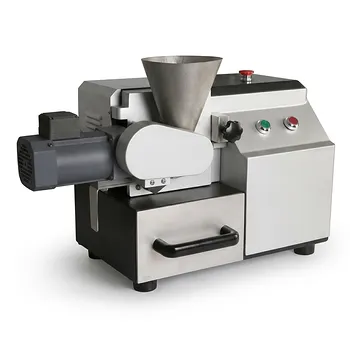
Laboratory Hammer Mill for Coal Quality Analysis and Brittle Mineral Grinding

High Energy Laboratory Planetary Ball Mill for Nano Grinding and Material Science Sample Preparation