Why add steel grinding media to Ti-6Al-4V-CNT centrifugal mixing? Key for uniform dispersion & surface integration.
Updated 4 months ago
In the production of Ti-6Al-4V-CNT composites, steel grinding media act as the primary mechanical catalyst for successful reinforcement integration. The addition of high-hardness balls or cylinders during centrifugal mixing facilitates the anchoring or "fusing" of carbon nanotubes (CNTs) directly onto the surface of the titanium alloy powder. This process is essential for breaking up natural CNT agglomerates and ensuring a uniform, dispersed distribution within the metal matrix.
The use of steel grinding media transforms simple mixing into a high-energy mechanical process that physically binds nanotubes to titanium particles. This prevents the "clumping" typical of carbon reinforcements, ensuring the final composite achieves its intended structural properties.
The Mechanics of Surface Integration
Fusing CNTs to the Metal Surface
The primary role of the steel balls or cylinders is to utilize mechanical forces generated during centrifugal motion to "anchor" the carbon nanotubes. These forces press the nanotubes into the surface of the Ti-6Al-4V powder, creating a physical bond that prevents the reinforcements from separating during subsequent processing.
Overcoming Van der Waals Forces
Carbon nanotubes naturally tend to cluster into "agglomerates" due to strong intermolecular forces. The high-hardness steel media provide the necessary kinetic energy to shear these clusters apart, allowing individual nanotubes to interact with the metal powder.
Achieving Microstructural Uniformity
Kinetic Energy and Impaction
As the mixing vessel rotates, the steel cylinders or balls collide with both the titanium powder and the CNTs. These high-energy impacts serve to flatten or slightly deform the surface of the titanium particles, effectively trapping the nanotubes within the surface layer.
Ensuring Homogeneous Distribution
Without the presence of grinding media, CNTs would likely remain unevenly distributed, leading to "soft spots" or structural weaknesses in the final part. The media ensure a dispersed distribution, which is critical for the composite to benefit from the nanotubes' high strength and stiffness.
Critical Considerations and Potential Pitfalls
Media Wear and Contamination
One significant trade-off when using steel grinding media is the risk of interfacial contamination. As the steel balls collide, microscopic amounts of iron or chromium can wear off and integrate into the titanium alloy, potentially altering its chemical profile or fatigue resistance.
Structural Damage to Reinforcements
While high-energy mixing is required for dispersion, excessive force can physically damage the nanotube structure. If the mixing duration or speed is too high, the steel media may break the CNTs into shorter fragments, reducing their effectiveness as a reinforcement phase.
Optimizing Your Centrifugal Mixing Strategy
Successful integration requires balancing the energy needed for dispersion against the preservation of material purity.
- If your primary focus is Maximum Dispersion: Utilize a higher media-to-powder ratio and longer mixing times to ensure every CNT cluster is fully dismantled and fused to the titanium.
- If your primary focus is Material Purity: Select high-hardness cylinders with superior wear resistance and minimize mixing duration to reduce the risk of steel-to-titanium cross-contamination.
By precisely controlling the mechanical forces of the grinding media, you can transform a simple powder mixture into a high-performance composite material.
Summary Table:
| Key Function | Mechanical Mechanism | Primary Benefit |
|---|---|---|
| CNT Dispersion | Shearing Van der Waals forces via kinetic energy | Eliminates clumping and "soft spots" |
| Surface Anchoring | Mechanical fusing of CNTs onto Ti-alloy particles | Prevents phase separation during processing |
| Homogenization | High-energy impact and particle deformation | Ensures uniform microstructural properties |
| Process Optimization | Controlled media-to-powder ratio | Balances dispersion vs. material purity |
Elevate Your Material Research with Precision Powder Solutions
Achieving the perfect dispersion in Ti-6Al-4V-CNT composites requires more than just mixing—it requires the right mechanical energy and precision equipment. [Company Name] provides complete laboratory sample preparation solutions tailored for material science professionals.
Whether you are focusing on the high-energy dispersion phase or the final consolidation, our extensive product line supports your entire workflow:
- Powder Processing: High-performance planetary ball mills, jet mills, and centrifugal mixers designed for uniform dispersion and de-agglomeration.
- Sample Preparation: Advanced crushers, cryogenic grinders, and vibratory sieve shakers for precise particle size control.
- Compaction & Sintering: A full spectrum of Hydraulic Presses, including Cold/Warm Isostatic Presses (CIP/WIP), Vacuum Hot Presses, and XRF pellet presses to achieve maximum density.
Maximize your composite’s structural integrity and minimize contamination today.
Contact our specialists now to find the ideal equipment for your lab!
References
- A. Vevers, A. Kromanis. Additive Manufacturing of Ti-6Al-4V with Carbon Nanotube Composite Material. DOI: 10.2478/lpts-2023-0039
Mentioned Products
- High Efficiency Vacuum Planetary Centrifugal Mixer and Defoaming Machine for Industrial Material Research and Precise Laboratory Powder Dispersion
- Industrial Planetary Centrifugal Vacuum Defoaming Mixer for High Viscosity Paste and Powder Homogenization
- High Speed Vacuum Planetary Centrifugal Mixer and Defoamer for Industrial Paste Processing
- High Viscosity Planetary Centrifugal Mixing and Vacuum Defoaming Machine for Laboratory Material Preparation
- Ultra Centrifugal Mill for Rapid Laboratory Sample Preparation and Fine Powder Grinding
People Also Ask
- Why is a planetary centrifugal mixer recommended for geopolymer slurries? Achieve high-shear, air-free homogenization.
- What core functions does a planetary centrifugal mixer perform? Optimize Hard Carbon Anode Slurry & Degassing
- Why is a planetary centrifugal mixer utilized for wood powder and HPMC? Achieve uniform dispersion & rapid defoaming.
- What role does a planetary centrifugal mixer play in flexible sensor inks? Achieve Nano-Scale Homogenization
- What is the role of a planetary centrifugal mixer in preparing DCPD resin-based matrices? Ensure Flawless Homogeneity

Tech Team · PowderPreparation
Last updated on Jun 03, 2026
Related Products
High Efficiency Vacuum Planetary Centrifugal Mixer and Defoaming Machine for Industrial Material Research and Precise Laboratory Powder Dispersion
Industrial Planetary Centrifugal Vacuum Defoaming Mixer for High Viscosity Paste and Powder Homogenization
High Speed Vacuum Planetary Centrifugal Mixer and Defoamer for Industrial Paste Processing
High Viscosity Planetary Centrifugal Mixing and Vacuum Defoaming Machine for Laboratory Material Preparation
Ultra Centrifugal Mill for Rapid Laboratory Sample Preparation and Fine Powder Grinding
Industrial Planetary Centrifugal Vacuum Defoaming Mixer for High Viscosity Paste and Advanced Material Science
High Viscosity Planetary Centrifugal Vacuum Mixer for Material Defoaming and Uniform Mixing
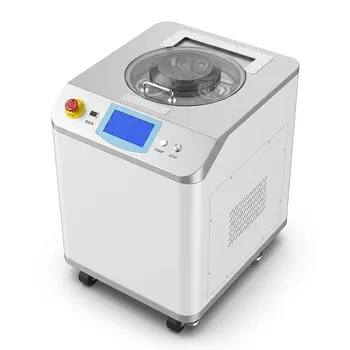
Dual Cup Vacuum Centrifugal Mixer Planetary Paste Defoaming Machine Industrial Material Processor
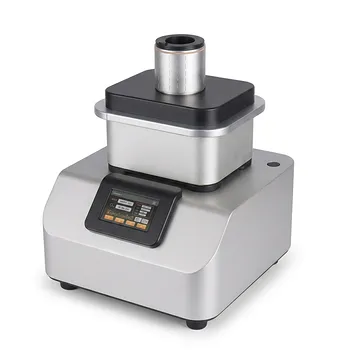
Ultra Centrifugal Mill High Speed Laboratory Grinder for Fibrous and Brittle Sample Preparation
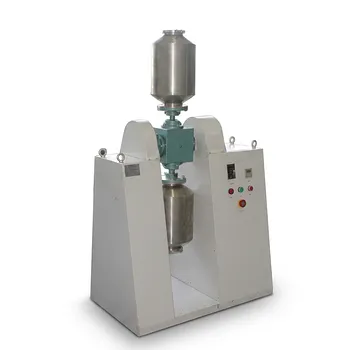
Multi Dimensional Universal Mixer for High Uniformity Powder Blending
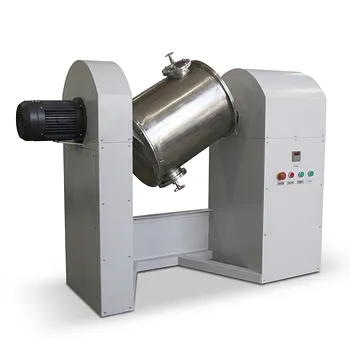
Inclined Mixer for Homogeneous Powder Blending and Grinding
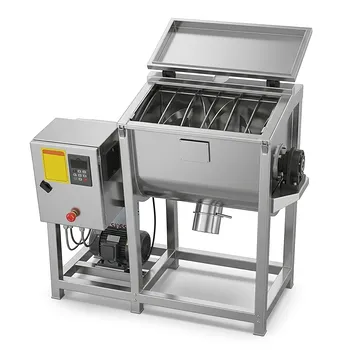
Horizontal Ribbon Mixer for Uniform Powder and Slurry Mixing
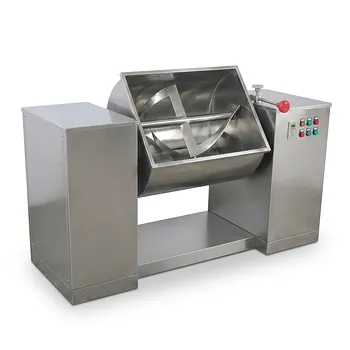
Horizontal Trough Mixer for Uniform Powder and Paste Blending
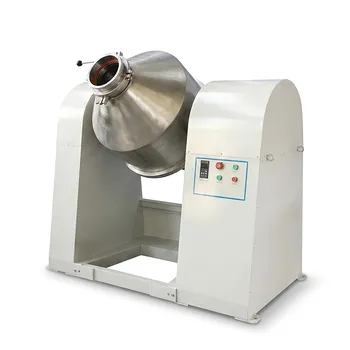
Industrial Double Cone Mixer for Powder Blending and Homogeneous Mixing
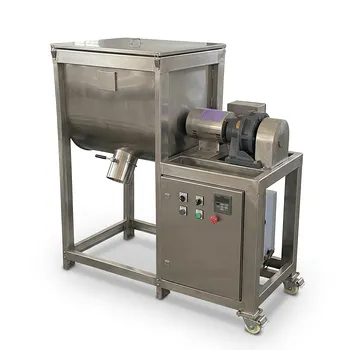
Horizontal Ribbon Mixer for Dry Powder and Slurry Blending
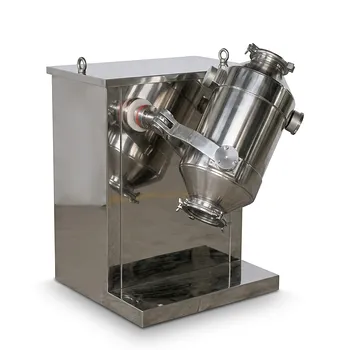
Three-Dimensional Motion Mixer for Laboratory Powder and Granule Blending
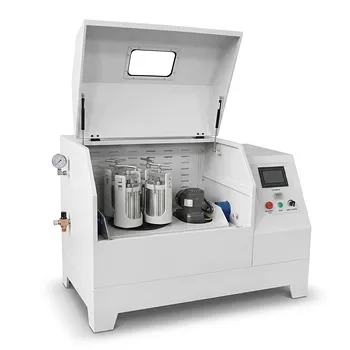
Vertical Production Planetary Ball Mill for High Throughput Powder Processing
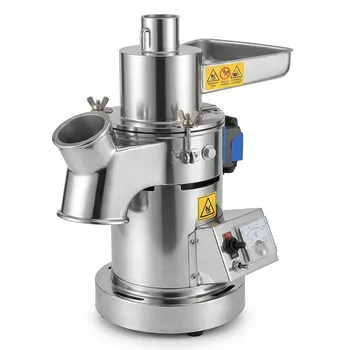
Continuous Feeding Grinder High Efficiency Pulverizer for Lab Sample Preparation
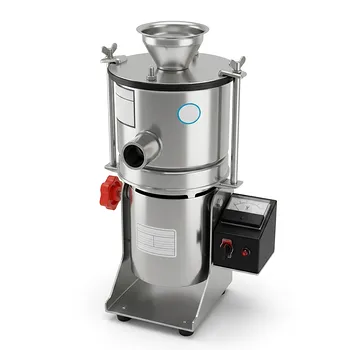
Air Guided Ultrafine Pulverizer High Speed Laboratory Powder Grinder for Chemical and Material Processing