What is the function of a rotary mill for Inconel 625 & carbide composites? Achieve Perfect Powder Homogeneity
Updated 4 months ago
In the preparation of Inconel 625 and mixed carbide powder composites, the primary function of a rotary mill is to achieve a uniform distribution of the ceramic reinforcement phase within the metal matrix. By utilizing steel ball media over an extended period—typically 24 hours—the mill ensures that the 5–20 mass% carbide particles and dextrin additives are thoroughly integrated, creating a homogeneous precursor for the final sintering process.
The rotary mill acts as a mechanical homogenization tool that breaks down particle agglomerates and ensures that reinforcement phases are evenly dispersed. This process is fundamental to preventing localized material weaknesses and ensuring the final composite exhibits isotropic mechanical properties.
Achieving Microstructural Homogeneity
The Role of Mechanical Mixing
The rotary mill uses the motion of a rotating cylinder to drive grinding media, such as steel balls, through the powder mixture. This creates a combination of impact and shear forces that physically force the Inconel 625 and carbide powders to intermix at a granular level.
Integrating Additives and Reinforcements
Beyond the base powders, the mill integrates additives like dextrin, which serves as a binder or lubricant. This extended mixing period—often reaching 24 hours—is necessary to ensure these minor components are distributed as thinly and evenly as possible throughout the bulk material.
Establishing the Foundation for Sintering
A well-mixed composite powder ensures that during the subsequent sintering phase, the liquid or solid-state diffusion occurs uniformly. This prevents the formation of "carbide-rich" or "metal-rich" zones, which would otherwise lead to a non-uniform microstructure and compromised structural integrity.
Enhancing Material Properties Through Processing
Preventing Particle Agglomeration
Small carbide particles often have a natural tendency to clump together due to van der Waals forces. The mechanical stirring action of the rotary mill is designed to break these initial agglomerations, enabling dispersion at the micron or sub-micron scale.
Increasing Specific Surface Area
While the primary goal is mixing, the repeated impacts from the media can also increase the specific surface area of the powders. This higher surface energy enhances the reactivity of the powder, facilitating better bonding between the Inconel matrix and the carbide reinforcements during heat treatment.
Controlling Flowability and Packing Density
Proper milling optimizes the macro and micro-uniform distribution of particles with different diameters. This improves the packing density of the powder, which is a critical factor for achieving high density in the final sintered part and reducing porosity.
Understanding the Trade-offs
Time vs. Mechanical Energy
Rotary milling is often a low-energy, long-duration process compared to high-energy techniques like cryomilling. While it is excellent for dispersion, it may not achieve the extreme grain refinement or "mechanical alloying" seen in high-impact systems unless run for very long cycles.
Potential for Media Contamination
The use of steel balls as grinding media introduces a risk of cross-contamination. Over time, the wear and tear on the media can introduce trace amounts of iron or other alloys into the Inconel 625 matrix, which may alter the chemical specifications of the final composite.
Processing Medium Limitations
Unlike vibrating mills that can easily use isopropyl alcohol or other liquids to assist dispersion, standard rotary milling is often done dry. Dry milling can sometimes lead to cold-welding of the metal powder to the mill walls or the media if the temperature and friction are not carefully managed.
How to Apply This to Your Project
Making the Right Choice for Your Goal
- If your primary focus is microstructural uniformity: Utilize a long-duration (24-hour) rotary mixing cycle with a low charge ratio to ensure the carbide phase is perfectly dispersed without damaging the particle morphology.
- If your primary focus is grain refinement: Consider transitioning from standard rotary milling to high-energy cryomilling to accumulate the high dislocation density required for nanometer-scale grain structures.
- If your primary focus is maximizing sintered density: Focus on the milling speed and media size to optimize the particle size distribution, aiming for a lower Hausner ratio and better powder flowability.
The success of an Inconel 625-carbide composite depends entirely on the quality of the initial powder blend, making the rotary mill a cornerstone of the fabrication process.
Summary Table:
| Key Process Factor | Role of Rotary Milling | Impact on Composite Quality |
|---|---|---|
| Homogenization | Evenly disperses 5–20% carbide particles | Prevents localized material weaknesses |
| De-agglomeration | Breaks down van der Waals clusters | Ensures micron-scale reinforcement |
| Additive Mixing | Uniformly integrates dextrin/binders | Facilitates better green body integrity |
| Surface Energy | Increases specific surface area | Enhances bonding during sintering |
| Packing Density | Optimizes particle size distribution | Reduces porosity in final sintered parts |
Elevate Your Material Research with Precision Powder Solutions
Achieving the perfect microstructural homogeneity for Inconel 625 and carbide composites requires more than just mixing—it requires the right equipment. At KINTEK, we provide complete laboratory sample preparation solutions tailored for material science and powder metallurgy.
Our extensive range of equipment includes:
- Advanced Milling: Planetary ball mills, jet mills, and rotor mills for precise grain refinement.
- Powder Processing: High-performance powder mixers and vacuum defoaming mixers.
- Compaction Excellence: A full spectrum of hydraulic presses, including Cold/Warm Isostatic Presses (CIP/WIP), standard lab presses, and vacuum hot presses for high-density sintering.
Whether you are focusing on grain refinement or maximizing sintered density, our specialists are ready to help you select the ideal tools for your specific application.
Ready to optimize your powder preparation? Contact us today to discuss your project!
References
- Paweł Rutkowski, Paweł Nieroda. Thermal properties of spark plasma sintered Inconel 625 modified by titanium zirconium mixed carbide. DOI: 10.1007/s10973-023-12259-1
Mentioned Products
- 360° Rotating Omnidirectional Laboratory Planetary Ball Mill for Homogeneous Ultra-Fine Grinding and Mixing
- Industrial Rotor Beater Mill for High Speed Impact and Shear Grinding in Laboratory Sample Preparation
- Vibratory Disc Mill for Rapid Fine Grinding and High Throughput Sample Preparation of Hard and Brittle Materials
- High Energy Omnidirectional Planetary Ball Mill 16L
- High Energy Omnidirectional Planetary Ball Mill 20L
People Also Ask
- What role does an omni-directional planetary ball mill play in brass/cobalt antimonide pretreatment? Achieve Nano-Scale Homogeneity.
- What is the function of an omni-directional planetary ball mill? Achieve Streak-Free Glass Homogenization
- Why is an intermittent grinding process required for perovskites in a planetary ball mill? Ensure Stability & Purity
- Why is a planetary ball mill essential for SiBCN-rGO wet-spinning? Achieve Superior Dispersion and Spinnability
- What role does a planetary ball mill play in the synthesis of Li6PS5Cl (LPSCl)? Unlock High Ionic Conductivity

Tech Team · PowderPreparation
Last updated on Jun 03, 2026
Related Products
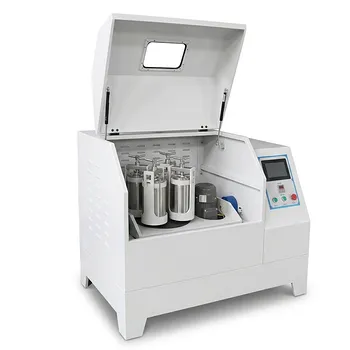
360° Rotating Omnidirectional Laboratory Planetary Ball Mill for Homogeneous Ultra-Fine Grinding and Mixing
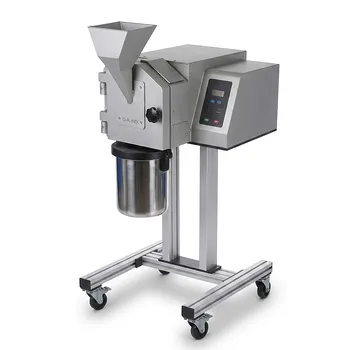
Industrial Rotor Beater Mill for High Speed Impact and Shear Grinding in Laboratory Sample Preparation
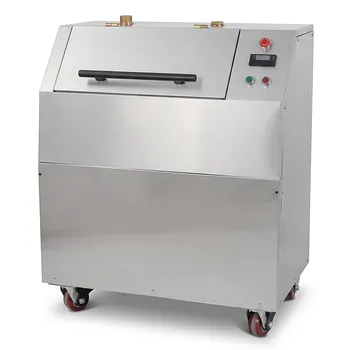
Vibratory Disc Mill for Rapid Fine Grinding and High Throughput Sample Preparation of Hard and Brittle Materials

High Energy Omnidirectional Planetary Ball Mill 16L
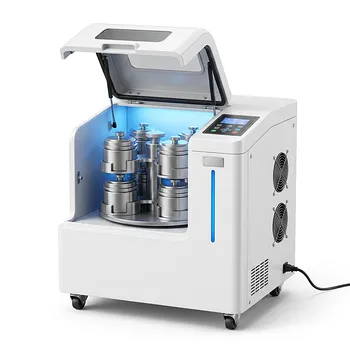
High Energy Omnidirectional Planetary Ball Mill 20L
Cyclonic Laboratory Mill for NIR Spectroscopy Sample Preparation Food and Feed Grinding
Planetary Ball Mill 12L
Heavy Duty Horizontal Planetary Ball Mill for Efficient Industrial Grinding and Sample Preparation
Portable Cutting Mill for Laboratory Sample Preparation and RoHS WEEE Compliance Testing
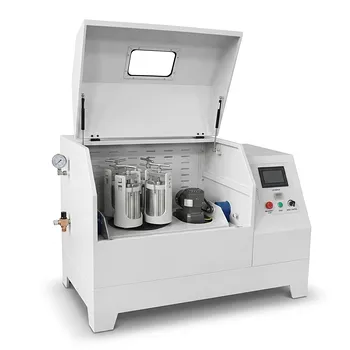
Vertical Production Planetary Ball Mill for High Throughput Powder Processing

Vertical Square Planetary Ball Mill for Laboratory Sample Preparation and Nanoscale Grinding
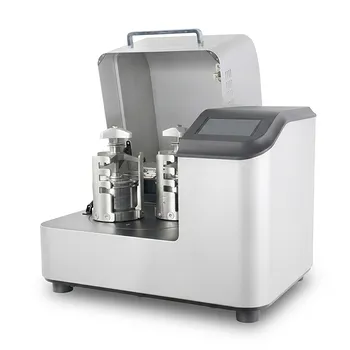
High Energy Planetary Ball Mill for Nano Scale Grinding and Mechanical Alloying
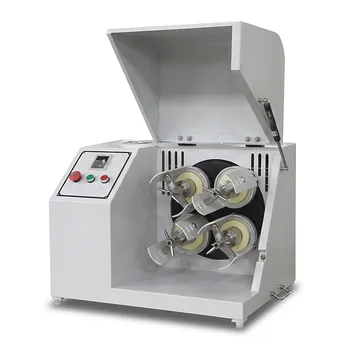
Horizontal Light Duty Planetary Ball Mill for Laboratory Sample Preparation
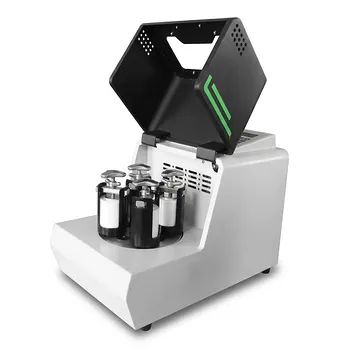
Miniature Planetary Ball Mill with Vacuum Grinding and High Efficiency for Laboratory Sample Preparation
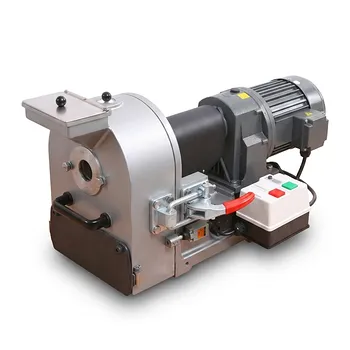
Laboratory Disc Mill for Fine Sample Preparation of Hard and Brittle Materials
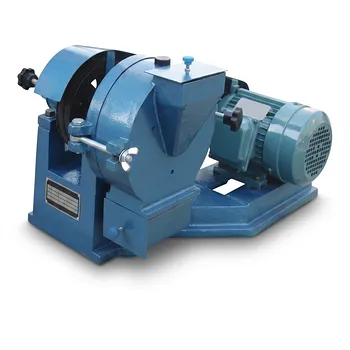
Laboratory Disc Mill for Ore and Mineral Sample Preparation

Single Tank High Energy Vibratory Ball Mill for Laboratory Grinding and Mixing
Ordinary Type Rotary Tablet Press for Pharmaceutical Chemical Food Electronic Industries
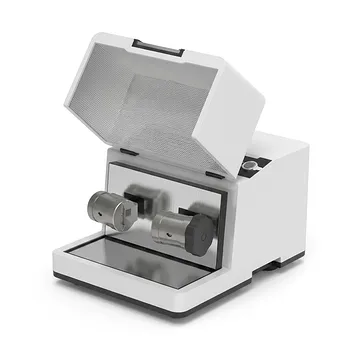
Heating Temperature Controlled High Energy Vibratory Ball Mill
