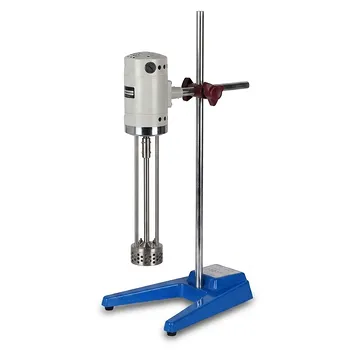
What is the function of a mechanical mixer in the preparation of PVC plastisol containing recycled powder? Expert Guide
Updated 4 months ago
Mechanical mixers serve as the critical engine for homogenization in PVC plastisol production. They apply high-shear forces to transform raw components—including virgin resin, recycled powder, plasticizers, and stabilizers—into a stable, uniform fluid. This process ensures that recycled particles are fully integrated, directly influencing the final coating's viscosity and surface quality.
The primary function of a mechanical mixer is to achieve uniform dispersion and precise viscosity control through high-shear forces, ensuring that recycled powders are seamlessly integrated into the plastisol matrix for consistent application performance.
Achieving Uniform Dispersion through High-Shear
Breaking Down Agglomerates
The mixer uses high-shear forces to break apart clumps of PVC resin and fillers like Calcium Carbonate (CaCO3). This ensures that every solid particle is thoroughly wetted by the plasticizer, such as DINP.
Without sufficient shear, the recycled powder can remain as "grit," leading to structural weaknesses or surface imperfections in the finished product.
Integrating Recycled Materials
Recycled PVC powder often possesses different particle sizes and absorption rates compared to virgin resin. The mechanical mixer provides the energy necessary to distribute these recycled components evenly throughout the liquid phase.
This uniform distribution is vital to prevent the settling of heavier particles and to ensure the chemical heat stabilizers protect the entire batch equally.
Precision Control of Material Viscosity
Optimizing Flow Characteristics
By adjusting the mixing speed and duration, operators can precisely reach a target viscosity. This measurement dictates how the plastisol will flow during the coating or molding stage of production.
A consistent viscosity is essential for maintaining a stable "wet" thickness and ensuring the material moves through the delivery system without clogging.
Ensuring Film Quality
Properly mixed plastisol results in a high-quality film during the fusion process. When the recycled powder is perfectly dispersed, the resulting layer is free from voids and exhibits uniform mechanical properties.
The mixer essentially "prepares" the internal structure of the liquid so it can transition into a smooth, durable solid upon heating.
Understanding the Trade-offs and Pitfalls
Heat Generation and Premature Gelation
High-shear mixing generates significant friction, which naturally increases the temperature of the plastisol. If the temperature rises too high, the resin may begin to swell or "gel" prematurely within the mixer.
This requires careful monitoring of mixing times to ensure the batch remains a liquid and does not begin to cure before it is applied.
Air Entrainment and Voids
High-speed mechanical mixing can trap air within the dense liquid, leading to bubbles or pinholes in the final coating. This often necessitates a secondary degassing step or the use of specific additives to release trapped air.
Balancing the need for high shear with the risk of air incorporation is a primary challenge for operators managing recycled content.
How to Apply This to Your Project
When preparing plastisol with recycled content, your mixing strategy must adapt to the specific characteristics of your raw materials.
- If your primary focus is consistent coating thickness: Prioritize the control of mixing duration to hit exact viscosity targets, as this dictates the flow rate of the plastisol.
- If your primary focus is surface aesthetics: Ensure the mixer is set to a high-shear frequency to fully break down any coarse recycled powder particles that could cause "seeding" or bumps.
- If your primary focus is material stability: Closely monitor the temperature during the mixing cycle to prevent the heat stabilizers from being depleted or the resin from gelling early.
Mastering the mechanical mixing process is the most effective way to ensure that recycled PVC powders perform with the same reliability as virgin materials.
Summary Table:
| Key Function | Mechanism | Impact on Recycled Content |
|---|---|---|
| Homogenization | High-shear force application | Breaks down recycled powder agglomerates and "grit" |
| Viscosity Control | Speed & duration adjustment | Ensures consistent flow for coating and molding |
| Material Integration | Intensive wetting | Uniformly distributes stabilizers and plasticizers |
| Quality Assurance | Precise energy input | Eliminates surface imperfections and structural voids |
Elevate Your Material Science Research with Precision Mixing Solutions
Achieving perfect homogeneity in PVC plastisol and powder processing requires more than just standard equipment—it requires precision. At [Company Name], we provide complete laboratory sample preparation solutions tailored for material science.
Whether you are integrating recycled powders or developing advanced composites, our specialized equipment ensures reliable, repeatable results:
- Advanced Mixing: Powder mixers and high-efficiency defoaming mixers to eliminate air entrainment.
- Size Reduction: A full suite of mills (planetary ball, jet, sand/bead, disc, rotor) and crushers (jaw/roll) for perfect particle distribution.
- Compaction Excellence: Cold/Warm Isostatic Presses (CIP/WIP), vacuum hot presses, and standard lab presses for material density control.
- Classification: Vibratory and air-jet sieve shakers for precise particle size analysis.
Ready to optimize your lab's efficiency and product quality? Our technical experts are here to help you select the ideal configuration for your specific application.
Contact Us Today to Get a Professional Quote
References
- Walid Chaouch, Slah Msahli. Recycled PVC content and particle size distribution effects on morphological and mechanical properties of expanded PVC layer for floorcoverings. DOI: 10.5802/crchim.280
Mentioned Products
- Three-Dimensional Motion Mixer for Laboratory Powder and Granule Blending
- Multi Dimensional Universal Mixer for High Uniformity Powder Blending
- Industrial Double Cone Mixer for Powder Blending and Homogeneous Mixing
- Inclined Mixer for Homogeneous Powder Blending and Grinding
- Dual Cup Vacuum Centrifugal Mixer Planetary Paste Defoaming Machine Industrial Material Processor
People Also Ask
- Why is a 3D Motion Mixer employed when preparing binary powder mixtures for tableting? Achieve Superior Homogeneity
- What role does an industrial 3D mixer play in the preparation of diamond tool segment raw materials? Achieve Homogeneity
- What is the role of a 3D mixer in Ti2SnC synthesis? Optimize Precursor Homogeneity for High-Purity MAX Phases
- How does a 3D mixer with tungsten balls contribute to magnesium composite mixing? Achieve Superior Macro-Homogeneity
- What are the advantages of using a 3D powder mixer? Boost Tablet Consistency with Advanced Mixing Technology

Tech Team · PowderPreparation
Last updated on May 14, 2026
Related Products
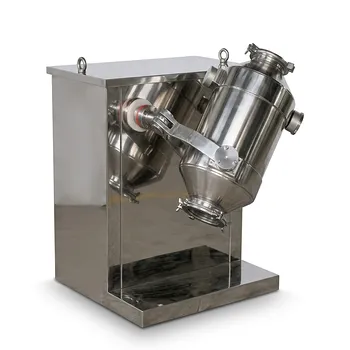
Three-Dimensional Motion Mixer for Laboratory Powder and Granule Blending
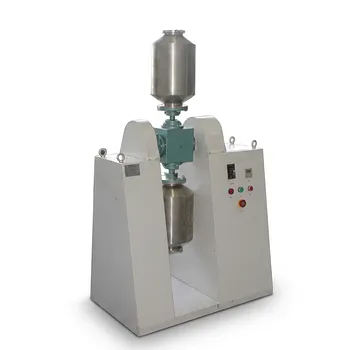
Multi Dimensional Universal Mixer for High Uniformity Powder Blending
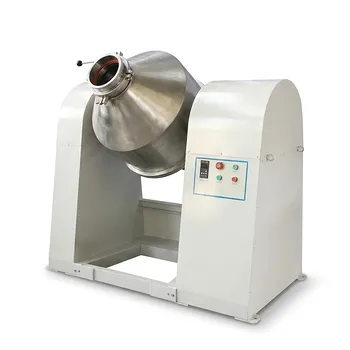
Industrial Double Cone Mixer for Powder Blending and Homogeneous Mixing
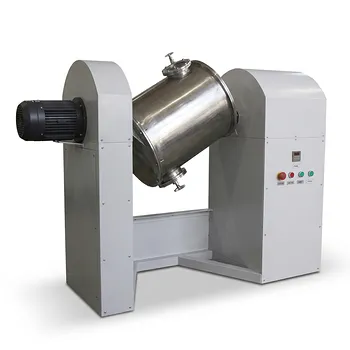
Inclined Mixer for Homogeneous Powder Blending and Grinding
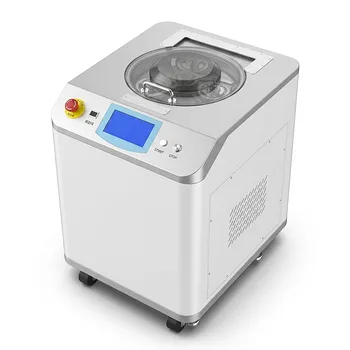
Dual Cup Vacuum Centrifugal Mixer Planetary Paste Defoaming Machine Industrial Material Processor
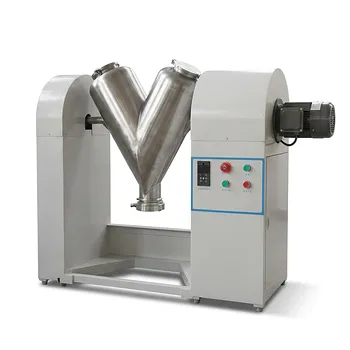
V-Type Powder Mixer for Uniform Blending of Dry Powders and Granules
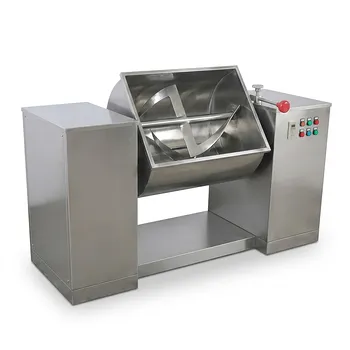
Horizontal Trough Mixer for Uniform Powder and Paste Blending
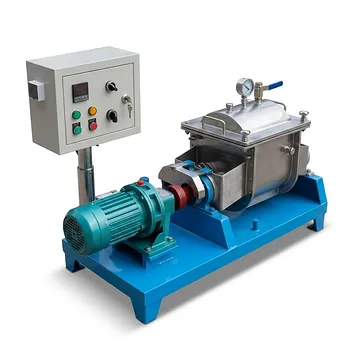
Industrial Vacuum Kneader for High-Viscosity Silicone, Rubber, and Compound Mixing
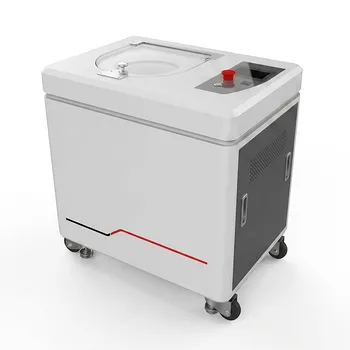
非介入式材料均质机真空脱泡行星搅拌高粘度混合设备
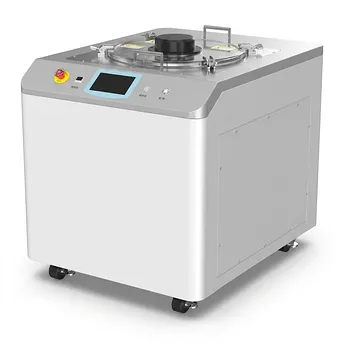
Industrial Planetary Centrifugal Vacuum Defoaming Mixer for High Viscosity Paste and Powder Homogenization
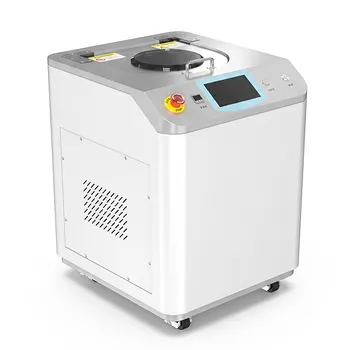
High Speed Vacuum Planetary Centrifugal Mixer and Defoamer for Industrial Paste Processing
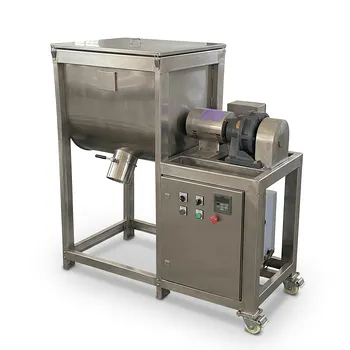
Horizontal Ribbon Mixer for Dry Powder and Slurry Blending
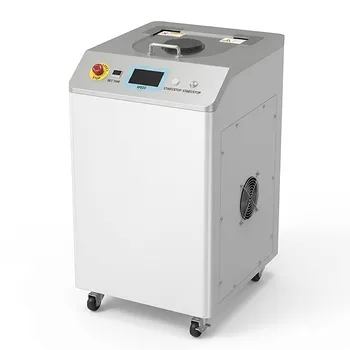
High Viscosity Planetary Centrifugal Vacuum Mixer for Material Defoaming and Uniform Mixing
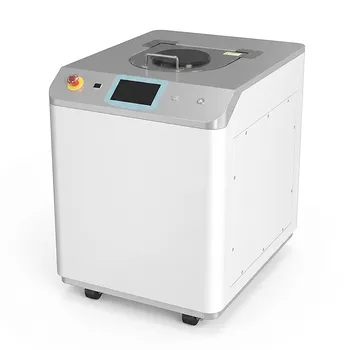
Industrial Planetary Centrifugal Vacuum Defoaming Mixer for High Viscosity Paste and Advanced Material Science
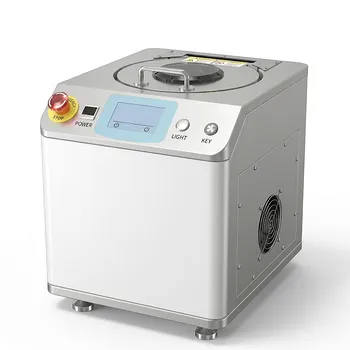
High Efficiency Vacuum Planetary Centrifugal Mixer and Defoaming Machine for Industrial Material Research and Precise Laboratory Powder Dispersion
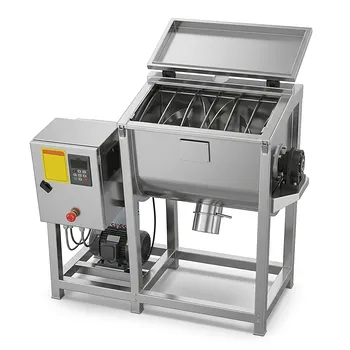
Horizontal Ribbon Mixer for Uniform Powder and Slurry Mixing
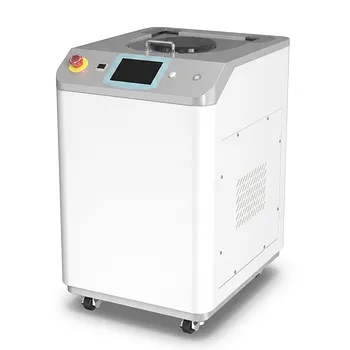
High Viscosity Planetary Centrifugal Mixing and Vacuum Defoaming Machine for Laboratory Material Preparation
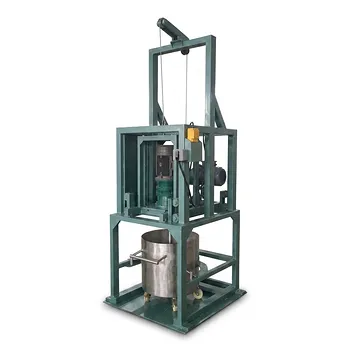
High-Speed Simple Disperser for Efficient Mixing, Dispersion, and Emulsification
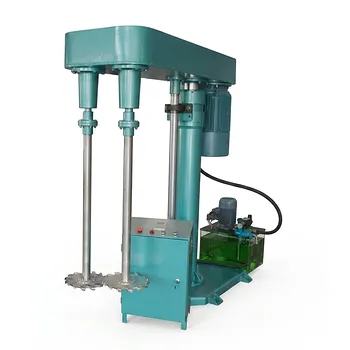
Hydraulic Double Shaft Disperser for High Viscosity Liquid Mixing and Dispersion