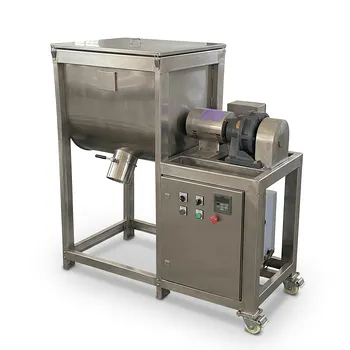
What is the function of a laboratory powder mixer in the preparation of Liqui-Pellets? Ensure Uniform Drug Distribution
Updated 5 months ago
The laboratory powder mixer serves as the foundational unit for achieving material homogeneity during the initial stages of Liqui-Pellet formulation. Its primary function is to ensure thorough contact between the carrier material, disintegrants, and the liquid medication by maintaining a specific, controlled rotation speed. This mechanical action creates a uniform wet mass, which is a critical prerequisite for the success of subsequent extrusion and spheronization processes.
The laboratory powder mixer transforms independent dry and liquid components into a statistically homogeneous wet mass. This uniformity is essential for ensuring accurate drug distribution and the structural integrity of the final pellet.
Facilitating Uniform Liquid Adsorption
Ensuring Consistent Drug Loading
The mixer facilitates the even distribution of liquid medications across carrier materials like microcrystalline cellulose. By forcing the liquid into the pores of the carrier, it ensures that the active pharmaceutical ingredient (API) is present in the exact intended dose throughout the entire batch.
Creating a Cohesive Wet Mass
Mechanical mixing blends dry powders and liquid mediums into a cohesive, paste-like consistency. This uniform state is vital for preventing the separation of components when the material is subjected to high pressure during downstream processing.
Optimizing Surface Interaction
The shearing and tumbling actions of the mixer ensure that disintegrants are perfectly interspersed within the carrier matrix. This microscopic level of contact is what allows the final Liqui-Pellet to disintegrate predictably and release the medication effectively.
Impact on Downstream Processing
Preparing for Extrusion
A homogeneous wet mass is necessary to prevent "dry spots" or "wet pockets" during the extrusion stage. Inconsistencies in the mix can lead to equipment clogging, uneven extrusion strands, and significant material waste.
Enhancing Spheronization Quality
The plasticity of the extruded strands depends entirely on the quality of the initial mix. A well-mixed mass ensures that the strands break and round into smooth, uniform spheres rather than crumbling into dust or sticking together.
Eliminating Compositional Bias
By achieving a statistically homogeneous mixture, the laboratory mixer ensures that any sample taken from the batch matches the overall bulk composition. This repeatability is essential for passing rigorous quality control and regulatory standards.
Understanding the Trade-offs and Pitfalls
The Risk of Over-Mixing
Excessive mixing time or high rotation speeds can generate friction-induced heat, which may degrade sensitive liquid medications. Additionally, over-processing can lead to "over-wetting," making the mass too sticky to be processed by an extruder.
Consequences of Under-Mixing
Insufficient mixing results in "weak zones" within the pellet where the binder or liquid is poorly distributed. This leads to fragile pellets that break during handling or suffer from inconsistent drug release profiles.
Scale-Up Limitations
While laboratory mixers provide high precision on a small scale, the parameters used (such as RPM) may not translate directly to industrial-scale production. Identifying the correct "mixing energy" is often more important than simply replicating the mixing time.
How to Optimize Your Mixing Protocol
To achieve the best results with your laboratory powder mixer, tailor your approach based on your specific formulation goals:
- If your primary focus is drug content uniformity: Prioritize a longer mixing time at a moderate speed to ensure the liquid medication is fully adsorbed by every carrier particle.
- If your primary focus is pellet structural integrity: Focus on the "wetting" phase of the mix to ensure the disintegrants and binders are deeply homogenized, preventing weak spots in the final matrix.
- If your primary focus is processing heat-sensitive APIs: Utilize a high-efficiency mixer that achieves homogeneity in a shorter timeframe (10–15 minutes) to minimize thermal exposure.
By mastering the initial mixing phase, you ensure that every subsequent step of the Liqui-Pellet process is both predictable and repeatable.
Summary Table:
| Key Mixing Function | Impact on Liqui-Pellet Quality |
|---|---|
| Uniform Liquid Adsorption | Ensures precise drug loading and API distribution across carriers. |
| Cohesive Mass Creation | Prevents component separation during high-pressure extrusion. |
| Homogenization | Eliminates "dry spots" to prevent equipment clogging and material waste. |
| Controlled Shearing | Optimizes the plasticity required for smooth, spherical pellet formation. |
| Repeatability | Ensures batch-to-batch consistency for regulatory and QC standards. |
Elevate Your Material Research with Precision Engineering
Ready to achieve perfect homogeneity in your Liqui-Pellet formulations? We provide complete laboratory sample preparation solutions for material science, specializing in advanced powder processing and compaction equipment.
Our extensive product line is designed to streamline your R&D workflow:
- Mixing & Milling: High-efficiency powder mixers, defoaming mixers, planetary ball mills, jet mills, and liquid nitrogen cryogenic grinders.
- Sizing & Preparation: Vibratory and air-jet sieve shakers, jaw crushers, and roll crushers.
- Advanced Compaction: A full spectrum of hydraulic presses, including Cold/Warm Isostatic Presses (CIP/WIP), standard lab presses, XRF pellet presses, and vacuum hot presses.
Whether you are optimizing drug loading or enhancing pellet structural integrity, our equipment delivers the precision and reliability your lab demands. Contact our technical experts today to find the ideal solution for your specific application!
References
- Matthew Lam, Ali Nokhodchi. Factors affecting performance and manufacturability of naproxen Liqui-Pellet. DOI: 10.1007/s40199-020-00362-9
Mentioned Products
- Multi Dimensional Universal Mixer for High Uniformity Powder Blending
- High Efficiency Vacuum Planetary Centrifugal Mixer and Defoaming Machine for Industrial Material Research and Precise Laboratory Powder Dispersion
- Three-Dimensional Motion Mixer for Laboratory Powder and Granule Blending
- Horizontal Ribbon Mixer for Uniform Powder and Slurry Mixing
- High Speed Laboratory Powder Grinder Small Batch Sample Preparation Mill
People Also Ask
- What is the role of a multi-dimensional powder mixer in the preparation of Ce-TZP ceramics? Optimize Homogenization
- What is the importance of using a high-efficiency powder mixer when preparing sand and soil mixtures? Accurate Results.
- What is the role of a powder mixer in SiC mechanical seal ring production? Ensure Homogeneity and Structural Integrity
- Why is high-uniformity powder mixing essential for antibacterial ceramic glazes? Ensure Consistent Bioactive Protection
- How do powder mixers and additives influence ZTA ceramics? Optimize microstructure for superior toughness and density

Tech Team · PowderPreparation
Last updated on May 14, 2026
Related Products
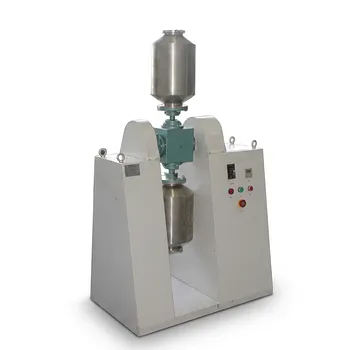
Multi Dimensional Universal Mixer for High Uniformity Powder Blending
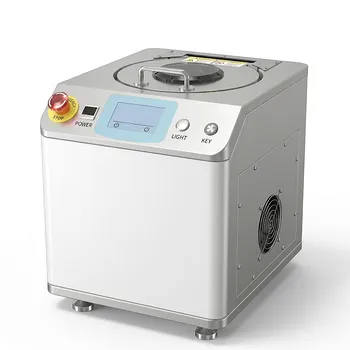
High Efficiency Vacuum Planetary Centrifugal Mixer and Defoaming Machine for Industrial Material Research and Precise Laboratory Powder Dispersion
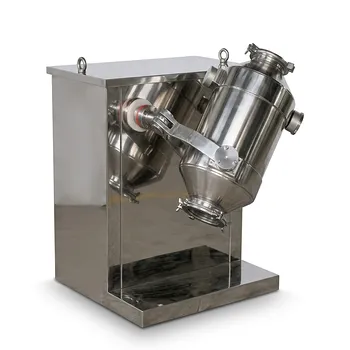
Three-Dimensional Motion Mixer for Laboratory Powder and Granule Blending
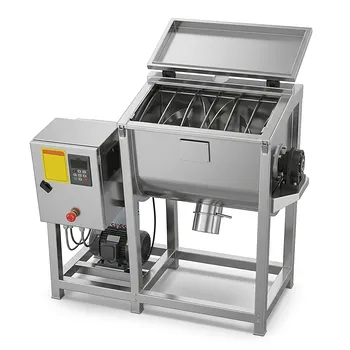
Horizontal Ribbon Mixer for Uniform Powder and Slurry Mixing
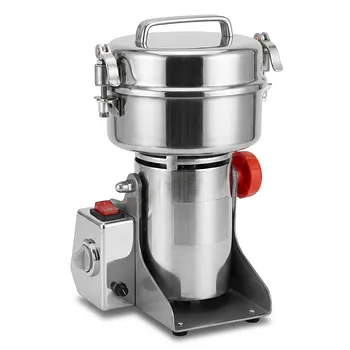
High Speed Laboratory Powder Grinder Small Batch Sample Preparation Mill
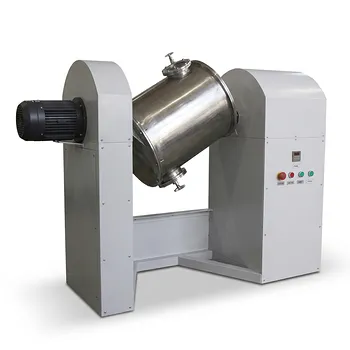
Inclined Mixer for Homogeneous Powder Blending and Grinding
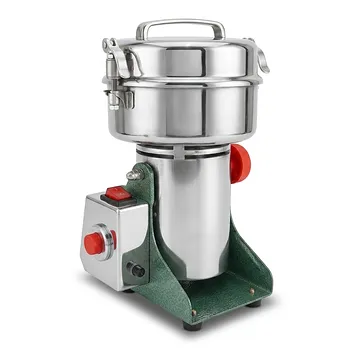
Small High-Speed Laboratory Grinder for Powder Processing
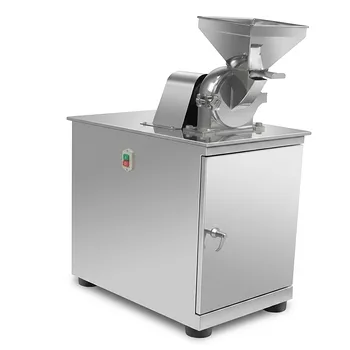
Universal Laboratory Pulverizer Grinder for Small Batch Powder Processing and Material Science Research
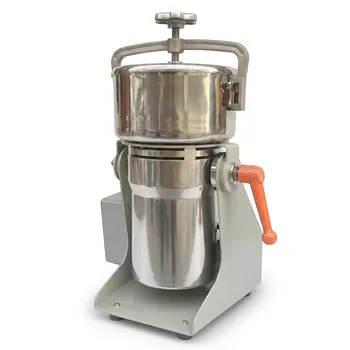
High Speed Laboratory Grinder Efficient Stainless Steel Powder Pulverizer Universal Material Science Mill for Sample Preparation
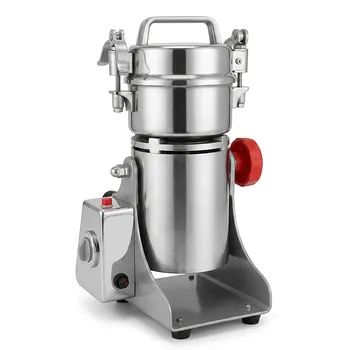
Industrial High Speed Small Sample Pulverizer Swing Type Laboratory Grinder for Powder Processing
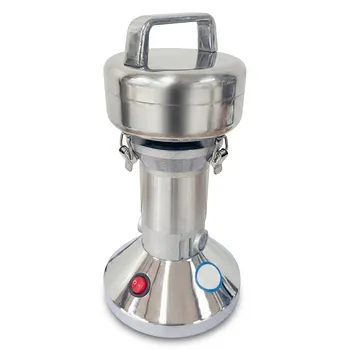
Small Trace Sample High Speed Pulverizer Grinder Laboratory Powder Mill
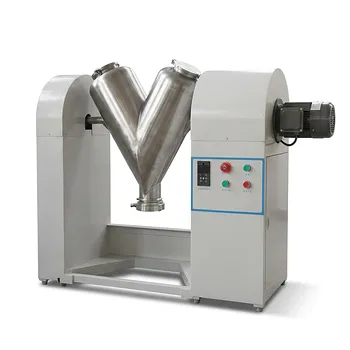
V-Type Powder Mixer for Uniform Blending of Dry Powders and Granules
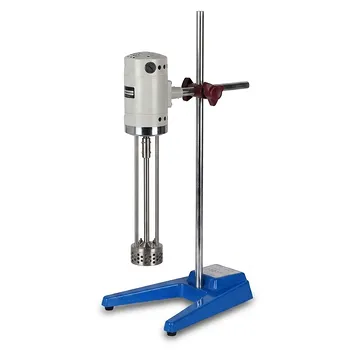
High Shear Laboratory Emulsifier for Mixing and Homogenization
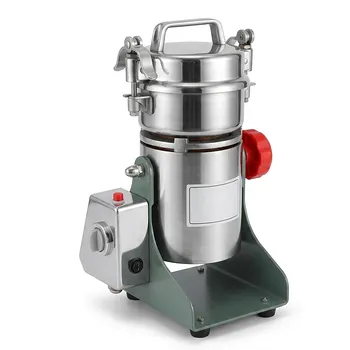
High Speed Swing Type Laboratory Pulverizer for Fine Powder Grinding and Sample Preparation
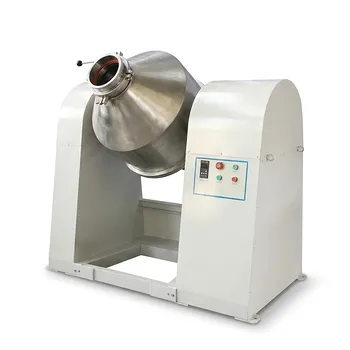
Industrial Double Cone Mixer for Powder Blending and Homogeneous Mixing
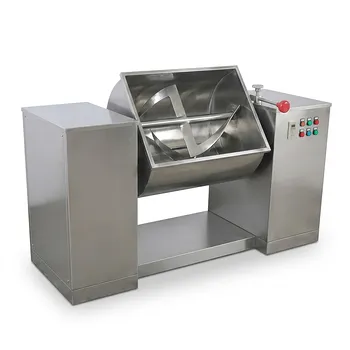
Horizontal Trough Mixer for Uniform Powder and Paste Blending

Automatic Vibrating Powder Feeder for Laboratory Material Processing Precision Vibratory Hopper Feeder for Granular and Powder Material Handling Industrial Grade Vibrating Tray Feeder for Consistent Material Sample Preparation
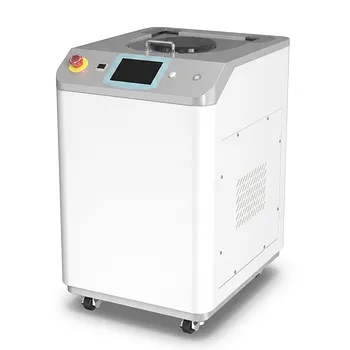
High Viscosity Planetary Centrifugal Mixing and Vacuum Defoaming Machine for Laboratory Material Preparation
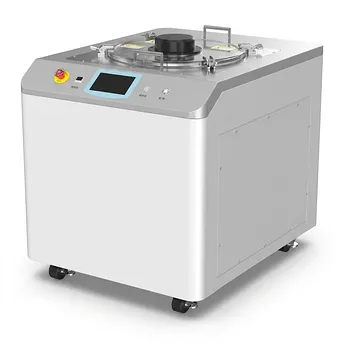
Industrial Planetary Centrifugal Vacuum Defoaming Mixer for High Viscosity Paste and Powder Homogenization