What is the function of a manual hydraulic press in FTIR analysis? Enhance clarity for precise biomass research
Updated 5 months ago
The laboratory manual hydraulic press is the critical tool for sample preparation in FTIR spectroscopy. It compresses a mixture of pretreated biomass powder and Potassium Bromide (KBr) into a translucent pellet under high pressure, typically ranging from several tons to specific loads like 130–450 MPa. This process transforms loose, opaque material into a dense, uniform medium that allows infrared light to pass through with minimal interference, enabling accurate molecular-level analysis.
The primary function of a pellet press in FTIR analysis is to create high-quality, transparent samples that minimize light scattering and maximize signal-to-noise ratios. By densifying the biomass-KBr mixture, the press allows the spectrometer to clearly identify chemical bond changes and functional groups within the pretreated material.
Enhancing Optical Clarity and Signal Quality
Minimizing Infrared Light Scattering
Loose biomass powder is inherently opaque and scatters infrared radiation, which results in "noisy" or unusable spectra. The hydraulic press forces particles into a dense, thin pellet that is semi-transparent or translucent. This high degree of transparency is essential for allowing the infrared beam to penetrate the sample and reach the detector.
Optimizing the Signal-to-Noise Ratio
By eliminating air gaps and internal voids between particles, the press ensures a uniform path for the infrared beam. This densification improves the signal-to-noise ratio of the resulting spectrum. High-quality pellets allow for the clear identification of structural fingerprints, such as the stretching vibrations of silicon-oxygen bonds or the conversion of chemical units.
Facilitating Molecular-Level Analysis
Identifying Functional Group Changes
In pretreated biomass, researchers must track changes in specific chemical structures to evaluate the success of a process. The pellet press enables the detection of hydroxyl and carboxyl groups on the biological material surface. Without the high-pressure pelletizing process, these subtle absorption peaks would likely be obscured by background noise.
Quantifying Pretreatment Efficacy
The press allows for the observation of cellulose hydrogen bond breakage and lignin degradation. For example, in studies involving ball milling, the press provides the molecular-level evidence needed to evaluate the intensity of the milling. This is achieved by creating a stable sample environment where molecular vibrations are not dampened by loose packing.
The Mechanics of Pellet Formation
Overcoming Internal Elastic Resistance
Biomass materials possess internal elastic resistance that causes them to spring back to their original shape if not sufficiently compressed. The hydraulic press applies precise, high-axial loads to overcome this resistance. This force rearranges and deforms the biomass particles, interlocking them into a stable, molded solid.
Achieving Plastic Deformation
Under pressures typically around 15 KPa/cm² or higher, the mixture of KBr and biomass undergoes plastic deformation. This means the materials flow together at the molecular level, creating a permanent bond. This deformation is what transforms a powdery mixture into a solid, glass-like disc that can be handled and analyzed.
Understanding the Trade-offs and Pitfalls
Pressure Sensitivity and Sample Integrity
While high pressure is necessary, excessive force can sometimes alter the sample's crystalline structure or induce unwanted chemical changes. Finding the optimal pressure range—often between 90 and 450 MPa—is crucial to avoid damaging the sample while still achieving necessary density.
Moisture and Contamination Risks
Potassium Bromide (KBr) is highly hygroscopic, meaning it absorbs moisture from the air rapidly. If the pressing process is too slow or performed in a humid environment, the resulting pellet will contain water peaks that mask the biomass's hydroxyl groups. Cleanliness of the die and the speed of the pressing operation are vital for data integrity.
Applying This to Your Research Project
Choosing the Right Approach
- If your primary focus is identifying surface functional groups: Prioritize the use of a high-precision pellet die to ensure maximum transparency and minimal light scattering for clear hydroxyl and carboxyl peaks.
- If your primary focus is evaluating pretreatment intensity: Use a press with a stable, controllable pressure gauge to ensure consistent pellet density, allowing for a reproducible mathematical comparison between molding pressure and molecular changes.
- If your primary focus is high-throughput screening: Consider a manual press with a quick-release mechanism to maintain a fast workflow while minimizing the time the KBr powder is exposed to atmospheric moisture.
Effective FTIR analysis of biomass relies entirely on the quality of the pellet, making the hydraulic press an indispensable component of the analytical chain.
Summary Table:
| Feature | Function in FTIR Analysis | Impact on Research |
|---|---|---|
| High-Pressure Pelleting | Compresses biomass-KBr mixture into translucent discs | Minimizes light scattering; maximizes signal-to-noise ratio |
| Molecular Densification | Eliminates air gaps and internal voids | Ensures a uniform beam path for clear structural fingerprints |
| Plastic Deformation | Overcomes elastic resistance at 130–450 MPa | Creates stable, glass-like samples for reproducible analysis |
| Functional Group Mapping | Enables detection of hydroxyl and carboxyl groups | Allows precise tracking of chemical changes in pretreated biomass |
Elevate Your Material Analysis with Precision Sample Prep
At [Company Name], we understand that the quality of your FTIR spectra depends entirely on the integrity of your sample. We provide complete laboratory sample preparation solutions for material science, specializing in high-performance powder processing and compaction equipment.
Our extensive line of hydraulic presses—including standard lab presses, XRF pellet presses, and advanced Cold/Warm Isostatic Presses (CIP/WIP)—is designed to deliver the precise axial loads required for flawless pellet formation. Whether you are analyzing biomass or advanced ceramics, our equipment ensures optimal density and optical clarity every time.
Our specialized laboratory range includes:
- Powder Processing: Crushers (jaw/roll), liquid nitrogen cryogenic grinders, and planetary ball mills.
- Sieving & Mixing: Vibratory sieve shakers, powder mixers, and vacuum defoaming mixers.
- Thermal Processing: Hot presses and vacuum hot presses for specialized material synthesis.
Ready to improve your signal-to-noise ratio and streamline your workflow? Contact us today to find the perfect press for your research requirements!
References
- Hlaing Hlaing Myint, Hirofumi Hinode. Dissolution Model of Ball Milled Rice Straw Particles in 1-Ethyl-3-Methyl Imidazolium Acetate at Elevated Temperature. DOI: 10.4172/2155-9821.1000260
Mentioned Products
- Manual Tablet Press with Dual Scale Pressure Gauge for Pharmaceutical Food Chemical Laboratory Sample Preparation
- 5 Ton Single Punch Tablet Press Laboratory Small Batch Production
- 6-Ton Small Single-Punch Tablet Press — Laboratory Powder & Granule Tableting Equipment / Tablet Forming Machine
- Enhanced 9 Punch Rotary Tablet Press for Powder Compaction
- 6 Ton Variable Frequency Single Punch Tablet Press
People Also Ask
- What is the function of a laboratory press in Cr-Ti alloy evaluation? Quantify Fracture Stress & Strength
- What is the function of a laboratory press in assessing the hydrophobic performance of modified vermiculite fillers?
- What is the core function of a laboratory press in the forming of ceramic filter element green bodies? Maximize Density.
- What is the function of a laboratory press in the preparation of ceramic feed rods? Master Density and Precision
- Why is vacuum sealing and flexible packaging necessary for Aluminum Titanate powders during CIP? Ensure Peak Density

Tech Team · PowderPreparation
Last updated on May 14, 2026
Related Products
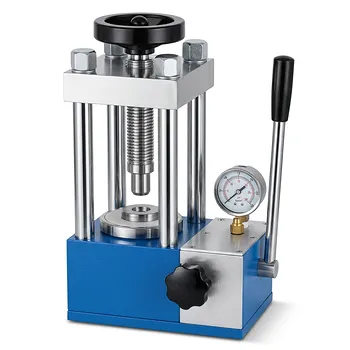
Manual Tablet Press with Dual Scale Pressure Gauge for Pharmaceutical Food Chemical Laboratory Sample Preparation
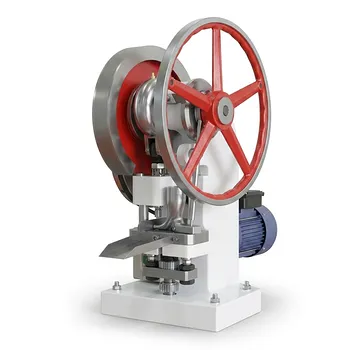
5 Ton Single Punch Tablet Press Laboratory Small Batch Production
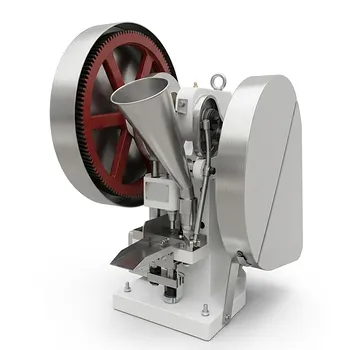
6-Ton Small Single-Punch Tablet Press — Laboratory Powder & Granule Tableting Equipment / Tablet Forming Machine
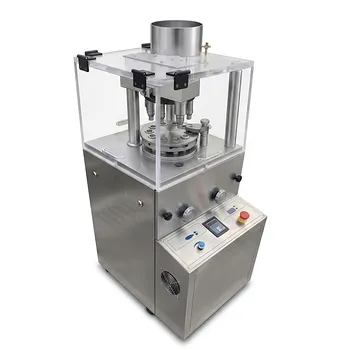
Enhanced 9 Punch Rotary Tablet Press for Powder Compaction
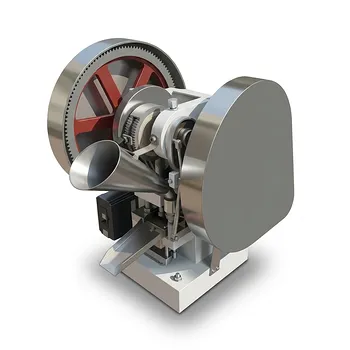
6 Ton Variable Frequency Single Punch Tablet Press
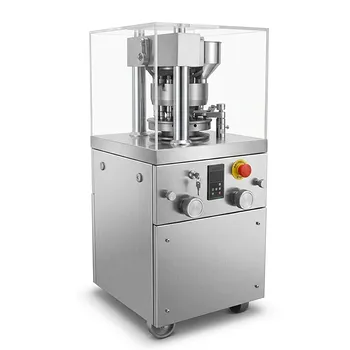
Ordinary Type Rotary Tablet Press for Pharmaceutical Chemical Food Electronic Industries