What is the function of a hydraulic press and steel mold in the shaping process of stone waste particles? Optimize Density
Updated 4 months ago
The primary function of a hydraulic press and steel mold is to transform loose stone waste particles into a dense, structurally stable "green body" through high-pressure uniaxial compaction. By applying pressures of up to 127 MPa, this system forces the rearrangement of particles, expels trapped air, and ensures a uniform internal structure. This process is critical for achieving the necessary green density to survive subsequent thermal treatments like sintering without cracking or excessive shrinkage.
Core Takeaway: The combination of a hydraulic press and high-strength molds provides the mechanical force and geometric containment needed to achieve high-density compaction, serving as the essential foundation for the structural integrity and final mechanical properties of the recycled stone product.
The Mechanics of Particle Transformation
Particle Rearrangement and Compaction
The hydraulic press applies axial pressure to force individual stone particles into a tighter configuration. This mechanical force overcomes the internal friction of the wet powder mixture, allowing particles to slide into voids and fill empty spaces.
Expulsion of Air and Moisture
As the steel mold constrains the mixture, the high pressure effectively expels excess air bubbles and moisture. Eliminating these internal voids is vital, as trapped air can expand during heat treatment, leading to structural failures or "bloating" in the final material.
Formation of the Green Body
The result of this process is a green body, a compact that is held together by mechanical interlocking and surface tension. While not yet fully hardened, this body possesses enough structural consistency to be handled and moved to the next stage of production.
Establishing Structural Foundations for Sintering
Maximizing Green Density
Achieving a high green density—the density of the material before firing—is the most critical predictor of final product quality. A higher initial density reduces the amount of volume change that occurs during sintering, which directly limits linear shrinkage.
Prevention of Structural Defects
By ensuring a uniform distribution of pressure, the hydraulic press prevents the formation of internal stress gradients. This uniformity is what prevents the material from cracking or warping when it is subjected to the high temperatures required for chemical curing or vitrification.
Precision Dimensional Control
The use of high-strength steel molds ensures that every sample or component produced has identical geometric dimensions. This standardization is crucial for industrial applications where precise thickness and internal bond strength must meet specific engineering tolerances.
Understanding the Trade-offs and Limitations
Pressure vs. Particle Damage
While high pressure increases density, exceeding the material’s structural limits can lead to particle crushing. In mixtures containing fibers, excessive pressure (beyond the typical 25–30 kG/cm² range for fibers) can damage the reinforcement structure, actually weakening the final internal bond.
Friction and Pressure Gradients
In uniaxial pressing, friction between the stone particles and the mold walls can lead to uneven pressure distribution. This often results in the center of the compact being less dense than the ends, a phenomenon that must be managed through proper lubrication or mold design.
Mold Wear and Maintenance
The abrasive nature of stone waste particles poses a significant challenge to mold longevity. Using high-precision stainless or high-strength steel is necessary to resist surface scratching and deformation under the repeated application of 127 MPa of force.
How to Apply This to Your Shaping Process
Selecting the right parameters for your hydraulic press and mold setup depends entirely on your material composition and final performance requirements.
- If your primary focus is maximum mechanical strength: Prioritize high axial pressure (up to 127 MPa) and high-strength molds to maximize green density and minimize sintering shrinkage.
- If your primary focus is fiber-reinforced stability: Limit pressure to a lower range (e.g., 25–30 kG/cm²) to ensure tight particle rearrangement without fracturing the delicate fiber reinforcements.
- If your primary focus is geometric precision for testing: Utilize high-precision stainless steel molds to ensure uniform thickness and standardized internal structures across all samples.
By precisely controlling the interaction between compressive force and mold containment, you ensure that stone waste is successfully repurposed into a high-performance, predictable industrial material.
Summary Table:
| Process Stage | Mechanism | Key Outcome |
|---|---|---|
| Compaction | Axial pressure (up to 127 MPa) | Particle rearrangement & air/moisture expulsion |
| Containment | High-strength steel mold | Precise geometric dimensions & structural stability |
| Density Control | Uniform pressure distribution | Maximized green density to prevent sintering cracks |
| Optimization | Controlled force application | Prevention of particle crushing or fiber reinforcement damage |
Elevate Your Material Research with Precision Compaction Solutions
Transforming raw stone waste and powders into high-performance materials requires precise control over pressure and containment. We provide complete laboratory sample preparation solutions for material science, specializing in the equipment you need to achieve optimal green density and structural integrity.
Our extensive product lines include:
- Advanced Hydraulic Presses: From standard lab presses and XRF pellet presses to sophisticated Cold/Warm Isostatic Presses (CIP/WIP), hot presses, and vacuum hot presses.
- Powder Processing: High-energy mills (planetary ball, jet, sand, disc, rotor), liquid nitrogen cryogenic grinders, and jaw/roll crushers.
- Consistency & Grading: Vibratory and air-jet sieve shakers, test sieves, powder mixers, and defoaming mixers.
Whether you are focusing on maximizing mechanical strength or maintaining the integrity of fiber reinforcements, our equipment ensures repeatable, industrial-grade results.
Ready to optimize your shaping process?
Contact our experts today to find the perfect solution for your lab!
References
- Gökhan Erol, Devrim PEKDEMİR. Granit ve rekristalize kireçtaşı doğal taş atıklarından elde edilen kompozit malzemenin ısıl dönüşümünün incelenmesi. DOI: 10.19111/bulletinofmre.1081187
Mentioned Products
- Ordinary Type Rotary Tablet Press for Pharmaceutical Chemical Food Electronic Industries
- Hydraulic Double Shaft Disperser for High Viscosity Liquid Mixing and Dispersion
- Enhanced 9 Punch Rotary Tablet Press for Powder Compaction
- 6 Ton Variable Frequency Single Punch Tablet Press
- Manual Tablet Press with Dual Scale Pressure Gauge for Pharmaceutical Food Chemical Laboratory Sample Preparation
People Also Ask
- Why is a laboratory hydraulic press required for FT-IR KBr pellets? Achieve Precise Sample Clarity for ZrC–SiC Analysis
- Why is a laboratory hydraulic press required to compress oyster shell powder before XRF analysis? Improve Data Accuracy.
- Why is vacuum sealing and flexible packaging necessary for Aluminum Titanate powders during CIP? Ensure Peak Density
- What are the advantages of using hardened steel molds and graphite spray for titanium powder? Ensure structural integrity
- What role does a high-strength stainless steel mold kit play in the uniaxial die compaction process? Ensuring Precision

Tech Team · PowderPreparation
Last updated on Jun 03, 2026
Related Products
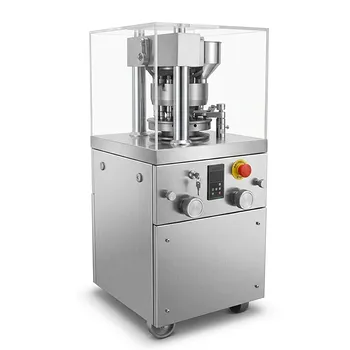
Ordinary Type Rotary Tablet Press for Pharmaceutical Chemical Food Electronic Industries
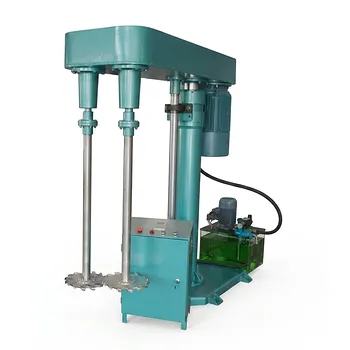
Hydraulic Double Shaft Disperser for High Viscosity Liquid Mixing and Dispersion
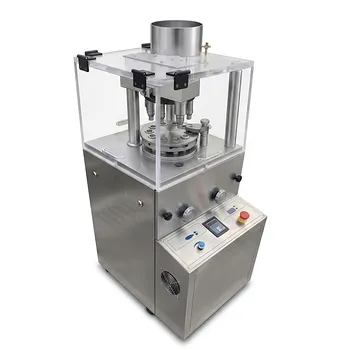
Enhanced 9 Punch Rotary Tablet Press for Powder Compaction
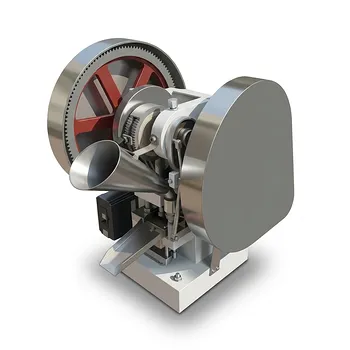
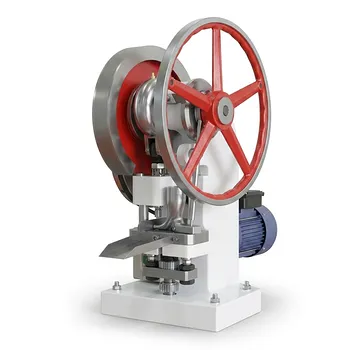
6 Ton Variable Frequency Single Punch Tablet Press
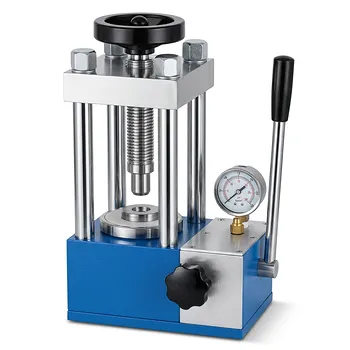
Manual Tablet Press with Dual Scale Pressure Gauge for Pharmaceutical Food Chemical Laboratory Sample Preparation
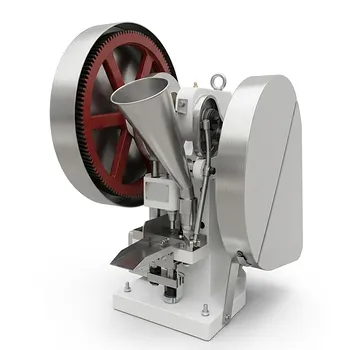
6-Ton Small Single-Punch Tablet Press — Laboratory Powder & Granule Tableting Equipment / Tablet Forming Machine