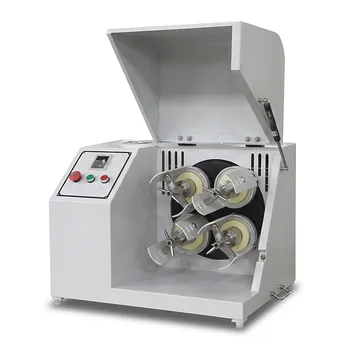
What is the function of a planetary centrifugal mixer in filler pre-mixing? Master Nano-SiO2 & BN Homogenization
Updated 4 months ago
The high-speed planetary centrifugal mixer serves as the critical mechanism for the "dry mixing" and multi-scale homogenization of nano-SiO₂ and micro-BN fillers. By utilizing intense centrifugal forces, the equipment ensures a uniform distribution of these different-sized particles and prevents severe nanoparticle agglomeration before they are ever introduced into the epoxy resin matrix.
Core Takeaway: During the pre-mixing stage, the planetary centrifugal mixer uses simultaneous revolution and rotation to achieve a uniform dry blend of fillers, providing a necessary foundation for stable dispersion and preventing the structural defects caused by nanoparticle clumping.
The Mechanics of Multi-Scale Filler Integration
Achieving Uniformity Across Scales
In Epoxy/Nano-SiO₂/Micro-BN composites, the fillers exist at different orders of magnitude—nanoscale silica and microscale boron nitride.
The mixer uses high-speed rotation to generate powerful centrifugal forces that force these disparate particles to interact and intermix at a granular level.
This process ensures that the nano-silica is distributed evenly among the larger boron nitride particles, creating a preliminary uniform distribution that is impossible to achieve through manual or low-energy mixing.
Preventing Nanoparticle Agglomeration
Nanoparticles like SiO₂ have a high surface energy, making them naturally prone to forming tight agglomerates.
If these fillers are introduced to the epoxy resin while clumped, they will not disperse properly, leading to weak spots in the final composite.
The planetary centrifugal mixer acts as a "technical measure" to break down these macro-agglomerates during the dry phase, ensuring the particles remain individually accessible to the resin during the subsequent blending stage.
Enhancement of Material Integrity
The Benefit of Blade-Free Mixing
Unlike traditional mixers, a planetary centrifugal mixer is a non-contact system that does not use stirring blades.
By relying on the combination of revolution and rotation, the equipment avoids cross-contamination and prevents the physical damage to fillers that can occur with mechanical impellers.
This non-contact approach is particularly vital for maintaining the structural integrity of the micro-BN and nano-SiO₂ as they are prepared for the matrix.
Foundation for Subsequent Dispersion
Pre-mixing the fillers creates an optimized foundation for the later stages of composite preparation, such as ultrasonic dispersion or resin wetting.
When the fillers are already well-distributed, the epoxy resin can coat each particle more efficiently, reducing the viscosity-related challenges of high-filler loading.
This leads to a more kinetically stable system where the fillers are less likely to settle or re-agglomerate during the curing process.
Understanding the Trade-offs
Thermal Management During High-Speed Operation
The intense shear and centrifugal forces generated at high RPMs (up to 2000 RPM) can lead to localized heat generation through particle friction.
If the temperature is not monitored, it can cause premature surface oxidation of some fillers or affect the moisture content of the dry mix.
Users must balance the need for high-energy dispersion with the duration of the mixing cycle to prevent thermal degradation of the materials.
Equipment Capacity and Scalability
Planetary centrifugal mixers are highly effective for high-viscosity and high-precision applications but often have limited batch sizes compared to industrial ribbon blenders.
While they offer superior dispersion quality, they may require multiple cycles for large-scale production, which can increase the processing time per kilogram of composite.
Additionally, the high-precision nature of these machines requires careful balancing of the mixing containers to avoid mechanical strain on the motor.
How to Apply This to Your Project
Making the Right Choice for Your Goal
- If your primary focus is maximizing thermal conductivity: Ensure the pre-mixing stage is long enough to fully coat the micro-BN with nano-SiO₂ to facilitate a continuous filler network.
- If your primary focus is mechanical strength: Prioritize the removal of nanoparticle agglomerates during pre-mixing to eliminate potential stress concentration points.
- If your primary focus is production speed: Use the highest stable RPM setting to achieve dry homogenization quickly, but monitor temperature to avoid moisture-related clumping.
By mastering the pre-mixing stage with a planetary centrifugal mixer, you ensure that the complex architecture of your Epoxy/Nano-SiO₂/Micro-BN composite is established correctly from the start.
Summary Table:
| Key Mechanism | Function in Pre-mixing | Impact on Final Composite |
|---|---|---|
| Multi-Scale Blending | Uniformly distributes Nano-SiO₂ among Micro-BN | Eliminates structural weak spots |
| Anti-Agglomeration | High shear breaks down nanoparticle clumps | Ensures stable dispersion in resin |
| Blade-Free Mixing | Non-contact revolution/rotation | Zero contamination; preserves filler integrity |
| Surface Optimization | Prepares particles for resin wetting | Prevents settling and re-agglomeration |
Elevate Your Material Research with Expert Sample Prep Solutions
Achieving perfect dispersion in complex composites like Epoxy/Nano-SiO₂/Micro-BN requires precision equipment. At [Brand Name], we provide complete laboratory sample preparation solutions tailored for material science.
Whether you need high-speed defoaming mixers for bubble-free homogenization, planetary ball mills for ultra-fine grinding, or a full spectrum of hydraulic presses—including Cold/Warm Isostatic Presses (CIP/WIP) and Hot Presses—our equipment is designed to ensure material integrity and consistency.
Our product lines include:
- Processing: Crushers (jaw/roll), liquid nitrogen cryogenic grinders, and jet/sand/rotor mills.
- Classification: Vibratory and air-jet sieve shakers with various test sieves.
- Compaction: Standard lab presses, XRF pellet presses, and vacuum hot presses.
Contact us today to optimize your lab's workflow and achieve superior material performance!
References
- Fuqiang Tian, Shuting Zhang. Effect of Temperature on the Charge Transport Behavior of Epoxy/Nano−SiO2/Micro−BN Composite. DOI: 10.3390/nano12101617
Mentioned Products
- High Speed Vacuum Planetary Centrifugal Mixer and Defoamer for Industrial Paste Processing
- High Efficiency Vacuum Planetary Centrifugal Mixer and Defoaming Machine for Industrial Material Research and Precise Laboratory Powder Dispersion
- High Viscosity Planetary Centrifugal Vacuum Mixer for Material Defoaming and Uniform Mixing
- High Viscosity Planetary Centrifugal Mixing and Vacuum Defoaming Machine for Laboratory Material Preparation
- Industrial Planetary Centrifugal Vacuum Defoaming Mixer for High Viscosity Paste and Powder Homogenization
People Also Ask
- Why increase revolution radius for high-viscosity materials? Optimize Mixing Performance with Centrifugal Acceleration
- What is the function of a planetary centrifugal mixer in electrode slurry prep? Achieve high-energy, uniform dispersion.
- Why is a planetary centrifugal mixer utilized for wood powder and HPMC? Achieve uniform dispersion & rapid defoaming.
- How does a planetary centrifugal mixer contribute to the preparation of magnetic polymer composites? Expert Guide
- How does a planetary centrifugal mixer address key challenges in Tyr-CDs@EVA optical films? Ensure Optical Clarity.

Tech Team · PowderPreparation
Last updated on Jun 03, 2026
Related Products
High Speed Vacuum Planetary Centrifugal Mixer and Defoamer for Industrial Paste Processing
High Efficiency Vacuum Planetary Centrifugal Mixer and Defoaming Machine for Industrial Material Research and Precise Laboratory Powder Dispersion
High Viscosity Planetary Centrifugal Vacuum Mixer for Material Defoaming and Uniform Mixing
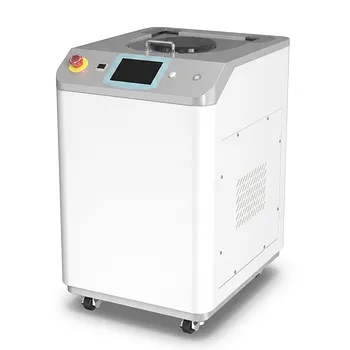
High Viscosity Planetary Centrifugal Mixing and Vacuum Defoaming Machine for Laboratory Material Preparation
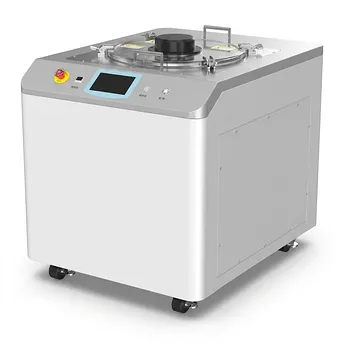
Industrial Planetary Centrifugal Vacuum Defoaming Mixer for High Viscosity Paste and Powder Homogenization
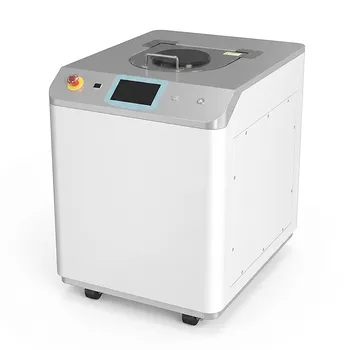
Industrial Planetary Centrifugal Vacuum Defoaming Mixer for High Viscosity Paste and Advanced Material Science
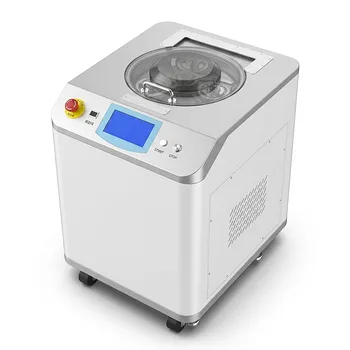
Dual Cup Vacuum Centrifugal Mixer Planetary Paste Defoaming Machine Industrial Material Processor
Ultra Centrifugal Mill High Speed Laboratory Grinder for Fibrous and Brittle Sample Preparation
Ultra Centrifugal Mill for Rapid Laboratory Sample Preparation and Fine Powder Grinding
High-Speed Simple Disperser for Efficient Mixing, Dispersion, and Emulsification
High Energy Laboratory Planetary Ball Mill for Nano Grinding and Colloidal Mixing of Hard and Brittle Materials

Vertical Production Planetary Ball Mill for High Throughput Powder Processing

360° Rotating Omnidirectional Laboratory Planetary Ball Mill for Homogeneous Ultra-Fine Grinding and Mixing

High Energy Omnidirectional Planetary Ball Mill 16L
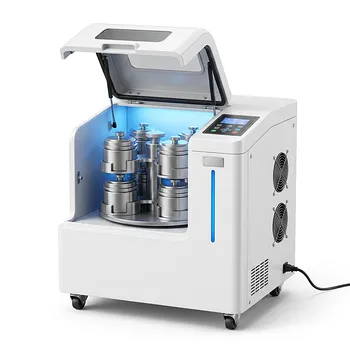
High Energy Omnidirectional Planetary Ball Mill 20L
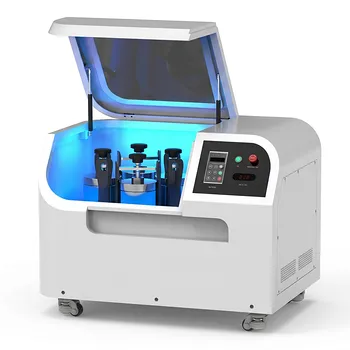
Planetary Ball Mill 12L

Heavy Duty Horizontal Planetary Ball Mill for Efficient Industrial Grinding and Sample Preparation
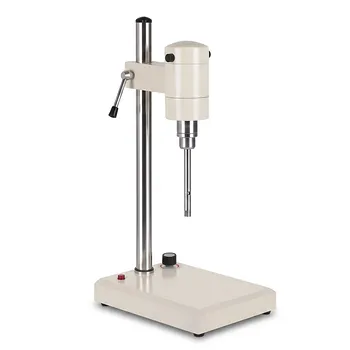
High Speed Dispersing Homogenizer for Laboratory Emulsification Dispersion and Cell Disruption
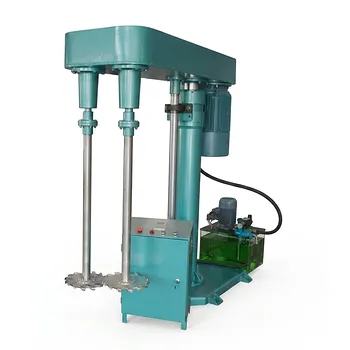
Hydraulic Double Shaft Disperser for High Viscosity Liquid Mixing and Dispersion