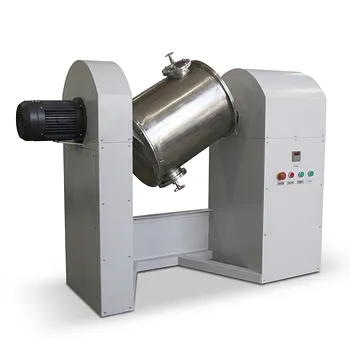
What is the function of a high-speed centrifugal mixer in the preparation of hmSAM inks? Achieve High-Energy Homogeneity
Updated 4 months ago
In the preparation of hard magnetic soft active material (hmSAM) inks, a high-speed centrifugal mixer serves as the critical engine for high-energy homogenization. By generating intense shear forces at thousands of revolutions per minute, the mixer breaks down magnetic particle agglomerates and ensures a uniform dispersion of micro-particles within a viscous polymer matrix. This process is essential for achieving the stable magnetic performance and consistent rheological properties required for high-precision 3D printing.
The high-speed centrifugal mixer transforms raw components into a functional ink by using centrifugal and shear forces to overcome the high viscosity of polymer matrices, effectively dispersing magnetic particles and removing microscopic air bubbles to ensure structural and magnetic homogeneity.
Achieving High-Energy Dispersion in Viscous Media
Overcoming Particle Agglomeration
Hard magnetic materials, such as NdFeB magnetic micro-particles, naturally tend to clump or agglomerate due to magnetic and van der Waals forces. The high-speed centrifugal mixer generates powerful shear forces that mechanically pull these clusters apart. This ensures that each particle is individually wetted by the matrix, preventing "weak spots" or magnetic inconsistencies in the final material.
Homogenization of High-Viscosity Matrices
The polymer matrices used in hmSAM, typically silicone rubber or epoxy, are highly viscous and resistant to standard stirring methods. Centrifugal mixing utilizes synchronous rotation and revolution (planetary motion) to force the particles through the matrix without the use of invasive blades. This results in a micron-level uniform dispersion that is otherwise impossible to achieve in high-viscosity systems.
In-Situ Material Modification
Beyond simple mixing, the high energy of the process can facilitate physical changes in the additives. For instance, in complex nanocomposites, the shear forces can promote in-situ delamination of layered materials. This enhances the surface area contact between the magnetic particles and the binder, strengthening the internal microstructure of the ink.
Enhancing Material Integrity and Printability
Centrifugal De-aeration (Bubble Removal)
One of the most critical secondary functions of the centrifugal mixer is the elimination of air bubbles. As the container rotates at high speeds, the resulting centrifugal force drives air to the surface while pulling the denser ink toward the bottom. This vacuum-like de-aeration is vital for preventing macroscopic defects and structural failure during the 3D printing process.
Stabilizing Rheological Properties
For successful Direct Ink Writing (DIW), an ink must exhibit specific rheological stability and shape retention. The mixer ensures that catalysts, plasticizers, and magnetic fillers are distributed at a molecular level. This uniformity provides the ink with consistent flow behavior, ensuring that the extrusion rate remains stable throughout the printing of complex 3D voxels.
Efficiency and Consistency
Traditional mixing methods can take hours and may still result in an inhomogeneous slurry. High-speed centrifugal mixers achieve deep mixing within minutes, significantly reducing the "pot life" concerns for chemically active resins. This speed ensures that the precise component ratios are maintained without premature curing or sedimentation.
Understanding the Trade-offs
Thermal Management Challenges
The primary drawback of high-speed centrifugal mixing is frictional heat generation. The intense kinetic energy required to shear viscous fluids is partially converted into heat, which can trigger premature polymerization or degradation of temperature-sensitive catalysts. Operators must often utilize pulsed mixing cycles or external cooling to maintain material integrity.
Equipment and Loading Constraints
While highly effective, these mixers are limited by batch size and container weight. Because the process relies on precise centrifugal balance, exceeding the weight limit or using an unbalanced load can lead to equipment failure or inconsistent mixing energy. Furthermore, the high-energy nature of the device may lead to particle attrition if the mixing duration is too long, potentially altering the magnetic properties of the NdFeB particles.
Applying This Technology to Your Workflow
Making the Right Choice for Your Goal
- If your primary focus is magnetic performance: Prioritize longer mixing cycles at moderate speeds to ensure every NdFeB particle is isolated and uniformly distributed without damaging the particle geometry.
- If your primary focus is 3D printing precision: Focus on the de-aeration settings of the mixer to ensure a bubble-free slurry, as even microscopic voids can cause extrusion "spitting" and structural defects.
- If your primary focus is high-viscosity resins: Utilize a planetary centrifugal mixer that emphasizes the "revolution" aspect to ensure deep penetration of the particles into the thick polymer base.
By mastering the high-speed centrifugal mixing process, you ensure that your hard magnetic soft active materials possess the microscopic homogeneity required for advanced robotic and structural applications.
Summary Table:
| Key Function | Technical Mechanism | Impact on hmSAM Inks |
|---|---|---|
| High-Energy Dispersion | Intense shear forces (thousands of RPM) | Breaks NdFeB particle agglomerates for uniform magnetic performance. |
| Planetary Mixing | Synchronous rotation and revolution | Achieves micron-level dispersion in high-viscosity silicone/epoxy matrices. |
| Centrifugal De-aeration | High-speed centrifugal force | Removes microscopic bubbles to prevent 3D printing defects and voids. |
| Rheological Stabilization | Molecular-level distribution | Ensures consistent extrusion rates and shape retention during printing. |
| Rapid Processing | High kinetic energy transfer | Completes homogenization in minutes, preserving the pot life of active resins. |
Elevate Your Material Synthesis with Precision Mixing Solutions
Are you looking to achieve perfect homogeneity and bubble-free results for your advanced magnetic composites? We provide complete laboratory sample preparation solutions for material science, specializing in high-performance powder processing and compaction equipment.
Our extensive product line is designed to handle the most demanding research requirements, including:
- Advanced Mixers: Planetary centrifugal mixers and defoaming mixers for high-viscosity resins.
- Milling & Grinding: Planetary ball mills, jet mills, and cryogenic grinders for fine particle control.
- Compaction Equipment: A full spectrum of hydraulic presses, including Cold/Warm Isostatic Presses (CIP/WIP), vacuum hot presses, and XRF pellet presses.
- Sieving & Grading: Vibratory and air-jet sieve shakers for precise particle size distribution.
Whether you are developing hmSAM inks for soft robotics or high-performance magnetic components, our equipment ensures structural and magnetic integrity in every batch. Contact us today to discuss your specific application and find the ideal solution for your laboratory workflow!
References
- Shuai Wu, Ruike Renee Zhao. Evolutionary Algorithm‐Guided Voxel‐Encoding Printing of Functional Hard‐Magnetic Soft Active Materials. DOI: 10.1002/aisy.202000060
Mentioned Products
- High Speed Vacuum Planetary Centrifugal Mixer and Defoamer for Industrial Paste Processing
- Ultra Centrifugal Mill High Speed Laboratory Grinder for Fibrous and Brittle Sample Preparation
- High Viscosity Planetary Centrifugal Mixing and Vacuum Defoaming Machine for Laboratory Material Preparation
- Industrial Planetary Centrifugal Vacuum Defoaming Mixer for High Viscosity Paste and Powder Homogenization
- High Viscosity Planetary Centrifugal Vacuum Mixer for Material Defoaming and Uniform Mixing
People Also Ask
- Why increase revolution radius for high-viscosity materials? Optimize Mixing Performance with Centrifugal Acceleration
- What is the function of a planetary centrifugal mixer in electrode slurry prep? Achieve high-energy, uniform dispersion.
- Why is a planetary centrifugal mixer utilized for wood powder and HPMC? Achieve uniform dispersion & rapid defoaming.
- How does a planetary centrifugal mixer contribute to the preparation of magnetic polymer composites? Expert Guide
- How does a planetary centrifugal mixer address key challenges in Tyr-CDs@EVA optical films? Ensure Optical Clarity.

Tech Team · PowderPreparation
Last updated on Jun 03, 2026
Related Products
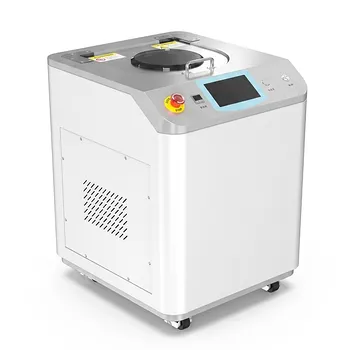
High Speed Vacuum Planetary Centrifugal Mixer and Defoamer for Industrial Paste Processing
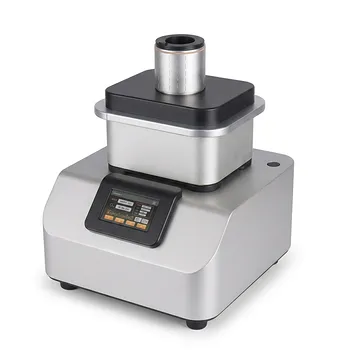
Ultra Centrifugal Mill High Speed Laboratory Grinder for Fibrous and Brittle Sample Preparation
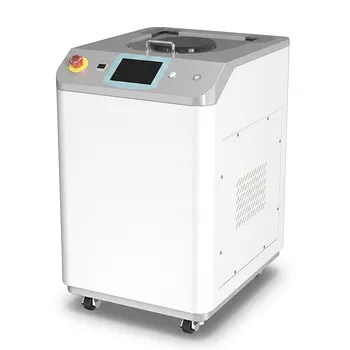
High Viscosity Planetary Centrifugal Mixing and Vacuum Defoaming Machine for Laboratory Material Preparation
Industrial Planetary Centrifugal Vacuum Defoaming Mixer for High Viscosity Paste and Powder Homogenization
High Viscosity Planetary Centrifugal Vacuum Mixer for Material Defoaming and Uniform Mixing
Industrial Planetary Centrifugal Vacuum Defoaming Mixer for High Viscosity Paste and Advanced Material Science
High Efficiency Vacuum Planetary Centrifugal Mixer and Defoaming Machine for Industrial Material Research and Precise Laboratory Powder Dispersion
Ultra Centrifugal Mill for Rapid Laboratory Sample Preparation and Fine Powder Grinding
Dual Cup Vacuum Centrifugal Mixer Planetary Paste Defoaming Machine Industrial Material Processor
Small High Speed Grinder for Laboratory Sample Preparation
High Shear Laboratory Emulsifier for Mixing and Homogenization
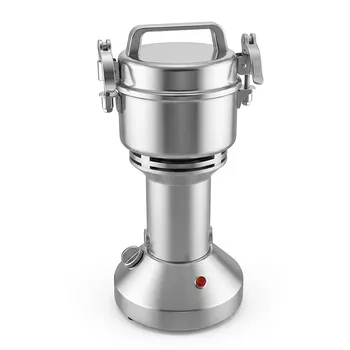
Small High Speed Upright Grinder for Laboratory Sample Preparation
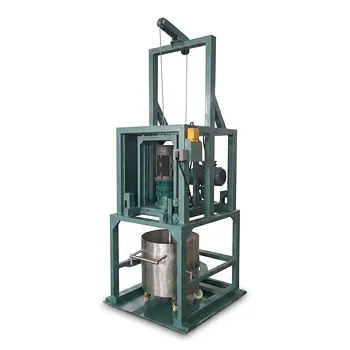
High-Speed Simple Disperser for Efficient Mixing, Dispersion, and Emulsification
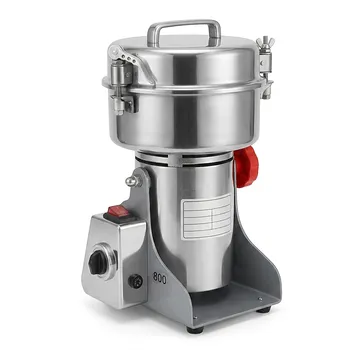
Small High-Speed Laboratory Grinder for Rapid Sample Preparation
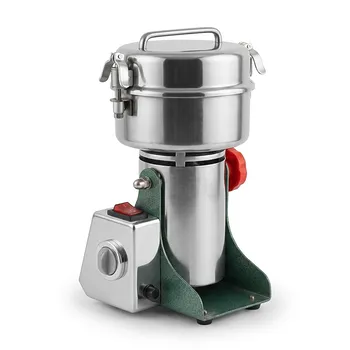
Small High-Speed Swing Grinder for Laboratory Sample Preparation
High Speed Laboratory Grinder Efficient Stainless Steel Powder Pulverizer Universal Material Science Mill for Sample Preparation
High Speed Swing Type Laboratory Pulverizer for Fine Powder Grinding and Sample Preparation
High Speed Dispersing Homogenizer for Laboratory Emulsification Dispersion and Cell Disruption
Industrial Knife Mill for Food and Biological Sample Preparation High Speed Laboratory Homogenizer