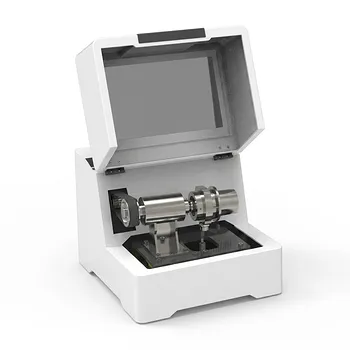
What is the function of a high-energy planetary ball mill in TiCoCrFeMn ODS prep? Master Mechanical Alloying
Updated 3 months ago
The high-energy planetary ball mill acts as a solid-state reactor that facilitates mechanical alloying through intense physical force. In the preparation of TiCoCrFeMn ODS alloys, it utilizes high-speed rotation to generate impact and shear forces that repeatedly fracture and cold-weld elemental powders and oxide particles. This process transforms a heterogeneous mixture of raw materials into a single, nanostructured, pre-alloyed powder with atomic-level homogeneity.
High-energy planetary ball milling is the critical precursor step that overcomes the thermodynamic and density-related limitations of traditional melting. By forcing atomic interpenetration and grain refinement, it ensures the uniform dispersion of oxides and the formation of stable, high-entropy solid solutions.
Mechanical Alloying and Atomic Homogeneity
Overcoming Melting Point Disparities
Traditional melting often fails with TiCoCrFeMn alloys because the constituent elements have significantly different melting points and densities, leading to component segregation. The planetary ball mill bypasses the liquid phase entirely, using mechanical energy to induce atomic interpenetration in a solid state.
Repeated Cold Welding and Fracturing
As the grinding balls collide with the powder, the particles undergo continuous plastic deformation. This cycle of repeated fracturing and cold welding forces the metallic elements (Ti, Co, Cr, Fe, Mn) and oxide reinforcements into an atomic-scale mixture.
Creation of Supersaturated Solid Solutions
The intense energy generated overcomes the thermodynamic barriers that normally prevent certain elements from mixing. This "forces" the atoms into a chemical disorder, expanding solid solution limits and often resulting in the formation of uniform FCC or BCC crystal structures.
Structural Refinement and Surface Activity
Nanoscale Grain Refinement
The high-energy impacts efficiently refine the grain size of the alloy powder, often driving it down to the nanoscale (typically below 50 nm). This high density of grain boundaries provides the structural foundation for the superior mechanical properties of the final composite.
Increasing Powder Surface Activity
Mechanical milling increases the surface area and stored energy of the powder particles. This high surface activity is essential for achieving optimal densification during subsequent stages like Spark Plasma Sintering (SPS) or hot-press sintering.
In-Situ Synthesis Preparation
By deeply mixing metallic powders with oxides like TiO2 or CuO, the mill creates a "high-activity" base. This proximity of reactants allows for the in-situ synthesis of fine, dispersed oxide phases during the heating process, which is the hallmark of ODS composites.
Understanding the Trade-offs
The Risk of Process Contamination
The primary downside of high-energy milling is the potential for impurities introduced by the wear and tear of the grinding media and vials. Over-milling can lead to significant contamination from iron or carbon, which may alter the intended high-entropy chemistry.
Balancing Energy and Time
While high rotational speeds accelerate alloying, they also generate significant heat that can cause unwanted phase transformations or powder sticking. Professionals must carefully calibrate the ball-to-powder ratio and milling duration to avoid degrading the powder's quality.
Environmental Sensitivity
The increased surface activity that makes these powders ideal for sintering also makes them highly pyrophoric. Handling TiCoCrFeMn powders requires strict atmosphere control (usually high-purity Argon) to prevent oxidation or combustion during the milling and recovery process.
How to Apply This to Your Project
Recommendations for Material Development
- If your primary focus is maximizing hardness and strength: Prioritize longer milling times at moderate speeds to ensure the finest possible grain refinement and maximum oxide dispersion.
- If your primary focus is chemical purity: Use grinding media (balls and vials) made of the same material as the alloy base or high-purity zirconia to minimize foreign element contamination.
- If your primary focus is rapid prototyping: Utilize a high ball-to-powder ratio (e.g., 10:1 or higher) to accelerate the mechanical alloying process and reach a steady state faster.
The high-energy planetary ball mill is not merely a mixer; it is the fundamental tool required to synthesize the complex, nanostructured precursors necessary for high-performance ODS high-entropy alloys.
Summary Table:
Key Functions of Planetary Ball Milling in ODS Alloy Synthesis
| Function | Mechanism | Technical Benefit |
|---|---|---|
| Mechanical Alloying | High-speed impact & shear forces | Overcomes melting point disparities; achieves atomic homogeneity. |
| Grain Refinement | Repeated fracturing & cold welding | Produces nanostructured powders (typically < 50 nm). |
| Surface Activation | Increased surface area & stored energy | Enhances densification during SPS or hot-press sintering. |
| Oxide Dispersion | Solid-state atomic interpenetration | Ensures uniform distribution of fine oxide phases (e.g., TiO2). |
| Structural Control | Forced chemical disorder | Creates supersaturated FCC/BCC solid solutions. |
Elevate Your Material Research with Expert Sample Prep Solutions
Achieving the perfect nanostructured powder for TiCoCrFeMn high-entropy alloys requires more than just equipment—it requires precision. At [Company Name], we provide complete laboratory sample preparation solutions tailored for material science and advanced powder metallurgy.
Whether you are scaling up mechanical alloying or optimizing ODS composite production, our specialized equipment ensures consistency and purity:
- Powder Processing: High-energy planetary ball mills, jet mills, and cryogenic grinders for superior grain refinement.
- Preparation & Sizing: Jaw crushers, vibratory sieve shakers, and high-efficiency powder mixers.
- Advanced Compaction: A full spectrum of hydraulic presses, including Cold/Warm Isostatic Presses (CIP/WIP), vacuum hot presses, and XRF pellet presses.
Ready to optimize your TiCoCrFeMn synthesis? Contact our technical team today to find the ideal milling and pressing configuration for your laboratory's needs.
References
- Dominika Górniewicz, Stanisław Jóźwiak. Titanium Oxide Formation in TiCoCrFeMn High-Entropy Alloys. DOI: 10.3390/ma18020412
Mentioned Products
- High Energy Planetary Ball Mill for Nano Scale Grinding and Mechanical Alloying
- High Energy Laboratory Planetary Ball Mill for Nano Grinding and Colloidal Mixing of Hard and Brittle Materials
- High Energy Planetary Ball Mill for Nano Scale Grinding and Colloidal Mixing in Material Science Research
- High Energy Omnidirectional Planetary Ball Mill 16L
- High Energy Laboratory Planetary Ball Mill for Nano Grinding and Material Science Sample Preparation
People Also Ask
- Why is a high-energy planetary ball mill used for nano-milling As4Se3? Achieve Expert Structural Transformation
- What role do high-energy planetary ball mills play in FDM composite filament preparation? Optimize Material Performance
- What is the role of a high-energy planetary ball mill in the exfoliation of modified WSe2? Achieve Nano-Precision
- What is the function of a planetary ball mill in glass-ceramic sintering? Optimize Reactivity and Uniformity
- What is the role of a high-energy planetary ball mill in the preparation of high-performance nano-ceramics? Key Guide

Tech Team · PowderPreparation
Last updated on May 14, 2026
Related Products

High Energy Planetary Ball Mill for Nano Scale Grinding and Mechanical Alloying
High Energy Laboratory Planetary Ball Mill for Nano Grinding and Colloidal Mixing of Hard and Brittle Materials
High Energy Planetary Ball Mill for Nano Scale Grinding and Colloidal Mixing in Material Science Research

High Energy Omnidirectional Planetary Ball Mill 16L
High Energy Laboratory Planetary Ball Mill for Nano Grinding and Material Science Sample Preparation
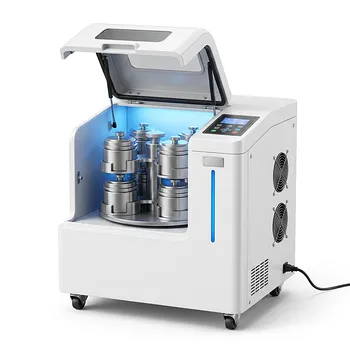
High Energy Omnidirectional Planetary Ball Mill 20L

Vertical Square Planetary Ball Mill for Laboratory Sample Preparation and Nanoscale Grinding
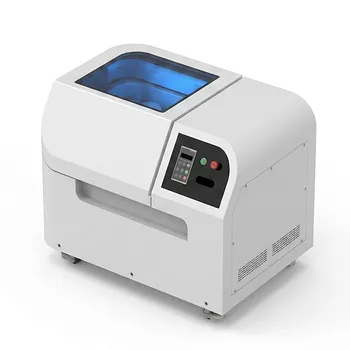
8L Planetary Ball Mill for Laboratory Grinding and Sample Preparation

Miniature Planetary Ball Mill with Vacuum Grinding and High Efficiency for Laboratory Sample Preparation

Vertical Production Planetary Ball Mill for High Throughput Powder Processing
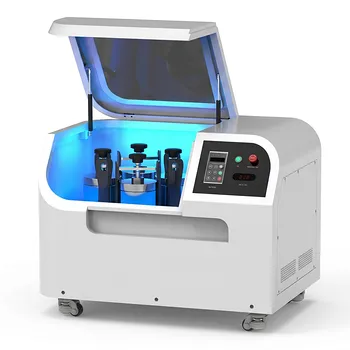
Planetary Ball Mill 12L
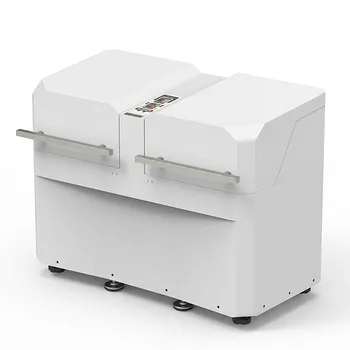
Dual Station Planetary Ball Mill 24L

Heavy Duty Horizontal Planetary Ball Mill for Efficient Industrial Grinding and Sample Preparation
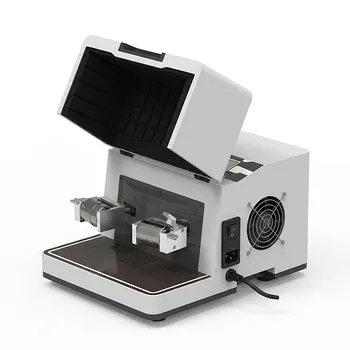
High Energy Hybrid Vibratory Ball Mill for Grinding Mixing and Cell Disruption
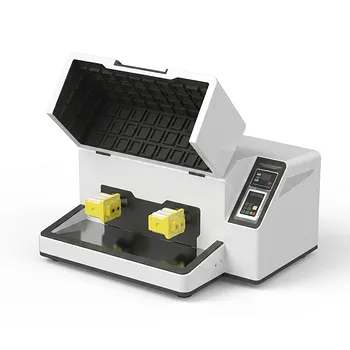
Multi-Platform Nanoscale High-Energy Vibratory Ball Mill
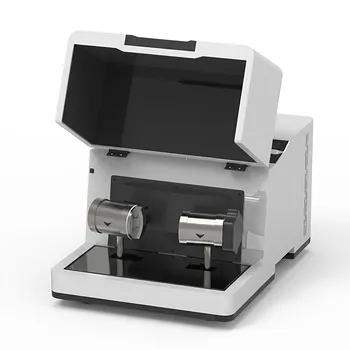
Ultra-Low Temperature Cryogenic High-Energy Vibratory Ball Mill

Nano High Energy Vibratory Ball Mill with Heating and Temperature Control
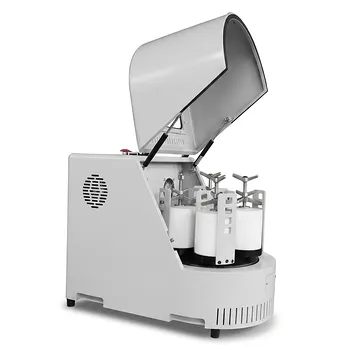
Vertical Semi Circular Planetary Ball Mill for Laboratory Precision Grinding
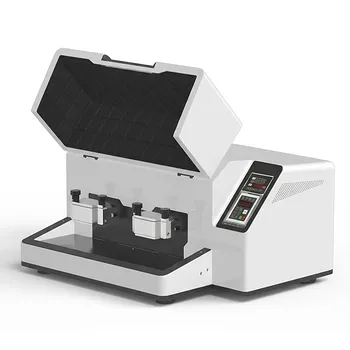
Nanoscale High-Energy Vibratory Ball Mill for Laboratory Sample Preparation, Mechanochemistry, and Mechanical Alloying