What function does the rotating disc perform in a high-speed centrifugal mixer? Master Kinetic Energy for Mixing.
Updated 5 months ago
The rotating disc serves as the primary kinetic engine of a high-speed centrifugal mixer. It uses surface friction to convert mechanical energy into powerful centrifugal force, accelerating material particles toward the outer edges of the disc in under two seconds. This rapid displacement ensures immediate spatial dispersion and creates the high-energy environment required for uniform blending, pulverization, and moisture integration.
The rotating disc is the central mechanism for energy transfer, utilizing high-speed radial acceleration to homogenize materials of varying densities while simultaneously preventing vessel scaling and facilitating rapid discharge.
Transforming Kinetic Energy into Material Motion
Generating Centrifugal Force
The disc uses friction between its surface and the raw materials to generate centrifugal force. This force ejects particles toward the inner walls of the mixing vessel at high velocities.
This initial movement is critical for spatial dispersion, ensuring that the material is not clumped but spread thinly across the mixing zone.
Overcoming Material Segregation
By forcing particles to accelerate rapidly, the disc causes materials of different densities to cross trajectories.
This exchange of positions within the flow channel effectively breaks down segregation phenomena. Without this high-speed displacement, heavier particles would settle, preventing a truly homogeneous mix.
Multi-Stage Material Processing
Facilitating Moisture Integration
The dispersion created by the disc ensures that powder particles come into thorough contact with injected moisture.
By thinning the material flow as it moves toward the vessel walls, the disc maximizes the surface area available for liquid absorption. This leads to more consistent hydration and prevents the formation of "dry pockets" within the mixture.
Impact and Pulverization
In industrial-grade configurations, the disc may be perforated or equipped with fixed pins.
As particles pass through these pins at high speeds, they are cut and impacted by the edges of the rotating disc. This provides the necessary energy for refining coarse components and achieving deep mixing simultaneously.
Secondary Operational Functions
Self-Cleaning and Wall Scraping
Mixing blades installed on the disc perform mechanical scraping of the vessel's inner walls.
This constant motion prevents material from adhering to the surfaces, which reduces scale buildup and maintains consistent thermal transfer. It also ensures that 100% of the batch remains part of the active mixing process.
Automated Material Discharge
Once the mixing cycle is complete, the disc uses its rotational kinetic energy to drive the finished product toward the discharge port.
This creates a "self-pumping" effect that empties the vessel quickly. This efficiency reduces downtime between batches and minimizes manual intervention.
Understanding the Trade-offs and Pitfalls
The Risk of Back-Mixing
While higher speeds generally increase mixing intensity, an imbalance between rotor speed and load can be detrimental.
If the speed is excessively high relative to a low material load, it can cause back-mixing. This degrades the quality of the blend by disrupting the intended spiral motion trajectory.
Mechanical Wear and Heat Generation
The high-friction environment required for centrifugal acceleration naturally leads to component wear.
Furthermore, the intense mechanical energy transferred to the particles can generate significant heat. For heat-sensitive materials, precise regulation of the rotor speed is required to prevent thermal degradation.
Optimizing the Mixer for Your Process
Effective use of a high-speed centrifugal mixer requires aligning the disc's rotational speed with your specific material characteristics.
- If your primary focus is deagglomeration of fine powders: Utilize a perforated disc with high-speed pins to maximize impact energy and refinement.
- If your primary focus is blending materials with vast density differences: Prioritize high radial acceleration to ensure trajectories cross frequently enough to prevent settling.
- If your primary focus is moisture-sensitive granulation: Focus on precise speed regulation to ensure the disc creates a thin enough material "curtain" for even liquid distribution.
By mastering the rotational dynamics of the disc, you can achieve a level of homogeneity and processing speed that traditional mixing methods cannot match.
Summary Table:
| Function | Description | Key Benefit |
|---|---|---|
| Force Generation | Converts friction into centrifugal force | Rapid spatial dispersion in <2 seconds |
| Homogenization | Forces particles to cross trajectories | Prevents density-based segregation |
| Moisture Integration | Thins material flow for liquid contact | Ensures uniform hydration; no dry pockets |
| Pulverization | Impact via perforated or pinned surfaces | Component refinement and deep mixing |
| Maintenance | Scrapes walls and drives discharge | Reduces scaling and minimizes downtime |
Elevate Your Material Processing with Professional Solutions
Achieve unparalleled homogeneity and processing speed with our advanced powder technology. [Brand Name] provides complete laboratory sample preparation solutions for material science, specializing in high-performance powder processing and compaction equipment.
Our extensive line includes everything you need for superior results:
- Mixing & De-aeration: High-speed centrifugal mixers and defoaming mixers.
- Size Reduction: Crushers, liquid nitrogen cryogenic grinders, and high-energy mills (planetary, jet, and rotor).
- Classification: Vibratory and air-jet sieve shakers.
- Compaction: A full spectrum of hydraulic presses, including Cold/Warm Isostatic Presses (CIP/WIP), vacuum hot presses, and XRF pellet presses.
Whether you are refining fine powders or managing moisture-sensitive granulation, our expertise ensures your lab achieves maximum efficiency. Contact our experts today to discuss your specific application and find the perfect equipment configuration for your workflow!
References
- Hongjun Li, Ying Zuo. Research and Optimization Design of Mixing Characteristics of High-speed Centrifugal Mixer Based on DEM. DOI: 10.1088/1742-6596/2095/1/012071
Mentioned Products
- Stainless Steel Rotary Vibrating Sieve High Precision Circular Vibratory Separator Industrial Powder Grading Machine Multi Layer Sifting Equipment
- High Speed Vibratory Disc Mill for Spectral Analysis Sample Preparation and Rapid Powder Grinding
- Vibratory Disc Mill for Rapid Fine Grinding and High Throughput Sample Preparation of Hard and Brittle Materials
- 360° Rotating Omnidirectional Laboratory Planetary Ball Mill for Homogeneous Ultra-Fine Grinding and Mixing
- Ordinary Type Rotary Tablet Press for Pharmaceutical Chemical Food Electronic Industries
People Also Ask
- What is the significance of high-precision vibratory sieve machines for SMA? Optimize Aggregate Gradation & Durability
- What is the role of a laboratory-grade high-precision sieve in CPC-PCL? Ensure uniform powder distribution and stability.
- Why is high-precision sieving equipment necessary for aviation-grade composites? Optimize Fiber Strength & Consistency
- What is the function of high-precision vibratory sieve shakers in the analysis of brown rice particle size distribution?
- Why is a high-precision vibratory sieve shaker necessary for wood-polystyrene particles? Maximize composite strength.

Tech Team · PowderPreparation
Last updated on May 14, 2026
Related Products
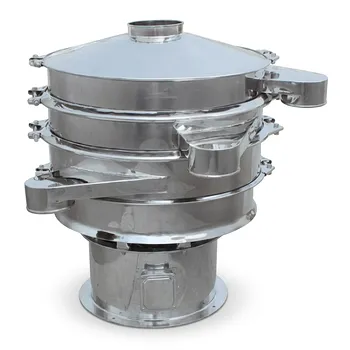
Stainless Steel Rotary Vibrating Sieve High Precision Circular Vibratory Separator Industrial Powder Grading Machine Multi Layer Sifting Equipment
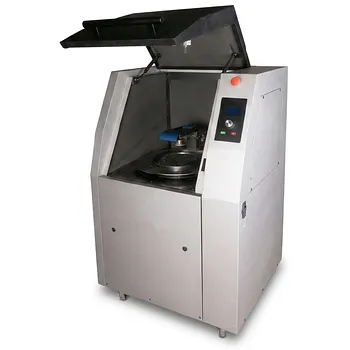
High Speed Vibratory Disc Mill for Spectral Analysis Sample Preparation and Rapid Powder Grinding
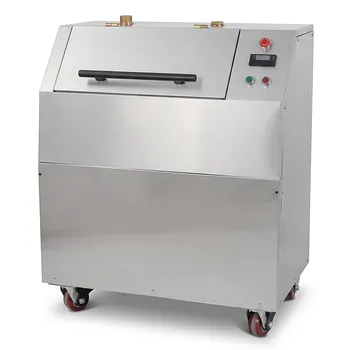
Vibratory Disc Mill for Rapid Fine Grinding and High Throughput Sample Preparation of Hard and Brittle Materials
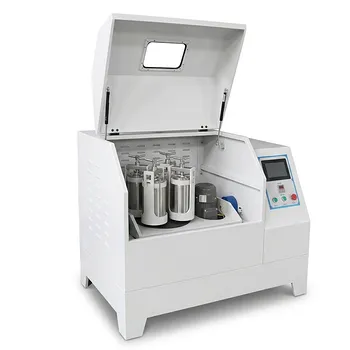
360° Rotating Omnidirectional Laboratory Planetary Ball Mill for Homogeneous Ultra-Fine Grinding and Mixing
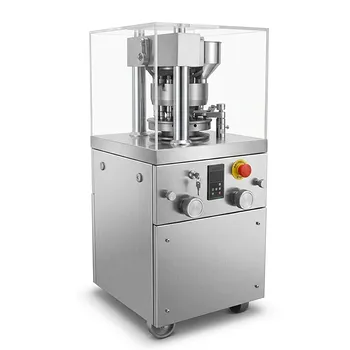
Ordinary Type Rotary Tablet Press for Pharmaceutical Chemical Food Electronic Industries
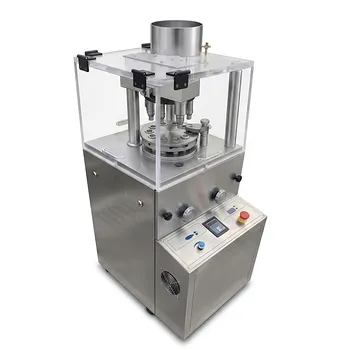
Enhanced 9 Punch Rotary Tablet Press for Powder Compaction
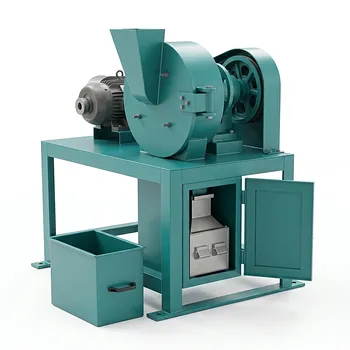
Sealed Disc Pulverizer Customized Model
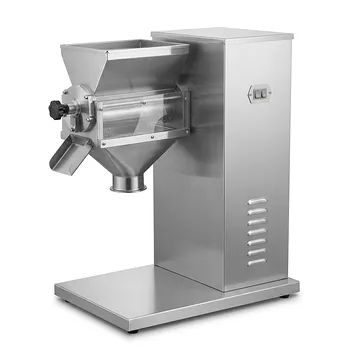
Small Swing Granulator Efficient Powder Granulation for Pharmaceutical Chemical Food Industries
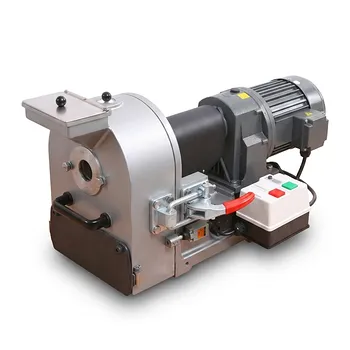
Laboratory Disc Mill for Fine Sample Preparation of Hard and Brittle Materials
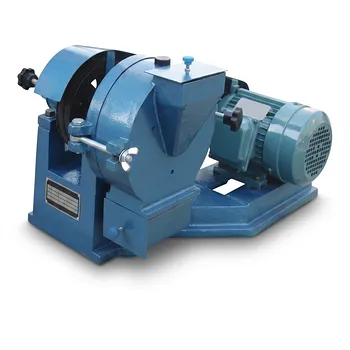
Laboratory Disc Mill for Ore and Mineral Sample Preparation