What critical physical conditions does a hydraulic hot press provide during the molding of hybrid bio-composites? Key Roles
Updated 5 months ago
The molding of hybrid bio-composites relies on the precise application of thermal and mechanical energy. A hydraulic hot press provides a simultaneous environment of constant, high-temperature heat and stable mechanical pressure. These two conditions work in tandem to melt the polymer matrix for fiber encapsulation while densifying the material to eliminate internal structural defects.
The core function of a hydraulic hot press is to create a controlled "thermo-mechanical coupling" that ensures the polymer matrix fully impregnates the biomass filler, resulting in a dense, bubble-free composite with high interfacial bonding strength.
Thermal Regulation: Facilitating Matrix Flow and Chemical Bonding
Phase Transition and Matrix Encapsulation
The heating system raises the temperature—often between 160°C and 210°C—to reach the melting point of the thermoplastic matrix, such as PLA or polypropylene. Once molten, the polymer achieves the necessary fluidity to flow into the interstitial spaces of the biomass fibers, effectively encapsulating the reinforcement phase.
Activation of Chemical Cross-Linking
In systems using bio-binders or thermosetting resins like epoxy, the controlled heat induces essential cross-linking reactions. This thermal energy triggers the bonding of polysaccharides and hemicellulose, which is fundamental to the final material's compressive strength and toughness.
Volatile and Moisture Elimination
High temperatures assist in the removal of residual air and excess moisture trapped within the biomass fillers. By driving out these volatiles during the liquid phase of the matrix, the press prevents the formation of internal steam pockets that could compromise structural integrity.
Mechanical Pressure: Achieving Structural Density and Precision
Elimination of Voids and Porosity
The hydraulic system applies a stable load, such as 25 kN or up to 12 MPa, to compress the mixture within the mold. This mechanical force is critical for excluding air bubbles and reducing porosity, ensuring the resin fully occupies all voids between biomass particles or fiber layers.
Enhancement of Interfacial Bonding
Pressure forces the molten matrix into intimate contact with the fiber surfaces, maximizing the interfacial bonding strength. This compaction eliminates internal density gradients, creating a homogenous material that can efficiently transfer mechanical loads between the matrix and the fibers.
Dimensional Stability and Standardization
By maintaining constant pressure during the cooling or curing phase, the press ensures the composite achieves high dimensional stability. This is vital for producing standardized specimens, such as dumbbell-shaped plates, required for rigorous mechanical property testing.
Understanding the Trade-offs
Thermal Degradation of Bio-Fibers
While high temperatures are necessary for matrix flow, excessive heat can lead to the thermal degradation of natural fibers. Overheating may weaken the organic components of the bio-composite, leading to discoloration and a significant loss in tensile strength.
Excessive Pressure and Fiber Damage
Applying pressure beyond the material's threshold can result in fiber crushing or shearing, particularly with delicate natural fibers. Finding the balance between high density and fiber preservation is the most challenging aspect of the molding process.
Optimizing the Molding Process for Your Objectives
To achieve the best results with hybrid bio-composites, your pressing parameters must align with your specific material requirements.
- If your primary focus is Maximum Mechanical Strength: Prioritize higher pressure settings and extended dwell times to ensure the absolute elimination of internal voids and the strongest possible interfacial bond.
- If your primary focus is Bio-Fiber Integrity: Maintain the lowest possible temperature required for matrix melting to prevent the thermal breakdown of the biomass filler.
- If your primary focus is Dimensional Precision: Ensure the hydraulic system maintains a constant, unwavering pressure during the entire cooling cycle to prevent warping and internal stress.
Mastering the balance of heat and pressure transforms a loose mixture of fibers and plastic into a sophisticated, high-performance engineering material.
Summary Table:
| Condition | Key Function | Impact on Bio-Composite |
|---|---|---|
| Thermal Energy | Melts matrix & triggers cross-linking | Ensures fiber encapsulation & chemical bonding |
| Mechanical Pressure | Compresses mixture & eliminates voids | Maximizes structural density & interfacial strength |
| Moisture Removal | Drives out volatiles/steam pockets | Prevents internal defects and porosity |
| Cooling Stability | Maintains load during solidification | Ensures dimensional precision & reduces warping |
Elevate Your Material Research with Precision Engineering
At KinTek, we provide complete laboratory sample preparation solutions for material science, specializing in high-performance powder processing and compaction equipment. Whether you are developing advanced hybrid bio-composites or testing industrial ceramics, our equipment ensures the repeatability and precision your research demands.
Our extensive product range includes:
- Hydraulic Presses: A full spectrum featuring Hot Presses, Vacuum Hot Presses, Standard Lab Presses, and Cold/Warm Isostatic Presses (CIP/WIP).
- Milling & Grinding: Planetary ball mills, jet mills, and liquid nitrogen cryogenic grinders for ultra-fine particle sizes.
- Processing Tools: Jaw/roll crushers, sieve shakers, and high-efficiency powder or defoaming mixers.
Ready to optimize your molding process? Our experts are here to help you select the ideal pressure and thermal configurations for your specific biomass fillers and polymer matrices.
Contact KinTek Today to Request a Quote
References
- Farhana Afroz, M. A. Gafur. Synthesis of Hybrid Composites from Bio-Based Fillers: Chicken Feather, Groundnut Shell, Sawdust. DOI: 10.37934/mjcsm.13.1.126135
Mentioned Products
- Hydraulic Double Shaft Disperser for High Viscosity Liquid Mixing and Dispersion
- 5 Ton Single Punch Tablet Press Laboratory Small Batch Production
- 6 Ton Variable Frequency Single Punch Tablet Press
- 6-Ton Small Single-Punch Tablet Press — Laboratory Powder & Granule Tableting Equipment / Tablet Forming Machine
- Ordinary Type Rotary Tablet Press for Pharmaceutical Chemical Food Electronic Industries
People Also Ask
- Why is it necessary for an industrial hydraulic press to provide high unit pressure when preparing MMC green bodies? Optimize Densification
- What role does high-speed mixing play in photoanode slurry prep? Optimize Nanoparticle Dispersion for Solar Efficiency
- What are the advantages of a customized dual-blade mixer? High-Shear Mixing for High-Viscosity Pastes
- How does high-precision mixing ensure phase stability in BaO–MgO–ZrO2 ceramics? Achieve Pure Dielectric Performance
- What is the function of high-efficiency mixing and defoaming equipment in catalyst systems? Achieve Molecular Uniformity

Tech Team · PowderPreparation
Last updated on May 14, 2026
Related Products
Hydraulic Double Shaft Disperser for High Viscosity Liquid Mixing and Dispersion
5 Ton Single Punch Tablet Press Laboratory Small Batch Production
6 Ton Variable Frequency Single Punch Tablet Press
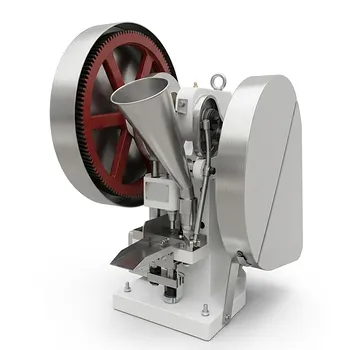
6-Ton Small Single-Punch Tablet Press — Laboratory Powder & Granule Tableting Equipment / Tablet Forming Machine
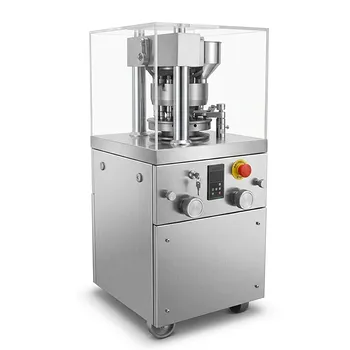
Ordinary Type Rotary Tablet Press for Pharmaceutical Chemical Food Electronic Industries