What core environmental conditions do vacuum hot presses provide? Optimize Diamond and Hard Carbon Synthesis
Updated 4 months ago
Vacuum hot presses facilitate carbon transformation by providing a synchronized environment of high axial pressure, extreme temperatures, and a controlled vacuum. This combination provides the thermodynamic energy required to overcome Van der Waals forces in graphite, allowing atoms to rearrange into dense, sp3-hybridized structures like diamond or bct-carbon. Crucially, the vacuum protects the carbon from oxidative loss and chemical degradation during these high-energy transitions.
Core Takeaway: A vacuum hot press enables phase transformations in carbon by simultaneously applying mechanical force and thermal energy to restructure atomic lattices while isolating the material from atmospheric contaminants that would otherwise cause oxidation or impurity defects.
The Thermodynamic Drivers of Phase Transformation
High Axial Pressure for Atomic Rearrangement
The press applies high axial pressure to physically force the carbon atoms into a denser configuration. This mechanical energy is necessary to drive the transition from the layered sp2 structure of graphite to the three-dimensional sp3 structure of diamond or other hard allotropes.
Extreme Thermal Energy
High temperatures are applied simultaneously with pressure to provide the energy needed to break existing atomic bonds. By weakening the Van der Waals forces between graphite layers, the heat allows the carbon atoms to become mobile enough to shift into new, high-density crystalline structures.
Preventing Volatile Expansion
In materials like graphene oxide, continuous pressure inhibits the expansion of layers that would otherwise be caused by gas release during reduction. This containment is essential for creating isotropic, high-hardness structures like graphenic glass rather than loose, expanded flakes.
The Critical Role of the Vacuum Environment
Elimination of Atmospheric Contaminants
The vacuum removes oxygen, nitrogen, and water vapor from the chamber. This is vital because carbon materials are highly susceptible to oxidative loss and decarburization when heated to the extreme temperatures required for transformation.
Surface Film Prevention
By removing atmospheric gases, the vacuum prevents the formation of surface films on carbon particles. These films would otherwise act as barriers, impeding the bonding and diffusion processes necessary for full material densification.
Evacuation of Volatile Impurities
The vacuum environment facilitates the outgassing of volatile impurities and reaction by-products. This leads to significantly higher material purity in the final hard carbon allotrope and can even allow for lower sintering temperatures by removing inhibitors to particle rearrangement.
Achieving Structural Integrity and Density
Forced Densification and Low Porosity
The dual action of heat and pressure in a vacuum promotes rapid particle rearrangement and diffusion. This process effectively eliminates internal voids, resulting in advanced materials with extremely low residual porosity.
Control Over Microstructure
Because the environment is tightly controlled, researchers can produce isotropic structures that lack long-range ordered alignment. This is a key requirement for creating glassy carbon and other amorphous hard carbon structures that possess high wear resistance.
Understanding the Trade-offs
Axial vs. Isostatic Pressure
Vacuum hot presses primarily apply axial (one-dimensional) pressure, which can lead to slight density gradients in very large or complex samples. For perfectly uniform density in all directions, hot isostatic pressing (HIP) is often used, though it is significantly more complex and expensive.
Cooling Rates and Thermal Stress
The high temperatures required for diamond transformation can lead to thermal stress during the cooling phase. If the vacuum environment and temperature are not ramped down with precision, the newly formed hard carbon structures may crack due to internal tension.
Equipment Limitations
Achieving the extreme pressures required for large-scale synthetic diamond production often exceeds the capabilities of standard laboratory vacuum hot presses. These machines are typically optimized for phase transformation research and high-density coatings rather than industrial diamond mass production.
How to Apply This to Your Research
Making the Right Choice for Your Goal
- If your primary focus is maximum material purity: Prioritize a press with a high-ultimate vacuum capability to ensure all volatile impurities and reactive gases are removed before heating.
- If your primary focus is achieving sp3 hybridization (Diamond-like carbon): Focus on the synchronization of the pressure and temperature ramps to ensure the carbon lattice reaches the transition threshold without burning.
- If your primary focus is creating wear-resistant coatings: Utilize the vacuum's ability to prevent surface films, which ensures superior adhesion and density in the final bulk material or target.
The vacuum hot press remains the definitive tool for carbon research by providing the precise, high-energy conditions required to redefine the atomic structure of carbon.
Summary Table:
| Condition | Primary Function | Benefit for Carbon Transformation |
|---|---|---|
| High Axial Pressure | Forces atomic rearrangement | Facilitates sp3 hybridization (Diamond-like) |
| Extreme Heat | Breaks Van der Waals forces | Enables carbon atom mobility and bond shifting |
| Controlled Vacuum | Removes oxygen and nitrogen | Prevents oxidation and decarburization |
| Outgassing | Eliminates volatile impurities | Ensures high material purity and low porosity |
| Thermal Precision | Controlled cooling cycles | Reduces internal tension and structural cracking |
Elevate Your Material Research with Precision Engineering
At [Insert Brand Name], we provide complete laboratory sample preparation solutions tailored for the demanding needs of material science. Whether you are researching carbon phase transformations or developing high-performance ceramics, our equipment is designed to deliver consistent, high-purity results.
Our extensive product line includes:
- Advanced Milling & Grinding: Planetary ball mills, jet mills, liquid nitrogen cryogenic grinders, and disc/rotor mills.
- Sieving & Mixing: Vibratory and air-jet sieve shakers, alongside high-efficiency powder and defoaming mixers.
- Comprehensive Pressing Solutions: Standard lab presses, XRF pellet presses, and advanced Cold/Warm Isostatic Presses (CIP/WIP).
- Thermal Processing: Specialized hot presses and Vacuum Hot Presses for high-energy atomic restructuring.
Ready to achieve superior structural integrity in your samples? Contact our technical experts today to discuss how our powder processing and compaction equipment can accelerate your research goals.
References
- D. M. Stefanescu, Ramón Suárez. Recent Developments in Understanding Nucleation and Crystallization of Spheroidal Graphite in Iron-Carbon-Silicon Alloys. DOI: 10.3390/met10020221
Mentioned Products
- Dual Cup Vacuum Centrifugal Mixer Planetary Paste Defoaming Machine Industrial Material Processor
- 非介入式材料均质机真空脱泡行星搅拌高粘度混合设备
- High Speed Vacuum Planetary Centrifugal Mixer and Defoamer for Industrial Paste Processing
- High Efficiency Vacuum Planetary Centrifugal Mixer and Defoaming Machine for Industrial Material Research and Precise Laboratory Powder Dispersion
- Industrial Vacuum Kneader for High-Viscosity Silicone, Rubber, and Compound Mixing
People Also Ask
- Why is a vacuum centrifugal defoaming mixer required to process ceramic slurry before 3D printing? Ensure High Density
- Why is a vacuum centrifugal de-foaming mixer required before DIW of PZT ink? Achieve Dense, Bubble-Free Piezo Ceramics
- What are the advantages of centrifugal defoaming mixers for recycled slurries? Achieve Superior Electrode Quality
- Why is centrifugal defoaming necessary for magnetic composite inks? Ensure Void-Free Extrusion for 3D Printing
- Why is vacuum defoaming necessary for PDMS mixtures before microwave irradiation curing? Key to Structural Integrity

Tech Team · PowderPreparation
Last updated on Jun 03, 2026
Related Products
Dual Cup Vacuum Centrifugal Mixer Planetary Paste Defoaming Machine Industrial Material Processor
非介入式材料均质机真空脱泡行星搅拌高粘度混合设备
High Speed Vacuum Planetary Centrifugal Mixer and Defoamer for Industrial Paste Processing
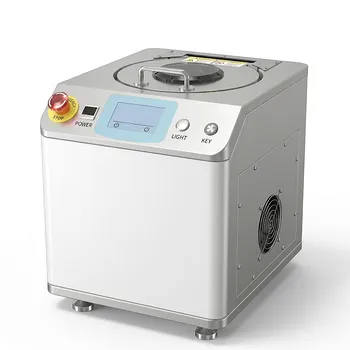
High Efficiency Vacuum Planetary Centrifugal Mixer and Defoaming Machine for Industrial Material Research and Precise Laboratory Powder Dispersion
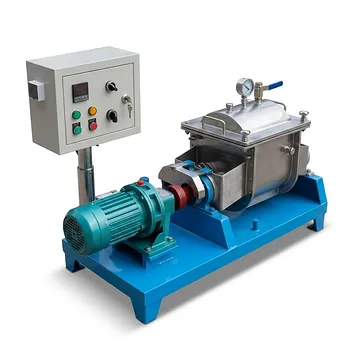
Industrial Vacuum Kneader for High-Viscosity Silicone, Rubber, and Compound Mixing
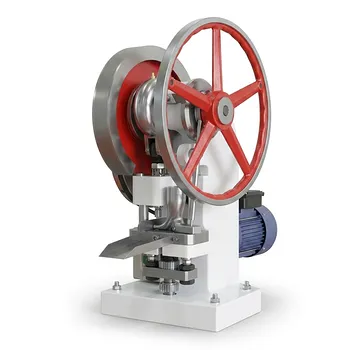
5 Ton Single Punch Tablet Press Laboratory Small Batch Production
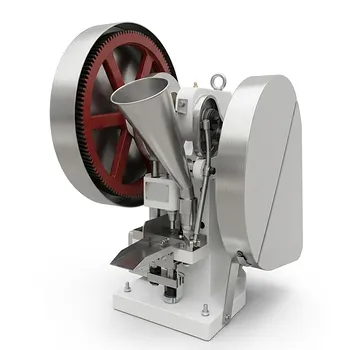
6-Ton Small Single-Punch Tablet Press — Laboratory Powder & Granule Tableting Equipment / Tablet Forming Machine
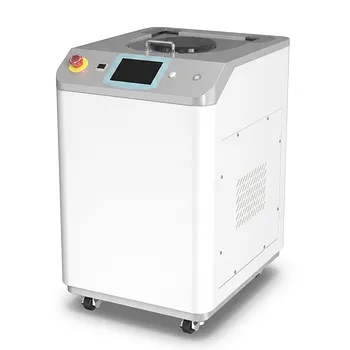
High Viscosity Planetary Centrifugal Mixing and Vacuum Defoaming Machine for Laboratory Material Preparation
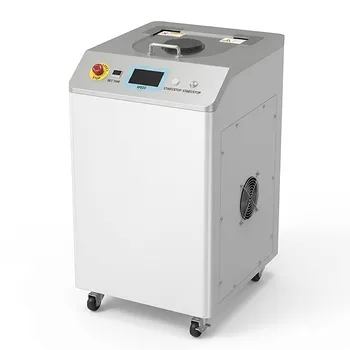
High Viscosity Planetary Centrifugal Vacuum Mixer for Material Defoaming and Uniform Mixing
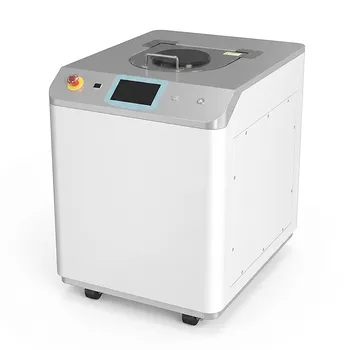
Industrial Planetary Centrifugal Vacuum Defoaming Mixer for High Viscosity Paste and Advanced Material Science
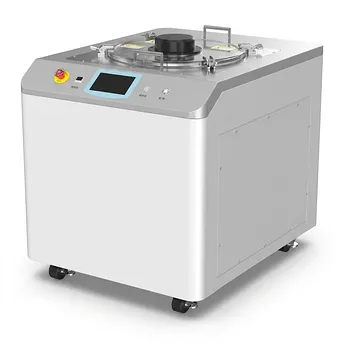
Industrial Planetary Centrifugal Vacuum Defoaming Mixer for High Viscosity Paste and Powder Homogenization
6 Ton Variable Frequency Single Punch Tablet Press