Advantages of Vacuum Hot Press vs. Pressureless Sintering for Silicon Nitride? Achieve 99%+ Density
Updated 5 months ago
The core advantage of vacuum hot pressing is the simultaneous application of axial pressure and heat. This thermo-mechanical coupling provides a mechanical driving force that overcomes the inherently low self-diffusion coefficients of covalent materials like silicon nitride. By using external pressure, manufacturers can achieve near-theoretical density at lower temperatures and with significantly fewer additives than pressureless sintering requires.
Core Takeaway: Vacuum hot pressing (VHP) enables the production of high-density silicon nitride with superior mechanical properties by using mechanical pressure to accelerate densification while inhibiting the grain growth and oxidation that typically degrade performance in pressureless methods.
Overcoming Diffusion Barriers in Covalent Materials
The Mechanical Driving Force
Covalent materials like silicon nitride ($Si_3N_4$) possess extremely low self-diffusion coefficients, making them resistant to densification via thermal energy alone. A vacuum hot press applies uniaxial axial pressure (often 20–40 MPa) during the heating cycle, which forces particle rearrangement and accelerates mass transfer. This external force acts as a powerful supplement to surface tension, bridging the gap that thermal energy cannot close.
Lowering Sintering Temperatures
Because the mechanical pressure assists the densification process, the required sintering temperature is significantly reduced compared to pressureless methods. Processing at lower temperatures (e.g., 1800°C) prevents the material from reaching points of excessive thermal degradation or volatile loss of sintering aids. This thermal efficiency preserves the inherent mechanical integrity of the ceramic matrix.
Accelerating Phase Transformation
In silicon nitride processing, the transformation from the alpha-phase ($\alpha-Si_3N_4$) to the beta-phase ($\beta-Si_3N_4$) is critical for developing a tough, interlocking microstructure. The coupling of heat and pressure in a hot press facilitates the liquid phase of sintering additives more effectively, allowing it to fill pores and promote this phase change. This results in a material with higher fracture toughness and structural stability.
Enhancing Microstructural Integrity
Inhibiting Grain Growth
One of the primary failures of pressureless sintering is the "coarsening" of grains due to long soak times at high temperatures. Vacuum hot pressing utilizes shorter cycle times and lower temperatures to achieve full densification, which effectively inhibits grain growth. This preserves a fine-grained microstructure, which is essential for maintaining high strength and hardness.
Achieving Superior Density
Pressureless sintering often struggles to reach the final stages of densification, frequently leaving residual porosity that acts as a stress concentrator. Vacuum hot pressing consistently achieves relative densities exceeding 98–99%. This level of densification is vital for applications requiring high thermal conductivity, electrical insulation, or optical clarity.
Precise Atmospheric Control
The vacuum environment or controlled nitrogen atmosphere within the hot press prevents the oxidation of the silicon nitride at high temperatures. By removing oxygen and moisture, the system ensures that the chemical purity of the ceramic remains uncompromised. This is particularly important for maintaining high-temperature mechanical properties and chemical resistance.
Understanding the Trade-offs
Geometry and Complexity
The most significant limitation of hot pressing is its uniaxial nature, which restricts the production of complex, "near-net" shapes. Because the pressure is applied in a single direction within a mold, the process is generally limited to simple geometries like plates, discs, or cylinders. Complex parts often require extensive diamond machining after sintering, which increases production costs.
Throughput and Scalability
Hot pressing is typically a batch process with longer setup times for loading and unloading molds compared to continuous pressureless sintering furnaces. The requirement for specialized tooling, such as high-strength graphite dies, adds to the consumable costs of each run. For high-volume, low-cost components with relaxed density requirements, pressureless sintering may remain the more economical choice.
How to Apply This to Your Project
Making the Right Choice for Your Goal
- If your primary focus is maximum mechanical strength: Choose vacuum hot pressing to achieve the high density and fine grain size necessary for structural reliability.
- If your primary focus is high-temperature stability: Utilize hot pressing to minimize the use of sintering additives, which can form low-melting-point glass phases at grain boundaries.
- If your primary focus is complex part geometry: Consider pressureless sintering or Spark Plasma Sintering (SPS) if the performance requirements allow for slightly higher porosity.
- If your primary focus is material purity: Opt for the vacuum capabilities of a hot press to eliminate oxygen contamination and prevent the formation of unwanted oxides.
By leveraging the thermo-mechanical coupling of a vacuum hot press, you can push the physical limits of silicon nitride to meet the most demanding engineering specifications.
Summary Table:
| Feature | Vacuum Hot Pressing (VHP) | Pressureless Sintering |
|---|---|---|
| Driving Force | Thermal + Axial Mechanical Pressure | Thermal Energy Only |
| Relative Density | Superior (>98–99%) | Lower (Residual Porosity) |
| Grain Structure | Fine (Inhibited Growth) | Coarse (Due to High Temp/Time) |
| Sintering Temp. | Lower/More Efficient | Significantly Higher |
| Atmosphere | Vacuum/Controlled Nitrogen | Ambient or Controlled |
| Shape Complexity | Simple Geometries (Discs/Plates) | Complex/Near-net Shapes |
Elevate Your Advanced Ceramic Processing with KinTek
Achieving near-theoretical density in covalent materials like silicon nitride requires precision engineering. KinTek provides complete laboratory sample preparation solutions for material science, specializing in high-performance powder processing and compaction equipment designed to meet the most rigorous research standards.
Our extensive product range includes:
- Thermal Processing: Advanced Vacuum Hot Presses, standard Hot Presses, and XRF pellet presses for ultimate densification.
- Isostatic Pressing: Cold and Warm Isostatic Presses (CIP/WIP) for uniform material structure.
- Powder Preparation: Precision mills (planetary ball, jet, rotor), jaw/roll crushers, and cryogenic grinders.
- Refinement & Mixing: Sieve shakers (vibratory/air-jet) and high-efficiency powder or defoaming mixers.
Whether you are developing next-generation structural ceramics or high-temperature composites, KinTek delivers the reliability and technical support your lab needs to succeed.
Contact our technical experts today to find your perfect equipment solution!
References
- D. Kolář. Chemical research needed to improve high-temperature processing of advanced ceramic materials (Technical report). DOI: 10.1351/pac200072081425
Mentioned Products
- Dual Cup Vacuum Centrifugal Mixer Planetary Paste Defoaming Machine Industrial Material Processor
- 非介入式材料均质机真空脱泡行星搅拌高粘度混合设备
- High Efficiency Vacuum Planetary Centrifugal Mixer and Defoaming Machine for Industrial Material Research and Precise Laboratory Powder Dispersion
- High Speed Vacuum Planetary Centrifugal Mixer and Defoamer for Industrial Paste Processing
- Industrial Vacuum Kneader for High-Viscosity Silicone, Rubber, and Compound Mixing
People Also Ask
- Why is a vacuum centrifugal defoaming mixer required to process ceramic slurry before 3D printing? Ensure High Density
- Why is a vacuum centrifugal de-foaming mixer required before DIW of PZT ink? Achieve Dense, Bubble-Free Piezo Ceramics
- What are the advantages of centrifugal defoaming mixers for recycled slurries? Achieve Superior Electrode Quality
- Why is centrifugal defoaming necessary for magnetic composite inks? Ensure Void-Free Extrusion for 3D Printing
- Why is vacuum defoaming necessary for PDMS mixtures before microwave irradiation curing? Key to Structural Integrity

Tech Team · PowderPreparation
Last updated on May 14, 2026
Related Products
Dual Cup Vacuum Centrifugal Mixer Planetary Paste Defoaming Machine Industrial Material Processor
非介入式材料均质机真空脱泡行星搅拌高粘度混合设备
High Efficiency Vacuum Planetary Centrifugal Mixer and Defoaming Machine for Industrial Material Research and Precise Laboratory Powder Dispersion
High Speed Vacuum Planetary Centrifugal Mixer and Defoamer for Industrial Paste Processing
Industrial Vacuum Kneader for High-Viscosity Silicone, Rubber, and Compound Mixing
5 Ton Single Punch Tablet Press Laboratory Small Batch Production
6-Ton Small Single-Punch Tablet Press — Laboratory Powder & Granule Tableting Equipment / Tablet Forming Machine
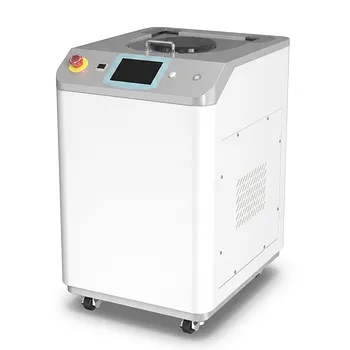
High Viscosity Planetary Centrifugal Mixing and Vacuum Defoaming Machine for Laboratory Material Preparation
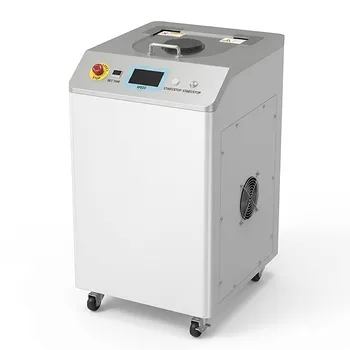
High Viscosity Planetary Centrifugal Vacuum Mixer for Material Defoaming and Uniform Mixing
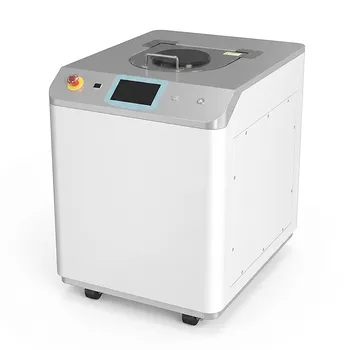
Industrial Planetary Centrifugal Vacuum Defoaming Mixer for High Viscosity Paste and Advanced Material Science
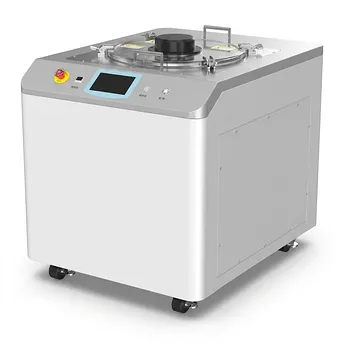
Industrial Planetary Centrifugal Vacuum Defoaming Mixer for High Viscosity Paste and Powder Homogenization
6 Ton Variable Frequency Single Punch Tablet Press