Selecting Stainless Steel Media for Hesperidin Milling: Key Technical Considerations for Amorphization
Updated 5 months ago
Selecting stainless steel grinding media for Hesperidin milling requires a focus on high-density energy transfer and material hardness. These properties are essential to provide the mechanical impact necessary to disrupt Hesperidin’s crystalline structure and achieve a fully amorphous state when mixed with polymer carriers.
The primary technical objective is to utilize the high mass and wear resistance of stainless steel to convert mechanical energy into crystal defect energy, ensuring thorough amorphization and high chemical purity without the introduction of wear-related contaminants.
Optimizing Energy Transfer for Amorphization
The Role of Density and Mass
Stainless steel is selected primarily for its high density, which allows grinding balls to generate significant kinetic energy even at moderate rotational speeds. This mass is critical for providing the powerful physical impact required to break down Hesperidin particles and integrate them into a polymer matrix.
Impact Velocity and Collision Frequency
To achieve complete amorphization, the system must sustain high-frequency collisions (often up to 20 cycles per second or 600 rpm). The mechanical strength of stainless steel ensures that the jars and balls can withstand these intense forces without deforming, effectively driving the solid-state reactions needed for refinement.
Mechanical Energy Conversion
The process relies on converting mechanical impact into crystal defect energy. This energy facilitates the transition of Hesperidin from a crystalline to an amorphous system, a process that requires the consistent, high-intensity energy output that only high-hardness metallic media can provide.
Maintaining Material Purity and Integrity
Wear Resistance and Debris Prevention
High-strength stainless steel is characterized by its excellent wear resistance, which is vital for long-duration milling cycles. By minimizing the production of wear debris, these components ensure the high purity of the Hesperidin system, preventing metallic fragments from compromising the final pharmaceutical or supplemental product.
Ball-to-Material Ratio
A technical standard often employed is a high ball-to-material ratio, such as 10:1. This ratio maximizes the collision surface area and frequency, ensuring that every particle of Hesperidin is subjected to sufficient stress to undergo structural changes within the desired timeframe.
Optimized Ball Diameters
Using a combination of different ball diameters (for example, 15mm and 20mm) can improve milling efficiency. This variation increases the number of contact points and ensures a more uniform distribution of energy throughout the grinding jar, leading to more consistent amorphization.
Thermal and Structural Considerations
Heat Dissipation and Thermal Conductivity
Mechanical milling generates significant heat through friction and impact. Stainless steel offers superior thermal conductivity compared to many ceramic alternatives, helping to dissipate heat and prevent local overheating that could cause unintended phase transitions or degradation of the Hesperidin.
Structural Integrity Under Stress
The use of flat-bottom grinding jars allows for more clearly defined collision dynamics. This structural choice ensures that impact velocities remain predictable and that the mechanical energy is applied efficiently to the powder rather than being lost to inefficient jar geometry.
Understanding the Trade-offs
Potential for Trace Contamination
While stainless steel is highly wear-resistant, it is not invincible. Prolonged milling may still introduce minor iron contamination (often in negligible atomic percentages), which must be monitored if the final product has extremely strict heavy-metal thresholds.
Risk of Localized Overheating
Despite stainless steel's thermal conductivity, high-intensity milling for extended periods (e.g., 20-30 hours) can still lead to heat accumulation. If not managed with pauses or external cooling, this can affect the stability of the Hesperidin-polymer bond or lead to premature aging of the amorphous system.
How to Apply This to Your Project
Recommendations for Implementation
Selecting the right configuration depends on your specific throughput and purity requirements.
- If your primary focus is Maximum Amorphization: Use a high ball-to-powder ratio (10:1) and a mixture of ball sizes to maximize energy density and collision frequency.
- If your primary focus is Chemical Purity: Prioritize high-grade, hardened stainless steel jars to minimize wear debris and consider shorter, high-intensity milling cycles to reduce metallic shedding.
- If your primary focus is Thermal Stability: Utilize the thermal conductivity of stainless steel by implementing interval milling or external cooling jackets to prevent Hesperidin degradation.
By balancing mass, hardness, and thermal management, stainless steel media provides the most reliable foundation for the high-energy processing of Hesperidin.
Summary Table:
| Key Factor | Recommendation | Benefit/Objective |
|---|---|---|
| Material Choice | High-Grade Stainless Steel | Provides high-density impact and excellent wear resistance. |
| Ball-to-Powder Ratio | 10:1 Ratio | Maximizes collision frequency for thorough amorphization. |
| Ball Size Strategy | Mixed Diameters (e.g., 15/20mm) | Increases contact points and ensures uniform energy distribution. |
| Milling Speed | Up to 600 rpm | Generates the mechanical energy needed for crystal defect formation. |
| Thermal Management | Interval Milling / Cooling | Leverages steel's conductivity to prevent heat-induced degradation. |
Elevate Your Material Research with Precision Engineering
Achieving consistent amorphization in Hesperidin requires a perfect balance of mechanical energy and thermal control. At our laboratory division, we specialize in providing complete laboratory sample preparation solutions for material science, ensuring your powder processing is efficient and contaminant-free.
Our extensive product line is designed to meet the rigorous demands of pharmaceutical and material research:
- Advanced Milling: Planetary ball mills, jet mills, liquid nitrogen cryogenic grinders, and rotor mills.
- Powder Processing: High-performance sieve shakers (vibratory/air-jet), powder mixers, and defoaming mixers.
- Compaction Solutions: A full spectrum of hydraulic presses, including Cold/Warm Isostatic Presses (CIP/WIP), vacuum hot presses, and XRF pellet presses.
Ready to optimize your milling protocol? Contact our technical experts today to find the ideal equipment configuration for your specific material requirements and ensure high-purity results every time.
References
- Natalia Rosiak, Judyta Cielecka‐Piontek. Amorphous Solid Dispersion of Hesperidin with Polymer Excipients for Enhanced Apparent Solubility as a More Effective Approach to the Treatment of Civilization Diseases. DOI: 10.3390/ijms232315198
Mentioned Products
- High Speed Laboratory Grinder Efficient Stainless Steel Powder Pulverizer Universal Material Science Mill for Sample Preparation
- Small High-Speed Laboratory Grinder for Powder Processing
- Vertical Square Planetary Ball Mill for Laboratory Sample Preparation and Nanoscale Grinding
- 8L Planetary Ball Mill for Laboratory Grinding and Sample Preparation
- Heavy Duty Horizontal Planetary Ball Mill for Efficient Industrial Grinding and Sample Preparation
People Also Ask
- What role does a laboratory grinder play in the pretreatment of sunflower seed shell-based adsorbents? Boost Efficiency.
- How does a laboratory grinder or mill enhance the adsorption performance of agricultural waste materials? Boost Surface Area
- What is the function of a laboratory high-speed pulverizer in the preparation of eggshell powder? Essential Pretreatment
- What are the technical advantages of using a high-speed laboratory pulverizer for grinding tablets into powders? 20K RPM
- Why must soil samples be ground before XRD or XRF analysis? Ensure Precision & Homogeneity in Lab Results

Tech Team · PowderPreparation
Last updated on May 14, 2026
Related Products
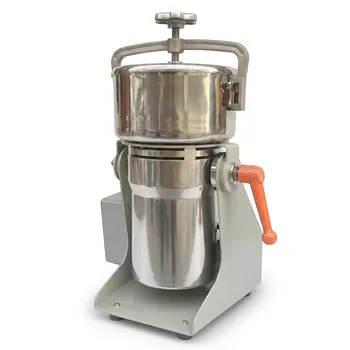
High Speed Laboratory Grinder Efficient Stainless Steel Powder Pulverizer Universal Material Science Mill for Sample Preparation
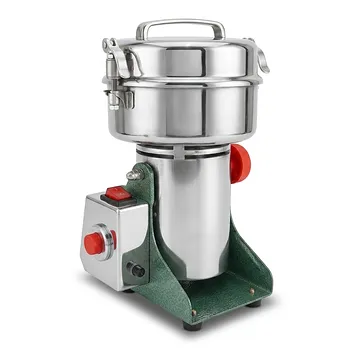
Small High-Speed Laboratory Grinder for Powder Processing

Vertical Square Planetary Ball Mill for Laboratory Sample Preparation and Nanoscale Grinding
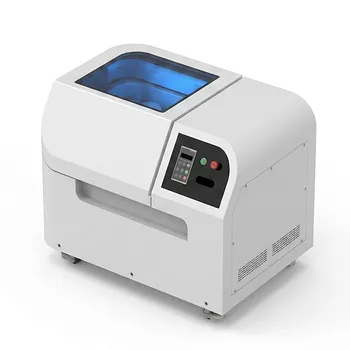
8L Planetary Ball Mill for Laboratory Grinding and Sample Preparation

Heavy Duty Horizontal Planetary Ball Mill for Efficient Industrial Grinding and Sample Preparation

High Energy Omnidirectional Planetary Ball Mill 16L
High Throughput Micro Ball Mill for Cryogenic Grinding and Laboratory Cell Disruption

High Energy Laboratory Planetary Ball Mill for Nano Grinding and Material Science Sample Preparation

Miniature Planetary Ball Mill with Vacuum Grinding and High Efficiency for Laboratory Sample Preparation

360° Rotating Omnidirectional Laboratory Planetary Ball Mill for Homogeneous Ultra-Fine Grinding and Mixing

Vertical Production Planetary Ball Mill for High Throughput Powder Processing

High Energy Planetary Ball Mill for Nano Scale Grinding and Mechanical Alloying
Laboratory Basket Sand Mill for Wet Grinding and Dispersion of Viscous Slurries

High Energy Omnidirectional Planetary Ball Mill 20L
Laboratory Disc Mill for Fine Sample Preparation of Hard and Brittle Materials
Dual Station Planetary Ball Mill 24L