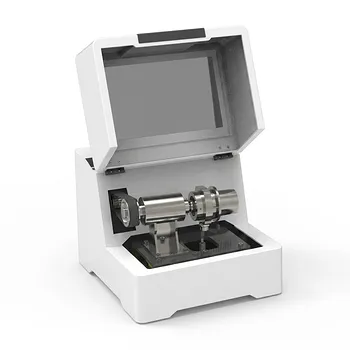
What are the technical advantages of using a planetary ball mill for Meloxicam nanosuspensions? Achieving Nano Precision
Updated 4 months ago
The technical advantages of planetary ball mills lie in their ability to generate extreme energy densities through the synchronized motion of revolution and rotation. Unlike traditional grinding equipment, these mills utilize high-energy impact and shear forces to overcome the drug's lattice energy, consistently achieving sub-micron or nanometer-scale particle sizes.
By leveraging multi-directional centrifugal forces, planetary ball mills achieve a level of particle refinement and uniformity that traditional equipment cannot match. This high-energy environment is essential for creating Meloxicam nanosuspensions with the increased surface area required for rapid dissolution and high bioavailability.
Superior Energy Density and Mechanical Force
Overcoming Crystalline Lattice Energy
The primary advantage of a planetary ball mill is its ability to generate the high dynamic energy required to break down stable crystalline structures. Meloxicam particles possess significant lattice energy that must be overcome to reach the nanometer scale. The combined motion of the grinding jar (rotation) and the supporting disk (revolution) creates intense impact and friction forces that traditional grinders lack.
Multi-Directional Force Application
Traditional equipment often relies on simple gravity or unidirectional rotation, which can lead to "dead zones" in the grinding chamber. In a planetary mill, Coriolis and centrifugal forces act on the grinding media from multiple directions simultaneously. This ensures that every drug particle is subjected to consistent, high-energy collisions, leading to a more efficient pulverization process.
Precision Control of Particle Morphology
Achieving Nanometer-Scale Uniformity
Planetary ball mills are highly effective at producing ultra-fine powders with a narrow particle size distribution. In pharmaceutical applications, achieving a consistent D50 (median particle size) is critical for ensuring predictable drug release profiles. This equipment can refine particles from the micrometer level to well below 200 nm, providing a critical foundation for stable nanosuspensions.
Surface Smoothing and Morphology
The high-energy collision process does more than just break particles; it often induces surface effects that smooth the edges of irregular crystals. This results in a near-spherical morphology, which improves the dispersibility of Meloxicam within the liquid carrier. Spherical particles also tend to exhibit better flow properties and lower viscosity in highly concentrated suspensions.
Process Efficiency and Material Integrity
Advantages of the Wet Grinding Process
When preparing Meloxicam nanosuspensions, the planetary ball mill typically operates in a closed wet system. This approach utilizes solvent assistance to improve grinding efficiency and significantly shortens processing time compared to dry milling. The liquid medium also acts as a heat sink, protecting the drug from thermal degradation during high-energy runs.
Minimal Contamination and High Purity
The use of high-density, wear-resistant grinding media—such as tungsten carbide or zirconia—ensures that the drug remains pure. Because the process is contained within sealed jars, there is zero risk of dust pollution or external contamination. This level of purity is non-negotiable in pharmaceutical manufacturing and X-ray diffraction (XRD) analysis.
Understanding the Trade-offs
Equipment Maintenance and Complexity
The dual-axis mechanical system of a planetary mill is more complex than traditional vibratory or rotary grinders. This complexity requires more rigorous maintenance schedules to ensure the timing between revolution and rotation remains precise. Furthermore, the high energy levels can lead to faster wear of mechanical components if the mill is not operated within its specified parameters.
Scalability Challenges
While planetary ball mills are the "gold standard" for laboratory-scale R&D and small-batch production, scaling to industrial volumes can be difficult. The centrifugal forces required to maintain nano-scale efficiency become harder to manage as jar sizes increase. For massive production volumes, manufacturers must carefully balance the energy density with the cooling requirements of the system.
How to Apply This to Your Project
Recommendations Based on Technical Goals
Selecting the right approach depends on your specific requirements for the Meloxicam formulation.
- If your primary focus is Maximum Dissolution Rate: Utilize a wet-grinding planetary process with small-diameter zirconia media to reach the lowest possible nanometer scale.
- If your primary focus is Analytical Precision: Use the planetary mill to achieve a uniform particle size distribution, which minimizes preferred orientation effects during XRD testing.
- If your primary focus is Thermal Stability: Opt for a high-speed wet milling cycle with intervals to allow the solvent to dissipate heat effectively.
- If your primary focus is Formulation Uniformity: Leverage the multi-directional forces of the planetary mill to eliminate agglomeration and ensure molecular-level mixing of surfactants and stabilizers.
The planetary ball mill represents the most effective technical solution for transforming poorly soluble drugs like Meloxicam into high-performance nanosuspensions.
Summary Table:
| Feature | Planetary Ball Mill | Traditional Grinding Equipment |
|---|---|---|
| Energy Mechanism | Synchronized revolution & rotation (High energy) | Simple gravity or unidirectional rotation |
| Particle Size | Sub-micron & nanometer scale (<200 nm) | Primarily micrometer scale |
| Force Application | Multi-directional (Coriolis & Centrifugal) | Unidirectional (Often results in "dead zones") |
| Morphology | Near-spherical, uniform distribution | Irregular shapes, wider size distribution |
| Efficiency | High; ideal for overcoming lattice energy | Lower; struggles with stable crystalline structures |
| Contamination | Minimal (Sealed jars, wear-resistant media) | Variable; higher risk of dust and external pollution |
Elevate Your Material Science Research with Precision Equipment
Are you looking to achieve superior particle refinement and high bioavailability in your pharmaceutical formulations? [Brand Name] provides complete laboratory sample preparation solutions tailored for material science and powder processing.
From our high-energy planetary ball mills, jet mills, and liquid nitrogen cryogenic grinders to our full spectrum of hydraulic presses (CIP/WIP, hot presses, and XRF pellet presses), we offer the specialized tools you need to overcome crystalline lattice energy and ensure nanometer-scale uniformity. Whether you require crushers, sieve shakers, or advanced powder mixers, our equipment is designed to deliver consistent, high-purity results for your most demanding R&D projects.
Ready to optimize your lab's efficiency? Contact our experts today to find the perfect solution for your powder processing and compaction needs!
References
- Csilla Bartos, Rita Ambrus. Study on the Scale-Up Possibility of a Combined Wet Grinding Technique Intended for Oral Administration of Meloxicam Nanosuspension. DOI: 10.3390/pharmaceutics16121512
Mentioned Products
- Vertical Semi Circular Planetary Ball Mill for Laboratory Precision Grinding
- High Energy Planetary Ball Mill for Nano Scale Grinding and Mechanical Alloying
- Vertical Production Planetary Ball Mill for High Throughput Powder Processing
- Heavy Duty Horizontal Planetary Ball Mill for Efficient Industrial Grinding and Sample Preparation
- 360° Rotating Omnidirectional Laboratory Planetary Ball Mill for Homogeneous Ultra-Fine Grinding and Mixing
People Also Ask
- What role does a planetary ball mill play in the synthesis of Li6PS5Cl (LPSCl)? Unlock High Ionic Conductivity
- Why is a planetary ball mill essential for SiBCN-rGO wet-spinning? Achieve Superior Dispersion and Spinnability
- Why is an intermittent grinding process required for perovskites in a planetary ball mill? Ensure Stability & Purity
- Why is a planetary ball mill required for PET micronization? Ensure Accurate Chemical Analysis of Reprocessed PET
- How does mechanized planetary ball milling compare to manual agate grinding? Optimize sulfide standard material precision.

Tech Team · PowderPreparation
Last updated on May 14, 2026
Related Products
Vertical Semi Circular Planetary Ball Mill for Laboratory Precision Grinding
High Energy Planetary Ball Mill for Nano Scale Grinding and Mechanical Alloying
Vertical Production Planetary Ball Mill for High Throughput Powder Processing
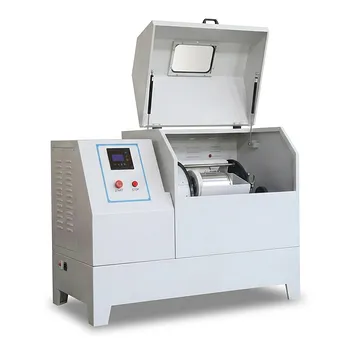
Heavy Duty Horizontal Planetary Ball Mill for Efficient Industrial Grinding and Sample Preparation
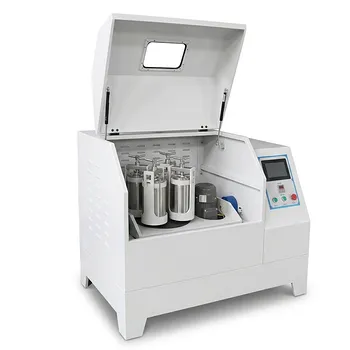
360° Rotating Omnidirectional Laboratory Planetary Ball Mill for Homogeneous Ultra-Fine Grinding and Mixing
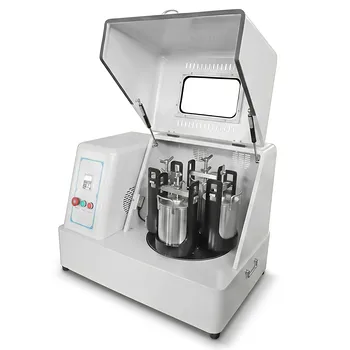
Vertical Square Planetary Ball Mill for Laboratory Sample Preparation and Nanoscale Grinding
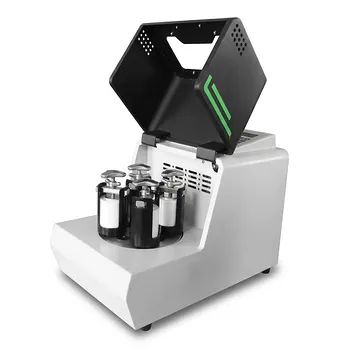
Miniature Planetary Ball Mill with Vacuum Grinding and High Efficiency for Laboratory Sample Preparation
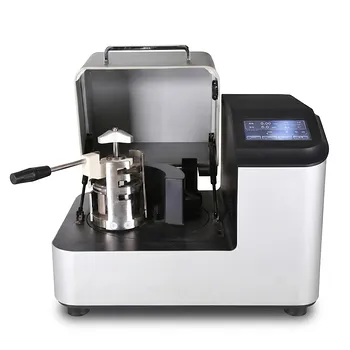
High Energy Laboratory Planetary Ball Mill for Nano Grinding and Material Science Sample Preparation
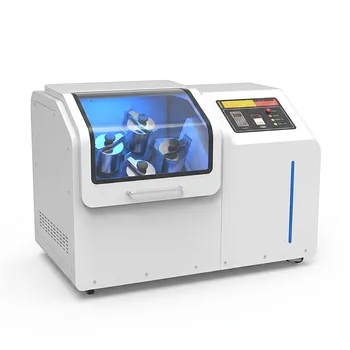
High Energy Omnidirectional Planetary Ball Mill 16L
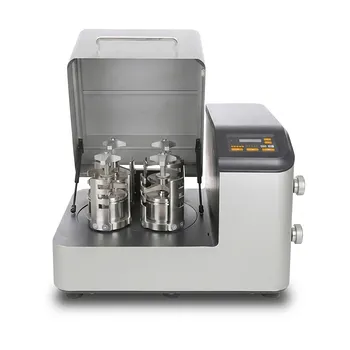
High Energy Planetary Ball Mill for Nano Scale Grinding and Colloidal Mixing in Material Science Research
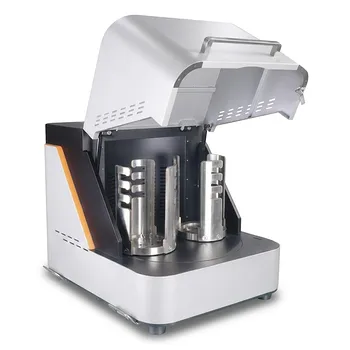
High Energy Laboratory Planetary Ball Mill for Nano Grinding and Colloidal Mixing of Hard and Brittle Materials
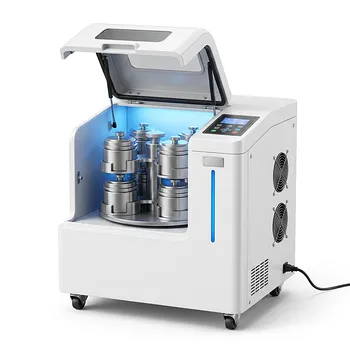
High Energy Omnidirectional Planetary Ball Mill 20L
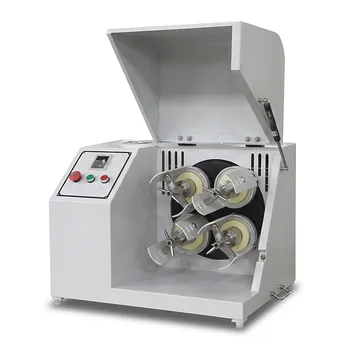
Horizontal Light Duty Planetary Ball Mill for Laboratory Sample Preparation

8L Planetary Ball Mill for Laboratory Grinding and Sample Preparation
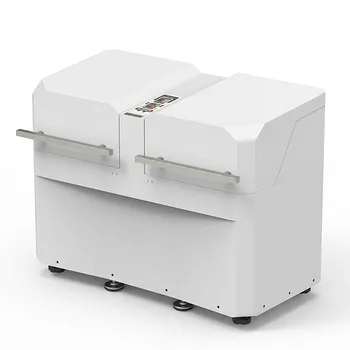
Dual Station Planetary Ball Mill 24L
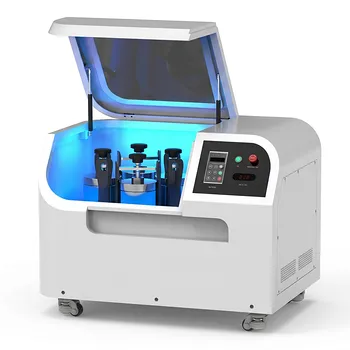
Planetary Ball Mill 12L

Nano High Energy Vibratory Ball Mill for Laboratory Sample Preparation
Multi-Platform Nanoscale High-Energy Vibratory Ball Mill
High Energy Hybrid Vibratory Ball Mill for Grinding Mixing and Cell Disruption