What are the technical advantages of jet milling wheat flour? Elevate Flour Quality with Precision Engineering
Updated 3 months ago
Jet milling fundamentally redefines the physical structure of wheat flour by utilizing supersonic air rather than mechanical blades. This process produces a superfine powder characterized by a narrow particle size distribution, improved water-holding capacity, and superior gelatinization properties. Because it operates at lower temperatures, it also preserves the nutritional integrity and visual brightness of the flour more effectively than traditional grinding.
Jet milling offers a superior alternative to conventional grinding by leveraging particle-on-particle collision to achieve extreme refinement. This results in a more uniform flour that enhances moisture absorption and protects heat-sensitive nutrients, making it ideal for specialized nutritional applications.
Precision Particle Engineering
Supersonic Airflow and Mutual Collision
Unlike conventional mills that rely on mechanical impact with metal blades or stones, jet milling uses high-pressure compressed air to create supersonic streams.
Within the grinding chamber, wheat particles undergo intense mutual collision and friction. This "self-grinding" mechanism ensures that the particles break each other down, rather than being crushed against a foreign surface.
Uniformity and Shape Control
This process results in a narrower and more uniform particle size distribution compared to traditional methods.
Beyond size, the self-grinding action produces more regular particle shapes. This uniformity is a critical technical advantage, as it dictates how the flour will behave during mixing and processing.
Enhanced Functional Properties
Increased Surface Area and Dispersibility
By reducing wheat flour to a superfine state, jet milling significantly increases the specific surface area of the powder.
This increased surface area directly improves the dispersibility and absorption of the flour. When introduced to liquids, the flour integrates more rapidly and thoroughly, reducing the risk of clumping.
Improved Water-Holding and Gelatinization
The refinement of the flour enhances its water-holding capacity, allowing it to retain moisture more effectively during cooking or baking.
Additionally, jet milling improves gelatinization properties. These changes make the resulting flour highly suitable for specialized products, such as those formulated for the unique digestive needs of children and the elderly.
Thermal Stability and Aesthetic Quality
Prevention of Oxidative Degradation
Conventional grinding often generates significant heat through mechanical friction, which can damage the flour. Jet milling features quasi-low-temperature characteristics because the expanding compressed air naturally cools the system.
This cooling effect effectively prevents the oxidative degradation of heat-sensitive components. Specifically, it protects antioxidant elements like total phenols and total flavonoids that are often lost in high-heat environments.
Enhancement of Visual Brightness
Because the flour avoids thermal damage and maintains its chemical integrity, the final powder exhibits enhanced brightness.
This aesthetic improvement is a direct result of preserving the natural pigments and preventing the browning reactions typically associated with the heat of mechanical grinding.
Understanding the Trade-offs
Energy Consumption and Operational Cost
While jet milling provides superior physical properties, it is generally more energy-intensive than conventional hammer or roller mills. The requirement for high-pressure compressed air translates to higher utility costs per ton of processed material.
Potential for Excessive Starch Damage
The high-velocity impacts inherent in jet milling can lead to excessive starch damage if not carefully calibrated. While some starch damage is beneficial for water absorption, too much can negatively affect the structural integrity of certain baked goods.
Equipment Complexity
Jet milling systems are more complex than traditional grinders, requiring specialized maintenance for the air compression and filtration systems. This complexity may necessitate a higher level of technical training for floor operators.
Applying Jet Milling to Your Production Goals
Making the Right Choice for Your Goal
To determine if jet milling is the correct technical path, consider your primary product requirements:
- If your primary focus is nutritional preservation: Jet milling is the ideal choice as its low-temperature operation protects heat-sensitive antioxidants and phenols.
- If your primary focus is specialized textures for sensitive demographics: Utilize jet milling to achieve the superior gelatinization and water-holding capacity required for infant or geriatric nutrition.
- If your primary focus is high-volume, low-cost commodity flour: Conventional grinding remains the more economically viable option due to lower energy requirements and simpler maintenance.
By leveraging the physics of supersonic collision, jet milling transforms wheat flour into a high-performance functional ingredient that exceeds the physical limitations of traditional mechanical grinding.
Summary Table:
| Feature | Jet Milling (Supersonic) | Conventional Grinding (Mechanical) |
|---|---|---|
| Grinding Method | Particle-on-particle collision | Mechanical blades or stones |
| Particle Distribution | Narrow and highly uniform | Broad and irregular |
| Thermal Impact | Quasi-low (prevents oxidation) | High (risk of thermal damage) |
| Nutrient Retention | Preserves phenols & flavonoids | Reduced due to heat/friction |
| Functional Quality | Superior water-holding & brightness | Standard commodity quality |
Optimize Your Material Processing with Our Expert Solutions
At our core, we provide complete laboratory sample preparation solutions for material science, specializing in high-performance powder processing and compaction equipment. Whether you are looking to achieve the extreme refinement of jet milling or require specialized crushers, planetary ball mills, or sieve shakers, we have the expertise to enhance your production quality.
Our extensive product line includes:
- Advanced Milling: Jet mills, planetary ball mills, disc/rotor mills, and liquid nitrogen cryogenic grinders.
- Compaction Excellence: Cold/Warm Isostatic Presses (CIP/WIP), vacuum hot presses, XRF pellet presses, and standard lab presses.
- Sample Refinement: Sieve shakers (vibratory/air-jet), powder mixers, and defoaming mixers.
Ready to elevate your flour processing or material research? Contact our technical experts today to find the perfect equipment configuration tailored to your specific goals.
References
- Erqi Guan, Ke Bian. Ultrafine grinding of wheat flour: Effect of flour/starch granule profiles and particle size distribution on falling number and pasting properties. DOI: 10.1002/fsn3.1431
Mentioned Products
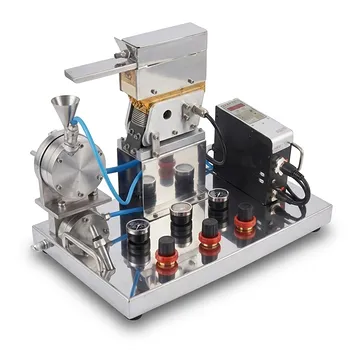
- Benchtop Micro Air Jet Mill for Ultrafine Grinding of High Value Powders
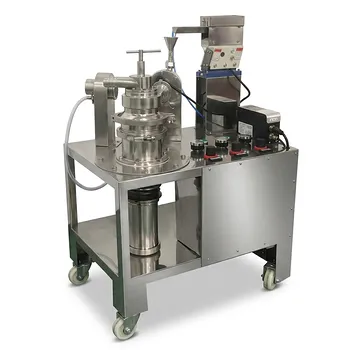
- Laboratory Classification Jet Mill for Ultrafine Powder Grinding
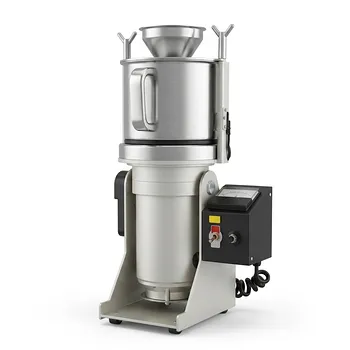
- Water Cooled Pulse Jet Ultra Fine Pulverizer for Continuous Grinding
- Small Airflow Ultra-Fine Grinder for Laboratory Sample Preparation
- Water Cooled Pulse Jet Ultrafine Grinder
People Also Ask
- How does an air-jet mill enhance the performance of Mo2N when used as an electrocatalyst? Optimize Electrode Efficiency
- Why is secondary jet milling necessary for products processed through HME? Achieve Precision for Inhalation Delivery
- Why is a jet mill used for the co-milling of inhalable Itraconazole microparticles? Optimize Pulmonary Drug Delivery
- What are the advantages of a jet mill vs. a ball mill for high-purity ceramics? Achieve superior purity and precision.
- What are the advantages of using a jet mill compared to a ball mill for Sm-Co magnets? Purity vs. Performance

Tech Team · PowderPreparation
Last updated on Jun 03, 2026
Related Products
Benchtop Micro Air Jet Mill for Ultrafine Grinding of High Value Powders
Laboratory Classification Jet Mill for Ultrafine Powder Grinding
Water Cooled Pulse Jet Ultra Fine Pulverizer for Continuous Grinding
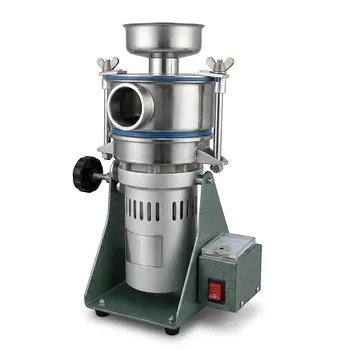
Small Airflow Ultra-Fine Grinder for Laboratory Sample Preparation
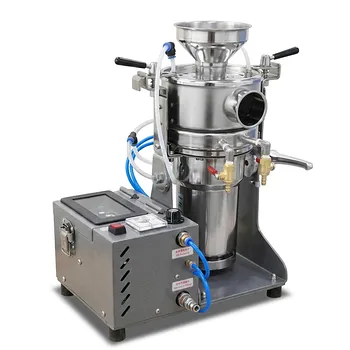
Water Cooled Pulse Jet Ultrafine Grinder
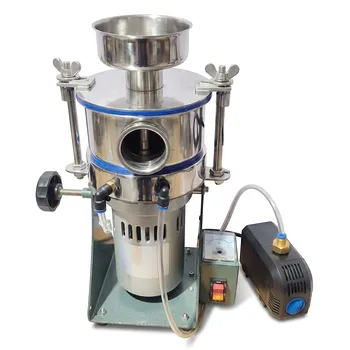
Water Cooled Airflow Ultra Fine Grinder for Low Temperature Material Processing
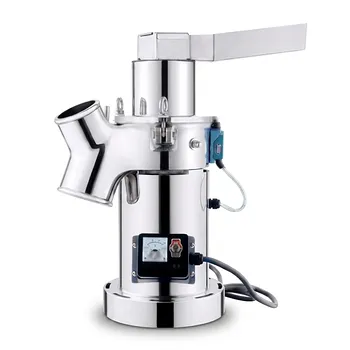
Airflow Ultrafine Pulverizer for Laboratory Ultra-fine Grinding
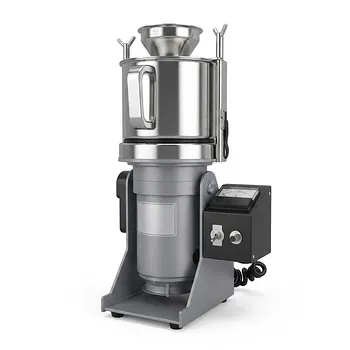
High Speed Air Induced Ultrafine Pulverizer Laboratory Superfine Powder Mill for Pharmaceutical and Material Science Sample Preparation
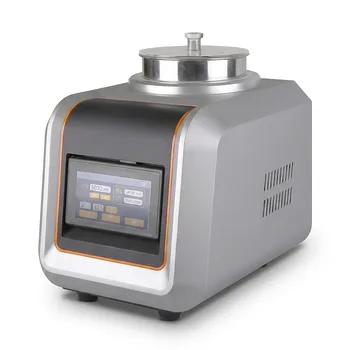
Laboratory Air Jet Sieving Machine for Fine Powder Particle Size Analysis and Deagglomeration
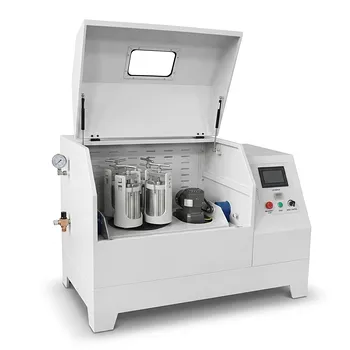
Vertical Production Planetary Ball Mill for High Throughput Powder Processing
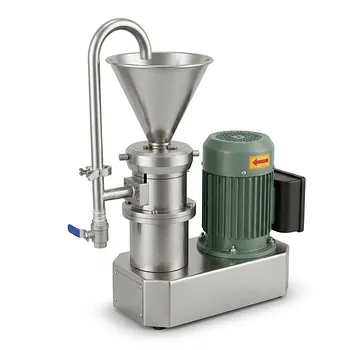
Small Laboratory Colloid Mill for Ultra-Fine Wet Grinding and Emulsification
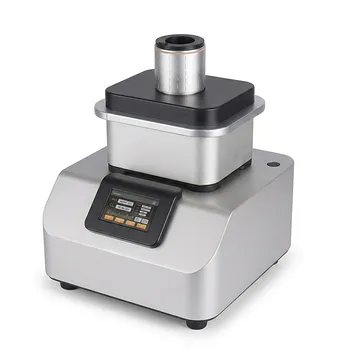
Ultra Centrifugal Mill High Speed Laboratory Grinder for Fibrous and Brittle Sample Preparation
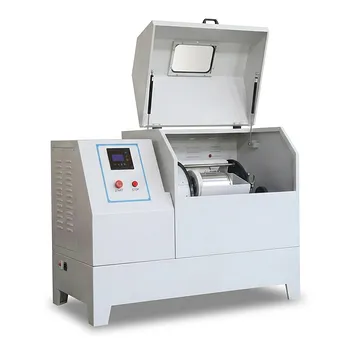
Heavy Duty Horizontal Planetary Ball Mill for Efficient Industrial Grinding and Sample Preparation
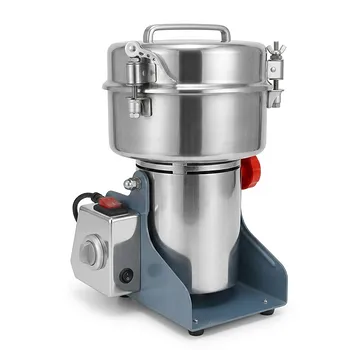
Small High-Speed Grinder for Efficient Laboratory Sample Preparation
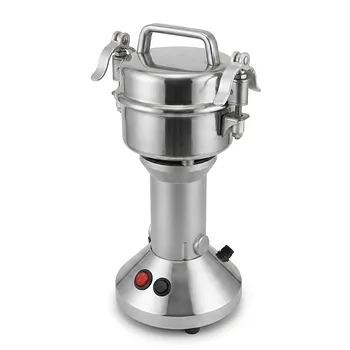
Continuous Feeding Grinding Mill for Dry Fibrous Tough and Hard Materials in Laboratory and Small Production
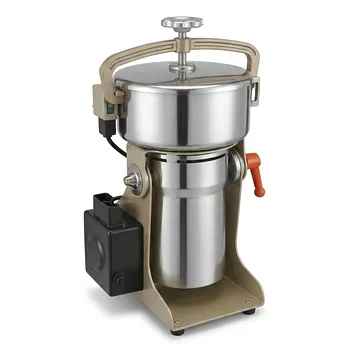
Multifunctional High Efficiency High Speed Laboratory Grinder
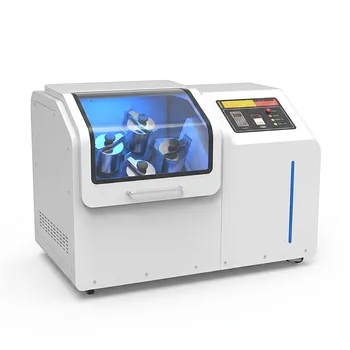
High Energy Omnidirectional Planetary Ball Mill 16L
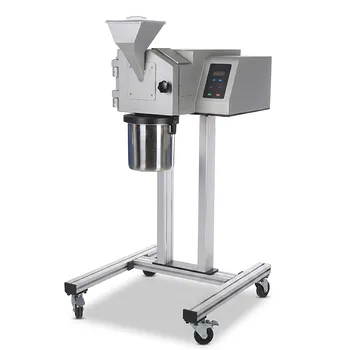
Cross Beater Mill for Brittle Material Grinding and Continuous Fine Crushing Industrial Sample Preparation
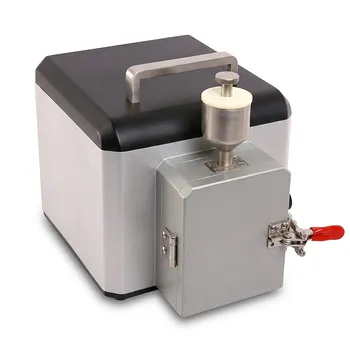
Portable Cutting Mill for Laboratory Sample Preparation and RoHS WEEE Compliance Testing