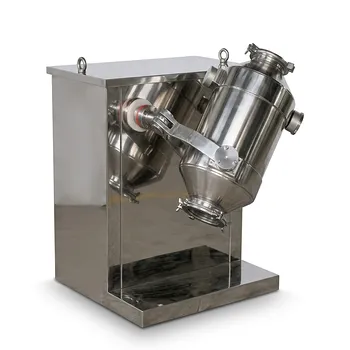
What are the technical advantages of industrial centrifugal mixers? Achieve Rapid Homogenization & Superior Uniformity
Updated 4 months ago
Industrial centrifugal mixers leverage powerful force fields that fundamentally surpass the capabilities of gravity-based systems. By generating centrifugal forces significantly stronger than a standard gravity field, these mixers force material particles into high-intensity inertial movement along the mixing surface. This physical shift eliminates common gravity-fed issues like laminar flow and poor distribution, allowing for the rapid homogenization of materials with vastly different masses and friction coefficients.
Core Takeaway: Centrifugal mixers transition material processing from passive, gravity-reliant movement to active, high-energy displacement. This results in superior uniformity (often below 3% heterogeneity) and significantly reduced cycle times—frequently completing in minutes what takes gravity mixers an hour.
Superior Force Fields and Throughput
Overcoming Laminar Flow
Gravity-based mixers often suffer from laminar flow, where materials slide in layers without actually intermingling. Centrifugal mixers resolve this by forcibly altering the motion trajectories of every particle within the vessel.
Enhancing Unit Throughput
The intensification of the force field directly translates to higher unit throughput. Because particles are driven by high-speed inertial movement rather than falling under their own weight, the volume of material processed per hour increases substantially.
Forced Motion of Diverse Masses
In a gravity field, particles of different masses tend to segregate, with heavier particles settling faster. Centrifugal force overcomes these friction coefficients, ensuring that fine powders and coarse aggregates are blended into a stable, physically uniform state.
Precision at the Micro-Level
Inducing Relative Displacement
High-speed centrifugal elements induce relative displacement between adjacent particles at a microscopic level. This is critical for processes requiring heat exchange, diffusion, or complex chemical reactions where surface contact is paramount.
De-agglomeration and Coating
Industrial centrifugal mixers use high-intensity shear to break down particle agglomerates. This allows fine materials, such as an alumina bonding slip, to completely coat coarse aggregates, achieving maximum packing density and physically stable mixtures.
High-Viscosity Homogenization
In high-viscosity systems, planetary centrifugal motion achieves deep mixing while simultaneously performing degassing (defoaming). This dual action is essential for materials like 3D-printing filaments, where internal air bubbles would otherwise cause structural defects.
Efficiency and "Pseudo-Liquefaction"
Reducing Internal Friction
Advanced centrifugal vibration mixers combine rotation with high-frequency vibration to reach a state of pseudo-liquefaction. This reduces the effective friction coefficient between particles by 40 to 50 times compared to traditional mechanical rotation.
Drastic Reduction in Cycle Times
While a standard drum-type gravity mixer may require 60 minutes to reach a specific uniformity, a centrifugal system can achieve an inhomogeneity coefficient of less than 5% in under 6 minutes. Some systems reach peak uniformity in as little as 80 to 120 seconds.
Optimized Energy Consumption
Despite the high-speed operation, these mixers often offer lower unit energy consumption within specific capacity ranges. The efficiency gained by the shortened cycle time more than compensates for the higher instantaneous power draw of the motor.
Understanding the Trade-offs
Material Sensitivity to Shear
The same high-intensity shear that de-agglomerates materials can be a disadvantage for shear-sensitive particles. If a material's structural integrity is fragile, the aggressive forces of a centrifugal mixer may cause unwanted particle attrition or degradation.
Mechanical Complexity and Heat
Centrifugal mixers are precision instruments with high-speed rotating parts that require rigorous maintenance compared to simpler drum mixers. Additionally, the high energy input can generate significant heat, which may necessitate cooling systems for temperature-sensitive chemical formulations.
Applying Centrifugal Technology to Your Workflow
Choosing the Right System
Deciding between centrifugal and gravity-based equipment depends on your specific material characteristics and production requirements.
- If your primary focus is rapid cycle times and high throughput: Centrifugal mixers are the definitive choice, reducing processing windows from hours to minutes.
- If your primary focus is processing high-viscosity slurries with air-free results: Planetary centrifugal mixers provide the necessary simultaneous mixing and degassing that gravity systems cannot replicate.
- If your primary focus is preventing segregation in materials with varying particle sizes: The high-intensity force field of a centrifugal mixer ensures a stable blend where gravity mixers would likely fail.
By transitioning to centrifugal mixing, facilities can achieve a level of molecular-level uniformity and operational speed that traditional gravity-based equipment simply cannot match.
Summary Table:
| Feature | Industrial Centrifugal Mixers | Gravity-Based Mixers |
|---|---|---|
| Mixing Force | High-intensity centrifugal/inertial force | Passive gravitational pull |
| Cycle Time | Rapid (typically 2–6 minutes) | Slow (often 60+ minutes) |
| Uniformity | Superior (Heterogeneity < 3-5%) | Moderate (Risk of segregation) |
| Functionality | Simultaneous mixing and de-foaming | Mixing only; prone to air bubbles |
| Flow Dynamics | Active particle displacement | Passive laminar flow |
Elevate Your Material Processing with Professional Lab Solutions
Is your current mixing process a bottleneck in your production? At SYP, we specialize in providing complete laboratory sample preparation solutions for material science. We offer high-performance centrifugal and planetary mixers designed to achieve molecular-level uniformity and air-free results in a fraction of the time.
Beyond mixing, our extensive product line supports your entire workflow:
- Powder Processing: Advanced crushers (jaw/roll), planetary ball mills, jet mills, and rotor mills.
- Sieving & Mixing: Vibratory sieve shakers and high-efficiency defoaming mixers.
- Compaction Excellence: A full spectrum of hydraulic presses, including Cold/Warm Isostatic Presses (CIP/WIP), XRF pellet presses, and vacuum hot presses.
Maximize your lab's efficiency and material stability today. Contact our technical team for a custom consultation!
References
- Andrey Globin, A. M. Kurgansky. Theoretical studies of the process of mixing feed with a centrifugal mixer. DOI: 10.51419/202145504.
Mentioned Products
- Industrial Planetary Centrifugal Vacuum Defoaming Mixer for High Viscosity Paste and Powder Homogenization
- Industrial Planetary Centrifugal Vacuum Defoaming Mixer for High Viscosity Paste and Advanced Material Science
- High Speed Vacuum Planetary Centrifugal Mixer and Defoamer for Industrial Paste Processing
- High Efficiency Vacuum Planetary Centrifugal Mixer and Defoaming Machine for Industrial Material Research and Precise Laboratory Powder Dispersion
- Dual Cup Vacuum Centrifugal Mixer Planetary Paste Defoaming Machine Industrial Material Processor
People Also Ask
- What are the advantages of planetary centrifugal mixers for LSM-CeO2 slurries? Superior Results
- Why is a planetary centrifugal defoaming mixer essential in battery slurry? Achieve High Homogeneity & Degassing
- What process advantages do planetary gravity mixers provide for r-GO/RuO2 electrodes? Achieve Superior Nanoscale Dispersion
- What is the function of industrial planetary centrifugal mixers in 3D printing inks? Achieve Perfect Homogenization
- What are the primary advantages of planetary centrifugal mixers? Master Bladeless Mixing & Vacuum Defoaming

Tech Team · PowderPreparation
Last updated on May 14, 2026
Related Products
Industrial Planetary Centrifugal Vacuum Defoaming Mixer for High Viscosity Paste and Powder Homogenization
Industrial Planetary Centrifugal Vacuum Defoaming Mixer for High Viscosity Paste and Advanced Material Science
High Speed Vacuum Planetary Centrifugal Mixer and Defoamer for Industrial Paste Processing
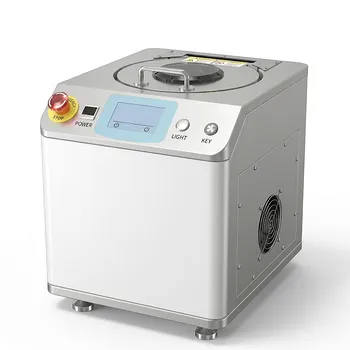
High Efficiency Vacuum Planetary Centrifugal Mixer and Defoaming Machine for Industrial Material Research and Precise Laboratory Powder Dispersion
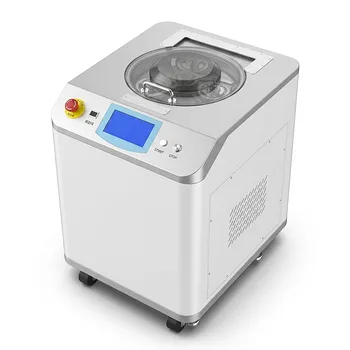
Dual Cup Vacuum Centrifugal Mixer Planetary Paste Defoaming Machine Industrial Material Processor
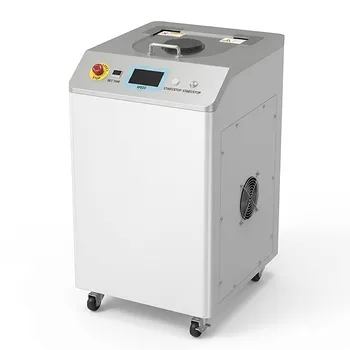
High Viscosity Planetary Centrifugal Vacuum Mixer for Material Defoaming and Uniform Mixing
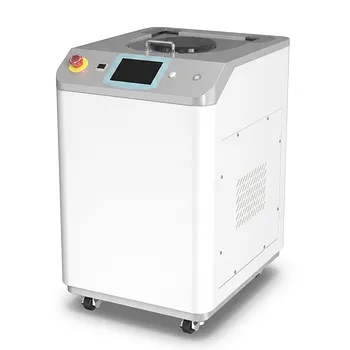
High Viscosity Planetary Centrifugal Mixing and Vacuum Defoaming Machine for Laboratory Material Preparation
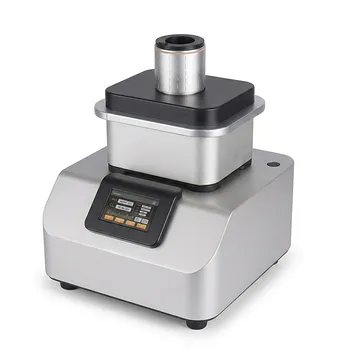
Ultra Centrifugal Mill High Speed Laboratory Grinder for Fibrous and Brittle Sample Preparation
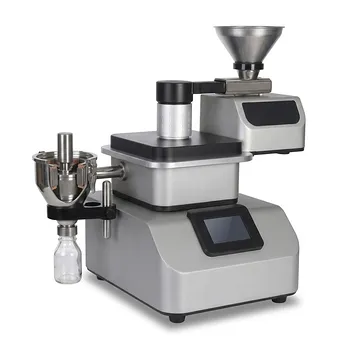
Ultra Centrifugal Mill for Rapid Laboratory Sample Preparation and Fine Powder Grinding
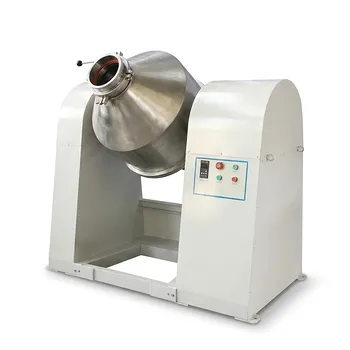
Industrial Double Cone Mixer for Powder Blending and Homogeneous Mixing
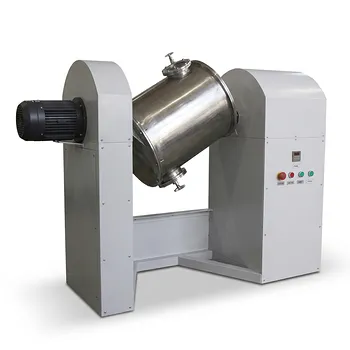
Inclined Mixer for Homogeneous Powder Blending and Grinding
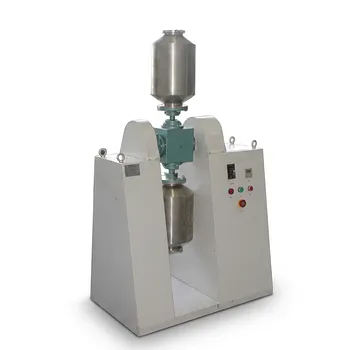
Multi Dimensional Universal Mixer for High Uniformity Powder Blending
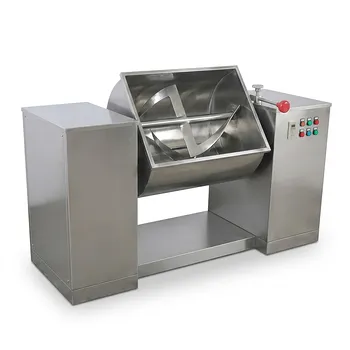
Horizontal Trough Mixer for Uniform Powder and Paste Blending
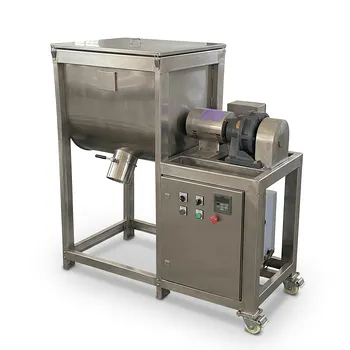
Horizontal Ribbon Mixer for Dry Powder and Slurry Blending
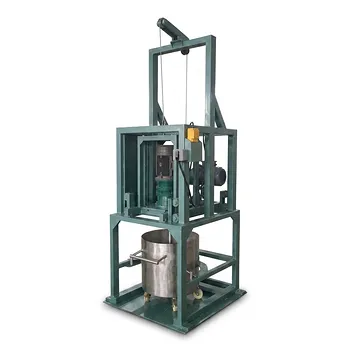
High-Speed Simple Disperser for Efficient Mixing, Dispersion, and Emulsification
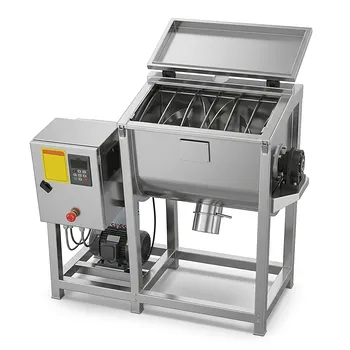
Horizontal Ribbon Mixer for Uniform Powder and Slurry Mixing
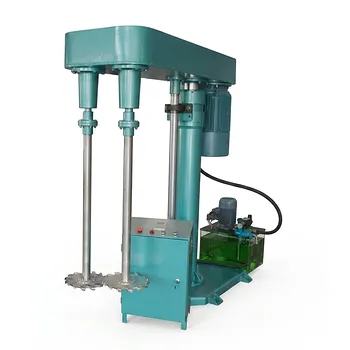
Hydraulic Double Shaft Disperser for High Viscosity Liquid Mixing and Dispersion
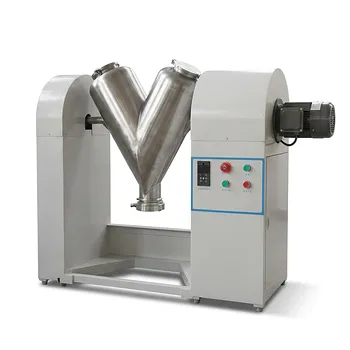
V-Type Powder Mixer for Uniform Blending of Dry Powders and Granules
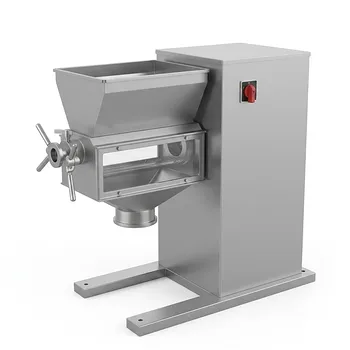
Industrial Swing Granulator for Powder Processing in Pharma Food and Chemical Industries