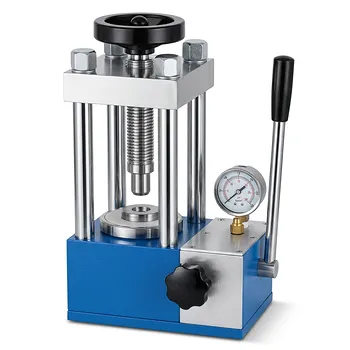
What are the process advantages of using a Cold Isostatic Press (CIP) for copper? Gain uniform density & high strength.
Updated 4 months ago
The primary advantage of using a Cold Isostatic Press (CIP) for pure copper powder is the application of uniform, omnidirectional pressure through a liquid medium. Unlike traditional unidirectional pressing, which suffers from friction-induced pressure gradients, CIP ensures a completely consistent density distribution throughout the entire compact. This process allows for the creation of high-strength green bodies at room temperature, effectively preventing the grain growth that typically occurs during high-temperature consolidation.
Core Takeaway: Cold Isostatic Pressing eliminates internal stress concentrations and density gradients by applying equal pressure from all directions. For pure copper powder, this results in an isotropic microstructure and superior green strength while preserving the material’s fine grain structure for subsequent processing.
Achieving Superior Density and Structural Integrity
Elimination of Friction and Pressure Gradients
In traditional uniaxial pressing, friction between the powder and the rigid mold walls creates significant pressure gradients. This leads to non-uniform density, where the center or bottom of the compact may be less dense than the top. Cold Isostatic Pressing utilizes a fluid medium to apply pressure equally, removing these friction constraints and ensuring a homogeneous compact.
Enhanced Green Strength and Shape Stability
Because the pressure is isotropic, the resulting "green body" (the unsintered compact) possesses remarkably high green strength. This uniform compaction prevents the internal stress concentrations that often lead to cracking or delamination. A well-consolidated copper rod produced via CIP is stable enough to undergo handling and subsequent plastic deformation without structural failure.
Isotropic Mechanical Properties
Traditional pressing often creates anisotropic materials, where physical properties differ depending on the direction of the applied force. CIP significantly improves the isotropy ratio, often bringing it close to 1.0. This means the consolidated copper will exhibit uniform mechanical and physical properties in every direction, which is critical for high-performance engineering applications.
Thermal Management and Microstructural Control
Prevention of Grain Growth
One of the most critical advantages for copper processed via cryogenic ball milling is the ability to consolidate at room temperature. High-temperature consolidation methods often trigger rapid grain growth, which degrades the mechanical benefits of the fine-grained powder. CIP avoids this thermal damage entirely, maintaining the integrity of the nanostructured or fine-grained copper.
Controlled Porosity for Subsequent Processing
CIP can consolidate copper powder into well-shaped forms while maintaining the specific level of porosity required for later stages. This is particularly important if the copper must undergo further plastic deformation, such as rolling or extrusion. The process provides a superior foundation for sintering by removing internal micro-pores without the need for excessive heat.
Reduction of Sintering Defects
Because CIP produces a green body with high density consistency, the risk of deformation during the subsequent sintering process is greatly reduced. In uniaxial pressing, uneven density leads to non-uniform shrinkage, which often causes warping or cracking as the material densifies. CIP ensures that shrinkage is uniform, resulting in a final product that closely matches the intended dimensions.
Understanding the Trade-offs
Dimensional Precision and Tooling
While CIP provides superior internal uniformity, it typically offers less dimensional precision than rigid-die uniaxial pressing. Because CIP uses flexible elastomeric molds, the final outer dimensions may require additional machining to reach tight tolerances. Uniaxial pressing in steel dies is generally better suited for producing high volumes of small, simple parts with exact dimensions.
Production Cycle Time
CIP is fundamentally a batch process, which generally results in a slower production cycle compared to the rapid-fire capability of automated uniaxial presses. The requirement to seal the powder in a flexible mold, submerge it, pressurize the fluid, and then de-mold makes it less efficient for mass-producing simple components. It is a specialized tool optimized for material quality rather than sheer throughput.
How to Apply This to Your Project
Making the Right Choice for Your Goal
Choosing between CIP and unidirectional pressing depends on your requirements for material performance and production volume.
- If your primary focus is maximizing mechanical strength and grain refinement: Use Cold Isostatic Pressing to consolidate the powder at room temperature and maintain an isotropic microstructure.
- If your primary focus is producing complex, large-scale rods or billets: CIP is the superior choice as it eliminates the height-to-diameter limitations inherent in uniaxial pressing.
- If your primary focus is high-speed mass production of simple shapes: Traditional unidirectional pressing remains more cost-effective due to its shorter cycle times and higher dimensional accuracy out of the mold.
By utilizing Cold Isostatic Pressing, you ensure that your pure copper components begin their lifecycle with the highest possible degree of microstructural uniformity and density.
Summary Table:
| Feature | Cold Isostatic Pressing (CIP) | Unidirectional Pressing |
|---|---|---|
| Pressure Direction | Omnidirectional (Uniform) | Uniaxial (One Direction) |
| Density Distribution | Perfectly Homogeneous | Gradient (Friction-affected) |
| Grain Control | Room Temp (Prevents Growth) | High Risk at Temperature |
| Material Properties | Isotropic (Uniform) | Anisotropic (Directional) |
| Best Application | High-performance rods/billets | Mass-produced simple shapes |
Elevate Your Material Consolidation with Precision Engineering
Ready to achieve superior density and microstructural integrity in your copper powder projects? Our brand provides complete laboratory sample preparation solutions for material science, specializing in advanced powder processing and compaction equipment.
Whether you are looking to eliminate internal stresses with our Cold/Warm Isostatic Presses (CIP/WIP) or need high-efficiency standard lab presses, XRF pellet presses, or vacuum hot presses, we deliver the reliability your research demands. Our extensive product line also includes:
- Size Reduction: Jaw/roll crushers and cryogenic grinders.
- Milling: Planetary ball, jet, and rotor mills.
- Classification: Vibratory and air-jet sieve shakers.
- Mixing: Powder and defoaming mixers.
Contact us today to find the perfect solution for your lab and see how our specialized equipment can enhance your material performance.
References
- Leila Ladani, Terry C. Lowe. Manufacturing of High Conductivity, High Strength Pure Copper with Ultrafine Grain Structure. DOI: 10.3390/jmmp7040137
Mentioned Products
- Enhanced 9 Punch Rotary Tablet Press for Powder Compaction
- 6-Ton Small Single-Punch Tablet Press — Laboratory Powder & Granule Tableting Equipment / Tablet Forming Machine
- Medium Hardness Material Disc Pulverizer for Coal Ore Sample Preparation
- Water Cooled Graduated Continuous Feed Pulverizer for Industrial Powder Processing and Laboratory Material Preparation
- Vibratory Ultra-Low Temperature Ultrafine Grinder for Cryogenic Powder Processing
People Also Ask
- What is the purpose of adding lubricants like zinc stearate during Al-Al2O3 powder pressing? Achieve Superior Density
- Why is a laboratory hydraulic press required for FT-IR KBr pellets? Achieve Precise Sample Clarity for ZrC–SiC Analysis
- What role does a high-strength stainless steel mold kit play in the uniaxial die compaction process? Ensuring Precision
- Why is a laboratory hydraulic press required to compress oyster shell powder before XRF analysis? Improve Data Accuracy.
- Why is vacuum sealing and flexible packaging necessary for Aluminum Titanate powders during CIP? Ensure Peak Density

Tech Team · PowderPreparation
Last updated on Jun 03, 2026
Related Products
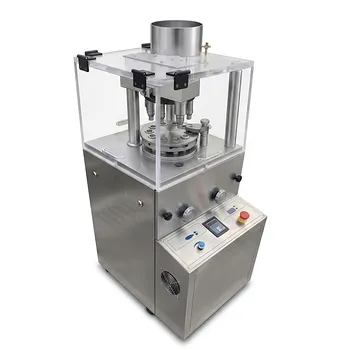
Enhanced 9 Punch Rotary Tablet Press for Powder Compaction
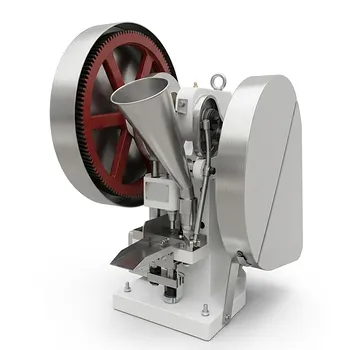
6-Ton Small Single-Punch Tablet Press — Laboratory Powder & Granule Tableting Equipment / Tablet Forming Machine
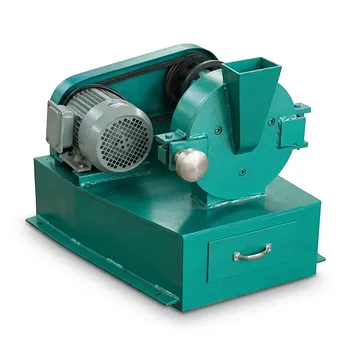
Medium Hardness Material Disc Pulverizer for Coal Ore Sample Preparation
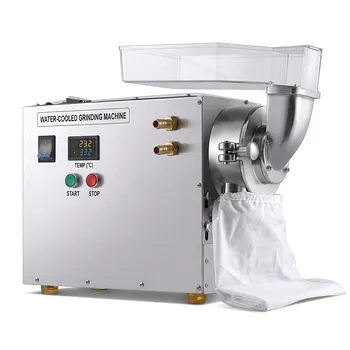
Water Cooled Graduated Continuous Feed Pulverizer for Industrial Powder Processing and Laboratory Material Preparation
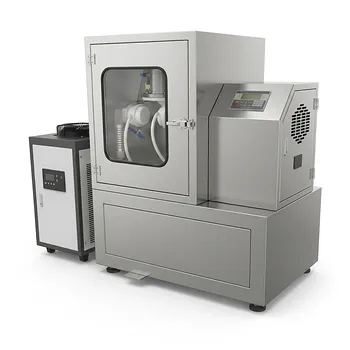
Vibratory Ultra-Low Temperature Ultrafine Grinder for Cryogenic Powder Processing

Vertical Production Planetary Ball Mill for High Throughput Powder Processing