What are the primary processing objectives of a laboratory hot press? Achieve Precise Composite Sample Preparation
Updated 4 months ago
The laboratory hot press serves as the critical bridge between raw material blending and performance evaluation. It utilizes simultaneous heat and uniaxial pressure to compress materials into uniform sheets of standard thickness while eliminating internal defects like micropores and air bubbles. This process ensures density uniformity and precise material consolidation, creating the standardized specimens required for accurate tensile, tribological, and mechanical testing.
The primary objective of a laboratory hot press is to achieve material densification and structural uniformity by eliminating internal voids and precisely controlling the sample's geometry. This ensures that subsequent test results reflect the material's intrinsic properties rather than flaws introduced during preparation.
Establishing Geometric and Density Consistency
Achieving Uniform Sample Thickness
Precision-controlled platens ensure that composite sheets are pressed to a specific, repeatable thickness, typically ranging from 1 to 2 mm. This geometric standardization is mandatory for calculating tensile strength and other mechanical properties that rely on a known cross-sectional area.
Ensuring Density Uniformity
Continuous uniaxial pressure promotes particle rearrangement and plastic flow within the mold. This results in a consolidated material with consistent density, preventing the formation of localized "weak spots" that would skew experimental data.
Producing Flat, Stress-Free Surfaces
By cooling the material under balanced pressure, the hot press prevents warping and deformation. This results in the flat specimen surfaces required for accurate electrical characterization and consistent contact in tribological experiments.
Removing Latent Material Defects
Degassing and Void Elimination
Heat reduces the viscosity of the matrix, while pressure forces out residual air and trapped gases through a degassing function. Eliminating these micropores is essential, as internal voids act as stress concentrators that lead to premature material failure.
Homogenizing the Microstructure
The application of heat and pressure ensures the tight integration of nano-fillers or reinforcements within the matrix. This creates a consistent microstructure, ensuring that additives like carbon nanotubes are physically locked into the polymer network.
Reducing Resin-Rich Zones
In laminate composites, the hot press facilitates the compaction of layers, effectively reducing interlaminar resin-rich zones. This improves the bonding between layers and enhances the overall interlaminar properties of the finished composite.
Managing Thermal and Chemical Transitions
Promoting Chemical Curing and Bonding
Elevated temperatures trigger the necessary chemical curing of resins and promote the interfacial softening of thermoplastic components. This creates the thermodynamic conditions required for the chemical interaction of healing agents or the physical bonding of fibers.
Tailoring Crystallization Behavior
The ability to control the cooling rate under pressure allows researchers to adjust the matrix's crystallization behavior. This is a vital step in defining the final mechanical and thermal properties of thermoplastic composites.
Facilitating Material Sintering and Creep
In metal or ceramic powders, the hot press promotes sintering and creep at the microscopic level. This allows for material formation at lower temperatures and shorter cycle times than pressureless methods would require.
Understanding the Trade-offs and Pitfalls
Balancing Pressure and Fiber Integrity
Excessive molding pressure can cause fiber crushing or excessive resin "squeeze-out," which inadvertently changes the material's fiber-volume fraction. Conversely, insufficient pressure fails to eliminate voids, resulting in a porous and unreliable specimen.
Thermal Degradation vs. Flow
While high temperatures are necessary to ensure the material flows adequately within the mold, excessive heat or prolonged dwell times can trigger thermal degradation. This breaks down the molecular chains of the polymer matrix and compromises the test results.
Cooling Rate Internal Stresses
Rapid cooling can increase throughput but may introduce internal residual stresses within the composite. These stresses can lead to micro-cracking or dimensional instability, potentially masking the material's true performance characteristics.
How to Apply This to Your Research Project
Before starting your pressing cycle, define your primary testing objective to determine the optimal press settings.
- If your primary focus is mechanical strength testing: Prioritize thickness precision and the elimination of internal voids to ensure a clean break at the material's true limit.
- If your primary focus is interfacial bonding or curing: Focus on precise temperature maintenance and specific dwell times to ensure the chemical reaction reaches completion.
- If your primary focus is surface-level performance (Tribology/Electrical): Prioritize the cooling phase under pressure to ensure maximum surface flatness and contact uniformity.
By mastering these processing objectives, you ensure that your experimental data is a true reflection of your material's potential.
Summary Table:
| Processing Objective | Key Mechanism | Impact on Performance Testing |
|---|---|---|
| Geometric Consistency | Precision platens & uniaxial pressure | Ensures accurate tensile and mechanical property calculations. |
| Defect Elimination | Degassing and high-pressure compaction | Removes voids/micropores that cause premature material failure. |
| Microstructure Control | Simultaneous heat and pressure | Ensures uniform filler distribution and interlaminar bonding. |
| Thermal Management | Controlled heating and cooling rates | Regulates chemical curing and prevents internal residual stresses. |
Elevate Your Material Research with Precision Sample Preparation
Reliable performance testing starts with perfect sample consolidation. [Your Brand Name] provides complete laboratory sample preparation solutions for material science, specializing in advanced powder processing and compaction equipment designed to eliminate preparation flaws.
Our extensive product lines are engineered to meet the rigorous demands of modern R&D labs:
- Advanced Hydraulic Presses: We manufacture a full spectrum including Hot Presses, Vacuum Hot Presses, Cold/Warm Isostatic Presses (CIP/WIP), standard lab presses, and XRF pellet presses.
- Size Reduction & Grinding: High-performance crushers (jaw/roll), liquid nitrogen cryogenic grinders, and specialized mills (planetary ball, jet, sand/bead, disc, rotor).
- Sifting & Mixing: Vibratory and air-jet sieve shakers with precision meshes, alongside high-efficiency powder and defoaming mixers.
Whether you are working with polymers, ceramics, or advanced composites, our equipment ensures your specimens reflect their true intrinsic properties.
Ready to optimize your lab's efficiency? Contact our experts today to find the ideal solution!
References
- F. -W. Tu, Qunchao Zhang. Synergistic Enhancement Effect of Polytetrafluoroethylene and WSe2 on the Tribological Performance of Polyetherimide Composites. DOI: 10.3390/lubricants13020044
Mentioned Products
- 6-Ton Small Single-Punch Tablet Press — Laboratory Powder & Granule Tableting Equipment / Tablet Forming Machine
- 5 Ton Single Punch Tablet Press Laboratory Small Batch Production
- Manual Tablet Press with Dual Scale Pressure Gauge for Pharmaceutical Food Chemical Laboratory Sample Preparation
- 6 Ton Variable Frequency Single Punch Tablet Press
- Water Cooled High Speed Grinder with Cryogenic Option for Laboratory Sample Preparation
People Also Ask
- What is the function of a laboratory press in Cr-Ti alloy evaluation? Quantify Fracture Stress & Strength
- What is the function of a laboratory press in assessing the hydrophobic performance of modified vermiculite fillers?
- What is the core function of a laboratory press in the forming of ceramic filter element green bodies? Maximize Density.
- What is the function of a laboratory press in the preparation of ceramic feed rods? Master Density and Precision
- Why is vacuum sealing and flexible packaging necessary for Aluminum Titanate powders during CIP? Ensure Peak Density

Tech Team · PowderPreparation
Last updated on Jun 03, 2026
Related Products
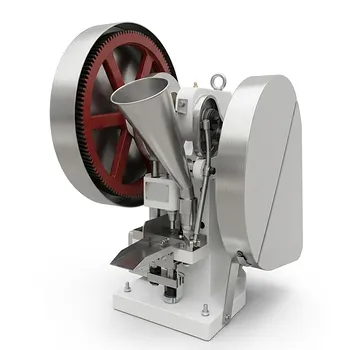
6-Ton Small Single-Punch Tablet Press — Laboratory Powder & Granule Tableting Equipment / Tablet Forming Machine
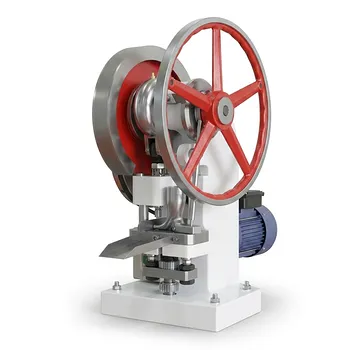
5 Ton Single Punch Tablet Press Laboratory Small Batch Production
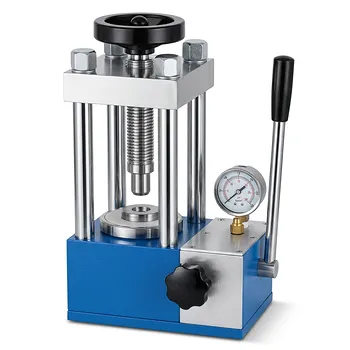
Manual Tablet Press with Dual Scale Pressure Gauge for Pharmaceutical Food Chemical Laboratory Sample Preparation
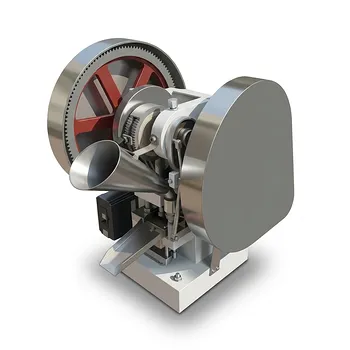
6 Ton Variable Frequency Single Punch Tablet Press
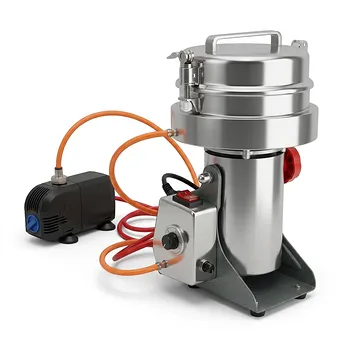
Water Cooled High Speed Grinder with Cryogenic Option for Laboratory Sample Preparation
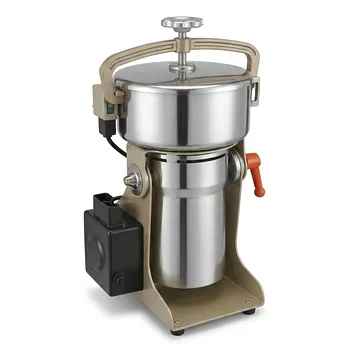
Multifunctional High Efficiency High Speed Laboratory Grinder
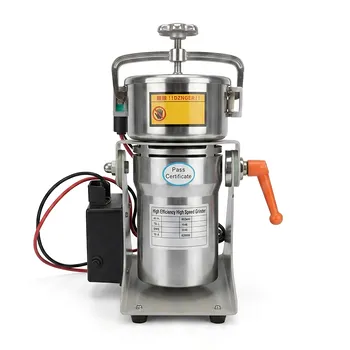
High Efficiency High Speed Grinder Laboratory Mill 1300W 25000rpm
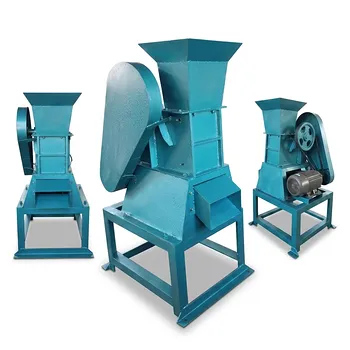
Custom Raised Height Laboratory Jaw Crusher for Precision Sample Preparation in Material Science
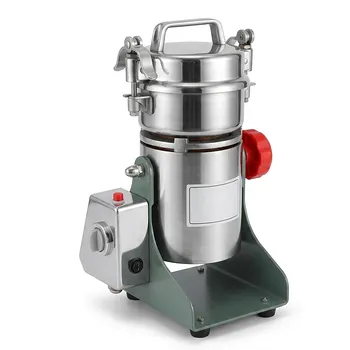
High Speed Swing Type Laboratory Pulverizer for Fine Powder Grinding and Sample Preparation

Small Trace Sample High Speed Pulverizer Grinder Laboratory Powder Mill
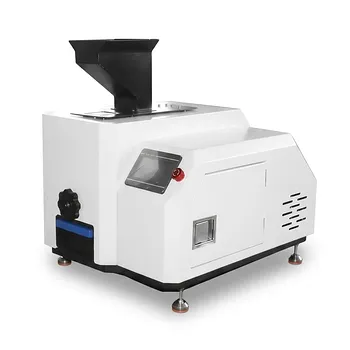
Laboratory Jaw Crusher 2025 Model for Ore and Brittle Material Crushing
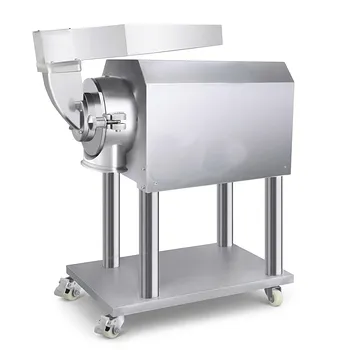
High Speed Small Laboratory Crusher for Dry Material Sample Preparation
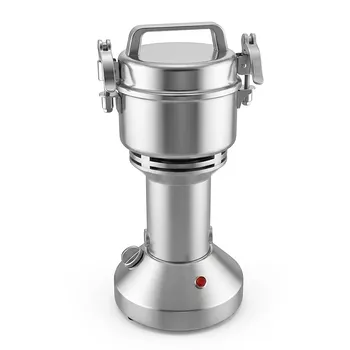
Small High Speed Upright Grinder for Laboratory Sample Preparation
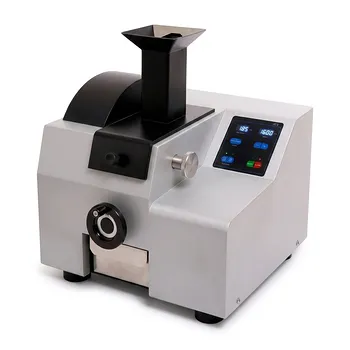
Laboratory Benchtop Jaw Crusher for Hard Brittle Materials Primary Size Reduction and Sample Preparation
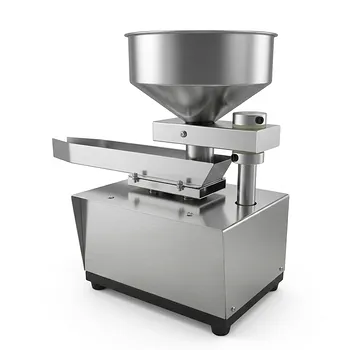
Automatic Vibrating Powder Feeder for Laboratory Material Processing Precision Vibratory Hopper Feeder for Granular and Powder Material Handling Industrial Grade Vibrating Tray Feeder for Consistent Material Sample Preparation
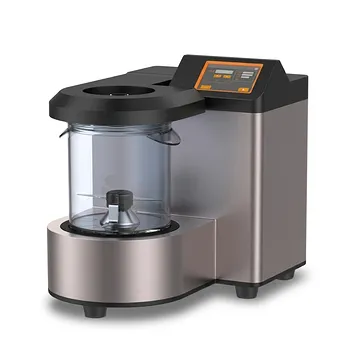
Laboratory Knife Mill for Large Volume Sample Homogenization and Food Preparation

Industrial Knife Mill for Food and Biological Sample Preparation High Speed Laboratory Homogenizer
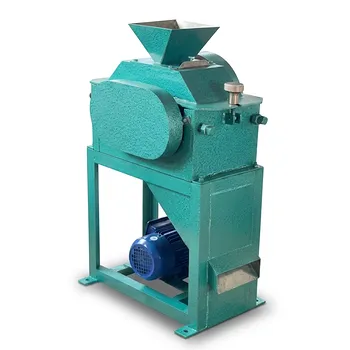
Laboratory Double Roll Crusher for Medium Hardness Materials Coal Ore Sample Preparation
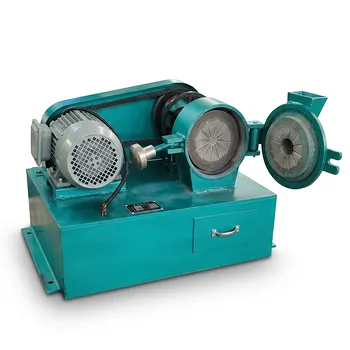
Laboratory Disc Mill Medium Hard Material Grinding Coal Coke Ore Pulverizer