What are the primary functions of an industrial hot press for PR/NQF? Optimize Resin Curing & Material Density
Updated 5 months ago
The industrial hot press serves as the dual-action engine for PR/NQF (Phenolic Resin/Quartz Felt) composite fabrication. By simultaneously applying controlled thermal energy and mechanical pressure, it transforms liquid or semi-solid resins into a hardened, high-performance matrix. This process ensures that the quartz felt is fully integrated with the phenolic resin, resulting in a material that meets exact density and structural specifications.
The core function of an industrial hot press is to catalyze the chemical cross-linking of phenolic resin while mechanically enforcing the composite's density and geometric precision. This synergy eliminates internal voids and ensures a stable, uniform material structure.
Driving Chemical Polymerization
Initiating the Cross-Linking Reaction
The hot press provides the continuous thermal field necessary to trigger the chemical polymerization of the phenolic resin. This heat breaks down chemical inhibitors and facilitates the formation of strong molecular bonds within the quartz felt matrix.
Ensuring Curing Completeness
A stable temperature profile ensures that the curing process is uniform throughout the entire material thickness. Consistent heat application prevents material defects, such as internal stresses or "soft spots," which are often caused by uneven or incomplete curing cycles.
Controlling Physical and Geometric Properties
Maintaining Preset Density
Industrial hot presses are essential for achieving specific material grades, such as densities of 0.5 or 0.8 g/cm³. The calibrated pressure compresses the quartz felt to the exact volume required to reach these target density values.
Enforcing Dimensional Accuracy
Beyond density, the press locks the composite into its precise external geometric dimensions. By maintaining constant pressure throughout the polymerization stage, the equipment prevents the material from warping or expanding during the volatile-heavy curing phase.
Optimizing Material Integrity
Suppression of Volatiles and Pores
Phenolic resins naturally generate volatiles during curing which can create structural weaknesses. The application of high pressure suppresses the formation of pores, ensuring that the final green body achieves sufficient mechanical strength.
Elimination of Residual Air
The mechanical force of the press plates helps displace and expel residual air bubbles trapped within the quartz felt layers. This densification process is critical for enhancing the interlaminar properties and the overall ionic or thermal conductivity of the finished part.
Understanding the Trade-offs
Resin Starvation vs. Proper Compaction
While high pressure is necessary for density, excessive force can lead to resin bleed-out. If too much resin is squeezed out of the quartz felt, the resulting "dry" composite will suffer from brittle behavior and poor interlaminar bonding.
Thermal Lag in Thick Sections
In very thick PR/NQF laminates, there is a risk of the exterior curing significantly faster than the interior. This thermal gradient can trap gases in the core, leading to internal delamination or "blistering" once the pressure is released.
How to Apply This to Your Project
Making the Right Choice for Your Goal
- If your primary focus is dimensional stability: Prioritize a press with high-precision hydraulic controls to maintain exact thickness tolerances throughout the heating cycle.
- If your primary focus is maximizing mechanical strength: Implement a multi-stage pressure cycle that increases force as the resin viscosity drops to effectively suppress all volatile-induced voids.
- If your primary focus is high-volume production: Utilize a hot press with advanced thermal programming to optimize ramp rates, ensuring rapid but uniform curing across multiple composite sheets.
By mastering the balance between thermal kinetics and mechanical compression, you can ensure that every PR/NQF composite meets its rigorous performance benchmarks.
Summary Table:
| Function Category | Key Mechanism | Material Impact |
|---|---|---|
| Chemical Curing | Continuous thermal field application | Initiates resin cross-linking & prevents soft spots |
| Physical Control | Calibrated hydraulic pressure | Achieves target density (e.g., 0.5-0.8 g/cm³) |
| Structural Integrity | Mechanical densification | Suppresses pores and expels trapped air bubbles |
| Geometric Precision | Constant plate pressure | Prevents warping and enforces dimensional accuracy |
Optimize Your Composite Fabrication with Precision Hot Pressing Solutions
At our company, we provide complete laboratory sample preparation solutions for material science, specializing in high-performance powder processing and compaction equipment. Whether you are working with PR/NQF composites or advanced ceramics, our machinery ensures the thermal and mechanical precision required for superior material integrity.
Our extensive product lines include:
- Full Spectrum of Hydraulic Presses: Cold/Warm Isostatic Presses (CIP/WIP), standard lab presses, XRF pellet presses, and advanced Vacuum Hot Presses for sensitive polymerization stages.
- Powder Processing: Crushers (jaw/roll), liquid nitrogen cryogenic grinders, and various mills (planetary ball, jet, sand/bead, disc, rotor).
- Analysis & Mixing: Sieve shakers (vibratory/air-jet), powder mixers, and defoaming mixers.
Ready to enhance your lab's efficiency and material performance?
Contact our experts today to find the ideal pressing solution for your specific application requirements!
References
- Xiaoyu Huang, Xiuhui Duan. Ablation Mechanism and Process of Low-Density Needled Quartz Felt/Phenolic Resin Thermal Protection Materials Under Long-Term Low–Medium Heat Flow. DOI: 10.3390/aerospace12020081
Mentioned Products
- Enhanced 9 Punch Rotary Tablet Press for Powder Compaction
- High Speed Vacuum Planetary Centrifugal Mixer and Defoamer for Industrial Paste Processing
- 6-Ton Small Single-Punch Tablet Press — Laboratory Powder & Granule Tableting Equipment / Tablet Forming Machine
- Manual Tablet Press with Dual Scale Pressure Gauge for Pharmaceutical Food Chemical Laboratory Sample Preparation
- 6 Ton Variable Frequency Single Punch Tablet Press
People Also Ask
- What is the purpose of adding lubricants like zinc stearate during Al-Al2O3 powder pressing? Achieve Superior Density
- Why is a laboratory hydraulic press required for FT-IR KBr pellets? Achieve Precise Sample Clarity for ZrC–SiC Analysis
- What role does a high-strength stainless steel mold kit play in the uniaxial die compaction process? Ensuring Precision
- Why is a laboratory hydraulic press required to compress oyster shell powder before XRF analysis? Improve Data Accuracy.
- Why is vacuum sealing and flexible packaging necessary for Aluminum Titanate powders during CIP? Ensure Peak Density

Tech Team · PowderPreparation
Last updated on May 14, 2026
Related Products
Enhanced 9 Punch Rotary Tablet Press for Powder Compaction
High Speed Vacuum Planetary Centrifugal Mixer and Defoamer for Industrial Paste Processing
6-Ton Small Single-Punch Tablet Press — Laboratory Powder & Granule Tableting Equipment / Tablet Forming Machine
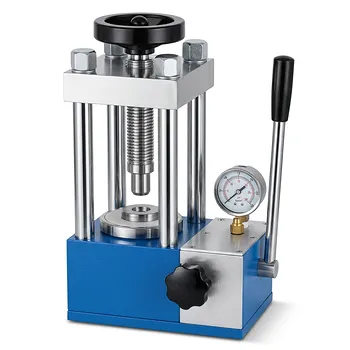
Manual Tablet Press with Dual Scale Pressure Gauge for Pharmaceutical Food Chemical Laboratory Sample Preparation
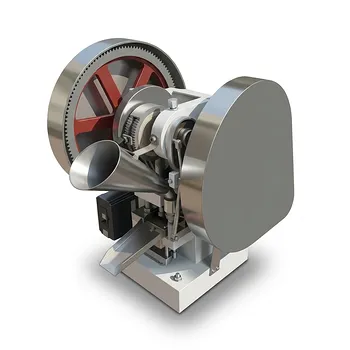
6 Ton Variable Frequency Single Punch Tablet Press
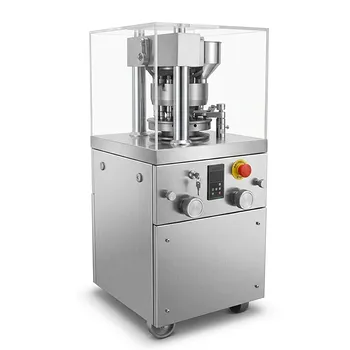
Ordinary Type Rotary Tablet Press for Pharmaceutical Chemical Food Electronic Industries
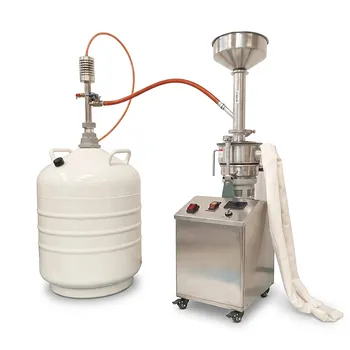
Laboratory Liquid Nitrogen Cryogenic Grinder for Polymer and Elastomer Materials
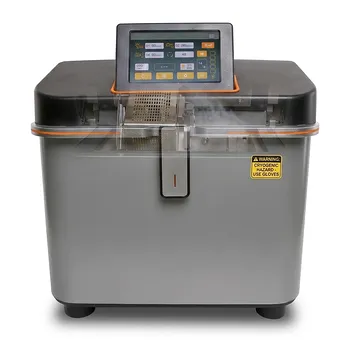
Cryogenic Liquid Nitrogen Grinder for DNA Analysis and Polymer Pulverization with Automatic Cooling and Electromagnetic Impact Technology