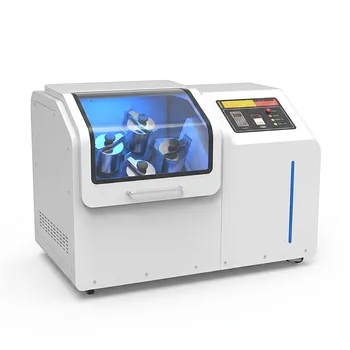
What are the material requirements for molds and punches? Essential Guide to H13 Steel for High-Pressure Consolidation
Updated 4 months ago
Selecting materials for high-pressure and high-temperature consolidation requires a focus on thermal stability and mechanical endurance. Components such as molds and punches are primarily fabricated from H13 hot-work tool steel because it maintains structural integrity under extreme conditions. This specific alloy provides the necessary high-temperature strength, red hardness, and thermal fatigue resistance required to survive environments exceeding 400°C.
High-pressure consolidation demands materials that can withstand cyclic thermal loads and axial pressure without losing dimensional accuracy. H13 hot-work tool steel is the industry standard because it balances hardness with the ability to resist cracking under repeated heating and cooling cycles.
The Critical Role of High-Temperature Strength
Maintaining Structural Integrity
In consolidation processes, molds are subjected to massive axial loads while being heated to temperatures often exceeding 400°C. Standard steels would soften and deform under these conditions, leading to part failure or loss of precision.
H13 tool steel is engineered to retain its mechanical properties even when glowing red, a characteristic known as red hardness. This ensures the punch and mold do not yield or "mushroom" when pressure is applied at peak operating temperatures.
Ensuring Dimensional Accuracy
High-temperature consolidation requires tight tolerances to ensure the final product meets specifications. If the mold material expands unevenly or deforms permanently, the entire production batch may be compromised.
By using materials with high thermal stability, engineers can predict expansion rates and maintain the structural integrity of the forming cavity. This reliability is essential for high-volume industrial manufacturing.
Durability Under Cyclic Thermal Stress
Resisting Thermal Fatigue
Molds and punches do not stay at a constant temperature; they undergo rapid heating and cooling cycles during each production run. This "thermal cycling" creates internal stresses that can lead to surface cracking, often called "heat checking."
Thermal fatigue resistance is the ability of H13 steel to expand and contract repeatedly without developing these microscopic fractures. Without this property, the mold surface would degrade quickly, ruining the finish of the consolidated parts.
Managing Mechanical Pressures
Beyond heat, the mechanical pressure applied during consolidation is immense. The material must be tough enough to resist brittle fracturing while being hard enough to resist wear from the material being processed.
H13 provides a unique balance, offering enough ductility to absorb energy without cracking. This makes it ideal for the high-impact or high-pressure environments found in advanced consolidation techniques.
Understanding the Trade-offs
Limitations of Hot-Work Tool Steels
While H13 is exceptionally versatile, it is not a "universal" solution for every extreme environment. It can be susceptible to oxidation if used at temperatures significantly higher than its design limit for prolonged periods.
Furthermore, H13 requires precise heat treatment to achieve its optimal properties. Incorrect tempering can result in a mold that is either too brittle (leading to cracks) or too soft (leading to rapid wear).
Cost and Machinability
High-performance alloys like H13 are more expensive and difficult to machine than standard carbon steels. This increases the initial tooling cost and requires specialized equipment for fabrication and maintenance.
Making the Right Choice for Your Goal
Choosing the right material configuration depends on your specific production parameters and volume requirements.
- If your primary focus is Maximum Tool Life: Prioritize H13 steel with a premium heat treatment and surface coating to maximize resistance to thermal fatigue.
- If your primary focus is Dimensional Precision: Ensure the mold design accounts for the specific thermal expansion coefficient of the tool steel at temperatures above 400°C.
- If your primary focus is High-Pressure Durability: Select a grade of hot-work steel that emphasizes toughness and red hardness to prevent deformation under heavy axial loads.
By aligning material properties with the specific thermal and mechanical demands of the consolidation process, manufacturers ensure both part quality and tool longevity.
Summary Table:
| Key Property | Benefit to Consolidation Process | Recommended Material |
|---|---|---|
| Red Hardness | Prevents softening and deformation at temperatures >400°C. | H13 Tool Steel |
| Thermal Fatigue Resistance | Resists "heat checking" and cracking during rapid cooling cycles. | H13 Tool Steel |
| High-Temperature Strength | Maintains structural integrity under massive axial pressures. | H13 Tool Steel |
| Dimensional Stability | Ensures tight tolerances and predictable thermal expansion. | H13 Tool Steel |
Elevate Your Material Research with Professional Consolidation Solutions
Achieving precision in high-pressure and high-temperature consolidation requires more than just the right materials—it requires the right equipment. Our Laboratory Solutions specialize in providing complete sample preparation tools for material science, ensuring your H13 molds and punches perform at their peak.
We offer a comprehensive range of equipment designed for demanding powder processing and compaction:
- Advanced Pressing: Full spectrum of hydraulic presses, including Cold/Warm Isostatic Presses (CIP/WIP), Hot Presses, and Vacuum Hot Presses.
- Precision Milling: Planetary ball mills, jet mills, and cryogenic grinders for optimal powder preparation.
- Sieving & Mixing: Vibratory sieve shakers and high-efficiency powder/defoaming mixers.
Ready to optimize your lab's efficiency and achieve superior material integrity? Contact our experts today to discuss your project!
References
- Kimia Jamshidi, Hamed Jamshidi Aval. Microstructure and corrosion resistance of AZ91- Hydroxyapatite composites processed via deformation-driven metallurgy. DOI: 10.1007/s10856-025-06942-y
Mentioned Products
- Vertical Production Planetary Ball Mill for High Throughput Powder Processing
- High Speed Laboratory Powder Grinder Small Batch Sample Preparation Mill
- Small High-Speed Laboratory Grinder for Powder Processing
- Small Trace Sample High Speed Pulverizer Grinder Laboratory Powder Mill
- Ultra Centrifugal Mill High Speed Laboratory Grinder for Fibrous and Brittle Sample Preparation
People Also Ask
- What is the function of a high-performance planetary ball mill in AMZ laminates? Master Ceramic Homogenization.
- What is the role of a planetary ball mill in Al–Si3N4 nanocomposite prep? Achieve Uniform Homogenization
- What is the function of a planetary ball mill in lanthanum hexaaluminate synthesis? Master Micron-Level Homogenization
- What role does a planetary ball mill play in the synthesis of Er-doped PMN-PT ceramics? Enhancing Homogeneity & Purity
- What are the advantages of using a planetary ball mill for the fine grinding of barium silicate glass powder? Peak Results

Tech Team · PowderPreparation
Last updated on Jun 03, 2026
Related Products

Vertical Production Planetary Ball Mill for High Throughput Powder Processing
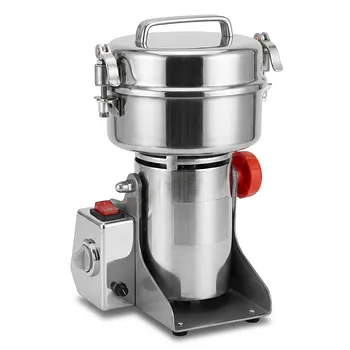
High Speed Laboratory Powder Grinder Small Batch Sample Preparation Mill

Small High-Speed Laboratory Grinder for Powder Processing

Small Trace Sample High Speed Pulverizer Grinder Laboratory Powder Mill

Ultra Centrifugal Mill High Speed Laboratory Grinder for Fibrous and Brittle Sample Preparation
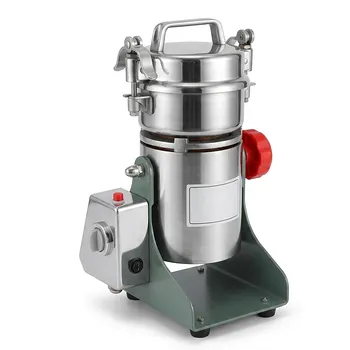
High Speed Swing Type Laboratory Pulverizer for Fine Powder Grinding and Sample Preparation
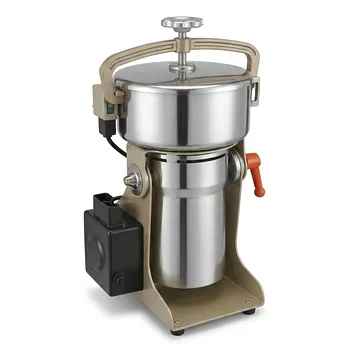
Multifunctional High Efficiency High Speed Laboratory Grinder
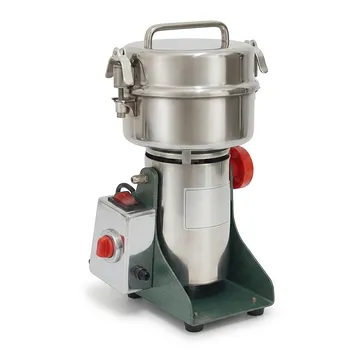
Small High Speed Grinder for Laboratory Sample Preparation
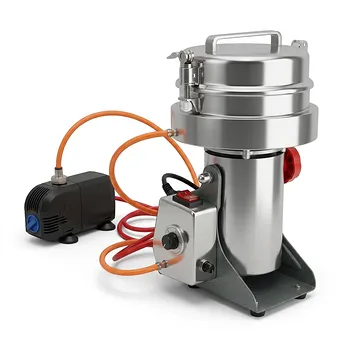
Water Cooled High Speed Grinder with Cryogenic Option for Laboratory Sample Preparation
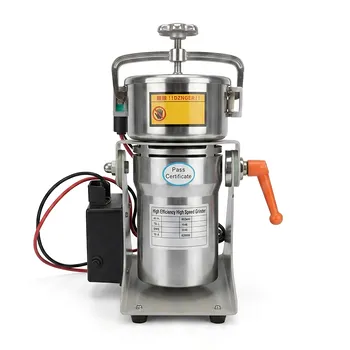
High Efficiency High Speed Grinder Laboratory Mill 1300W 25000rpm
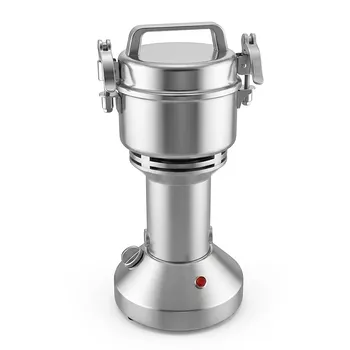
Small High Speed Upright Grinder for Laboratory Sample Preparation
Industrial Planetary Centrifugal Vacuum Defoaming Mixer for High Viscosity Paste and Powder Homogenization