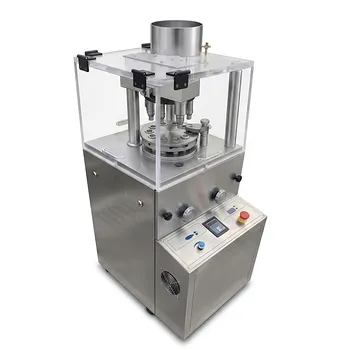
What are the benefits of using a high-temperature vacuum hot press compared to cold pressing? Enhance Stone Durability
Updated 5 months ago
High-temperature vacuum hot pressing is a transformative process that optimizes the chemical and physical properties of artificial stone. By simultaneously applying thermal energy, mechanical pressure, and a vacuum environment, this method accelerates the resin curing reaction while ensuring a nearly defect-free internal structure. Compared to cold pressing, it significantly reduces production cycles and produces slabs with superior dimensional stability, heat resistance, and density.
Core Takeaway: The integration of heat and vacuum eliminates the primary weaknesses of cold pressing—long cure times and internal porosity—resulting in a high-performance material with enhanced structural integrity and aesthetic consistency.
Optimizing the Chemical Matrix
Accelerated Thermal Curing
In artificial stone production, the epoxy or polyester resin matrix requires a specific timeframe to solidify. High-temperature hot pressing (typically around 90°C) provides the necessary activation energy to trigger the thermal curing reaction immediately. This reduces the production cycle from hours or days to mere minutes.
Full Molecular Cross-Linking
Cold pressing often results in incomplete chemical reactions, leaving the stone vulnerable to warping. The application of heat under pressure ensures that the resin undergoes full cross-linking and solidification. This creates a robust molecular network that provides the finished slab with higher dimensional stability and lower internal stress.
Superior Heat Resistance
Because the resin matrix is cured at an elevated temperature, the resulting stone can withstand higher thermal loads in real-world applications. Full solidification prevents the material from softening or deforming when exposed to heat post-installation. This makes hot-pressed stone far more suitable for kitchen environments and commercial surfaces.
Improving Physical Density and Integrity
Vacuum-Assisted De-airing
One of the greatest challenges in stone production is the presence of micro-bubbles or "voids." The vacuum environment within the hot press extracts air from the mixture before and during the pressing phase. This prevents the oxidation of components and ensures that the final product is non-porous and hygienic.
Near-Theoretical Density
By combining axial pressure with heat, the material reaches a state of plastic flow, allowing particles to pack more tightly. This thermo-mechanical coupling eliminates internal porosity and achieves a density exceeding 99% of the material's theoretical limit. The result is a stone with significantly higher mechanical hardness and lower water absorption rates.
Enhanced Interfacial Bonding
The quality of artificial stone depends on how well the resin matrix bonds to the mineral fillers (like quartz or marble). High pressure and temperature promote superior diffusion and bonding at the interface of the matrix and reinforcement particles. This ensures that the stone does not delaminate or crack under mechanical stress.
Understanding the Trade-offs
Increased Capital Expenditure
Transitioning from cold pressing to vacuum hot pressing requires a significant initial investment. The equipment integrates high-temperature furnaces, complex hydraulic systems, and vacuum seals, making it substantially more expensive than simple molds. Smaller operations may find the entry cost prohibitive despite the long-term efficiency gains.
Thermal Management Complexity
Precise temperature control is critical; if the heat is too high or applied unevenly, the resin may degrade or "burn." Operators must manage complex heating and cooling cycles to prevent thermal shock or uneven curing across large slabs. This requires more highly skilled technicians and sophisticated control software than traditional methods.
Mold Material Constraints
The molds used in hot pressing must be able to withstand both high pressure and repeated thermal cycling. Standard inexpensive molds used in cold pressing will fail under these conditions, necessitating the use of specialized, heat-resistant alloys. This adds to the ongoing operational costs and maintenance requirements of the production line.
Applying This Technology to Your Production
How to Apply This to Your Project
Selecting the right pressing method depends on your volume requirements and the desired quality tier of your final product.
- If your primary focus is high-volume industrial output: Transition to high-temperature hot pressing to minimize cycle times and maximize floor space efficiency.
- If your primary focus is premium, high-durability surfaces: Utilize vacuum hot pressing to ensure the highest possible density and resistance to staining and heat.
- If your primary focus is architectural precision: Leverage the superior dimensional stability of hot-pressed slabs to reduce warping and ensure consistent thickness across large batches.
While the technical complexity is higher, the move to vacuum hot pressing is the definitive path for producers aiming to deliver world-class artificial stone.
Summary Table:
| Feature | Cold Pressing | Vacuum Hot Pressing |
|---|---|---|
| Curing Cycle | Hours to Days | Minutes (Rapid thermal activation) |
| Material Density | Lower (Potential for micro-voids) | Near-Theoretical (>99% density) |
| Dimensional Stability | Prone to internal stress & warping | High (Full molecular cross-linking) |
| Internal Structure | Porous, prone to staining | Non-porous, hygienic, and defect-free |
| Heat Resistance | Moderate | High (Withstands thermal loads) |
| Initial Investment | Low (Simple molds/equipment) | High (Complex hydraulic/vacuum systems) |
Elevate Your Material Performance with KinTek Solutions
Are you looking to eliminate porosity and achieve superior structural integrity in your material production? KinTek provides complete laboratory sample preparation solutions tailored for material science. We specialize in high-performance powder processing and compaction equipment designed to meet the rigorous demands of modern manufacturing.
Our extensive product line includes:
- Advanced Compaction: Vacuum hot presses, Cold/Warm Isostatic Presses (CIP/WIP), standard lab presses, and XRF pellet presses.
- Powder Processing: Planetary ball mills, jet mills, jaw/roll crushers, and cryogenic grinders.
- Precision Sizing & Mixing: Vibratory sieve shakers, air-jet sieves, and high-efficiency powder/defoaming mixers.
Whether you are a researcher refining new composites or a distributor seeking reliable OEM/ODM support and certified equipment, KinTek delivers the precision and durability you need.
Contact our technical experts today to find the perfect solution for your project!
References
- Thaís Leal da Cruz Silva, Carlos Maurício Fontes Vieira. Characterization of Artificial Stone Developed with the Incorporation of Granite and Mirror Wastes in an Epoxy Matrix. DOI: 10.1590/1980-5373-mr-2022-0561
Mentioned Products
- High Viscosity Planetary Centrifugal Vacuum Mixer for Material Defoaming and Uniform Mixing
- High Efficiency Vacuum Planetary Centrifugal Mixer and Defoaming Machine for Industrial Material Research and Precise Laboratory Powder Dispersion
- High Viscosity Planetary Centrifugal Mixing and Vacuum Defoaming Machine for Laboratory Material Preparation
- High Speed Vacuum Planetary Centrifugal Mixer and Defoamer for Industrial Paste Processing
- Industrial Planetary Centrifugal Vacuum Defoaming Mixer for High Viscosity Paste and Powder Homogenization
People Also Ask
- What core functions does a planetary centrifugal mixer perform? Optimize Hard Carbon Anode Slurry & Degassing
- Why is a planetary centrifugal mixer recommended for geopolymer slurries? Achieve high-shear, air-free homogenization.
- Why is a planetary centrifugal mixer utilized for wood powder and HPMC? Achieve uniform dispersion & rapid defoaming.
- How does a planetary centrifugal mixer address key challenges in Tyr-CDs@EVA optical films? Ensure Optical Clarity.
- What is the role of a planetary centrifugal mixer in UHTC slurry preparation? Achieve Void-Free, High-Viscosity Mixing

Tech Team · PowderPreparation
Last updated on May 14, 2026
Related Products
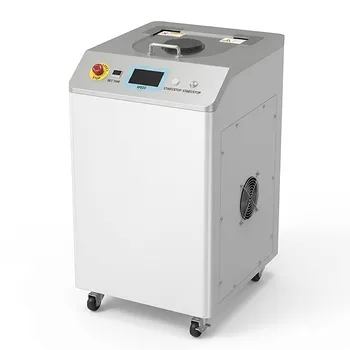
High Viscosity Planetary Centrifugal Vacuum Mixer for Material Defoaming and Uniform Mixing
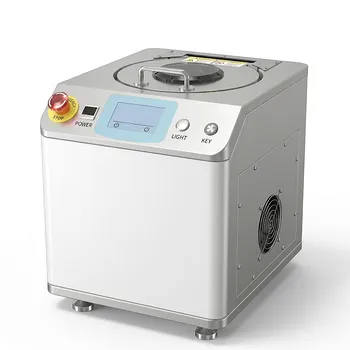
High Efficiency Vacuum Planetary Centrifugal Mixer and Defoaming Machine for Industrial Material Research and Precise Laboratory Powder Dispersion

High Viscosity Planetary Centrifugal Mixing and Vacuum Defoaming Machine for Laboratory Material Preparation
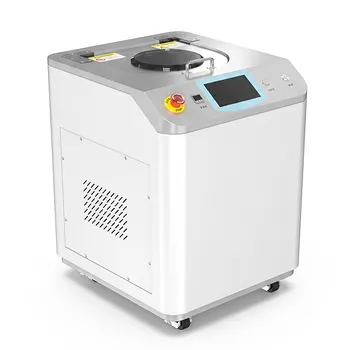
High Speed Vacuum Planetary Centrifugal Mixer and Defoamer for Industrial Paste Processing
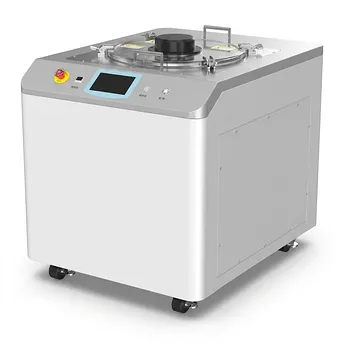
Industrial Planetary Centrifugal Vacuum Defoaming Mixer for High Viscosity Paste and Powder Homogenization
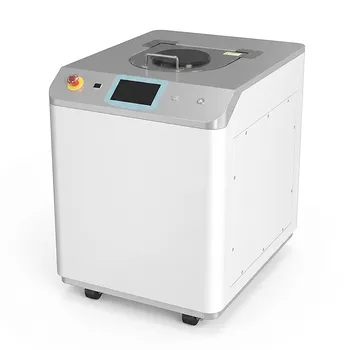
Industrial Planetary Centrifugal Vacuum Defoaming Mixer for High Viscosity Paste and Advanced Material Science
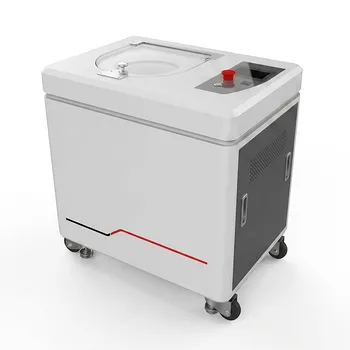
非介入式材料均质机真空脱泡行星搅拌高粘度混合设备
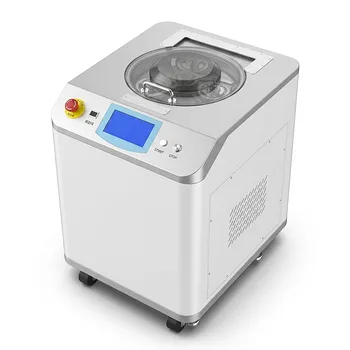
Dual Cup Vacuum Centrifugal Mixer Planetary Paste Defoaming Machine Industrial Material Processor
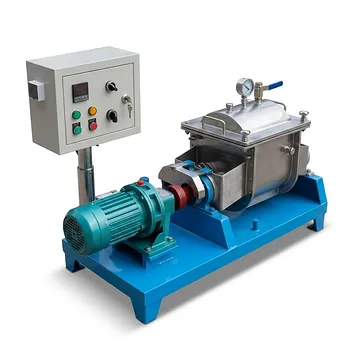
Industrial Vacuum Kneader for High-Viscosity Silicone, Rubber, and Compound Mixing