What are the advantages of vacuum hot pressing for Cr-Ti alloys? Achieve superior density and microstructural purity.
Updated 5 months ago
Vacuum hot pressing represents a transformative shift in Cr-Ti alloy production. By utilizing powder metallurgy instead of liquid-state processing, this method eliminates the inherent defects of traditional melting, such as compositional segregation, coarse grain growth, and non-uniform microstructures. The result is a high-density material with significantly enhanced mechanical strength and hardness, achieved at lower processing temperatures.
Core Takeaway: Vacuum hot pressing (VHP) overcomes the metallurgical limitations of melting by using pressure-assisted diffusion to create fine-grained, near-fully dense Cr-Ti alloys with superior structural integrity and chemical purity.
Superior Microstructural Integrity
Eliminating Compositional Segregation
Traditional melting processes often lead to "segregation," where different elements within the alloy settle unevenly as the liquid metal cools. Vacuum hot pressing bypasses the liquid phase entirely. By using solid-state powder particles, the distribution of Chromium and Titanium remains uniform throughout the entire component.
Grain Size Refinement
In traditional casting, high temperatures and slow cooling cycles encourage the formation of "coarse" or large grains, which weaken the material. The pressure-assisted nature of VHP allows for lower sintering temperatures. These lower temperatures effectively inhibit grain growth, resulting in a fine-grained microstructure that is fundamentally tougher and more resilient.
In-Situ Strengthening
The controlled environment of a vacuum hot press enables the uniform distribution of strengthening phases within the alloy matrix. Mechanical pressure helps promote the in-situ formation of these reinforcing phases. This creates a more consistent internal "skeleton" for the alloy, further enhancing its structural performance compared to cast equivalents.
Enhanced Mechanical Performance
Achieving Near-Theoretical Density
VHP equipment applies simultaneous heat and uniaxial pressure (often ranging from 10 to 40 MPa) to eliminate residual pores between powder particles. This process facilitates creep and plastic flow mechanisms. As a result, Cr-Ti alloys can reach nearly 100% of their theoretical density, which is critical for high-stress applications.
Superior Tensile and Compressive Strength
The combination of high density and fine grain structure leads to exceptional mechanical stats. VHP-produced materials often exhibit tensile strengths exceeding 800 MPa. This level of performance is difficult to achieve with traditional melting, where internal porosity and large grains act as "crack initiation sites" that lead to premature failure.
Increased Surface and Bulk Hardness
The precision of powder metallurgy allows for a more compact atomic structure. Pressure-assisted atomic diffusion densifies the material more effectively than simple gravity casting. This leads to a measurable increase in both surface hardness and bulk mechanical stability, making the alloy more resistant to wear and deformation.
Optimized Processing Environment
Prevention of Oxidation and Contamination
Titanium is highly reactive at high temperatures and easily absorbs oxygen or nitrogen from the air, which can embrittle the alloy. The vacuum environment acts as a protective shield. It prevents oxidation and facilitates the removal of interstitial gases, ensuring the final Cr-Ti alloy remains pure and biocompatible.
Reduced Thermal Stress
Because VHP utilizes mechanical pressure to drive densification, it does not require the extreme temperatures needed to reach a full liquidus state. Sintering often occurs at temperatures significantly lower than the melting point. This reduces the thermal gradient within the material, minimizing internal stresses and the risk of thermal cracking during cooling.
Understanding Technical Trade-offs
Geometry and Throughput Constraints
Unlike casting, which can produce complex "near-net" shapes using molds, VHP is generally limited by its uniaxial pressure application. This typically restricts production to simpler geometric forms like disks, plates, or cylinders. Furthermore, the cycle times for VHP are often longer than casting, as the equipment requires precise heating, holding, and cooling phases under pressure.
Equipment and Tooling Costs
The capital investment for an industrial-grade vacuum hot press is substantial compared to basic melting furnaces. The molds (dies) must be made of high-strength materials like graphite or specialized ceramics. These dies are subject to significant wear and tear due to the simultaneous application of high heat and high pressure, leading to higher recurring operational costs.
How to Apply This to Your Project
Making the Right Choice for Your Goal
- If your primary focus is Maximum Mechanical Reliability: Utilize vacuum hot pressing to ensure a fine-grained, defect-free microstructure that eliminates the risk of internal segregation.
- If your primary focus is High Chemical Purity: Choose VHP for its ability to process materials in a vacuum, preventing the oxidation and gas contamination common in open-air melting.
- If your primary focus is Mass-Producing Complex Shapes: Traditional melting or alternative powder metallurgy techniques like Metal Injection Molding (MIM) may be more cost-effective than the geometric limits of hot pressing.
- If your primary focus is Near-Theoretical Density: VHP is the superior choice, as the simultaneous application of pressure and heat effectively closes internal pores that standard sintering or casting cannot.
By prioritizing microstructural control over simple liquid-phase processing, vacuum hot pressing ensures that Cr-Ti alloys meet the rigorous demands of advanced industrial and medical applications.
Summary Table:
| Feature | Vacuum Hot Pressing (VHP) | Traditional Melting |
|---|---|---|
| Microstructure | Uniform, no segregation | Prone to compositional segregation |
| Grain Size | Fine-grained (inhibited growth) | Coarse grains (slow cooling) |
| Density | Near-theoretical (~100%) | Risk of internal porosity |
| Purity | High (Protective vacuum) | Risk of oxidation/contamination |
| Mechanical Strength | Superior (e.g., >800 MPa) | Limited by internal defects |
| Geometry | Simple (disks, cylinders) | Complex (near-net shapes) |
Elevate Your Material Research with Precision Compaction Solutions
Ready to eliminate metallurgical defects and achieve near-theoretical density in your Cr-Ti alloys? Contact our experts today to find the perfect equipment for your laboratory or production line.
At Our Brand, we provide complete laboratory sample preparation solutions for material science, specializing in advanced powder processing and compaction equipment. Our extensive range is designed to meet the most rigorous research and industrial standards, including:
- High-Performance Presses: Vacuum hot presses, standard hot presses, and Cold/Warm Isostatic Presses (CIP/WIP).
- Precision Milling: Planetary ball mills, jet mills, rotor mills, and liquid nitrogen cryogenic grinders.
- Sample Prep & Analysis: Jaw/roll crushers, vibratory/air-jet sieve shakers, and XRF pellet presses.
- Advanced Mixing: Powder mixers and vacuum defoaming mixers for consistent material blends.
Whether you are refining Cr-Ti alloys or developing new powder metallurgy workflows, our specialized equipment ensures repeatable, high-quality results. Inquire now to see how we can optimize your material performance!
References
- Shih‐Hsien Chang, Kuo-Tsung Huang. Investigation of Vacuum Hot-Press Sintering Temperatures on the Sintered Characteristics of Cr-31.2 mass% Ti Alloys. DOI: 10.2320/matertrans.m2017048
Mentioned Products
- 非介入式材料均质机真空脱泡行星搅拌高粘度混合设备
- Industrial Vacuum Kneader for High-Viscosity Silicone, Rubber, and Compound Mixing
- Dual Cup Vacuum Centrifugal Mixer Planetary Paste Defoaming Machine Industrial Material Processor
- High Efficiency Vacuum Planetary Centrifugal Mixer and Defoaming Machine for Industrial Material Research and Precise Laboratory Powder Dispersion
- High Speed Vacuum Planetary Centrifugal Mixer and Defoamer for Industrial Paste Processing
People Also Ask
- How does a planetary vacuum defoaming mixer help magnesium calcium phosphate slurries? Achieve Flawless 3D Printed Bone
- Why is vacuum defoaming necessary for PDMS mixtures before microwave irradiation curing? Key to Structural Integrity
- What role does a vacuum defoaming mixer play in BNT MLCC slurry? Ensure High Dielectric Strength & Pinhole-Free Prep
- Why is a vacuum defoaming mixer essential for DLP 3D printing ceramic slurries? Key to Structural Integrity
- What is the purpose of using a high-vacuum defoaming mixer for SiC/Cf composites? Optimize Density and Strength

Tech Team · PowderPreparation
Last updated on May 14, 2026
Related Products
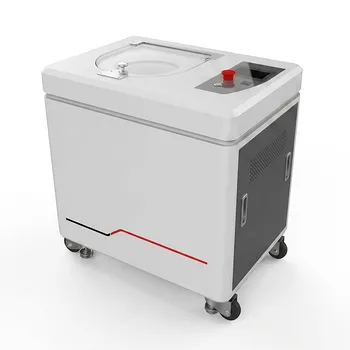
非介入式材料均质机真空脱泡行星搅拌高粘度混合设备
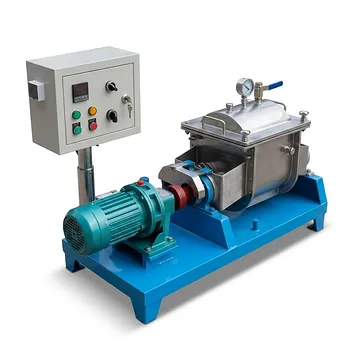
Industrial Vacuum Kneader for High-Viscosity Silicone, Rubber, and Compound Mixing
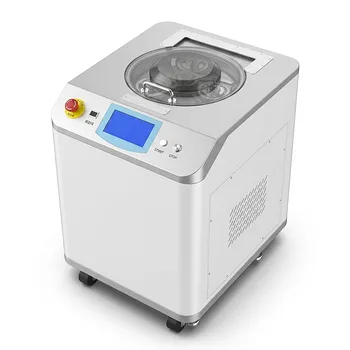
Dual Cup Vacuum Centrifugal Mixer Planetary Paste Defoaming Machine Industrial Material Processor
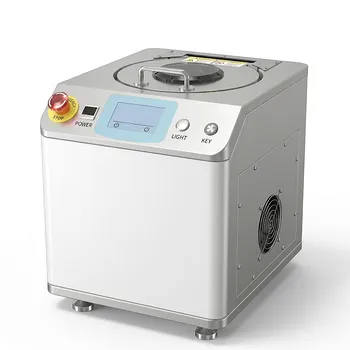
High Efficiency Vacuum Planetary Centrifugal Mixer and Defoaming Machine for Industrial Material Research and Precise Laboratory Powder Dispersion
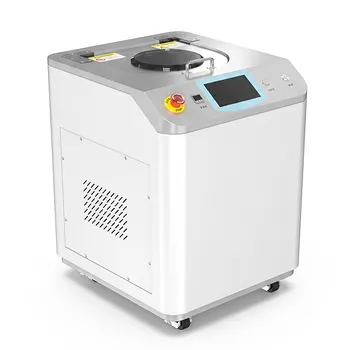
High Speed Vacuum Planetary Centrifugal Mixer and Defoamer for Industrial Paste Processing
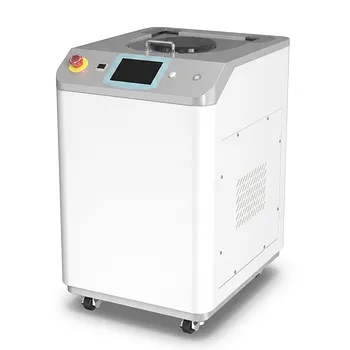
High Viscosity Planetary Centrifugal Mixing and Vacuum Defoaming Machine for Laboratory Material Preparation
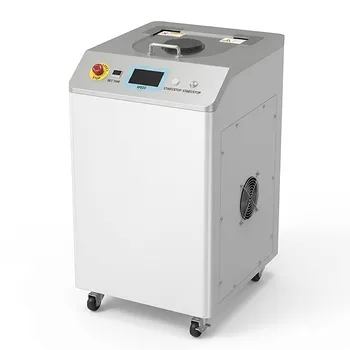
High Viscosity Planetary Centrifugal Vacuum Mixer for Material Defoaming and Uniform Mixing
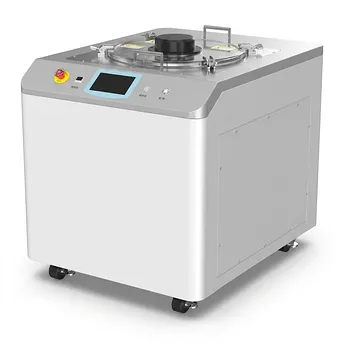
Industrial Planetary Centrifugal Vacuum Defoaming Mixer for High Viscosity Paste and Powder Homogenization