What are the advantages of using steel balls in a planetary ball mill for silica grinding? Maximize Kinetic Energy
Updated 5 months ago
Steel balls are the preferred grinding media for silica because they provide the high-density mass required to generate powerful kinetic energy during planetary milling. This energy creates the necessary mechanochemical force to overcome the lattice energy of silica, enabling the effective pulverization of hard sand particles into micron-scale powders while maintaining high grinding efficiency.
Using steel balls in a planetary ball mill optimizes the transfer of mechanical energy into impact and shear forces. This process not only reduces particle size but also increases the reactive surface area of silica, which is essential for downstream chemical applications.
Maximizing Kinetic Energy Transfer
The Role of High Density
Steel is significantly denser than ceramic alternatives, which directly correlates to the kinetic energy output during high-speed rotation. In a planetary ball mill, the mass of the steel balls determines the collision energy level, allowing them to crush materials with high fracture toughness like silica.
Overcoming Silica’s Lattice Energy
Silica (SiO2) possesses a strong crystalline structure that requires substantial force to disrupt. The high-frequency collisions and compression generated by steel balls provide the mechanochemical force necessary to break these chemical bonds and achieve material micronization.
Impact vs. Shear Forces
High-density steel media deliver a combination of powerful impact and shear forces. While impact energy is critical for initial fracturing of coarse sand, the shear force helps refine the powder to a micrometer scale by grinding particle surfaces against one another.
Enhancing Material Reactivity and Consistency
Increasing Specific Surface Area
Efficient grinding with steel balls significantly enhances the specific surface area of the silica powder. This increased surface area promotes faster dissolution and higher reactivity in alkaline environments, which is vital for the formation of geopolymer gels.
Stability and Consistency of Results
The high hardness and wear resistance of steel ensure that the media maintains its shape and mass during prolonged grinding cycles. This stability is critical for researchers who require consistent experimental results and repeatable particle size distributions.
Media Graduation for Optimized Breakage
Using a graded selection of steel ball diameters allows for optimized breakage efficiency. Larger balls provide the impact energy to crush coarse particles, while smaller balls increase the total contact points to refine intermediate particles through friction.
Understanding the Trade-offs
Potential for Metallic Contamination
While high-quality steel is wear-resistant, the high-energy environment of a planetary mill will inevitably introduce trace amounts of iron into the silica. If the final application requires ultra-high purity (e.g., semiconductor grade), secondary purification or alternative media like zirconia may be required.
Heat Generation and Pressure
The intense kinetic energy of steel balls produces significant internal heat within the grinding jar. For certain heat-sensitive silica modifications, this temperature rise must be managed through cooling cycles to prevent unwanted phase changes or pressure buildup.
Weight-Induced Equipment Wear
The high mass of steel media puts more mechanical stress on the planetary mill’s drive system compared to lighter media. Consistent use requires a robust maintenance schedule for the mill’s bearings and gears to ensure long-term operational reliability.
Applying Media Selection to Your Project
Recommendations for Grinding Strategy
- If your primary focus is rapid particle size reduction: Use high-density steel balls to maximize impact energy and minimize processing time.
- If your primary focus is chemical reactivity: Prioritize high-speed milling with steel to increase the specific surface area and activate the silica surface.
- If your primary focus is simulating industrial production: Employ a graded selection of different-sized steel balls to mimic the media environment of large-scale industrial mills.
Selecting steel balls as your grinding media ensures the energy density required to transform inert silica into a highly reactive, micron-scale precursor.
Summary Table:
| Key Feature | Advantage for Silica Grinding | Impact on Results |
|---|---|---|
| High Mass Density | Superior Kinetic Energy | Overcomes silica lattice energy for micronization |
| Mechanical Force | Combined Impact & Shear | Rapid reduction from coarse sand to fine powder |
| Wear Resistance | Long-term Media Stability | Ensures consistent particle size distribution |
| Media Graduation | Multi-size Ball Selection | Optimized breakage efficiency and surface area |
| High Hardness | Mechanochemical Activation | Increases reactivity for downstream applications |
Optimize Your Material Preparation Today
Achieving the perfect micron-scale powder requires the right equipment and the right media. At our facility, we provide complete laboratory sample preparation solutions for material science, specializing in professional-grade powder processing and compaction equipment.
Whether you need robust planetary ball mills, high-density grinding media, or post-processing tools like vibratory sieve shakers, we have you covered. Our extensive line includes:
- Grinding & Milling: Crushers (jaw/roll), liquid nitrogen cryogenic grinders, jet mills, and disc mills.
- Mixing: Powder mixers and vacuum defoaming mixers.
- Compaction: A full spectrum of hydraulic presses, including Cold/Warm Isostatic Presses (CIP/WIP), hot presses, and XRF pellet presses.
Let our experts help you select the ideal configuration to enhance your lab's efficiency and research accuracy. Contact us today to request a quote or consultation!
References
- Magda A. Akl. Preparation and Characterization of Silica Nanoparticles by Wet Mechanical Attrition of White and Yellow Sand. DOI: 10.4172/2157-7439.1000183
Mentioned Products
- Vertical Semi Circular Planetary Ball Mill for Laboratory Precision Grinding
- Heavy Duty Horizontal Planetary Ball Mill for Efficient Industrial Grinding and Sample Preparation
- 360° Rotating Omnidirectional Laboratory Planetary Ball Mill for Homogeneous Ultra-Fine Grinding and Mixing
- 8L Planetary Ball Mill for Laboratory Grinding and Sample Preparation
- Vertical Square Planetary Ball Mill for Laboratory Sample Preparation and Nanoscale Grinding
People Also Ask
- What role does a planetary ball mill play in the synthesis of Li6PS5Cl (LPSCl)? Unlock High Ionic Conductivity
- Why is a planetary ball mill essential for SiBCN-rGO wet-spinning? Achieve Superior Dispersion and Spinnability
- Why is an intermittent grinding process required for perovskites in a planetary ball mill? Ensure Stability & Purity
- Why is a planetary ball mill required for PET micronization? Ensure Accurate Chemical Analysis of Reprocessed PET
- How does mechanized planetary ball milling compare to manual agate grinding? Optimize sulfide standard material precision.

Tech Team · PowderPreparation
Last updated on May 14, 2026
Related Products
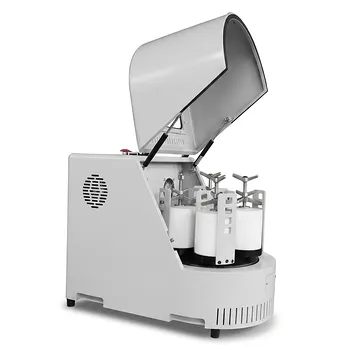
Vertical Semi Circular Planetary Ball Mill for Laboratory Precision Grinding
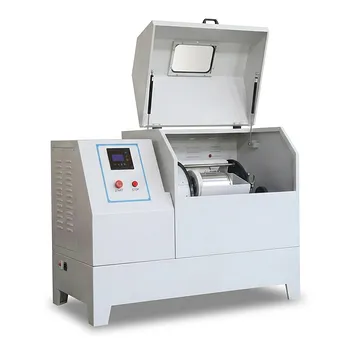
Heavy Duty Horizontal Planetary Ball Mill for Efficient Industrial Grinding and Sample Preparation
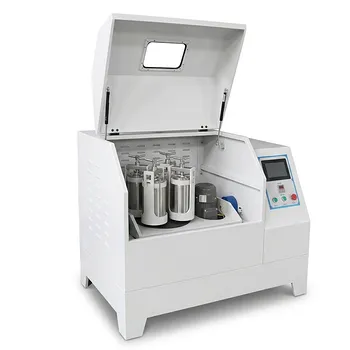
360° Rotating Omnidirectional Laboratory Planetary Ball Mill for Homogeneous Ultra-Fine Grinding and Mixing
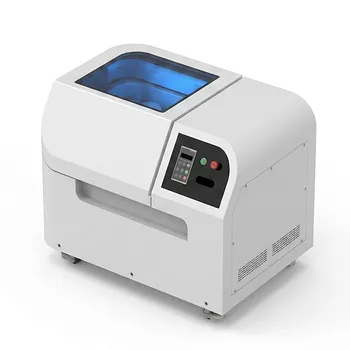
8L Planetary Ball Mill for Laboratory Grinding and Sample Preparation

Vertical Square Planetary Ball Mill for Laboratory Sample Preparation and Nanoscale Grinding
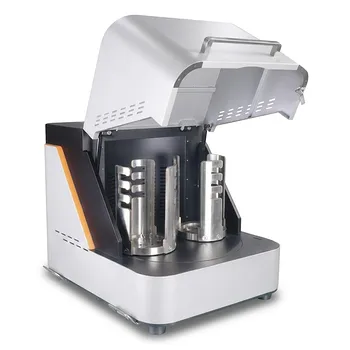
High Energy Laboratory Planetary Ball Mill for Nano Grinding and Colloidal Mixing of Hard and Brittle Materials

High Energy Laboratory Planetary Ball Mill for Nano Grinding and Material Science Sample Preparation
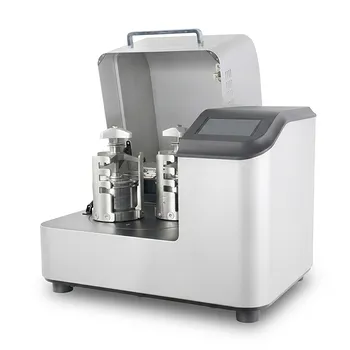
High Energy Planetary Ball Mill for Nano Scale Grinding and Mechanical Alloying
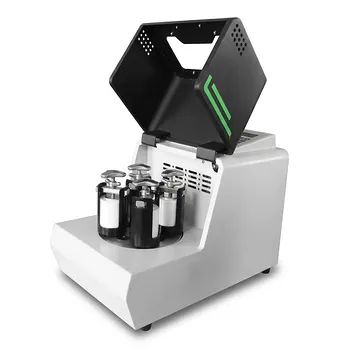
Miniature Planetary Ball Mill with Vacuum Grinding and High Efficiency for Laboratory Sample Preparation

High Energy Omnidirectional Planetary Ball Mill 16L
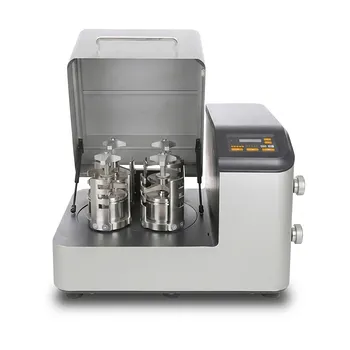
High Energy Planetary Ball Mill for Nano Scale Grinding and Colloidal Mixing in Material Science Research
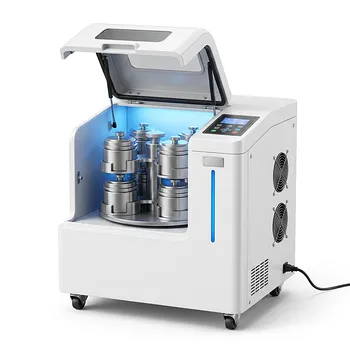
High Energy Omnidirectional Planetary Ball Mill 20L
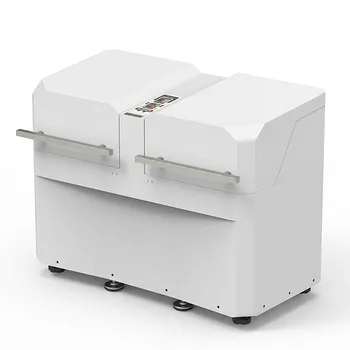
Dual Station Planetary Ball Mill 24L
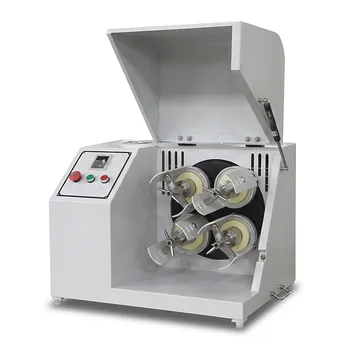
Horizontal Light Duty Planetary Ball Mill for Laboratory Sample Preparation
Vertical Production Planetary Ball Mill for High Throughput Powder Processing
Planetary Ball Mill 12L
High Energy Hybrid Vibratory Ball Mill for Grinding Mixing and Cell Disruption
High Throughput Micro Ball Mill for Cryogenic Grinding and Laboratory Cell Disruption

Single Tank High Energy Vibratory Ball Mill for Laboratory Grinding and Mixing