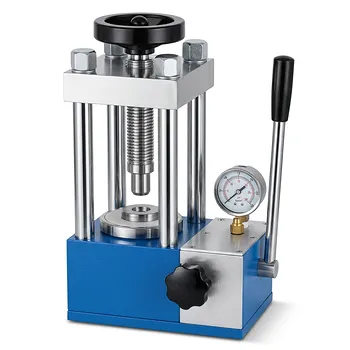
How is a high-precision hydraulic press used to test modified concrete strength for accurate, reproducible MPa data?
Updated 4 months ago
The determination of compressive strength in modified concrete relies on the application of a continuous and uniform axial load to a specimen until it reaches structural failure. By recording the maximum load sustained by the specimen, a high-precision hydraulic press calculates the material's strength in megapascals (MPa), providing a quantitative measure of how specific additives or substitutes alter the concrete's load-bearing capacity.
A high-precision hydraulic press ensures scientific validity by delivering a controlled loading rate and uniform stress distribution. This precision allows researchers to isolate the exact impact of material modifications—such as the addition of fibers, nanomaterials, or recycled aggregates—on the concrete's mechanical performance.
The Mechanics of Controlled Axial Compression
Standardized Specimen Loading
The hydraulic press applies a uniaxial load to standard specimens, which are typically shaped as cylinders or cubes (commonly 100mm or 150mm). To ensure reproducible results, the equipment maintains a standardized loading rate, often between 0.2 and 0.6 N/mm² per second.
Ensuring Uniform Stress Distribution
Modern presses utilize an upper pressure plate equipped with a spherical seat. This mechanism allows the plate to adjust its angle automatically to compensate for minor surface irregularities on the specimen.
Capture of Maximum Load Data
The system monitors the specimen from the initial stage of elastic deformation through to final structural failure. The precise load measurement system captures the peak value, which represents the material's ultimate compressive limit.
Quantifying the Impact of Material Modifications
Evaluating Additive Contributions
High-precision testing is essential for quantifying how materials like blood clam shell powder, carbon nanotubes, or steel fibers contribute to the cement matrix. These tests reveal whether an additive increases load-bearing capacity or successfully reduces the brittleness of the matrix through bridging effects.
Assessing Strength Reduction in Recycled Materials
When natural stone is replaced with recycled basalt aggregates or materials from demolished buildings, the press identifies any reduction in breaking stress. This data allows engineers to verify if the modified concrete still meets the necessary structural safety standards.
Detecting the Effects of Impurities
The press is sensitive enough to capture mechanical changes introduced by chemical impurities, such as soap factory wastewater or high-porosity materials. By measuring the reduction in breaking stress, researchers can analyze how pores or chemical reactions degrade the concrete's integrity.
Common Pitfalls and Technical Trade-offs
Impact of Loading Rate Deviations
Inconsistent loading rates can lead to "strain rate sensitivity," where the concrete appears stronger or weaker than it actually is. Maintaining a constant and smooth axial pressure is the only way to ensure the data is scientifically valid and comparable across different batches.
Sensitivity to Surface Preparation
Even with a spherical seat, extreme irregularities on the pressurized surface can cause local stress concentrations. These concentrations lead to premature failure at the edges, resulting in a recorded compressive strength that is lower than the material's actual potential.
The Role of Curing Age
Mechanical testing must be performed at specific curing ages, such as 7 or 28 days, to provide a true reflection of the material's pozzolanic characteristics. Testing too early or too late can lead to misleading conclusions about the effectiveness of a concrete modification.
Applying Testing Data to Your Project
Making the Right Choice for Your Goal
- If your primary focus is Structural Safety: Use the press to verify that recycled aggregate substitutions do not drop the compressive strength below the minimum MPa requirements for your specific application.
- If your primary focus is Material Innovation: Leverage the high-precision load measurement to quantify the "bridging effect" of fibers or the reinforcing potential of nanomaterials like carbon nanotubes.
- If your primary focus is Environmental Sustainability: Utilize the test to determine the maximum percentage of cement that can be replaced by waste materials, such as rice husk ash or shell powder, without compromising integrity.
By utilizing high-precision hydraulic testing, you transform qualitative theories about concrete additives into the quantitative, reproducible data required for modern engineering.
Summary Table:
| Key Feature | Functional Mechanism | Research Value |
|---|---|---|
| Controlled Loading | Constant rate (0.2–0.6 N/mm²/s) | Eliminates strain rate sensitivity for valid data comparisons. |
| Spherical Seat | Self-adjusting upper pressure plate | Ensures uniform stress distribution and prevents local edge failure. |
| Peak Data Capture | High-precision load monitoring | Quantifies the exact impact of additives like fibers or nanomaterials. |
| Standardization | Uniaxial load on cubes/cylinders | Verifies if modified concrete meets structural safety standards. |
Elevate Your Material Testing Precision with Our Solutions
At [Your Brand Name], we provide complete laboratory sample preparation solutions tailored for advanced material science. We specialize in high-performance powder processing and compaction equipment designed to deliver the quantitative accuracy your research demands.
Our extensive product lines include:
- Hydraulic Presses: A full spectrum including Cold/Warm Isostatic Presses (CIP/WIP), standard lab presses, XRF pellet presses, and vacuum hot presses.
- Sample Preparation: Precision crushers (jaw/roll), liquid nitrogen cryogenic grinders, and diverse mills (planetary ball, jet, and disc).
- Sieving & Mixing: Advanced sieve shakers, powder mixers, and defoaming mixers for uniform specimen preparation.
Whether you are validating the structural integrity of recycled aggregates or pioneering new fiber-reinforced composites, our equipment ensures your results are scientific and reproducible.
Ready to optimize your laboratory workflow? Contact our experts today to discuss the perfect solution for your testing requirements!
References
- Ifal Rahmadani, Ghina Amalia. PEMANFAATAN LIMBAH CANGKANG KERANG DARA SEBAGAI SUBSTITUSI SEMEN TERHADAP KUAT TEKAN BETON. DOI: 10.24912/jmts.v8i2.32276
Mentioned Products
- Hydraulic Double Shaft Disperser for High Viscosity Liquid Mixing and Dispersion
- Enhanced 9 Punch Rotary Tablet Press for Powder Compaction
- 6 Ton Variable Frequency Single Punch Tablet Press
- 6-Ton Small Single-Punch Tablet Press — Laboratory Powder & Granule Tableting Equipment / Tablet Forming Machine
- 5 Ton Single Punch Tablet Press Laboratory Small Batch Production
People Also Ask
- Why is it necessary for an industrial hydraulic press to provide high unit pressure when preparing MMC green bodies? Optimize Densification
- What role does high-speed mixing play in photoanode slurry prep? Optimize Nanoparticle Dispersion for Solar Efficiency
- What are the advantages of a customized dual-blade mixer? High-Shear Mixing for High-Viscosity Pastes
- How does high-precision mixing ensure phase stability in BaO–MgO–ZrO2 ceramics? Achieve Pure Dielectric Performance
- What is the function of high-efficiency mixing and defoaming equipment in catalyst systems? Achieve Molecular Uniformity

Tech Team · PowderPreparation
Last updated on Jun 03, 2026
Related Products
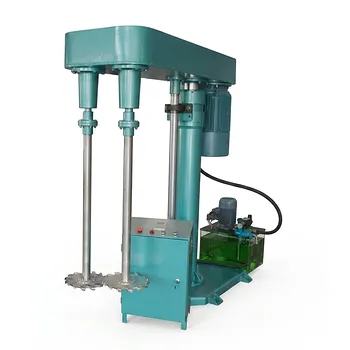
Hydraulic Double Shaft Disperser for High Viscosity Liquid Mixing and Dispersion
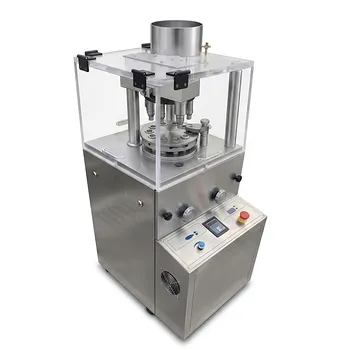
Enhanced 9 Punch Rotary Tablet Press for Powder Compaction
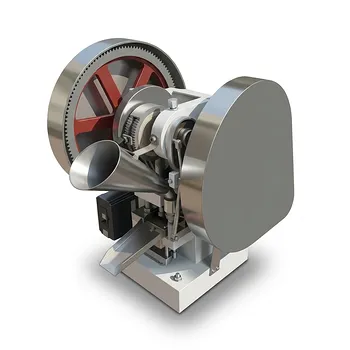
6 Ton Variable Frequency Single Punch Tablet Press
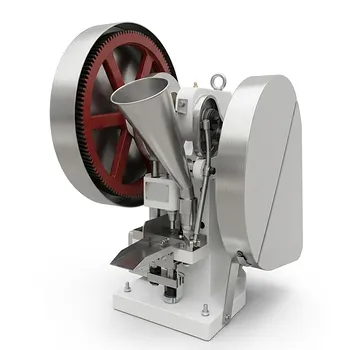
6-Ton Small Single-Punch Tablet Press — Laboratory Powder & Granule Tableting Equipment / Tablet Forming Machine
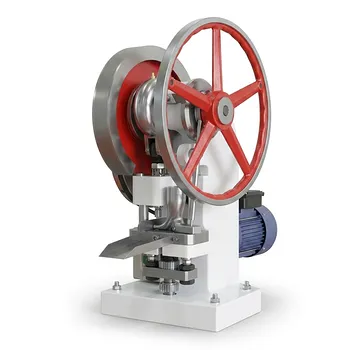
5 Ton Single Punch Tablet Press Laboratory Small Batch Production
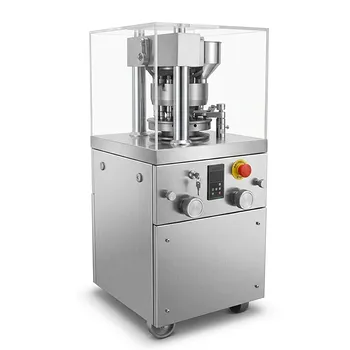
Ordinary Type Rotary Tablet Press for Pharmaceutical Chemical Food Electronic Industries