How is a standard sieve shaker utilized to evaluate the performance and grinding efficiency of a rod mill? Master PSD.
Updated 4 months ago
The standard sieve shaker serves as the primary diagnostic tool for assessing rod mill performance. It evaluates grinding efficiency by physically classifying the mill’s discharge into specific size fractions through standardized mechanical vibration and oscillation. By measuring the mass retained on a graduated stack of test sieves, operators can calculate the yield of target particles and determine if the mill is meeting its designated production specifications.
Core Takeaway: Sieve analysis transforms the physical output of a rod mill into quantifiable data. By analyzing the Particle Size Distribution (PSD), technical personnel can identify efficiency gaps, such as over-grinding or excessive waste production, and adjust mill parameters accordingly.
The Mechanics of Sieve-Based Evaluation
Multi-Layer Physical Separation
A sieve shaker utilizes a nested stack of test sieves with decreasing aperture sizes, typically ranging from 16 mesh to 100 mesh (or 5600 μm to 63 μm). Controlled mechanical vibration and tapping ensure that particles migrate through the stack until they reach a mesh through which they can no longer pass.
Quantitative Yield Calculation
Once the vibration cycle is complete, the material retained on each sieve level is weighed to determine the mass distribution. This data allows for the calculation of the "pass rate," such as a 50% target, which serves as a definitive indicator of whether the rod mill is achieving the required degree of size reduction.
Metrics for Measuring Grinding Efficiency
Establishing Particle Size Distribution (PSD)
Beyond simple pass rates, the sieve shaker provides the raw data needed to map the entire Particle Size Distribution (PSD). This map reveals the ratio of target particle sizes to "slime" (excessive fines), which is critical for assessing the overall quality of the discharge and the success of the grinding process.
Calculating Uniformity and Intensity
Data from the sieve shaker is used to calculate the Geometric Mean Diameter (GMD) and Geometric Standard Deviation (GSD). These metrics quantify the uniformity of the grinding process, indicating whether the rod mill is producing a consistent product or an erratic range of particle sizes.
Identifying Critical Indicators (D10, D50, D90)
Technical personnel use sieve data to determine specific indicators like the D50 (median particle size) and the uniformity coefficient. These values act as core technical benchmarks for evaluating the efficiency of various grinding technologies and how duration affects the final material state.
Understanding the Trade-offs
Sensitivity to Material Moisture
Sieve analysis is most effective when performed on dried grinding products. Excessive moisture can lead to "blinding" or agglomeration, where small particles stick together and fail to pass through the correct apertures, resulting in inaccurate efficiency data.
Physical Resolution Limits
While highly reliable for a wide range of industrial applications, mechanical sieving has physical resolution limits. For extremely fine materials below 25 μm, mechanical vibration may lose precision, potentially requiring alternative methods like laser diffraction to supplement the data.
Optimizing the Production Loop
Validating Process Models
The actual particle ratios obtained from the shaker are compared against simulation data or theoretical process models. This comparison validates the accuracy of the production flow and highlights where the rod mill may be deviating from expected performance due to mechanical wear or incorrect settings.
Guiding Equipment Adjustments
By identifying the crushing ratio and screening efficiency, engineers can fine-tune operational parameters. This includes adjusting the rod charge, the feed rate, or the discharge settings of the mill to optimize energy consumption and product throughput.
Applying This to Your Project
- If your primary focus is production yield: Use the sieve shaker to calculate the percentage of material meeting the target mesh size to ensure the mill is hitting its designated throughput goals.
- If your primary focus is process consistency: Analyze the Geometric Standard Deviation (GSD) to determine if the mill is producing a uniform product or if the rod charge needs rebalancing.
- If your primary focus is cost and waste reduction: Monitor the ratio of target size fractions to "slime" to identify over-grinding, which wastes energy and complicates downstream processing.
The integration of standardized sieve analysis ensures that rod mill operations are guided by empirical data rather than estimation.
Summary Table:
| Evaluation Metric | Purpose in Rod Mill Analysis | Key Operational Benefit |
|---|---|---|
| PSD Mapping | Analyzes the full range of particle sizes | Identifies over-grinding and excessive fines |
| Yield Calculation | Measures mass retained on target mesh | Confirms if production meets throughput goals |
| GSD/Uniformity | Quantifies consistency of the discharge | Guides adjustments for feed rate or rod charge |
| D50/D90 Indicators | Sets technical benchmarks for reduction | Validates process models and equipment health |
Precision Sample Preparation with [Brand Name]
Achieving the perfect particle size distribution is the foundation of successful material science research and production. At [Brand Name], we provide complete laboratory sample preparation solutions tailored to your specific grinding and classification needs.
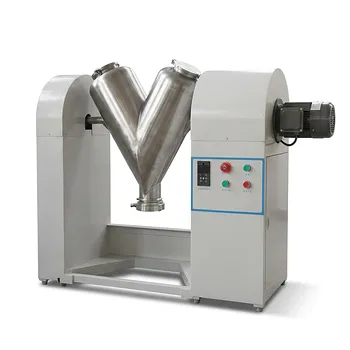
Whether you require robust jaw or roll crushers for primary reduction, high-efficiency planetary ball, jet, or cryogenic grinders, or precision vibratory and air-jet sieve shakers, our equipment is engineered for accuracy. We also offer a full spectrum of hydraulic presses (CIP/WIP), XRF pellet presses, and advanced powder mixers to ensure your material processing is seamless from start to finish.
Ready to optimize your grinding efficiency and production yield?
Contact our technical experts today to find the ideal equipment for your laboratory or industrial application!
References
- Manisa Chaca, Franto. Kajian Teknis Kinerja Alat Rod Mill terhadap Pengecilan Ukuran Butir di PT Babel Utama Korpora Site Pemali Kabupaten Bangka. DOI: 10.33019/96an1n30
Mentioned Products
- Stainless Steel Laboratory Vibratory Test Sieve Shaker
- 三维电磁微量振动筛分仪
- Small Laboratory Vibrating Sieve Shaker for Precise Particle Size Analysis
- Laboratory Dry and Wet Three Dimensional Vibratory Sieve Shaker for Particle Analysis
- Vibratory Sieve Shaker Electromagnetic 3D Motion Powder Particle Size Analyzer for Dry and Wet Sieving
People Also Ask
- What function does a laboratory vibratory sieve shaker serve in the production process of metakaolin? Optimize Reactivity
- Why is a precision laboratory vibratory sieve shaker necessary for particle size control? Optimize Biomass Carbonization
- What is the function of a laboratory vibratory sieve shaker? Enhance Coal Particle Size Distribution (PSD) Analysis
- What role do laboratory vibratory sieve shakers and test sieves play before the molding of Nb-Cu composite powders?
- What is the primary function of a laboratory vibratory sieve shaker in the evaluation of sand liquefaction potential?

Tech Team · PowderPreparation
Last updated on Jun 03, 2026
Related Products
Stainless Steel Laboratory Vibratory Test Sieve Shaker
三维电磁微量振动筛分仪
Small Laboratory Vibrating Sieve Shaker for Precise Particle Size Analysis
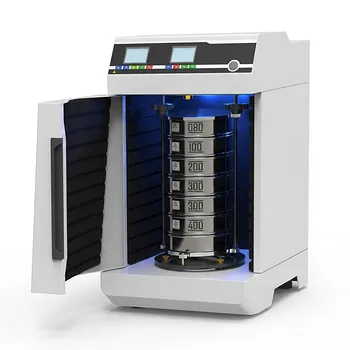
Laboratory Dry and Wet Three Dimensional Vibratory Sieve Shaker for Particle Analysis
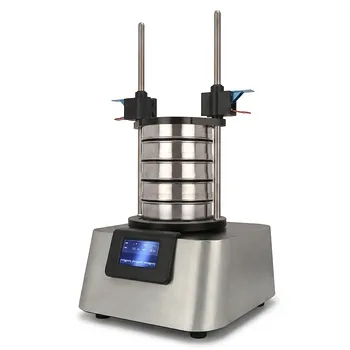
Vibratory Sieve Shaker Electromagnetic 3D Motion Powder Particle Size Analyzer for Dry and Wet Sieving
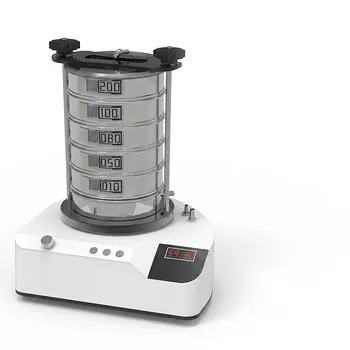
Heavy Duty Dry Three Dimensional Vibratory Sieve Shaker for Particle Separation
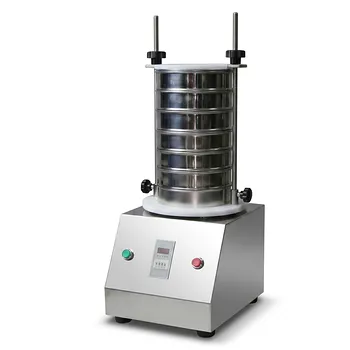
Small Laboratory Vibratory Sieve Shaker for Powder Gradation and Particle Size Analysis
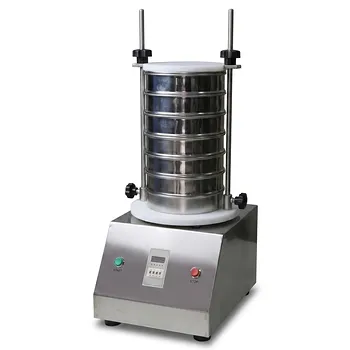
Laboratory Vibratory Test Sieve Shaker for Precision Particle Size Analysis and Powder Grading
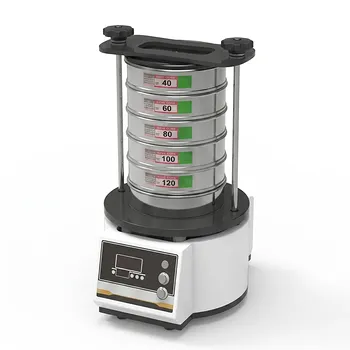
Dry Three Dimensional Vibratory Sieve Shaker
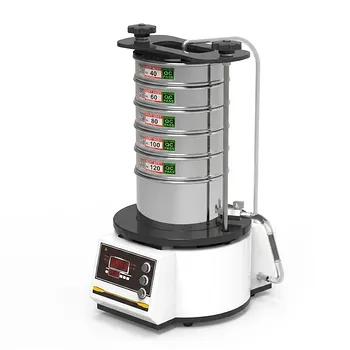
High Frequency Wet Three-Dimensional Vibrating Sieve Shaker for Dry and Wet Particle Size Analysis
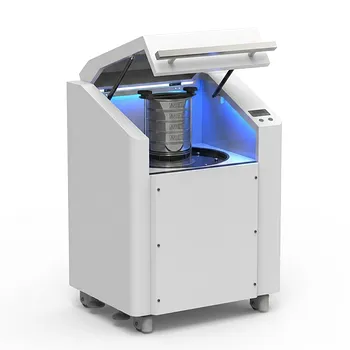
High Frequency Cabinet Type Three-Dimensional Rotary Vibrating Sieve Shaker for Dry Sieving and Particle Classification
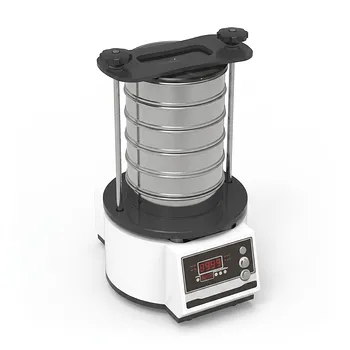
Tapping Oscillating Sieve Shaker for Dry and Wet Particle Size Analysis
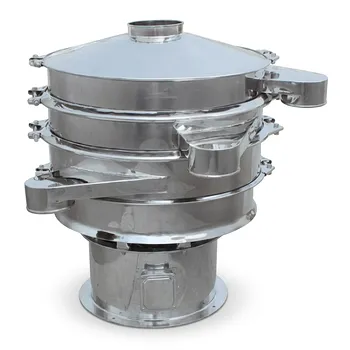
Stainless Steel Rotary Vibrating Sieve High Precision Circular Vibratory Separator Industrial Powder Grading Machine Multi Layer Sifting Equipment
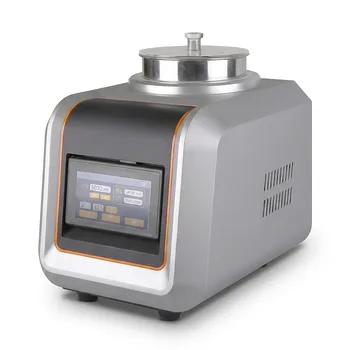
Laboratory Air Jet Sieving Machine for Fine Powder Particle Size Analysis and Deagglomeration
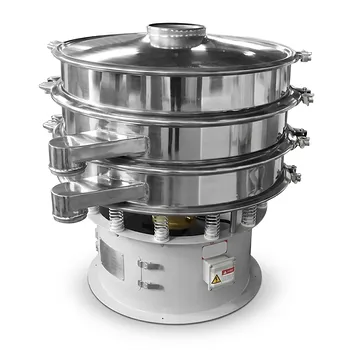
Three Dimensional Rotary Vibrating Sieve