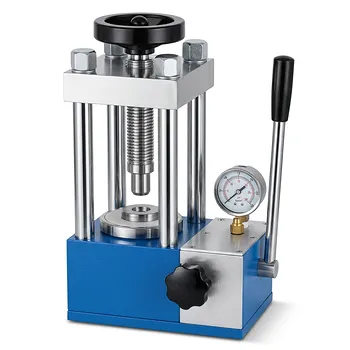
How is a lab hydraulic press used for photocatalytic concrete QC? Ensure 60 MPa strength & structural integrity.
Updated 4 months ago
The precision hydraulic press is the primary instrument for validating the structural integrity of photocatalytic concrete. It performs compressive strength tests on 150mm cube specimens by applying a precisely controlled loading rate to determine the point of material failure. This process ensures that both the functional photocatalytic top layer and the structural base layer meet rigorous design specifications, such as exceeding 60 MPa for industrial applications.
A laboratory high-precision hydraulic press provides the quantitative data necessary to bridge the gap between innovative material design and structural safety. By measuring ultimate load capacity and enforcing standardized loading rates, it ensures that photocatalytic concrete maintains its mechanical strength while performing its environmental functions.
Quantifying Structural Integrity via Compressive Strength
Measuring Ultimate Load at Failure
The hydraulic press applies uniaxial pressure to concrete specimens sampled directly from the construction site. By identifying the ultimate load at which the specimen fails, engineers can calculate the compressive strength to ensure it meets the structural requirements of the project.
Validating Multi-Layer Performance
Photocatalytic concrete often consists of a functional top layer and a recycled aggregate bottom layer. The high-precision press allows for the separate or combined testing of these layers to verify that the integrated system can withstand heavy-duty industrial loads.
Ensuring Compliance with Design Standards
For high-performance applications, concrete must often exceed specific thresholds, such as 60 MPa. The press provides the documented proof required for quality control and regulatory compliance in modern infrastructure projects.
Precise Control as a Metric for Material Validation
Standardizing Loading Rates
Precision is critical because the rate of force application significantly affects the measured strength. A hydraulic press maintains specific loading rates, such as 0.25 MPa/s, to ensure that results are repeatable and comparable across different batches and material compositions.
Evaluating Chemical and Thermal Stability
Beyond standard compression, these presses help determine residual strength after environmental exposure, such as high-temperature stress. By comparing failure loads before and after heat treatment, the press quantifies how specific aggregates contribute to the material's overall stability.
Optimizing Alkali Activator Ratios
In cementitious research, the press is used to verify the effectiveness of different chemical components. It captures the mechanical parameters necessary to determine the ideal ratio of sodium hydroxide to sodium silicate for maximum material strength.
Enhancing Material Density and Uniformity
Eliminating Internal Porosity
High-precision presses can apply uniaxial pressure to powder or ceramic-based components within the concrete mix to force particle rearrangement. This process eliminates internal micro-pores, establishing a solid physical foundation that prevents cracking during the final curing or sintering stages.
Preset Initial Density
By precisely adjusting the axial pressure, technicians can preset the initial porosity of a sample. This control is essential for ensuring the flatness and density of specialized concrete components, preventing deformation caused by uneven material distribution.
Reducing Density Gradients
The equipment’s pressure-holding capabilities are vital for maintaining a uniform structure within the "green body" or uncured state of the material. This uniformity ensures that the final product achieves the correct geometric shape and physical density required for high-precision applications.
Common Pitfalls to Avoid
Loading Rate Sensitivity
Using an incorrect or fluctuating loading rate can lead to inaccurate strength readings. If the load is applied too quickly, the material may appear stronger than it actually is, leading to potential structural failures in the field.
Specimen Alignment and Geometric Errors
If a 150mm cube is not perfectly aligned within the press, it creates eccentric loading. This results in premature failure and localized stress concentrations that do not reflect the true compressive strength of the concrete mix.
Ignoring Environmental Variables
Failure to account for the moisture content or temperature of the specimen during testing can skew results. A precision press provides the force, but the integrity of the specimen preparation remains the responsibility of the technician to ensure valid data.
How to Apply This to Your Project
- If your primary focus is structural safety: Prioritize the verification of the ultimate load capacity on 150mm cube samples to ensure they exceed the 60 MPa threshold.
- If your primary focus is durability in extreme conditions: Use the press to conduct residual strength testing after exposing samples to high temperatures or chemical stressors.
- If your primary focus is material innovation: Utilize precise loading rate control and alkali activator testing to optimize the chemical composition of your photocatalytic mix.
By integrating high-precision hydraulic testing into your quality control workflow, you ensure that environmental innovation never comes at the expense of structural reliability.
Summary Table:
| Application | Quality Control Objective | Key Metric/Standard |
|---|---|---|
| Compressive Testing | Determine ultimate load at failure | Exceeding 60 MPa |
| Layer Validation | Verify functional top vs. structural base layer | System Integrity |
| Densification | Eliminate internal micro-pores and air pockets | Material Density |
| Loading Control | Standardize force application rates | 0.25 MPa/s Rate |
| Material Stability | Assess residual strength after thermal stress | Thermal Stability |
Precision Equipment for High-Performance Concrete Research
Ensure your innovative materials meet the most rigorous structural standards with our complete laboratory sample preparation solutions. At our specialized equipment center, we specialize in the high-precision powder processing and compaction technology required for photocatalytic concrete and advanced material science.
Our extensive product line includes everything you need for reliable testing and preparation:
- Advanced Hydraulic Presses: Full spectrum including Cold/Warm Isostatic Presses (CIP/WIP), standard lab presses, XRF pellet presses, and vacuum hot presses.
- Sample Preparation: High-performance crushers (jaw/roll), liquid nitrogen cryogenic grinders, and various mills (planetary ball, jet, rotor).
- Consistency & Mixing: Powder mixers, defoaming mixers, and vibratory sieve shakers for precise particle size control.
Whether you are optimizing alkali activator ratios or validating 60 MPa industrial strength, we provide the tools to bridge the gap between material design and structural safety.
Ready to upgrade your quality control workflow? Contact our technical experts today to find the perfect solution for your laboratory needs.
References
- Anne Beldeens, Elia Boonen. A Double Layered Photocatalytic Concrete Pavement: A Durable Application with Air-purifying Properties. DOI: 10.33593/iccp.v10i1.427
Mentioned Products
- Ordinary Type Rotary Tablet Press for Pharmaceutical Chemical Food Electronic Industries
- Hydraulic Double Shaft Disperser for High Viscosity Liquid Mixing and Dispersion
- 6-Ton Small Single-Punch Tablet Press — Laboratory Powder & Granule Tableting Equipment / Tablet Forming Machine
- Enhanced 9 Punch Rotary Tablet Press for Powder Compaction
- 6 Ton Variable Frequency Single Punch Tablet Press
People Also Ask
- Why is a laboratory hydraulic press required for FT-IR KBr pellets? Achieve Precise Sample Clarity for ZrC–SiC Analysis
- Why is a laboratory hydraulic press required to compress oyster shell powder before XRF analysis? Improve Data Accuracy.
- Why is vacuum sealing and flexible packaging necessary for Aluminum Titanate powders during CIP? Ensure Peak Density
- What are the advantages of using hardened steel molds and graphite spray for titanium powder? Ensure structural integrity
- What role does a high-strength stainless steel mold kit play in the uniaxial die compaction process? Ensuring Precision

Tech Team · PowderPreparation
Last updated on May 14, 2026
Related Products
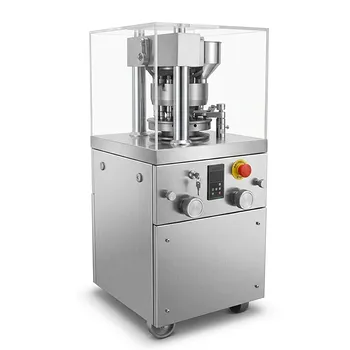
Ordinary Type Rotary Tablet Press for Pharmaceutical Chemical Food Electronic Industries
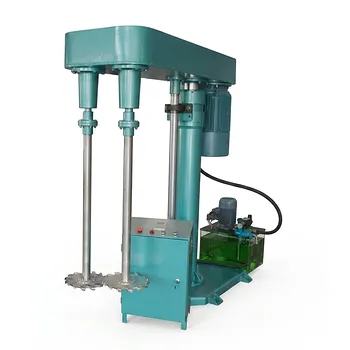
Hydraulic Double Shaft Disperser for High Viscosity Liquid Mixing and Dispersion
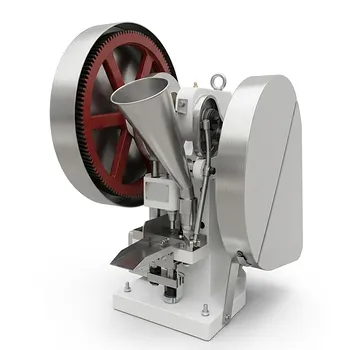
6-Ton Small Single-Punch Tablet Press — Laboratory Powder & Granule Tableting Equipment / Tablet Forming Machine
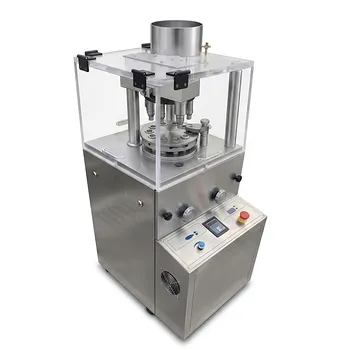
Enhanced 9 Punch Rotary Tablet Press for Powder Compaction
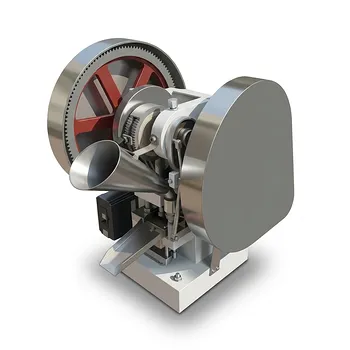
6 Ton Variable Frequency Single Punch Tablet Press
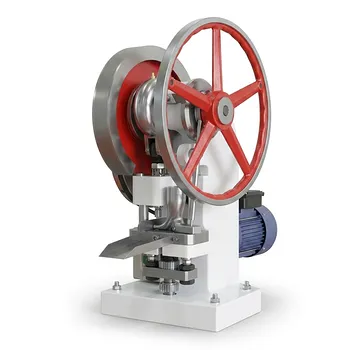
5 Ton Single Punch Tablet Press Laboratory Small Batch Production