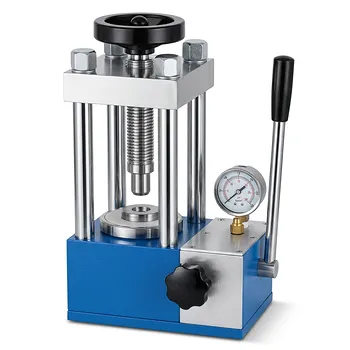
How is a laboratory-grade high-pressure hydraulic press used to evaluate mortar? Quantify Admixture Performance Gain
Updated 4 months ago
Measuring the mechanical efficacy of crystalline admixtures involves using a laboratory-grade high-pressure hydraulic press to apply controlled, quantifiable force to mortar specimens until structural failure. This process allows engineers to detect macroscopic increases in compressive and flexural strength, which serve as direct physical evidence of the admixture's ability to densify the material's internal microstructure.
Core Takeaway: A high-pressure hydraulic press quantifies the "pore-filling" effect of crystalline admixtures by measuring the increased load-bearing capacity of the mortar matrix. By converting peak failure force into strength data, it provides the definitive benchmark for evaluating how effectively these additives enhance structural integrity and packing density.
Quantifying Microstructural Reinforcement
Detecting the Impact of Crystal Growth
Crystalline admixtures work by generating new calcium silicate crystals within the pores and capillary tracts of the mortar. The hydraulic press is essential because it detects the macroscopic strength rise (often reaching increases such as 24.9% in compressive strength) that results from this internal filling effect.
Validating Packing Density
As crystals fill the voids, the packing density of the mortar increases, making the material significantly more resistant to axial loads. The press provides the empirical data needed to prove that the admixture has successfully transformed a porous matrix into a more compact and durable composite.
Standardized Testing and Data Precision
Controlling Loading Rates
To ensure objective results, the hydraulic press maintains a constant, standardized loading rate, such as 1.32 kN/s for compressive strength or 0.03 MPa/s for splitting tensile strength. This precise control removes human error and ensures that the point of fracture is a true reflection of the material's properties rather than an artifact of uneven force application.
Evaluating Performance Across Curing Intervals
The press is used to test specimens at specific intervals—typically 3, 7, and 28 days—to track the rate of crystalline development. Comparing the ultimate load at 28 days against a control sample allows researchers to quantitatively assess the long-term mechanical improvements provided by the chemical treatment.
Utilizing Specialized Fixtures
High-grade presses are equipped with specialized compression and flexural fixtures to accommodate different specimen geometries, such as cubes or RILEM standard prisms. These fixtures ensure the load is applied uniformly and vertically, which is critical for accurately calculating the peak stress at the moment of specimen failure.
Understanding the Trade-offs and Pitfalls
The Sensitivity to Specimen Preparation
The accuracy of the hydraulic press is highly dependent on the parallelism and flatness of the specimen surfaces. If the mortar cubes are not perfectly cast or if the loading platens are slightly misaligned, the press will record a premature failure, leading to an underestimation of the crystalline admixture's actual performance.
Loading Rate Variability
While high-precision presses offer automated control, using the wrong loading rate for a specific test type can yield misleading data. For example, applying load too quickly can result in an artificially high strength reading, masking the subtle differences in toughness and ductility that different admixture concentrations might provide.
Applying Testing Data to Your Project
Making the Right Choice for Your Goal
- If your primary focus is Durability Verification: Use the hydraulic press to compare 28-day compressive strengths of treated vs. untreated samples to confirm that the crystalline growth has successfully densified the matrix.
- If your primary focus is Quality Control: Implement standardized loading rates (e.g., 0.25 MPa/s) to ensure that every batch of mortar meets the minimum structural specifications required by the project.
- If your primary focus is Mix Design Optimization: Utilize the press to test varying concentrations of admixtures at multiple curing stages (3 to 28 days) to identify the most cost-effective dosage for peak mechanical performance.
By leveraging the precision of a high-pressure hydraulic press, you can transform theoretical chemical benefits into verifiable mechanical data, ensuring the structural integrity of your cementitious materials.
Summary Table:
| Evaluation Factor | Role of Hydraulic Press | Key Performance Insight |
|---|---|---|
| Strength Testing | Applies axial load to specimen failure | Quantifies gains in compressive and flexural strength. |
| Loading Rate | Controls precise pressure application (e.g., 1.32 kN/s) | Ensures data repeatability and removes human error. |
| Curing Intervals | Tests samples at 3, 7, and 28-day marks | Tracks the rate of crystal growth and structural development. |
| Specimen Geometry | Utilizes specialized compression/flexural fixtures | Ensures uniform force distribution for cubes and prisms. |
| Density Analysis | Measures resistance to macroscopic deformation | Validates the effectiveness of the pore-filling mechanism. |
Elevate Your Material Testing Precision with Our Laboratory Solutions
Are you looking to validate the performance of advanced cementitious materials or crystalline admixtures? At [Company Name], we provide complete laboratory sample preparation solutions for material science, specializing in high-precision powder processing and compaction equipment.
Our extensive manufacturing line includes a full spectrum of hydraulic presses—from Cold/Warm Isostatic Presses (CIP/WIP) and standard lab presses to XRF pellet presses and vacuum hot presses—designed to provide the standardized loading rates and force precision your research demands. Beyond compaction, we offer comprehensive prep tools including jaw crushers, planetary ball mills, sieve shakers, and specialized powder mixers to ensure your specimens are perfectly prepared from start to finish.
Maximize your lab's data accuracy and efficiency today. Contact us now to find the ideal equipment for your specific application!
References
- Hygor Thairony Parreira Vilela, Tiago Ferreira Campos Neto. Efeitos do uso de aditivos cristalizantes na reação álcali-agregado e absorção das argamassas. DOI: 10.21041/ra.v11i1.461
Mentioned Products
- Hydraulic Double Shaft Disperser for High Viscosity Liquid Mixing and Dispersion
- 6 Ton Variable Frequency Single Punch Tablet Press
- Enhanced 9 Punch Rotary Tablet Press for Powder Compaction
- 6-Ton Small Single-Punch Tablet Press — Laboratory Powder & Granule Tableting Equipment / Tablet Forming Machine
- 5 Ton Single Punch Tablet Press Laboratory Small Batch Production
People Also Ask
- Why is it necessary for an industrial hydraulic press to provide high unit pressure when preparing MMC green bodies? Optimize Densification
- What role does high-speed mixing play in photoanode slurry prep? Optimize Nanoparticle Dispersion for Solar Efficiency
- What are the advantages of a customized dual-blade mixer? High-Shear Mixing for High-Viscosity Pastes
- How does high-precision mixing ensure phase stability in BaO–MgO–ZrO2 ceramics? Achieve Pure Dielectric Performance
- What is the function of high-efficiency mixing and defoaming equipment in catalyst systems? Achieve Molecular Uniformity

Tech Team · PowderPreparation
Last updated on Jun 03, 2026
Related Products
Hydraulic Double Shaft Disperser for High Viscosity Liquid Mixing and Dispersion
6 Ton Variable Frequency Single Punch Tablet Press
Enhanced 9 Punch Rotary Tablet Press for Powder Compaction
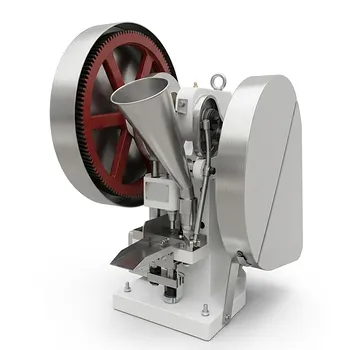
6-Ton Small Single-Punch Tablet Press — Laboratory Powder & Granule Tableting Equipment / Tablet Forming Machine
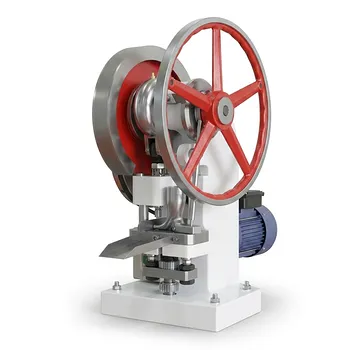
5 Ton Single Punch Tablet Press Laboratory Small Batch Production
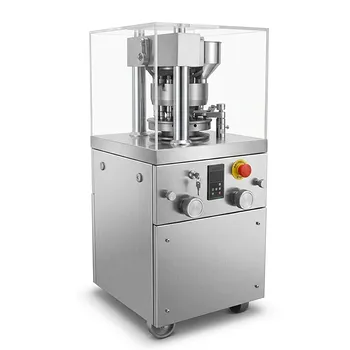
Ordinary Type Rotary Tablet Press for Pharmaceutical Chemical Food Electronic Industries