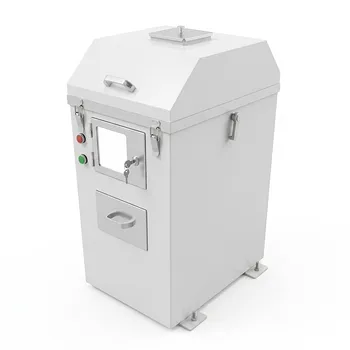
How does crushing equipment help process oyster shells for cement? Turn Waste into High-Performance Concrete
Updated 5 months ago
Crushing equipment serves as the essential mechanical bridge that transforms raw, oversized biological waste into standardized engineering aggregates. By applying high-impact force to overcome the shell's natural hardness, these machines reduce oyster waste to precise particle sizes—typically below 4.75mm—allowing it to function as a viable, high-performance replacement for natural sand in cement concrete.
The use of crushing equipment is a critical physical transformation step that converts high-hardness biological structures into controlled fragments. This process ensures the material meets specific gradation requirements, enabling uniform distribution and structural integrity within the final concrete matrix.
Overcoming Structural Barriers through Mechanical Force
Breaking High-Hardness Biological Structures
Waste oyster shells possess a naturally resilient and hard structure that resists manual breakdown. Industrial crushers apply the necessary mechanical force to overcome these characteristics, turning large shell blocks into manageable particles.
Facilitating Efficient Downstream Processing
Primary crushing is a vital prerequisite for any secondary refining stages. By reducing the material size early on, you ensure that the oyster shells can efficiently enter grinding machinery for ultra-fine processing without damaging the equipment.
Preparing the Surface for Chemical Bonding
The crushing process increases the surface area of the shell fragments. This allows for better interaction between the biological aggregate and the cement paste, which is fundamental for creating a strong chemical bond within the concrete.
Achieving Precision Gradation and Uniformity
Meeting Fine Aggregate Standards
To replace natural river sand, waste materials must meet strict gradation requirements. Crushing equipment allows operators to pulverize shells to specific sizes, such as the standard 4.75mm threshold used in mortar and concrete production.
Ensuring Uniform Matrix Distribution
When shells are crushed to a consistent size, they distribute evenly throughout the concrete matrix. This uniformity prevents "clumping" and ensures that the mechanical properties of the concrete remain stable across the entire structure.
Enhancing the Filling Effect
Processed oyster shell particles act as effective fillers within the mortar system. Their refined shape and size help fill the microscopic voids between larger aggregates, leading to a denser and potentially more durable final product.
Understanding the Trade-offs and Limitations
Equipment Wear and Maintenance
Oyster shells are abrasive and can cause significant component wear on crusher blades and liners over time. Regular maintenance schedules are necessary to prevent a decline in particle size precision as the machinery ages.
The Necessity of Pre-Processing
Crushing equipment is most effective when the raw material is already cleaned and dried. Attempting to crush wet or salt-laden shells can lead to equipment clogging and may introduce organic contaminants that weaken the concrete's setting properties.
Energy Consumption vs. Yield
Achieving "ultra-fine" particle sizes requires significantly more energy input. Producers must balance the need for fine gradation with the operational costs of running high-powered crushing and milling circuits.
How to Apply This to Your Project
Recommendations Based on Your Objectives
- If your primary focus is structural stability: Prioritize crushing equipment that can guarantee a consistent particle size below 4.75mm to ensure a uniform distribution similar to natural sand.
- If your primary focus is operational efficiency: Use a two-stage process involving a primary crusher followed by fine-milling to reduce the mechanical strain on your high-precision equipment.
- If your primary focus is resource recovery: Integrate industrial-grade crushers capable of handling mixed biological waste to maximize the volume of shells diverted from landfills into the circular economy.
Mechanical crushing effectively bridges the gap between environmental waste and industrial resource, providing the foundation for sustainable, high-performance concrete.
Summary Table:
| Process Feature | Role of Crushing Equipment | Engineering Benefit |
|---|---|---|
| Structural Breakdown | Overcomes natural hardness of shells | Converts raw waste into manageable aggregates |
| Gradation Control | Pulverizes material to <4.75mm | Meets strict standards for fine aggregate replacement |
| Surface Engineering | Increases fragment surface area | Enhances chemical bonding with cement paste |
| Matrix Uniformity | Ensures consistent particle sizing | Prevents clumping and stabilizes mechanical properties |
| Secondary Prep | Facilitates efficient downstream milling | Protects fine-grinding machinery from damage |
Optimize Your Material Processing with Professional Lab Solutions
Ready to transform raw materials into high-performance engineering resources? Contact our experts today to find the perfect equipment for your research or production needs.
At our core, we provide complete laboratory sample preparation solutions for material science. We specialize in precision powder processing and compaction equipment designed to handle everything from biological waste to advanced technical ceramics. Our extensive product lines include:
- Crushing & Grinding: Jaw/roll crushers, liquid nitrogen cryogenic grinders, and specialized mills (planetary ball, jet, sand/bead, disc, and rotor).
- Classification & Mixing: Vibratory and air-jet sieve shakers with various test sieves, alongside high-efficiency powder and defoaming mixers.
- Advanced Compaction: A full spectrum of hydraulic presses, including Cold/Warm Isostatic Presses (CIP/WIP), standard lab presses, XRF pellet presses, and vacuum hot presses.
Whether you are scaling up a circular economy project or refining material properties in the lab, we deliver the reliability and precision you require. Get a tailored consultation now!
References
- Obiekwe A. Ubachukwu, Fidelis Onyebuchi Okafor. Formulation of predictive model for the compressive strength of oyster shell powdercement concrete using Scheffe’s simplex lattice theory. DOI: 10.14382/epitoanyag-jsbcm.2020.34
Mentioned Products
- 150×125mm Laboratory Jaw Crusher for Medium and Fine Crushing of Brittle Materials
- Laboratory Benchtop Jaw Crusher for Hard Brittle Materials Primary Size Reduction and Sample Preparation
- High Speed Small Laboratory Crusher for Dry Material Sample Preparation
- Sealed Double Roll Crusher for Laboratory Sample Preparation of Medium Hardness Materials
People Also Ask
- What is the primary function of a laboratory jaw crusher? Master Initial Hard Rock Ore Preparation & Feed Sizing
- What is the role of a laboratory jaw crusher in the initial preparation of silicate-type low-grade copper ore?
- What is the primary role of a laboratory jaw crusher in the initial stages of tin and tantalum ore reprocessing? Explained
- Why is a laboratory jaw crusher necessary for processing biomass materials? Essential Prep for Material Science
- What is the primary function of a laboratory jaw crusher in the pretreatment process of galena ore? Initial Prep Guide

Tech Team · PowderPreparation
Last updated on May 14, 2026
Related Products
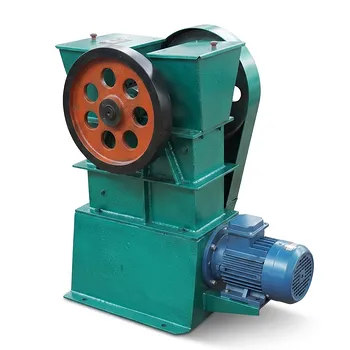
150×125mm Laboratory Jaw Crusher for Medium and Fine Crushing of Brittle Materials
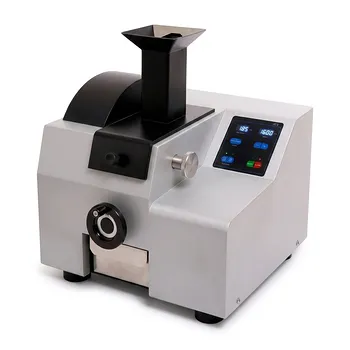
Laboratory Benchtop Jaw Crusher for Hard Brittle Materials Primary Size Reduction and Sample Preparation
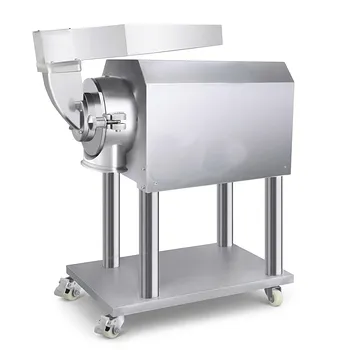
High Speed Small Laboratory Crusher for Dry Material Sample Preparation