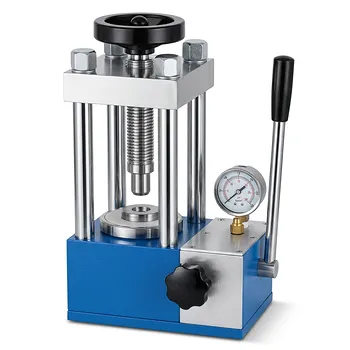
How does an experimental hydraulic press improve zirconia microstructure? Achieve superior phase uniformity and density.
Updated 4 months ago
Experimental hydraulic presses improve zirconia microstructure by utilizing high-precision pressure control to achieve a highly homogenized material state. This process facilitates the rearrangement of powder particles and the elimination of internal defects, allowing crystals to form a unique oval structure that ensures high phase uniformity and superior mechanical density in the green body.
The use of precision-controlled hydraulic pressing is fundamental to creating a defect-free zirconia microstructure, as it establishes the particle contact and phase homogeneity required for high-strength, biocompatible ceramics.
Mechanisms of Microstructural Improvement
Particle Rearrangement and Air Removal
The primary function of the hydraulic press is to apply stable, high-intensity pressure—often ranging from 200 MPa to 390 MPa—to consolidate granulated powders.
This mechanical force promotes the initial rearrangement of powder particles and triggers plastic deformation.
By forcing particles into closer contact, the press effectively removes air trapped between particles, significantly reducing the presence of micro-pores within the green body.
Achieving High Phase Uniformity
High-precision pressure control, often used in conjunction with specific stabilizers, ensures that the zirconia powder reaches a state of high phase uniformity.
This precision allows for a highly homogenized material structure where the distribution of yttria and other stabilizers is consistent throughout the volume.
Consistent phase distribution is critical because it prevents localized stresses that could lead to micro-cracking during the subsequent sintering stages.
Formation of Unique Oval Crystal Structures
Unlike standard pressing methods, experimental hydraulic pressing encourages the formation of a unique oval crystal structure.
This specific morphology is a direct result of the controlled, high-pressure environment which eliminates internal defects at the microscopic level.
The resulting dense green body serves as a structurally stable foundation, providing the necessary mechanical strength and biocompatibility required for medical and industrial applications.
Establishing the Foundation for Downstream Processes
Facilitating Effective Diffusion
The close particle contact achieved during the pressing stage is essential for effective diffusion during sintering.
When particles are in intimate contact, the energy required for atoms to migrate across grain boundaries is reduced.
This leads to a more rapid and complete densification process, resulting in a final ceramic with minimal porosity and high translucent properties.
Pre-Conditioning for Isostatic Pressing
In many advanced workflows, the hydraulic press creates the initial geometric shape and structural foundation for further treatments.
This initial uniaxial pressing provides the green body with enough mechanical integrity to undergo Cold Isostatic Pressing (CIP).
The combination of these methods ensures that the final zirconia block has a uniform density gradient, which is vital for preventing warping or distortion.
Understanding the Trade-offs
The Risk of Density Gradients
While uniaxial hydraulic pressing is efficient, it can introduce density gradients due to friction between the powder and the mold walls.
If the pressure is not applied symmetrically or if the mold lubrication is insufficient, the top of the green body may be denser than the center.
These variations can lead to non-uniform shrinkage during sintering, potentially compromising the dimensional accuracy of the final part.
Dependency on Binder Chemistry
The success of the pressing process is heavily dependent on the use of organic binders within the granulated powder.
High pressure alone may not be sufficient to hold the particles together if the binder distribution is uneven or if the binder content is too low.
Improper binder burnout after pressing can also leave behind residual pores, negating the microstructural gains achieved by the high-pressure pressing stage.
How to Apply This to Your Project
Recommendations for Material Development
- If your primary focus is maximum mechanical strength: Use higher pressures (near 390 MPa) to maximize particle fusion and minimize the initial pore volume before sintering.
- If your primary focus is phase stability and translucency: Prioritize high-precision pressure control and homogenized stabilizers to ensure the formation of the unique oval crystal structure.
- If your primary focus is complex geometric accuracy: Use the hydraulic press to form a stable green body as a precursor to Cold Isostatic Pressing (CIP) to ensure uniform density.
Precision hydraulic pressing is the critical first step in transforming raw zirconia powder into a high-performance, defect-free ceramic material.
Summary Table:
| Mechanism | Impact on Microstructure | Key Benefit |
|---|---|---|
| High-Intensity Pressure | Particle rearrangement & air removal | Significant reduction in micro-pores |
| Precision Control | Highly homogenized material state | Consistent phase & stabilizer distribution |
| Controlled Compaction | Formation of oval crystal structures | Elimination of internal microscopic defects |
| Structural Foundation | High-density green body formation | Improved mechanical strength & biocompatibility |
Elevate Your Material Research with Precision Compaction Solutions
Achieving a defect-free zirconia microstructure requires more than just pressure—it requires absolute precision. At our laboratory equipment division, we provide complete laboratory sample preparation solutions for material science, specializing in advanced powder processing and compaction equipment.
Whether you are refining yttria-stabilized zirconia or developing new composite materials, our extensive product line is designed to ensure maximum material integrity:
- Compaction Excellence: A full spectrum of hydraulic presses, including standard lab presses, XRF pellet presses, hot presses, vacuum hot presses, and Cold/Warm Isostatic Presses (CIP/WIP).
- Powder Preparation: High-performance crushers (jaw/roll), liquid nitrogen cryogenic grinders, and specialized mills (planetary ball, jet, sand/bead, disc, rotor).
- Post-Processing: Sieve shakers (vibratory/air-jet), powder mixers, and defoaming mixers to ensure feedstock consistency.
Ready to optimize your green body density and microstructural uniformity? Contact our technical experts today to find the perfect equipment configuration for your material science applications.
References
- Anna Hakobyan, Lilit Saghatelyan. CRYSTALLINE OXIDE CERAMICS AT VARIOUS STAGES OF THE TECHNOLOGICAL PROCESS COMPARATIVE CHARACTERISTICS OF THE TECHNOLOGICAL PROCESS. DOI: 10.58240/1829006x-2023.19.2-90
Mentioned Products
- Ordinary Type Rotary Tablet Press for Pharmaceutical Chemical Food Electronic Industries
- Hydraulic Double Shaft Disperser for High Viscosity Liquid Mixing and Dispersion
- 6-Ton Small Single-Punch Tablet Press — Laboratory Powder & Granule Tableting Equipment / Tablet Forming Machine
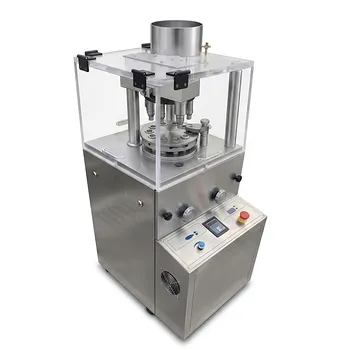
- Enhanced 9 Punch Rotary Tablet Press for Powder Compaction
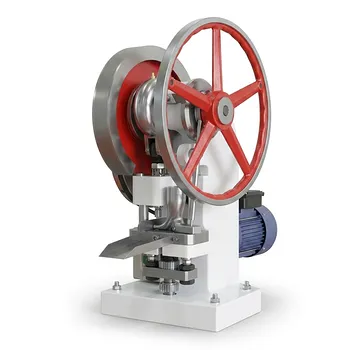
- 5 Ton Single Punch Tablet Press Laboratory Small Batch Production
People Also Ask
- Why is a laboratory hydraulic press required for FT-IR KBr pellets? Achieve Precise Sample Clarity for ZrC–SiC Analysis
- Why is a laboratory hydraulic press required to compress oyster shell powder before XRF analysis? Improve Data Accuracy.
- Why is vacuum sealing and flexible packaging necessary for Aluminum Titanate powders during CIP? Ensure Peak Density
- What are the advantages of using hardened steel molds and graphite spray for titanium powder? Ensure structural integrity
- What role does a high-strength stainless steel mold kit play in the uniaxial die compaction process? Ensuring Precision

Tech Team · PowderPreparation
Last updated on Jun 03, 2026
Related Products
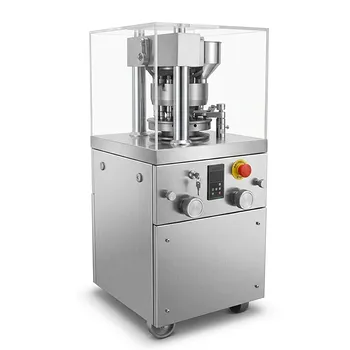
Ordinary Type Rotary Tablet Press for Pharmaceutical Chemical Food Electronic Industries
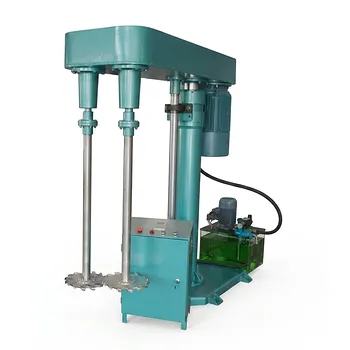
Hydraulic Double Shaft Disperser for High Viscosity Liquid Mixing and Dispersion
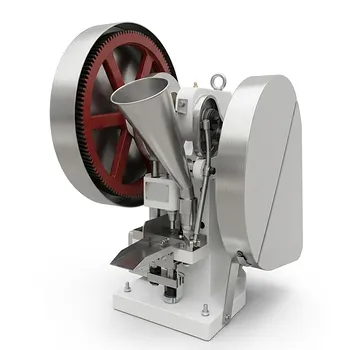
6-Ton Small Single-Punch Tablet Press — Laboratory Powder & Granule Tableting Equipment / Tablet Forming Machine
Enhanced 9 Punch Rotary Tablet Press for Powder Compaction
5 Ton Single Punch Tablet Press Laboratory Small Batch Production
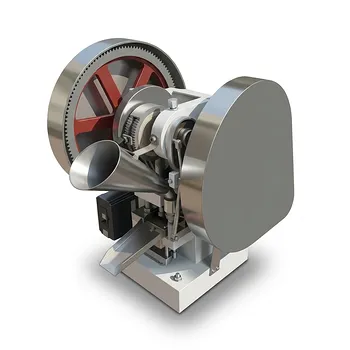
6 Ton Variable Frequency Single Punch Tablet Press