How does the use of a 0.2mm standard test sieve affect the results of total sulfur determination in coal? Ensure Accuracy
Updated 4 months ago
The use of a 0.2mm standard test sieve is a critical preparation step that ensures the coal sample achieves the necessary fineness for complete combustion. By forcing the sample to pass through this specific mesh size, the particle surface area is maximized, allowing for the rapid and total release of sulfur dioxide during coulometric analysis. This process directly impacts the precision and reliability of the final sulfur measurement.
Core Takeaway: Utilizing a 0.2mm sieve optimizes the surface-area-to-volume ratio of coal particles, which is essential for ensuring full sulfur release and maintaining the accuracy of the analytical results within a coulometric system.
The Impact of Particle Size on Combustion Efficiency
Maximizing Surface Area for Rapid Reaction
Small particles expose significantly more coal matter to oxygen within the high-temperature combustion tube. This increased exposure ensures that the internal sulfur content is released as sulfur dioxide (SO2) rather than remaining trapped in unburnt residue.
Enhancing Sulfur Release Efficiency
Coulometric sulfur analyzers rely on the instantaneous detection of sulfur gases. When particles are consistently under 0.2mm, the sulfur release is uniform and complete, leading to more accurate titration and clearer detection peaks.
Ensuring Analytical Integrity and Consistency
Sample Homogeneity and Reproducibility
Using a standard 0.2mm sieve ensures that every test run is performed on a sample with consistent physical properties. This standardization reduces variability between tests and allows for reproducible results across different laboratory environments.
Interaction with Instrumental Airtightness
While particle size ensures the sulfur is released, the airtightness of the instrument ensures the gas is actually measured. The combination of fine sample preparation and a sealed system prevents the loss of sulfur gases, which is vital for calculating the true total sulfur content.
Common Pitfalls in Sample Preparation
The Risk of Incomplete Combustion
Particles larger than 0.2mm may not burn completely during the limited time they spend in the furnace. This incomplete oxidation leads to underestimated sulfur values, as a portion of the sulfur remains locked in the residual ash.
Potential for Sample Alteration
While achieving the 0.2mm threshold is necessary, over-processing or excessive grinding can generate frictional heat. This heat may cause unintended moisture loss, which can skew the mass basis of the sample and result in inaccurate percentage calculations.
Optimizing Your Sulfur Determination Workflow
To achieve the highest level of accuracy in coal analysis, it is essential to adhere to strict preparation standards before beginning the titration process.
- If your primary focus is analytical precision: Ensure the entire coal sample passes through the 0.2mm sieve to eliminate outliers caused by the encapsulation of sulfur in larger particles.
- If your primary focus is instrument longevity: Maintain consistent particle sizing to prevent the buildup of unburnt carbon or clumping, which can eventually degrade the combustion tube and internal components.
Proper sample preparation is the foundation upon which all reliable coal chemistry is built.
Summary Table:
| Impact Factor | Effect of 0.2mm Sieving | Benefit to Analysis |
|---|---|---|
| Surface Area | Maximizes contact between coal and oxygen | Ensures rapid and total SO2 release |
| Combustion | Eliminates large particles (>0.2mm) | Prevents underestimated sulfur values |
| Homogeneity | Standardizes physical properties | Improves reproducibility across test runs |
| Data Integrity | Optimizes titration detection peaks | Provides consistent, reliable measurements |
Optimize Your Coal Analysis with Precision Sample Prep
Achieving the perfect 0.2mm particle size is the foundation of reliable sulfur determination. At our core, we provide complete laboratory sample preparation solutions tailored for material science and coal chemistry.
Whether you are processing raw coal or preparing fine powders, our extensive equipment line ensures consistent results:
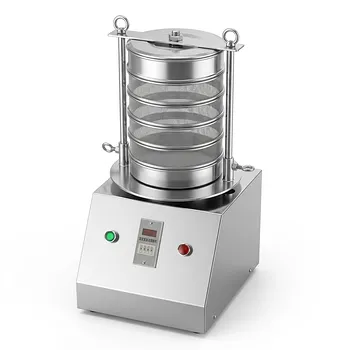
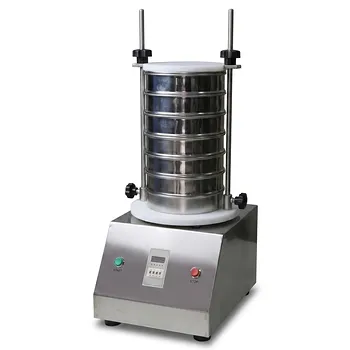
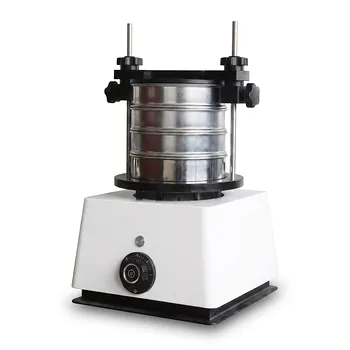
- Sizing & Classification: High-precision vibratory and air-jet sieve shakers with a full range of test sieves.
- Milling & Grinding: Advanced planetary ball mills, jet mills, and disc mills for achieving exact fineness without sample alteration.
- Crushing: Durable jaw and roll crushers for primary sample reduction.
- Compaction & Pelletizing: A full spectrum of hydraulic presses, including XRF pellet presses and Cold Isostatic Presses (CIP).
Don't let poor sample preparation compromise your analytical integrity. Contact our experts today to find the ideal equipment for your laboratory workflow and ensure superior heat treatment and analysis for your materials.
References
- H. Xi, Fei Mi. Research on Control Measures for Coal Testing Accuracy. DOI: 10.47297/taposatwsp2633-456902.20240504
Mentioned Products
- Stainless Steel Laboratory Vibratory Test Sieve Shaker
- Laboratory Vibratory Test Sieve Shaker for Precision Particle Size Analysis and Powder Grading
- Small Laboratory Vibrating Sieve Shaker for Precise Particle Size Analysis
People Also Ask
- What function does a laboratory vibratory sieve shaker serve in the production process of metakaolin? Optimize Reactivity
- Why is a precision laboratory vibratory sieve shaker necessary for particle size control? Optimize Biomass Carbonization
- What is the function of a laboratory vibratory sieve shaker? Enhance Coal Particle Size Distribution (PSD) Analysis
- What role do laboratory vibratory sieve shakers and test sieves play before the molding of Nb-Cu composite powders?
- What is the primary function of a laboratory vibratory sieve shaker in the evaluation of sand liquefaction potential?

Tech Team · PowderPreparation
Last updated on Jun 03, 2026