How does hydraulic pressure control affect packing density? Master Material Bed Compression & Fragmentation
Updated 3 months ago
Precise hydraulic pressure control directly dictates packing density by managing the rearrangement and fragmentation of particles within a material bed. By regulating compression forces, a hydraulic system forces smaller particles into the voids between larger grains. This process significantly reduces porosity and increases the final product's density, a critical requirement for high-performance ceramic molding and refractory materials.
The core of material bed compression lies in the hydraulic system’s ability to maintain specific pressure levels that trigger particle fragmentation. This intentional creation of "fines" allows the material to reach maximum packing density by eliminating internal voids.
The Mechanics of Material Bed Compression
Initial Particle Rearrangement
Under lower hydraulic pressures, particles within the bed shift and slide to fill large gaps. This is the first stage of increasing density before any structural changes occur to the material itself.
A well-regulated hydraulic system ensures this phase is completed uniformly across the entire material bed. This prevents uneven density distributions that could lead to structural weaknesses.
Fragmentation and the Creation of Fines
As the hydraulic system applies higher, regulated pressure, the stress on individual grains increases until they begin to fragment. These fine particles act as filler, migrating into the microscopic spaces between intact grains.
The precise maintenance of this pressure is what allows for a predictable volume of fines. Without this control, the material would lack the necessary "bridge-filling" particles required for high-density applications like refractories.
Maintaining Density through Regulation
The hydraulic system must not only reach a peak pressure but also maintain it consistently. Constant pressure ensures that the particles remain in their newly rearranged, high-density state during the critical phases of molding.
Fluctuations in pressure can cause "spring-back" or elastic recovery in certain materials. This would negate the density gains achieved during the initial compression stroke.
Understanding the Trade-offs
Excessive Pressure and Material Degradation
Applying too much pressure can lead to excessive fragmentation, which may compromise the mechanical strength of the final product. If the ratio of fines to large grains becomes too high, the material may lose its structural stability.
Finding the optimal pressure "sweet spot" is essential. This balance ensures maximum density is achieved without pulverizing the material beyond its functional limits.
Energy Consumption vs. Density Gains
Increasing hydraulic pressure yields diminishing returns in packing density after a certain threshold. At this point, the energy required to squeeze the material further outweighs the marginal gains in density.
Higher pressures also accelerate the wear and tear on hydraulic seals and compression molds. Operators must weigh the cost of maintenance against the necessity of extreme density.
How to Optimize Your Compression Process
If you are looking to refine your material bed compression strategy, consider the specific requirements of your end-product to determine your pressure settings.
- If your primary focus is Maximum Packing Density: Use high, sustained hydraulic pressure to maximize particle fragmentation and ensure fines fill all available voids.
- If your primary focus is Structural Integrity: Implement moderate pressure control that prioritizes particle rearrangement over fragmentation to preserve the strength of the original grains.
- If your primary focus is Process Efficiency: Calibrate your hydraulic system to the lowest pressure threshold that achieves your target density to reduce energy costs and hardware wear.
By mastering the relationship between hydraulic force and particle behavior, you can produce materials that meet the most rigorous industrial standards for density and performance.
Summary Table:
| Compression Phase | Particle Behavior | Impact on Packing Density |
|---|---|---|
| Initial Rearrangement | Particles shift and slide to fill large gaps | Uniformly increases density and prevents structural weak points |
| Fragmentation | High pressure breaks grains into "fines" | Maximum density achieved by filling microscopic internal voids |
| Sustained Regulation | Constant pressure prevents elastic recovery | Maintains high-density state and ensures product stability |
Elevate Your Material Research with Precise Compaction Solutions
Achieving the perfect packing density requires more than just force—it requires precision. At KinTek, we provide complete laboratory sample preparation solutions tailored for material science. Whether you are working with high-performance ceramics or advanced refractories, our equipment ensures consistent, high-density results every time.
Our specialized lineup includes:
- Powder Processing: Crushers (jaw/roll), liquid nitrogen cryogenic grinders, and advanced mills (planetary ball, jet, sand, disc, and rotor).
- Compaction Excellence: A full spectrum of hydraulic presses, including Cold/Warm Isostatic Presses (CIP/WIP), standard lab presses, XRF pellet presses, and vacuum hot presses.
- Sizing & Mixing: Vibratory/air-jet sieve shakers, powder mixers, and high-efficiency defoaming mixers.
Ready to optimize your material bed compression and improve structural integrity? Contact our experts today to find the ideal equipment for your laboratory needs.
References
- László Tamás, Ádám Rácz. Material Bed Compression Experiments and the Examination of the Bulk Density of the Product. DOI: 10.33030/geosciences.2022.15.110
Mentioned Products
- Ordinary Type Rotary Tablet Press for Pharmaceutical Chemical Food Electronic Industries
- Hydraulic Double Shaft Disperser for High Viscosity Liquid Mixing and Dispersion
- 6-Ton Small Single-Punch Tablet Press — Laboratory Powder & Granule Tableting Equipment / Tablet Forming Machine
- Enhanced 9 Punch Rotary Tablet Press for Powder Compaction
- 5 Ton Single Punch Tablet Press Laboratory Small Batch Production
People Also Ask
- Why is a laboratory hydraulic press required for FT-IR KBr pellets? Achieve Precise Sample Clarity for ZrC–SiC Analysis
- Why is a laboratory hydraulic press required to compress oyster shell powder before XRF analysis? Improve Data Accuracy.
- Why is vacuum sealing and flexible packaging necessary for Aluminum Titanate powders during CIP? Ensure Peak Density
- What are the advantages of using hardened steel molds and graphite spray for titanium powder? Ensure structural integrity
- What role does a high-strength stainless steel mold kit play in the uniaxial die compaction process? Ensuring Precision

Tech Team · PowderPreparation
Last updated on Jun 03, 2026
Related Products
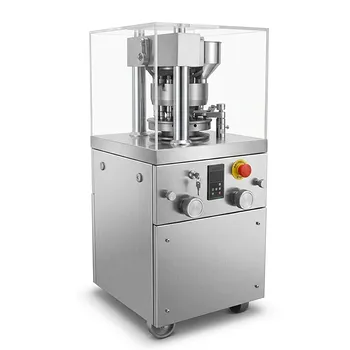
Ordinary Type Rotary Tablet Press for Pharmaceutical Chemical Food Electronic Industries
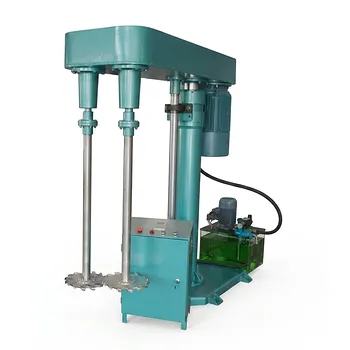
Hydraulic Double Shaft Disperser for High Viscosity Liquid Mixing and Dispersion
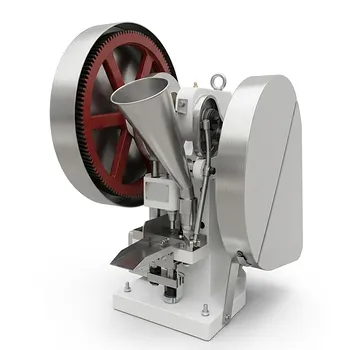
6-Ton Small Single-Punch Tablet Press — Laboratory Powder & Granule Tableting Equipment / Tablet Forming Machine
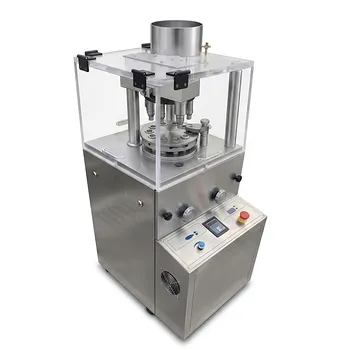
Enhanced 9 Punch Rotary Tablet Press for Powder Compaction
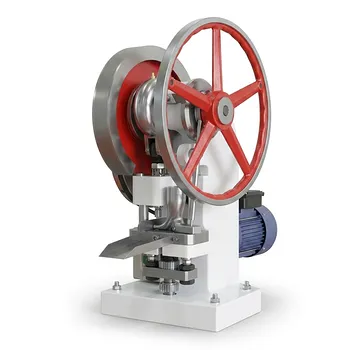
5 Ton Single Punch Tablet Press Laboratory Small Batch Production
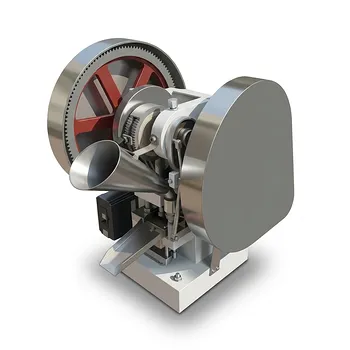
6 Ton Variable Frequency Single Punch Tablet Press