How Molding Pressure Affects Ceramic Weibull Results: Achieving Superior Material Reliability
Updated 4 months ago
The precise control of molding pressure optimizes the Weibull modulus of ceramic materials by ensuring structural homogeneity. By maintaining a uniform pressing force and stable holding time, manufacturers minimize density gradients and micro-pores within the "green body." This results in a more consistent flaw population, leading to a higher Weibull modulus (typically ranging from 10 to 20) and significantly more predictable mechanical performance in the sintered ceramic.
Controlled molding pressure creates a uniform defect distribution in ceramic green bodies. This uniformity directly translates to a higher Weibull modulus, narrowing the scatter of fracture strength and increasing the overall reliability of the finished component.
The Mechanics of Defect Suppression
Eliminating Density Gradients
Uneven pressure during the molding phase leads to localized variations in powder packing density. These gradients cause non-uniform shrinkage during sintering, which can introduce internal stresses or macroscopic warping.
Preventing Lamination and Micro-pores
High-precision pressure control ensures that powder particles rearrange effectively without trapping air or creating internal shears. This eliminates lamination defects and micro-pores, which often act as the primary initiation sites for structural failure.
The Role of Holding Time
Stable pressure must be accompanied by an adequate holding time to allow for full particle rearrangement. This duration ensures that the internal energy of the powder bed is stabilized, preventing "spring-back" effects that cause micro-cracking when the pressure is released.
Impact on Statistical Reliability
Interpreting the Weibull Modulus (m-value)
In ceramic science, the Weibull modulus (m) quantify the reliability and consistency of a material's strength. A higher m-value indicates a narrow, predictable strength distribution, whereas a low value suggests a wide, erratic spread of failure points.
Reducing Strength Scatter
By providing a uniform pressing force, the equipment ensures that the size and distribution of flaws are nearly identical across all samples. This consistency shifts the material's performance from a "weakest link" uncertainty to a statistically reproducible engineering standard.
Achieving Superior Performance Reproducibility
When molding pressure is strictly controlled, the resulting ceramic typically achieves an m-value between 10 and 20. This range is essential for technical ceramics used in load-bearing or high-precision applications where failure must be predictable.
Understanding the Trade-offs and Constraints
Pressure Limits and Die Friction
Simply increasing pressure does not always improve the Weibull results; excessive force can exacerbate die wall friction. This friction creates localized high-stress zones at the edges of the component, which may actually introduce new flaws.
Material-Specific Requirements
Different powder compositions and particle sizes respond differently to pressure levels. A pressure that optimizes the Weibull modulus for alumina may be insufficient or counterproductive for more complex zirconia or silicon carbide formulations.
Equipment Sensitivity
The mechanical stability of the hydraulic press is a critical variable. Fluctuations in hydraulic pressure or a lack of precision in the ram’s movement can introduce the very density gradients that the process is intended to eliminate.
Making the Right Choice for Your Project
High-precision pressure control is a prerequisite for any project where mechanical failure carries a high cost.
- If your primary focus is Maximum Reliability: Prioritize equipment that offers programmable holding times and ultra-stable pressure delivery to maximize the Weibull modulus.
- If your primary focus is Cost-Effective Mass Production: Identify the minimum pressure threshold that maintains an m-value above 10 to ensure a low rejection rate without over-engineering the process.
- If your primary focus is Complex Geometries: Focus on minimizing die friction and utilizing multi-action pressing to ensure density is uniform even in non-linear sections of the green body.
Mastering molding pressure transforms ceramic processing from an unpredictable craft into a rigorous, data-driven engineering discipline.
Summary Table:
| Key Factor | Impact on Green Body | Effect on Weibull Modulus (m) |
|---|---|---|
| Pressure Uniformity | Eliminates density gradients & warping | Increases m-value (reproducible strength) |
| Stable Holding Time | Allows particle rearrangement; prevents spring-back | Reduces micro-cracks and strength scatter |
| Precision Control | Minimizes micro-pores and lamination | Narrower flaw distribution (m = 10-20) |
| Friction Management | Reduces localized high-stress zones | Prevents unpredictable edge failures |
Elevate Your Material Reliability with Precision Compaction
Achieve ultimate structural homogeneity and a high Weibull modulus in your ceramic components with [Brand Name]. We provide complete laboratory sample preparation solutions tailored for material science, specializing in advanced powder processing and compaction equipment.
Our extensive line includes:
- High-Precision Presses: Cold/Warm Isostatic Presses (CIP/WIP), standard lab presses, and vacuum hot presses designed for stable pressure delivery.
- Powder Preparation: Jet mills, planetary ball mills, and liquid nitrogen cryogenic grinders for optimal particle size distribution.
- Mixing Solutions: Powder and defoaming mixers to ensure a uniform defect-free mixture.
Whether you are refining alumina formulations or developing complex technical ceramics, our equipment ensures the predictable mechanical performance your research demands. Contact our experts today to find the perfect solution for your laboratory workflow!
References
- Оксана Морозова, Edvin Hevorkian. APPLICATION OF WEIBULL STATISTICS IN MECHANICAL PROPERTIES DESCRIPTION OF CERAMIC MATERIALS. DOI: 10.32782/2663-5941/2025.1.1/30
Mentioned Products
- Enhanced 9 Punch Rotary Tablet Press for Powder Compaction
- Multi Dimensional Universal Mixer for High Uniformity Powder Blending
- 6-Ton Small Single-Punch Tablet Press — Laboratory Powder & Granule Tableting Equipment / Tablet Forming Machine
- Nano Laboratory Bead Mill Desktop Sub Micron Sand Mill Screenless Seal Less Powder Grinder
- Manual Tablet Press with Dual Scale Pressure Gauge for Pharmaceutical Food Chemical Laboratory Sample Preparation
People Also Ask
- What is the purpose of adding lubricants like zinc stearate during Al-Al2O3 powder pressing? Achieve Superior Density
- Why is a laboratory hydraulic press required for FT-IR KBr pellets? Achieve Precise Sample Clarity for ZrC–SiC Analysis
- What role does a high-strength stainless steel mold kit play in the uniaxial die compaction process? Ensuring Precision
- Why is a laboratory hydraulic press required to compress oyster shell powder before XRF analysis? Improve Data Accuracy.
- Why is vacuum sealing and flexible packaging necessary for Aluminum Titanate powders during CIP? Ensure Peak Density

Tech Team · PowderPreparation
Last updated on Jun 03, 2026
Related Products
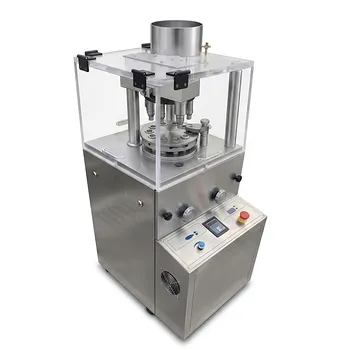
Enhanced 9 Punch Rotary Tablet Press for Powder Compaction
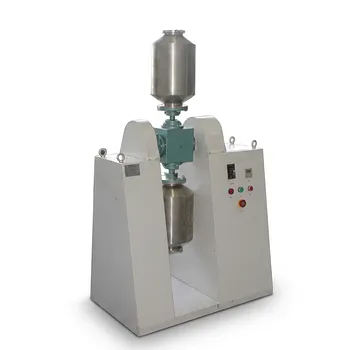
Multi Dimensional Universal Mixer for High Uniformity Powder Blending
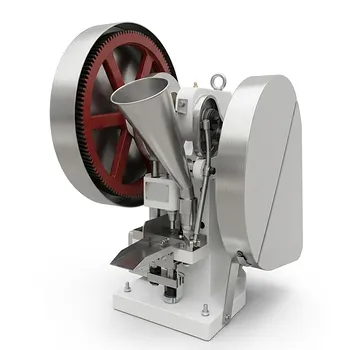
6-Ton Small Single-Punch Tablet Press — Laboratory Powder & Granule Tableting Equipment / Tablet Forming Machine
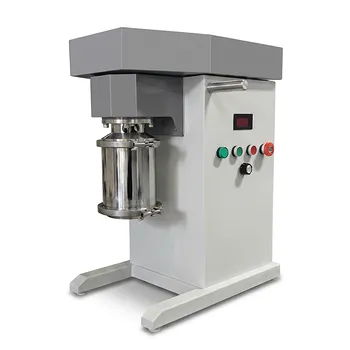
Nano Laboratory Bead Mill Desktop Sub Micron Sand Mill Screenless Seal Less Powder Grinder
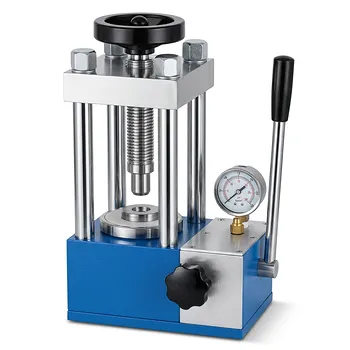
Manual Tablet Press with Dual Scale Pressure Gauge for Pharmaceutical Food Chemical Laboratory Sample Preparation
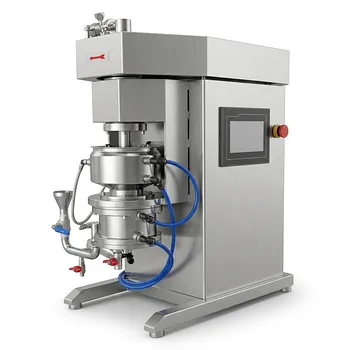
Small Ceramic Structure Laboratory Sand Mill Nanoscale Grinding Dispersion Equipment Seal-less Screen-less Design
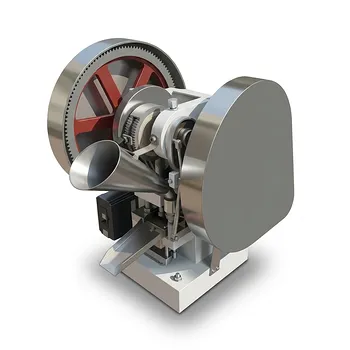
6 Ton Variable Frequency Single Punch Tablet Press
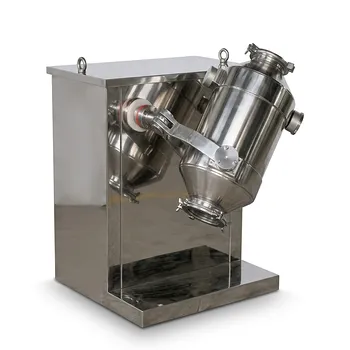
Three-Dimensional Motion Mixer for Laboratory Powder and Granule Blending