How does the Collector Pressing Scheme optimize pressure transmission for thick zirconia? Achieve Density Uniformity
Updated 4 months ago
The Collector Pressing Scheme optimizes pressure transmission by utilizing a composite mold system with counter-moving components. This specific mechanical action creates multi-directional wall friction during the pressing phase, ensuring that the applied force is distributed uniformly throughout the entire powder body regardless of its thickness. By neutralizing the friction losses typical of static molds, it effectively eliminates the density and stress gradients that usually plague thick ceramic samples.
The core innovation of the Collector Pressing Scheme lies in its ability to transform wall friction from a hindrance into a tool for uniform compaction. By using counter-moving mold parts, it ensures zero-loss pressure transmission, enabling the fabrication of thick, high-density zirconia ceramics without internal defects.
The Mechanics of Multi-Directional Wall Friction
Counter-Moving Part Dynamics
Unlike traditional uniaxial pressing where the mold walls remain static, this scheme uses composite parts that move relative to one another. This coordinated motion actively manages how the powder interacts with the container walls during the compression cycle.
Overcoming Friction Loss
In standard pressing, friction against the walls creates a "pressure shadow," leading to lower density in the core or base of the green body. The Collector Pressing Scheme generates multi-directional friction to ensure the applied load reaches every layer of the powder body effectively.
High Aspect Ratio Capability
This optimized transmission allows for the successful pressing of samples with high aspect ratios. It is particularly effective for thick components, such as 5 mm zirconia ceramics, which are traditionally difficult to compact uniformly.
Achieving Structural Uniformity in Thick Samples
Elimination of Density Gradients
Uniform pressure transmission ensures the green body achieves a consistent density from the surface to the center. This homogeneity is the foundation for predictable shrinkage and structural integrity during the subsequent stages of production.
Minimizing Macro-Defects
By removing internal stress gradients, the scheme significantly reduces the likelihood of cracking, warping, or delamination during sintering. This is critical for maintaining the geometric precision of thick ceramic parts.
Impact on Optical Transparency
For zirconia, structural uniformity is a prerequisite for optical transparency. The elimination of micro-pores and density variations allows light to pass through the material without being scattered by internal inconsistencies.
Understanding the Trade-offs and Challenges
Mold Complexity and Cost
The use of composite molds with moving parts increases the mechanical complexity of the pressing setup. This typically results in higher initial tooling costs and a more rigorous maintenance schedule compared to simple, one-piece static molds.
Precision and Alignment Requirements
To ensure multi-directional friction works as intended, the alignment between counter-moving parts must be extremely precise. Any mechanical misalignment can introduce new stress points or lead to uneven compaction across the horizontal plane.
Scaling and Cycle Times
While excellent for high-quality thick components, the complexity of the mold may impact cycle times in a high-volume production environment. The setup time for these composite systems is generally longer than that of traditional uniaxial presses.
How to Apply This to Your Project
When deciding whether to implement the Collector Pressing Scheme, consider the specific requirements of your ceramic component.
- If your primary focus is achieving optical transparency in thick sections: This scheme is the superior choice as it eliminates the density gradients that cause light scattering.
- If your primary focus is reducing post-sintering defects in high-aspect-ratio parts: The multi-directional friction ensures a uniform green body, preventing the macro-defects common in thick zirconia.
- If your primary focus is high-speed mass production of thin, simple parts: The complexity of the composite mold may not be necessary, and standard uniaxial pressing may be more cost-effective.
By mastering the distribution of internal forces, the Collector Pressing Scheme sets a new standard for the fabrication of high-performance, thick-section ceramics.
Summary Table:
| Feature | Mechanism | Key Benefit |
|---|---|---|
| Pressure Transmission | Counter-moving mold components | Zero-loss force distribution through thick samples |
| Friction Management | Multi-directional wall friction | Eliminates "pressure shadows" and density gradients |
| Structural Integrity | Stress-free green body formation | Prevents cracking, warping, and delamination |
| Optical Quality | Homogeneous microstructure | Enhances transparency in thick zirconia sections |
Elevate Your Material Science Research with Precision Compaction
Achieving perfect structural uniformity in thick zirconia requires the right technology. At [Company Name], we provide complete laboratory sample preparation solutions tailored for advanced material science. Whether you are dealing with complex ceramic geometries or high-performance powders, our specialized equipment ensures reliable, defect-free results.
Our Expertise Includes:
- Advanced Compaction: A full spectrum of hydraulic presses, including Cold/Warm Isostatic Presses (CIP/WIP), vacuum hot presses, and standard lab presses.
- Powder Processing: High-efficiency mills (planetary, jet, rotor), crushers, and liquid nitrogen cryogenic grinders.
- Sample Refinement: Sieve shakers, powder mixers, and defoaming mixers for consistent material preparation.
Ready to eliminate density gradients and improve the optical transparency of your ceramics? Contact our technical team today to find the ideal pressing solution for your laboratory.
References
- V. Paygin, А. Г. Анисимов. Manufacturing Optically Transparent Thick Zirconia Ceramics by Spark Plasma Sintering with the Use of Collector Pressing. DOI: 10.3390/app11031304
Mentioned Products
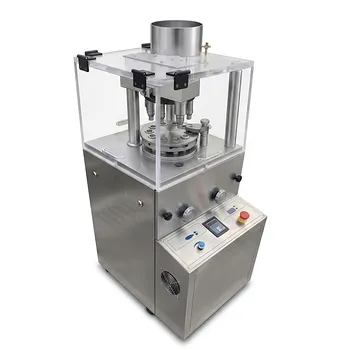
- Enhanced 9 Punch Rotary Tablet Press for Powder Compaction
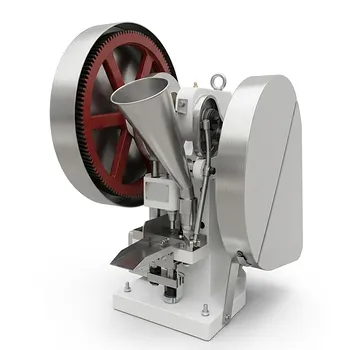
- 6-Ton Small Single-Punch Tablet Press — Laboratory Powder & Granule Tableting Equipment / Tablet Forming Machine
People Also Ask
- What is the purpose of adding lubricants like zinc stearate during Al-Al2O3 powder pressing? Achieve Superior Density
- Why is a laboratory hydraulic press required for FT-IR KBr pellets? Achieve Precise Sample Clarity for ZrC–SiC Analysis
- What role does a high-strength stainless steel mold kit play in the uniaxial die compaction process? Ensuring Precision
- Why is a laboratory hydraulic press required to compress oyster shell powder before XRF analysis? Improve Data Accuracy.
- Why is vacuum sealing and flexible packaging necessary for Aluminum Titanate powders during CIP? Ensure Peak Density

Tech Team · PowderPreparation
Last updated on Jun 03, 2026