How does the atmosphere control within a vacuum hot press contribute to Si-B-C-N ceramic stability? Optimize Performance
Updated 4 months ago
Atmosphere control is the critical safeguard against material degradation during the ultra-high-temperature processing of advanced ceramics. By providing a pressurized, high-purity environment of nitrogen or argon, a vacuum hot press prevents the thermal decomposition of silicon nitride phases within the Si-B-C-N matrix. This stabilization allows the material to undergo controlled crystallization, transforming from an amorphous state into a robust nanocomposite without losing its chemical integrity.
Core Takeaway: Atmosphere control within a vacuum hot press ensures structural stability by suppressing the decomposition of silicon nitride at temperatures up to 2000°C. This protection enables the formation of specialized micro-domains that grant the ceramic its exceptional creep resistance and mechanical strength.
The Mechanism of Decomposition Inhibition
Preventing Silicon Nitride Breakdown
At temperatures between 1800°C and 2000°C, silicon nitride ($Si_3N_4$) becomes inherently unstable and prone to thermal decomposition. The vacuum hot press introduces high-purity nitrogen or argon, which creates a localized partial pressure that physically inhibits the nitrogen loss from the ceramic lattice.
Maintaining Chemical Stoichiometry
Without precise atmosphere control, the loss of nitrogen would lead to the formation of free silicon or voids, compromising the ceramic's covalent bond network. By maintaining the correct gaseous environment, the equipment ensures the Si-B-C-N material retains its intended chemical composition throughout the annealing cycle.
Facilitating Microstructural Evolution
Driving Ordered Micro-Domain Growth
The stable thermal environment provided by the hot press allows thermal energy to be directed toward microstructural refinement rather than chemical breakdown. This energy facilitates the transition of the amorphous matrix into a specialized nanocomposite structure, consisting of ordered micro-domains.
Enhancing High-Temperature Creep Resistance
The resulting nanocomposite structure is the primary driver of the material's exceptional creep resistance. By preserving the structural stability of the phases during growth, the atmosphere control indirectly ensures the material can withstand mechanical stress in extreme environments without deforming.
The Role of Vacuum and Pressure Synergy
Removal of Volatile Impurities
The "vacuum" phase of the process is used to extract volatile oxide impurities from the particle surfaces before the inert gas is introduced. Removing these oxides prevents the formation of weak glassy phases at the grain boundaries, which would otherwise reduce the ceramic’s fracture toughness.
Simultaneous Densification and Stabilization
While the atmosphere stabilizes the chemistry, the axial pressure (often up to 40 MPa) provides the mechanical driving force for densification. This synergy allows the ceramic to reach high relative densities—often exceeding 94%—within a shorter processing window, further limiting the time available for unwanted grain coarsening.
Understanding the Trade-offs and Pitfalls
Balancing Temperature and Atmosphere
If the temperature exceeds the stabilization limits of the chosen gas pressure, localized decomposition can still occur, leading to surface porosity. Conversely, if the gas purity is insufficient, trace oxygen can lead to the formation of silicates, which degrade the ceramic's high-temperature performance.
Grain Coarsening vs. Densification
While high temperatures are necessary for diffusion, prolonged exposure can lead to grain coarsening, which reduces microhardness. The vacuum hot press must synchronize rapid heating rates with precise pressure application to "lock in" the fine nanocrystalline structures before they can grow too large.
How to Apply This to Your Project
Recommendations for Material Optimization
- If your primary focus is maximum creep resistance: Prioritize a high-purity nitrogen atmosphere at the upper end of the thermal range (1900°C-2000°C) to maximize the growth of ordered Si-B-C-N micro-domains.
- If your primary focus is fracture toughness: Utilize a vacuum stage to aggressively remove surface oxides before backfilling with inert gas to ensure clean, high-strength grain boundaries.
- If your primary focus is fine grain retention: Employ rapid heating rates and early application of axial pressure to achieve densification before significant grain growth occurs.
By mastering the balance between gaseous stabilization and mechanical pressure, engineers can unlock the full potential of Si-B-C-N ceramics for the most demanding thermal applications.
Summary Table:
| Feature | Mechanism | Benefit for Si-B-C-N Ceramics |
|---|---|---|
| Inert Gas Control | Maintains nitrogen/argon partial pressure | Suppresses $Si_3N_4$ decomposition up to 2000°C |
| Vacuum Phase | Extracts volatile oxide impurities | Eliminates weak glassy phases at grain boundaries |
| Axial Pressure | 40 MPa mechanical driving force | Achieves >94% density with minimal grain growth |
| Thermal Precision | Controlled annealing & cooling | Facilitates stable nanocomposite micro-domains |
Elevate Your Advanced Material Synthesis
Achieving the perfect balance of atmosphere and pressure is critical for the next generation of high-performance ceramics. At Our Advanced Laboratory Solutions, we provide complete laboratory sample preparation solutions for material science, specializing in high-performance powder processing and compaction equipment.
Our extensive product line is engineered to meet the rigorous demands of Si-B-C-N research and production, including:
- Advanced Pressing: Vacuum Hot Presses, Cold/Warm Isostatic Presses (CIP/WIP), and standard lab presses.
- Precision Milling: Planetary ball mills, jet mills, and cryogenic grinders for superior particle refinement.
- Sieving & Mixing: Air-jet sieve shakers, powder mixers, and defoaming mixers to ensure material homogeneity.
Whether you are focusing on creep resistance or fracture toughness, our equipment provides the precision required to 'lock in' nanocrystalline structures. Contact our technical experts today to discuss how our specialized solutions can enhance your lab's efficiency and material integrity.
References
- Pengfei Zhang, Yu Zhou. Progress of a novel non-oxide Si-B-C-N ceramic and its matrix composites. DOI: 10.1007/s40145-012-0017-x
Mentioned Products
- Dual Cup Vacuum Centrifugal Mixer Planetary Paste Defoaming Machine Industrial Material Processor
- 非介入式材料均质机真空脱泡行星搅拌高粘度混合设备
- High Speed Vacuum Planetary Centrifugal Mixer and Defoamer for Industrial Paste Processing
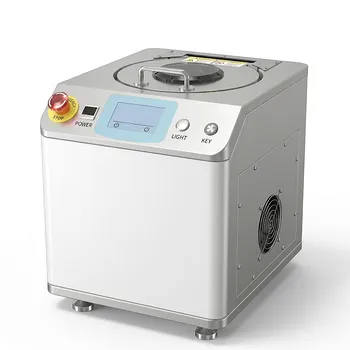
- High Efficiency Vacuum Planetary Centrifugal Mixer and Defoaming Machine for Industrial Material Research and Precise Laboratory Powder Dispersion
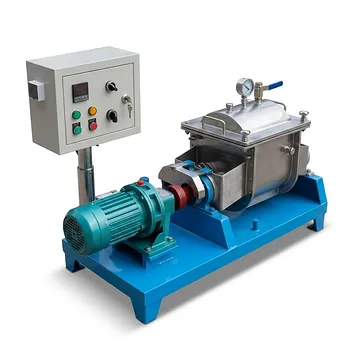
- Industrial Vacuum Kneader for High-Viscosity Silicone, Rubber, and Compound Mixing
People Also Ask
- Why is a vacuum centrifugal defoaming mixer required to process ceramic slurry before 3D printing? Ensure High Density
- Why is a vacuum centrifugal de-foaming mixer required before DIW of PZT ink? Achieve Dense, Bubble-Free Piezo Ceramics
- What are the advantages of centrifugal defoaming mixers for recycled slurries? Achieve Superior Electrode Quality
- Why is centrifugal defoaming necessary for magnetic composite inks? Ensure Void-Free Extrusion for 3D Printing
- Why is vacuum defoaming necessary for PDMS mixtures before microwave irradiation curing? Key to Structural Integrity

Tech Team · PowderPreparation
Last updated on Jun 03, 2026
Related Products
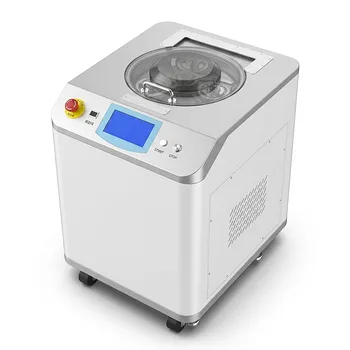
Dual Cup Vacuum Centrifugal Mixer Planetary Paste Defoaming Machine Industrial Material Processor
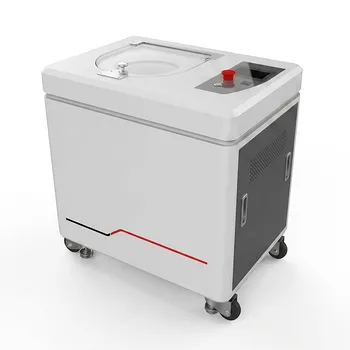
非介入式材料均质机真空脱泡行星搅拌高粘度混合设备
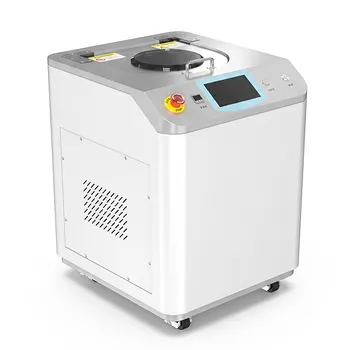
High Speed Vacuum Planetary Centrifugal Mixer and Defoamer for Industrial Paste Processing
High Efficiency Vacuum Planetary Centrifugal Mixer and Defoaming Machine for Industrial Material Research and Precise Laboratory Powder Dispersion
Industrial Vacuum Kneader for High-Viscosity Silicone, Rubber, and Compound Mixing
5 Ton Single Punch Tablet Press Laboratory Small Batch Production
6-Ton Small Single-Punch Tablet Press — Laboratory Powder & Granule Tableting Equipment / Tablet Forming Machine
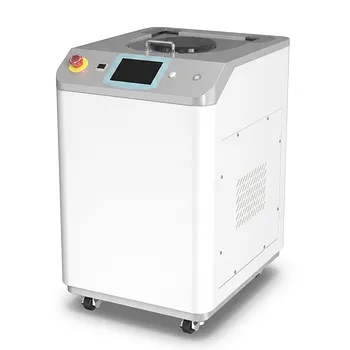
High Viscosity Planetary Centrifugal Mixing and Vacuum Defoaming Machine for Laboratory Material Preparation
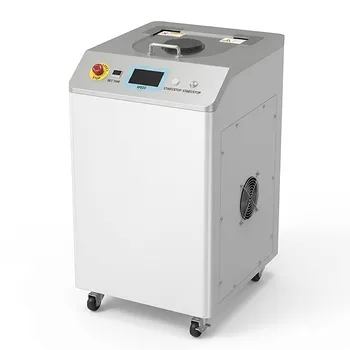
High Viscosity Planetary Centrifugal Vacuum Mixer for Material Defoaming and Uniform Mixing
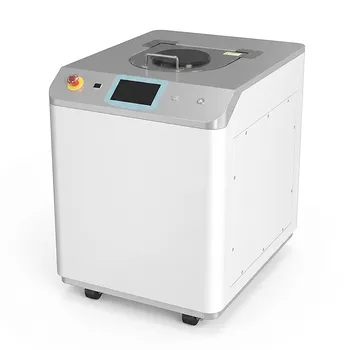
Industrial Planetary Centrifugal Vacuum Defoaming Mixer for High Viscosity Paste and Advanced Material Science
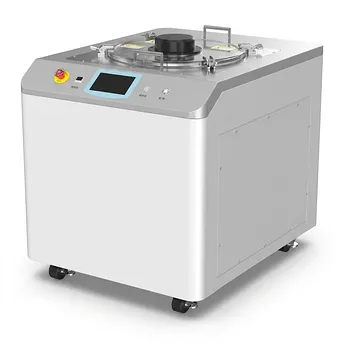
Industrial Planetary Centrifugal Vacuum Defoaming Mixer for High Viscosity Paste and Powder Homogenization
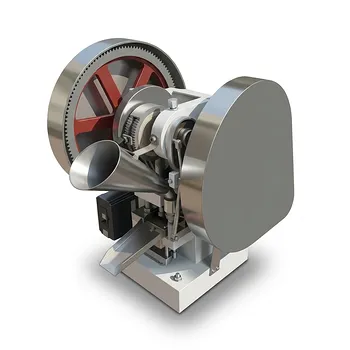
6 Ton Variable Frequency Single Punch Tablet Press