How does a hydraulic press function in SiC powder molding? Optimize Density & Reliability for Performance Ceramics
Updated 5 months ago
The industrial hydraulic press functions as the mechanical catalyst for densification in silicon carbide (SiC) production. It applies precise, adjustable axial pressure to transform loose SiC powder mixtures into a structured "green body." This process is essential for excluding air, maximizing particle contact, and establishing the foundational density required for high-performance ceramic components like seal rings and grinding wheels.
The primary function of a hydraulic press in SiC molding is to utilize controlled static pressure to force particle rearrangement and plastic deformation. This eliminates internal voids and creates the mechanical interlocking necessary for structural integrity before the final sintering stage.
The Mechanics of Powder Transformation
Forced Rearrangement and Air Exclusion
The press applies uniaxial force to displace loose particles, filling microscopic gaps within the mold. This action effectively expels entrapped air, which would otherwise manifest as structural defects or "large pores" during the subsequent heat treatment.
Increasing Particle Contact Area
High-intensity static pressure (often ranging from 60 MPa to 250 MPa) drives the powder into a state of dense contact. This maximizes the surface area available for atomic diffusion, which is a critical prerequisite for achieving a uniform, micron-scale grain structure.
Cold Forming and Plastic Deformation
During the pressing stage, the hydraulic system provides the energy required for the plastic deformation of powder particles. This forced rearrangement transforms the loose mixture into a rigid "green body" with specific geometries and structural strength.
Impact on Material Integrity
Establishing Initial Density and Dimensional Accuracy
Precise pressure settings determine the initial density of the component. A consistent green density is vital because it prevents uneven shrinkage, warping, or dimensional inaccuracies during the high-temperature sintering phase.
Enhancing Mechanical Reliability
By crushing internal voids and bridging gaps, the hydraulic press directly improves the Weibull modulus. This statistical measure of reliability ensures that the final ceramic can withstand high stress without unpredictable failure.
Mechanical Interlocking of Particles
The compression process forces the SiC abrasive particles and additives to interlock mechanically. This bond provides the green body with enough structural stability to be handled and processed before it reaches its final hardened state.
Understanding the Trade-offs
Pressure Limits vs. Tooling Wear
While higher pressures generally enhance density and hardness, they significantly increase the mechanical stress on precision steel molds. Operators must balance the need for high-density compacts with the maintenance costs associated with accelerated tooling wear.
Density Gradients in Complex Shapes
Uniaxial pressing can occasionally result in density gradients, where the pressure is not distributed perfectly throughout a complex mold. This can lead to internal residual stresses or subtle variations in the elastic modulus of the final product.
Optimizing the Pressing Process for Your Output
Effective SiC molding requires matching the hydraulic press capabilities to the specific requirements of the final application.
- If your primary focus is maximizing component reliability: Prioritize a press with high-precision pressure-holding capabilities to ensure a uniform microstructure and a high Weibull modulus.
- If your primary focus is high-volume industrial production: Utilize automated presses compatible with spray-granulated powders to maintain consistent dimensional accuracy across large batches.
- If your primary focus is achieving maximum material hardness: Focus on hydraulic systems capable of delivering higher axial pressures (exceeding 200 MPa) to maximize particle interlocking and minimize porosity.
Mastering the pressure dynamics of the hydraulic press is the most critical step in ensuring that your silicon carbide components transition successfully from loose powder to high-performance engineering materials.
Summary Table:
| Process Stage | Action & Mechanism | Impact on SiC Material |
|---|---|---|
| Forced Rearrangement | Uniaxial force displaces loose particles | Expels entrapped air; eliminates internal voids |
| Particle Contact | High static pressure (60-250 MPa) | Maximizes surface area for atomic diffusion |
| Cold Forming | Plastic deformation of powder | Creates a rigid "green body" with structural stability |
| Density Control | Precise pressure-holding | Prevents uneven shrinkage and warping during sintering |
Elevate Your Material Processing with Precision Engineering
Achieving the perfect "green body" density is critical for high-performance Silicon Carbide components. At KinTek, we provide complete laboratory sample preparation solutions tailored for material science. Whether you are refining powders or molding complex geometries, our expert-grade equipment ensures consistent results and maximum reliability.
Our comprehensive product lines include:
- Powder Processing: Crushers (jaw/roll), liquid nitrogen cryogenic grinders, and advanced mills (planetary ball, jet, sand/bead, disc, rotor).
- Sieving & Mixing: Sieve shakers (vibratory/air-jet) and high-efficiency powder or defoaming mixers.
- Advanced Compaction: A full spectrum of hydraulic presses, including Cold/Warm Isostatic Presses (CIP/WIP), standard lab presses, XRF pellet presses, and vacuum hot presses.
Ready to enhance your lab's efficiency and material integrity? Contact our specialists today to find the ideal solution for your SiC production needs!
References
- Kurniawan Kurniawan, Fachrul Rozy. Analysis of Seal Face Formation Parameters using Powder Metallurgy Technology with Taguchi Method and Gray Relational Analysis. DOI: 10.12962/j25807471.v6i2.11890
Mentioned Products
- Enhanced 9 Punch Rotary Tablet Press for Powder Compaction
- 6-Ton Small Single-Punch Tablet Press — Laboratory Powder & Granule Tableting Equipment / Tablet Forming Machine
- Vertical Production Planetary Ball Mill for High Throughput Powder Processing
- 6 Ton Variable Frequency Single Punch Tablet Press
- Manual Tablet Press with Dual Scale Pressure Gauge for Pharmaceutical Food Chemical Laboratory Sample Preparation
People Also Ask
- What is the purpose of adding lubricants like zinc stearate during Al-Al2O3 powder pressing? Achieve Superior Density
- Why is a laboratory hydraulic press required for FT-IR KBr pellets? Achieve Precise Sample Clarity for ZrC–SiC Analysis
- What role does a high-strength stainless steel mold kit play in the uniaxial die compaction process? Ensuring Precision
- Why is a laboratory hydraulic press required to compress oyster shell powder before XRF analysis? Improve Data Accuracy.
- Why is vacuum sealing and flexible packaging necessary for Aluminum Titanate powders during CIP? Ensure Peak Density

Tech Team · PowderPreparation
Last updated on May 14, 2026
Related Products
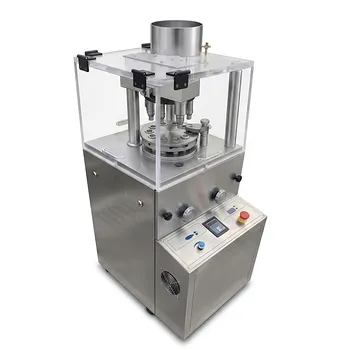
Enhanced 9 Punch Rotary Tablet Press for Powder Compaction
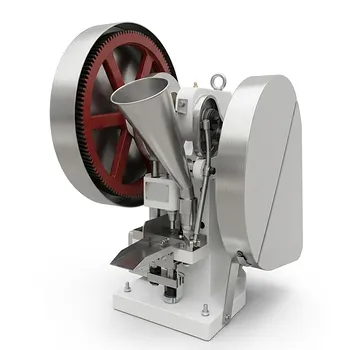
6-Ton Small Single-Punch Tablet Press — Laboratory Powder & Granule Tableting Equipment / Tablet Forming Machine
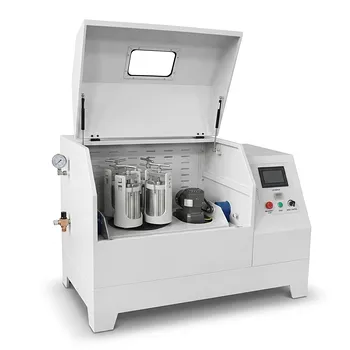
Vertical Production Planetary Ball Mill for High Throughput Powder Processing
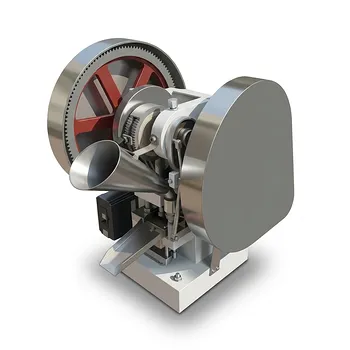
6 Ton Variable Frequency Single Punch Tablet Press
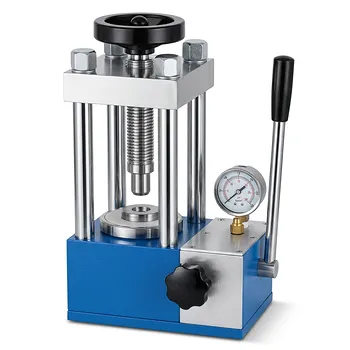
Manual Tablet Press with Dual Scale Pressure Gauge for Pharmaceutical Food Chemical Laboratory Sample Preparation