How does an industrial hydraulic molding press improve ceramic quality compared to manual molding techniques? Boost Precision
Updated 4 months ago
Industrial hydraulic molding presses transform ceramic production by providing extreme pressure uniformity. These machines compress ceramic powder into "green bodies" with a level of density and dimensional accuracy that manual techniques cannot replicate. By utilizing mechanical or hydraulic force—often reaching multiple tons—they ensure a robust physical foundation for the subsequent sintering process.
Hydraulic pressing replaces the inconsistency of manual labor with precise, high-pressure control. This results in ceramic bodies with superior mechanical strength, reduced shrinkage, and the structural reliability required for modern architectural and industrial applications.
The Impact of Pressure Uniformity on Microstructure
Particle Rearrangement and Air Displacement
Industrial hydraulic presses apply stable unidirectional pressure to compact granulated powder into specific shapes. This high-pressure environment forces particles to undergo rearrangement and plastic deformation, filling the gaps between grains. This process effectively displaces air from between the particles, which is a critical step that manual molding cannot consistently perform.
Eliminating Internal Micro-pores
High-precision pressure control, which can range from 21 MPa to 250 MPa depending on the application, eliminates internal voids and micro-pores. By removing these internal gaps, the press creates a dense, uniform structure. This uniformity prevents the formation of weak points that would otherwise lead to cracking or structural failure during high-temperature sintering.
Achieving Superior Green Strength and Precision
Increasing Green Body Density
The resulting "green body" (the unfired ceramic) possesses significantly higher mechanical strength than a manually molded one. This strength allows the ceramic to be handled, moved, or glazed without the risk of crumbling or breaking. Higher initial density is the primary factor in achieving low water absorption (often below 0.5%) in the final product.
Dimensional Accuracy and Standardization
Manual molding often suffers from uneven thickness and irregular edges due to the lack of consistent force. Hydraulic presses use precision molds and consistent vertical pressure to ensure every unit meets the exact geometric specifications required for architectural tiles and flooring. This dimensional accuracy is essential for meeting the standardized specifications of modern construction.
Managing Post-Production Stability
Reducing Shrinkage and Deformation
Because the hydraulic press packs powder particles so tightly, the rate of volumetric shrinkage during the sintering process is significantly reduced. This reduction in movement minimizes the risk of warping or deformation at high temperatures. It ensures that the final ceramic product maintains its intended dimensions and remains flat.
Foundation for Phase Transformation
The tight packing provided by the press establishes the necessary physical foundation for phase transformation during sintering. Without this initial compaction, the ceramic particles would not fuse effectively. This leads to a final product with the high-density substrate required for heavy-duty industrial or architectural use.
Understanding the Trade-offs
Equipment Complexity and Cost
While hydraulic presses offer vastly superior quality, they require a significant capital investment and specialized infrastructure compared to manual tools. The maintenance of hydraulic systems, seals, and precision-machined molds adds a layer of operational complexity.
Powder Preparation Requirements
The effectiveness of a hydraulic press is highly dependent on the quality of the granulated powder. If the powder has inconsistent moisture levels or particle sizes, even high pressure can result in density gradients. This can lead to "lamination" (layer separation) or internal stresses within the green body.
How to Apply This to Your Production
Making the Right Choice for Your Goal
- If your primary focus is Mass Production: Invest in high-tonnage industrial hydraulic presses to ensure consistency and speed across thousands of identical units.
- If your primary focus is R&D or Specialized Testing: Use laboratory-scale hydraulic presses with precise pressure adjustment (21-42 MPa) to identify the most economical pressure for your specific material.
- If your primary focus is Architectural Quality: Prioritize uniaxial presses capable of high vertical loads to achieve the mechanical strength and low water absorption required for wall and floor tiles.
Mastering hydraulic pressure is the definitive step in moving from artisanal craft to high-performance ceramic engineering.
Summary Table:
| Feature | Manual Molding Techniques | Industrial Hydraulic Pressing |
|---|---|---|
| Pressure Consistency | Variable and inconsistent | Uniform, high-precision control |
| Green Body Density | Low, prone to internal voids | High, eliminates micro-pores |
| Dimensional Accuracy | Irregular edges & thickness | Precise, standardized geometry |
| Post-Sintering Shrinkage | High and unpredictable | Significantly reduced & stable |
| Mechanical Strength | Low; high risk of breakage | Superior; handles high-stress use |
| Production Scalability | Low; labor-intensive | High; ideal for mass production |
Elevate Your Material Quality with Expert Compaction Solutions
Transitioning from manual processes to industrial precision is vital for high-performance ceramic engineering. At [Company Name], we provide complete laboratory sample preparation solutions for material science, specializing in high-performance powder processing and compaction equipment.
Whether you need to optimize R&D or scale production, our extensive line includes:
- Hydraulic Presses: Cold/Warm Isostatic Presses (CIP/WIP), standard lab presses, XRF pellet presses, hot presses, and vacuum hot presses.
- Powder Processing: Crushers (jaw/roll), liquid nitrogen cryogenic grinders, and advanced mills (planetary ball, jet, sand/bead, disc, rotor).
- Analysis & Mixing: Sieve shakers, powder mixers, and defoaming mixers.
Ready to achieve superior green strength and density? Contact our technical experts today to find the perfect press for your specific material requirements.
References
- Jitesh Singh. Socio economic development versus ceramic industry in western Uttar Pradesh. DOI: 10.33545/27068919.2021.v3.i4a.629
Mentioned Products
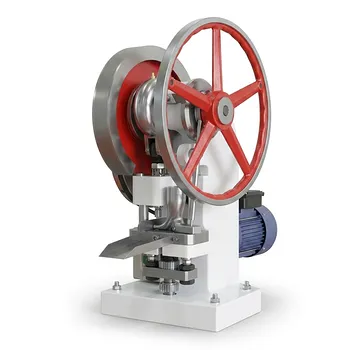
- 6-Ton Small Single-Punch Tablet Press — Laboratory Powder & Granule Tableting Equipment / Tablet Forming Machine
- Ordinary Type Rotary Tablet Press for Pharmaceutical Chemical Food Electronic Industries
- Enhanced 9 Punch Rotary Tablet Press for Powder Compaction
- 6 Ton Variable Frequency Single Punch Tablet Press
- 5 Ton Single Punch Tablet Press Laboratory Small Batch Production
People Also Ask
- What is the function of a laboratory press in Cr-Ti alloy evaluation? Quantify Fracture Stress & Strength
- What is the function of a laboratory press in assessing the hydrophobic performance of modified vermiculite fillers?
- What is the core function of a laboratory press in the forming of ceramic filter element green bodies? Maximize Density.
- What is the function of a laboratory press in the preparation of ceramic feed rods? Master Density and Precision
- Why is vacuum sealing and flexible packaging necessary for Aluminum Titanate powders during CIP? Ensure Peak Density

Tech Team · PowderPreparation
Last updated on Jun 03, 2026
Related Products
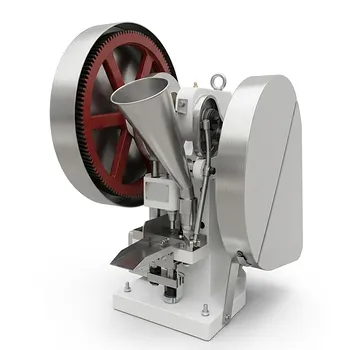
6-Ton Small Single-Punch Tablet Press — Laboratory Powder & Granule Tableting Equipment / Tablet Forming Machine
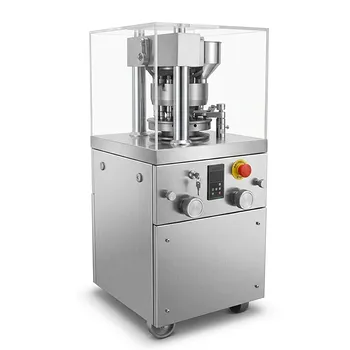
Ordinary Type Rotary Tablet Press for Pharmaceutical Chemical Food Electronic Industries
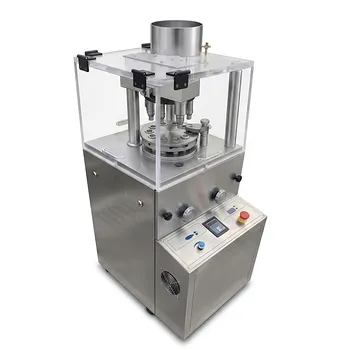
Enhanced 9 Punch Rotary Tablet Press for Powder Compaction
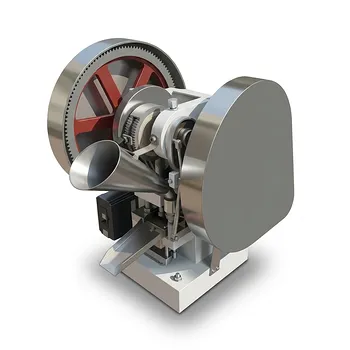
6 Ton Variable Frequency Single Punch Tablet Press