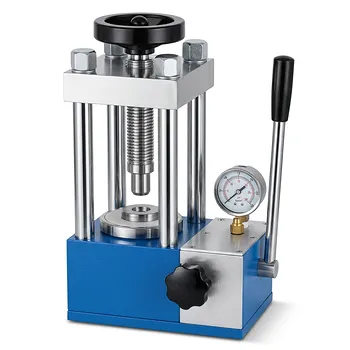
How does a hydraulic press verify Bakelite substitution in concrete? Ensure Structural Safety & Data Accuracy
Updated 4 months ago
The industrial-grade hydraulic press serves as the definitive tool for quantifying the mechanical consequences of substituting Bakelite powder for natural sand in concrete. By applying precisely controlled axial pressure to standard 15 cm cube specimens until failure, the press generates the empirical data needed to determine the maximum viable replacement ratio. This process allows engineers to identify the "sweet spot" where sustainable material substitution meets rigorous structural safety requirements.
Core Takeaway: The industrial hydraulic press transforms physical material failure into precise mathematical data, acting as the essential bridge between experimental material substitution and the verification of structural load-bearing capacity.
Quantifying Performance via Controlled Failure
The Mechanics of Axial Loading
The hydraulic press, often referred to as a universal testing machine, applies a vertical, uniaxial load to cured concrete specimens. This pressure is increased at a constant loading rate to ensure the results are repeatable and standardized across different batches of Bakelite-modified concrete.
Determining the Ultimate Load
As the press reaches the specimen's limit, it records the maximum failure load, which is the core data point required for engineering calculations. This figure is used to derive the compressive strength, providing a clear physical criterion for whether the Bakelite-sand mixture meets structural standards.
Analyzing the Impact of Bakelite Substitution
Establishing a Performance Baseline
To understand the impact of Bakelite powder, researchers use the hydraulic press to test control specimens made with traditional natural sand. This creates a benchmark against which all variations of Bakelite substitution ratios are compared.
Identifying Optimal Replacement Levels
By testing a range of substitution ratios—such as 5%, 10%, or 20%—the press reveals the exact point where mechanical strength begins to decline. This empirical evidence is critical for determining the optimal replacement levels that balance environmental sustainability with structural performance.
Validating Engineering and Safety Standards
Meeting Technical Requirements
For any new aggregate to be used in civil engineering, it must provide structural load-bearing capacity equivalent to traditional materials. The hydraulic press verifies if Bakelite-modified concrete can achieve the necessary strength grade required for real-world infrastructure projects.
Enhancing Material Density
In some applications, high-pressure hydraulic systems are used to compress mixtures into high-density green bodies. This process forces particle rearrangement and displaces air, establishing a robust physical foundation that directly influences the final density and mechanical integrity of the finished product.
Understanding the Trade-offs and Pitfalls
Sensitivity to Loading Rates
If the hydraulic press is not calibrated to a constant loading rate, the resulting data can be misleading. Loading a specimen too quickly may result in an artificially high strength reading, while loading too slowly may allow for creep, compromising the accuracy of the substitution analysis.
Specimen Size and Boundary Effects
While 15 cm cubes are standard, the friction between the press plates and the specimen surface can create confinement effects. This can lead to a slight overestimation of the material's true strength if the interface is not properly managed during the testing of Bakelite-substituted mixtures.
How to Apply This to Your Project
Making the Right Choice for Your Goal
To effectively use hydraulic press data for Bakelite substitution research, consider your specific project objectives:
- If your primary focus is Material Sustainability: Use the press to identify the highest possible Bakelite ratio that still maintains the minimum compressive strength required by local building codes.
- If your primary focus is Structural Integrity: Prioritize data from the press that shows low variance across multiple specimens, ensuring the Bakelite powder is consistently distributed throughout the mix.
- If your primary focus is Mix Optimization: Analyze the stress-strain curves provided by the testing equipment to understand how Bakelite affects the ductility and failure mode of the concrete.
By leveraging the precise data of an industrial hydraulic press, you move from theoretical substitution to validated, high-performance sustainable engineering.
Summary Table:
| Feature | Contribution to Concrete Research |
|---|---|
| Axial Loading | Applies precise, uniaxial force to measure the point of material failure. |
| Data Generation | Provides empirical failure load data to calculate exact compressive strength. |
| Ratio Optimization | Determines the maximum viable Bakelite-to-sand substitution ratio. |
| Density Control | Enhances material integrity by creating high-density green bodies via high pressure. |
Elevate Your Material Research with Precision Engineering
At our core, we provide complete laboratory sample preparation solutions tailored for material science and civil engineering research. Whether you are analyzing sustainable material substitution or optimizing powder processing, our equipment ensures accuracy and repeatability from raw powder to finished test specimen.
Our specialized equipment lines include:
- Compaction & Pressing: A full spectrum of hydraulic presses, including Cold/Warm Isostatic Presses (CIP/WIP), standard lab presses, XRF pellet presses, and vacuum hot presses.
- Powder Processing: Advanced crushers, liquid nitrogen cryogenic grinders, and high-energy mills (planetary ball, jet, and rotor mills).
- Analysis & Mixing: Vibratory sieve shakers and high-performance powder/defoaming mixers.
Ready to transform your experimental research into validated, high-performance structural data? Contact us today to learn how our specialized compaction and processing equipment can optimize your laboratory’s efficiency!
References
- Gyandeep Gupta, Sriramkumar. BAKELITE POWDER AS AN ALTERNATIVE TO NATURAL SAND IN CONCRETE FOR IMPROVING ITS PROPERTIES. DOI: 10.56726/irjmets29977
Mentioned Products
- Ordinary Type Rotary Tablet Press for Pharmaceutical Chemical Food Electronic Industries
- Hydraulic Double Shaft Disperser for High Viscosity Liquid Mixing and Dispersion
- 6-Ton Small Single-Punch Tablet Press — Laboratory Powder & Granule Tableting Equipment / Tablet Forming Machine
- Enhanced 9 Punch Rotary Tablet Press for Powder Compaction
- 5 Ton Single Punch Tablet Press Laboratory Small Batch Production
People Also Ask
- Why is a laboratory hydraulic press required for FT-IR KBr pellets? Achieve Precise Sample Clarity for ZrC–SiC Analysis
- Why is a laboratory hydraulic press required to compress oyster shell powder before XRF analysis? Improve Data Accuracy.
- Why is vacuum sealing and flexible packaging necessary for Aluminum Titanate powders during CIP? Ensure Peak Density
- What are the advantages of using hardened steel molds and graphite spray for titanium powder? Ensure structural integrity
- What role does a high-strength stainless steel mold kit play in the uniaxial die compaction process? Ensuring Precision

Tech Team · PowderPreparation
Last updated on Jun 03, 2026
Related Products
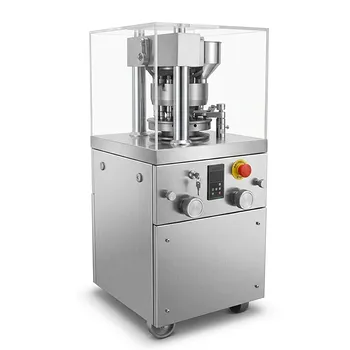
Ordinary Type Rotary Tablet Press for Pharmaceutical Chemical Food Electronic Industries
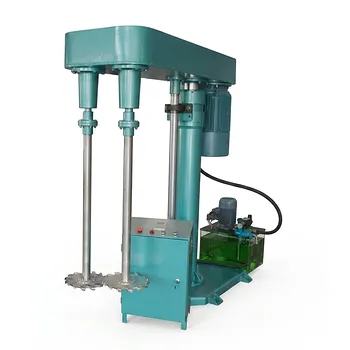
Hydraulic Double Shaft Disperser for High Viscosity Liquid Mixing and Dispersion
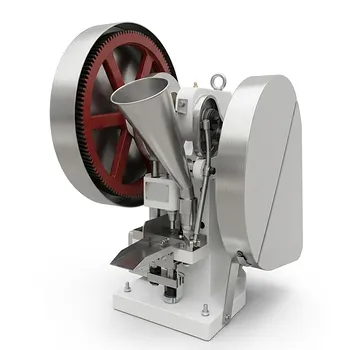
6-Ton Small Single-Punch Tablet Press — Laboratory Powder & Granule Tableting Equipment / Tablet Forming Machine
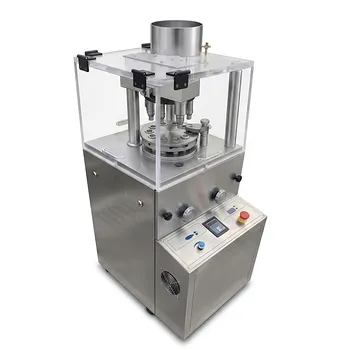
Enhanced 9 Punch Rotary Tablet Press for Powder Compaction
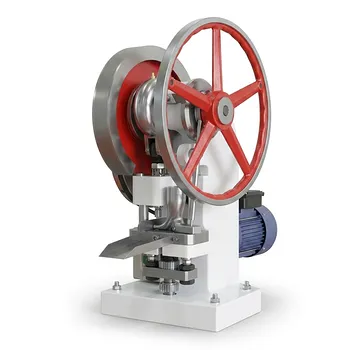
5 Ton Single Punch Tablet Press Laboratory Small Batch Production
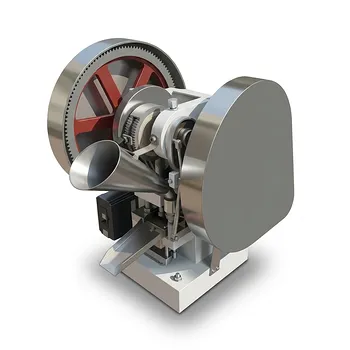
6 Ton Variable Frequency Single Punch Tablet Press