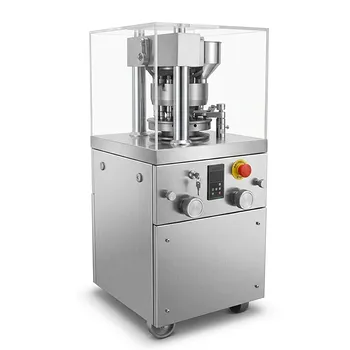
How does a vacuum hot press facilitate the synthesis of Mo2N cermets? Prevent Oxidation & Ensure High Density
Updated 5 months ago
A vacuum hot press facilitates the synthesis of $Mo_2N$ cermets by integrating high-temperature sintering with simultaneous axial pressure within an oxygen-free environment. This combination suppresses the oxidation of molybdenum, stabilizes nitrogen partial pressure, and enables full densification at temperatures low enough to prevent the decomposition of the metastable $\beta-Mo_2N$ phase.
The vacuum hot press provides a synergistic environment where mechanical pressure compensates for reduced thermal energy, allowing $Mo_2N$ to reach maximum density while the vacuum atmosphere prevents chemical degradation and oxidation.
Preventing Chemical Degradation and Oxidation
Eliminating Oxygen Reactivity
The primary function of the vacuum environment is to remove atmospheric oxygen that would otherwise react with molybdenum at elevated temperatures. This prevents the formation of molybdenum oxides, which can compromise the structural integrity and purity of the cermet.
Regulating Nitrogen Partial Pressure
A vacuum hot press allows for the maintenance of stable nitrogen partial pressure during the sintering process. This is critical for $Mo_2N$, as it prevents the material from losing nitrogen and decomposing into metallic molybdenum or other lower-nitride phases.
Protecting Non-Oxide Raw Materials
Because $Mo_2N$ is a non-oxide ceramic, it is highly sensitive to environmental contaminants. The vacuum state ensures the final product attains its theoretical thermal conductivity and mechanical strength by preventing the inclusion of impurities during the heating cycle.
Accelerating Densification at Lower Temperatures
Enhancing Plastic Flow and Diffusion
The application of axial mechanical pressure significantly promotes plastic flow and atomic diffusion between particles. This force allows the material to consolidate and eliminate pores much more efficiently than conventional pressureless sintering.
Reducing Sintering Temperature and Time
By providing mechanical energy to the system, the vacuum hot press reduces the total thermal energy required for densification. This enables the $Mo_2N$ to reach full density at lower temperatures and within significantly shorter holding times.
Preserving Metastable $\beta-Mo_2N$ Phase
$Mo_2N$ often exists in a metastable anti-rutile phase that is prone to transforming or decomposing at high heat. The ability to sinter at lower temperatures is decisive for preserving this specific phase and inhibiting excessive grain growth, which maintains the material's desired microstructural properties.
Understanding the Trade-offs
Limitations in Geometric Complexity
Vacuum hot pressing is primarily restricted to simple shapes like discs or blocks due to the nature of axial pressure application. Components with complex internal geometries or intricate curves are difficult to produce using this method compared to pressureless sintering or cold isostatic pressing.
Thermal Gradient Challenges
In large-scale vacuum hot presses, maintaining absolute thermal uniformity across the entire sample can be challenging. If not carefully managed, temperature gradients may lead to localized variations in density or phase distribution within the $Mo_2N$ cermet.
Cost and Throughput Considerations
The equipment required for vacuum hot pressing is technically complex and expensive to operate. Because it is often a batch process with significant cooling times required under vacuum, the throughput is generally lower than continuous sintering methods.
How to Apply This to Your Project
Making the Right Choice for Your Goal
- If your primary focus is Maximum Hardness and Density: Prioritize higher axial pressure settings to eliminate residual porosity while keeping temperatures at the lower end of the sintering window.
- If your primary focus is Phase Purity (Metastable $\beta-Mo_2N$): Use the shortest possible holding time and a high vacuum level to prevent any nitrogen loss or phase transformation.
- If your primary focus is Superior Thermal Conductivity: Ensure a high-purity vacuum environment to prevent even trace amounts of oxygen from forming resistive oxide layers at the grain boundaries.
By mastering the balance between mechanical pressure and atmospheric control, you can produce high-performance $Mo_2N$ cermets that retain their critical chemical and structural identities.
Summary Table:
| Key Feature | Functional Role | Benefit for Mo2N Cermets |
|---|---|---|
| Vacuum Environment | Removes oxygen & stabilizes $N_2$ | Prevents oxidation and nitrogen decomposition |
| Axial Pressure | Enhances plastic flow & diffusion | Achieves full density at lower temperatures |
| Thermal Control | Reduces required sintering heat | Preserves metastable $\beta-Mo_2N$ phase |
| Contamination Control | Eliminates atmospheric impurities | Ensures maximum thermal & mechanical strength |
Optimize Your Advanced Material Synthesis Today
Achieving the perfect balance of density and phase purity in sensitive materials like $Mo_2N$ requires precision equipment. [Brand Name] provides complete laboratory sample preparation solutions for material science, specializing in high-performance powder processing and compaction technology.
Our extensive product range is designed to support your research and production needs:
- Advanced Presses: Vacuum Hot Presses, Hot Presses, Cold/Warm Isostatic Presses (CIP/WIP), and XRF pellet presses.
- Milling & Grinding: Planetary ball mills, jet mills, and liquid nitrogen cryogenic grinders.
- Processing Equipment: Powder mixers, defoaming mixers, and vibratory sieve shakers.
Whether you are focusing on hardness, phase purity, or thermal conductivity, our experts are here to help you select the right solution. Contact us today to enhance your lab's efficiency!
References
- Lauren N. Walters, James M. Rondinelli. Metallicity and chemical bonding in anti-anatase Mo<sub>2</sub>N. DOI: 10.1039/d3cp05054h
Mentioned Products
- Dual Cup Vacuum Centrifugal Mixer Planetary Paste Defoaming Machine Industrial Material Processor
- 非介入式材料均质机真空脱泡行星搅拌高粘度混合设备
- High Speed Vacuum Planetary Centrifugal Mixer and Defoamer for Industrial Paste Processing
- High Efficiency Vacuum Planetary Centrifugal Mixer and Defoaming Machine for Industrial Material Research and Precise Laboratory Powder Dispersion
- Industrial Vacuum Kneader for High-Viscosity Silicone, Rubber, and Compound Mixing
People Also Ask
- Why is a vacuum centrifugal defoaming mixer required to process ceramic slurry before 3D printing? Ensure High Density
- Why is a vacuum centrifugal de-foaming mixer required before DIW of PZT ink? Achieve Dense, Bubble-Free Piezo Ceramics
- What are the advantages of centrifugal defoaming mixers for recycled slurries? Achieve Superior Electrode Quality
- Why is centrifugal defoaming necessary for magnetic composite inks? Ensure Void-Free Extrusion for 3D Printing
- Why is vacuum defoaming necessary for PDMS mixtures before microwave irradiation curing? Key to Structural Integrity

Tech Team · PowderPreparation
Last updated on May 14, 2026
Related Products
Dual Cup Vacuum Centrifugal Mixer Planetary Paste Defoaming Machine Industrial Material Processor
非介入式材料均质机真空脱泡行星搅拌高粘度混合设备
High Speed Vacuum Planetary Centrifugal Mixer and Defoamer for Industrial Paste Processing
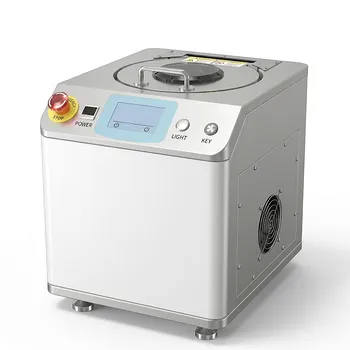
High Efficiency Vacuum Planetary Centrifugal Mixer and Defoaming Machine for Industrial Material Research and Precise Laboratory Powder Dispersion
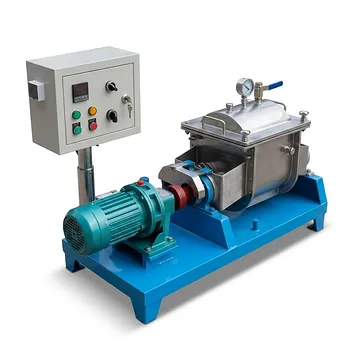
Industrial Vacuum Kneader for High-Viscosity Silicone, Rubber, and Compound Mixing
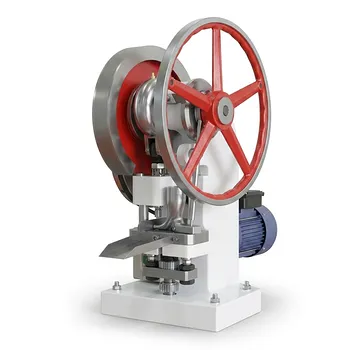
5 Ton Single Punch Tablet Press Laboratory Small Batch Production
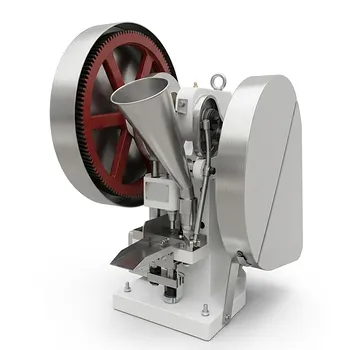
6-Ton Small Single-Punch Tablet Press — Laboratory Powder & Granule Tableting Equipment / Tablet Forming Machine
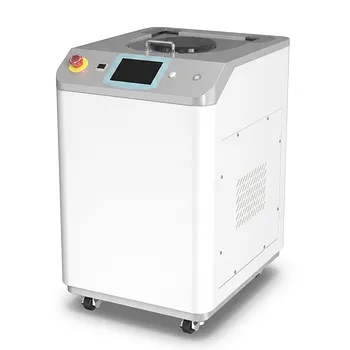
High Viscosity Planetary Centrifugal Mixing and Vacuum Defoaming Machine for Laboratory Material Preparation
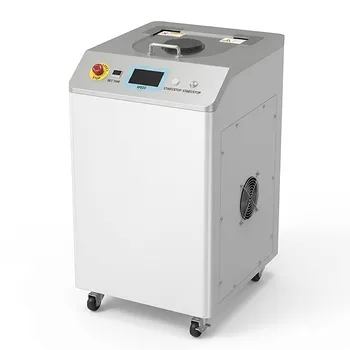
High Viscosity Planetary Centrifugal Vacuum Mixer for Material Defoaming and Uniform Mixing
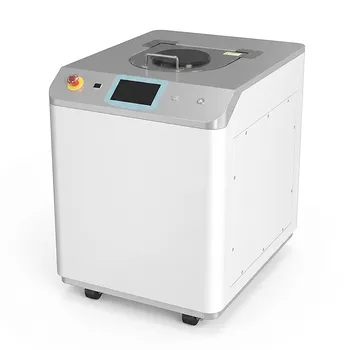
Industrial Planetary Centrifugal Vacuum Defoaming Mixer for High Viscosity Paste and Advanced Material Science
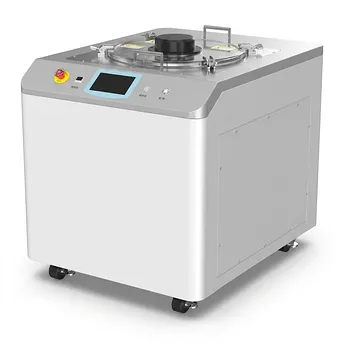
Industrial Planetary Centrifugal Vacuum Defoaming Mixer for High Viscosity Paste and Powder Homogenization
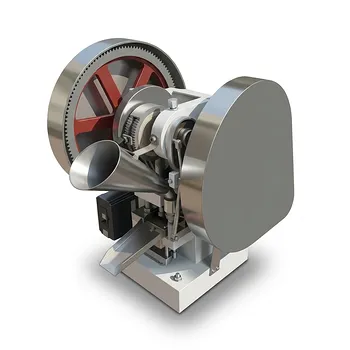
6 Ton Variable Frequency Single Punch Tablet Press