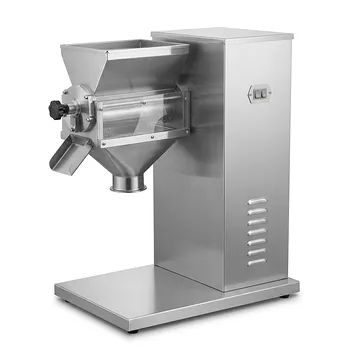
What is the function of a 3D powder mixer in Alumina-Indium-Graphene Nanoplatelet composite preparation?
Updated 5 months ago
In the preparation of Alumina-Indium-Graphene Nanoplatelet composites, the 3D powder mixer acts as the critical homogenization stage. By employing multi-axial motion trajectories, it ensures that Graphene Nanoplatelets and low-melting-point metallic Indium are distributed uniformly throughout the Alumina matrix. This high-level spatial distribution is essential for preventing nanomaterial clumping and ensuring the composite achieves maximum density and structural integrity during sintering.
The 3D powder mixer provides the essential macroscopic and microscopic uniformity required to turn a mixture of disparate powders into a high-performance material. By achieving a random, uniform distribution without altering the original particle morphology, it creates the ideal physical foundation for a defect-free, isotropic microstructure.
Mechanisms of Three-Dimensional Mixing
Multi-Axial Motion Trajectories
Unlike traditional mixers that move in a single plane, a 3D mixer utilizes complex spatial motion, including tumbling, rocking, and rotation. This multi-axial movement ensures that particles are agitated from every direction, eliminating "dead zones" where powders might settle.
Preservation of Particle Morphology
A primary benefit of 3D mixing is that it achieves homogeneity through dry physical mixing rather than high-energy mechanical alloying. This allows the Alumina, Indium, and Graphene to mix thoroughly without altering their original grain size or surface characteristics.
Optimized Contact Conditions
The mixer creates a state where different components are in ideal contact with one another. This is particularly vital for solid-state reactions and sintering, as it prevents the localized segregation that often leads to weak spots or impurity phases in the final ceramic core.
Overcoming Material-Specific Challenges
Preventing Graphene Nanoplatelet Agglomeration
Graphene Nanoplatelets (GNPs) have a natural tendency to agglomerate due to strong van der Waals forces. The continuous tumbling and agitation of a 3D mixer break these clusters apart, ensuring a uniform spatial distribution of the reinforcement phase within the ceramic matrix.
Distributing Low-Melting-Point Indium
Metallic Indium has a low melting point and can easily segregate during the preparation process. The 3D mixer ensures Indium is dispersed so finely that it cannot pool together, which is critical for maintaining a consistent microstructure when the composite is heated.
Handling High-Aspect-Ratio Reinforcements
Much like fibers in a ceramic matrix, nanoplatelets require a specific type of motion to achieve a random orientation. The 3D mixer provides the necessary agitation to ensure these high-aspect-ratio particles do not align in a single direction, which would lead to anisotropic (directional) weaknesses.
Downstream Impacts on Composite Quality
Enhancing Sintering Density
A uniform powder mixture is the prerequisite for high-density sintering. If the Indium or Graphene is poorly distributed, the composite will experience uneven shrinkage and localized porosity, compromising the mechanical strength of the final part.
Ensuring Isotropic Mechanical Properties
By achieving a "highly uniform random distribution," the 3D mixer ensures the final material is isotropic. This means the composite will exhibit the same strength, thermal, and electrical properties regardless of the direction in which those properties are measured.
Foundation for Advanced Manufacturing
In many cases, this dry-mixing phase provides the stable powder foundation needed for subsequent steps, such as 3D printing slurries or wet granulation. A stable, homogeneous mixture ensures that these later processes remain predictable and repeatable.
Understanding the Trade-offs
Physical Mixing vs. Mechanical Activation
It is important to recognize that 3D powder mixing is a non-destructive process. While this preserves particle shape, it does not provide the "mechanical activation" or grain refinement found in ball milling; if your process requires a reduction in particle size, a 3D mixer alone will not suffice.
Mixing Time Requirements
To achieve a truly random distribution of nanomaterials, mixing times can be significant—sometimes requiring up to 24 hours of continuous operation. Reducing this time prematurely can result in microscopic inhomogeneities that are only discovered after the sintering process is complete.
How to Apply This to Your Project
- If your primary focus is maximizing material density: Prioritize 3D mixing to ensure Indium is distributed finely enough to act as a uniform sintering aid without creating localized pores.
- If your primary focus is the electrical conductivity of Graphene: Use 3D mixing to prevent GNP agglomeration, which is essential for creating a continuous conductive network throughout the Alumina matrix.
- If your primary focus is preserving particle shape: Opt for a 3D rocking or tumbling mixer over high-energy milling to maintain the original aspect ratio of your reinforcements.
The 3D powder mixer is the bridge between raw raw ingredients and a sophisticated composite, transforming a simple blend into a high-performance material foundation.
Summary Table:
| Mixing Challenge | 3D Powder Mixer Solution | Impact on Composite Quality |
|---|---|---|
| GNP Agglomeration | High-level spatial agitation breaks van der Waals clusters. | Uniform reinforcement distribution. |
| Indium Segregation | Multi-axial trajectories prevent low-melting metal pooling. | Consistent, defect-free microstructure. |
| Particle Damage | Gentle physical mixing instead of high-energy milling. | Preserved grain size and morphology. |
| Anisotropy | Random particle orientation via complex motion. | Uniform mechanical/electrical properties. |
| Density Issues | Microscopic homogenization of disparate powders. | Optimized sintering & maximum density. |
Optimize Your Material Performance with Precision Sample Preparation
Achieving a defect-free, isotropic microstructure in advanced composites requires more than just mixing—it requires the right technology. At [Our Brand], we provide complete laboratory sample preparation solutions for material science, specializing in high-performance powder processing and compaction equipment.
Whether you are working with Alumina-Graphene composites or advanced ceramics, our extensive product line supports every stage of your workflow:
- Mixing & Homogenization: Advanced 3D powder mixers and vacuum defoaming mixers.
- Size Reduction: Planetary ball mills, jet mills, and cryogenic grinders.
- Material Processing: Jaw/roll crushers and vibratory sieve shakers.
- Advanced Compaction: A full spectrum of hydraulic presses, including Cold/Warm Isostatic Presses (CIP/WIP), vacuum hot presses, and XRF pellet presses.
Ready to elevate your research with reliable, high-precision equipment? Contact our technical experts today to find the perfect solution for your lab!
References
- Viktor Puchý, Ján Dusza. The Effects of Indium Additions on Tribological Behavior of Spark Plasma Sintering-Produced Graphene-Doped Alumina Matrix Composites for Self-Lubricating Applications. DOI: 10.3390/cryst14010104
Mentioned Products
- Three-Dimensional Motion Mixer for Laboratory Powder and Granule Blending
- Multi Dimensional Universal Mixer for High Uniformity Powder Blending
- Horizontal Trough Mixer for Uniform Powder and Paste Blending
- V-Type Powder Mixer for Uniform Blending of Dry Powders and Granules
- Inclined Mixer for Homogeneous Powder Blending and Grinding
People Also Ask
- Why is a 3D Motion Mixer employed when preparing binary powder mixtures for tableting? Achieve Superior Homogeneity
- What role does an industrial 3D mixer play in the preparation of diamond tool segment raw materials? Achieve Homogeneity
- What is the role of a 3D mixer in Ti2SnC synthesis? Optimize Precursor Homogeneity for High-Purity MAX Phases
- How does a 3D mixer with tungsten balls contribute to magnesium composite mixing? Achieve Superior Macro-Homogeneity
- What are the advantages of using a 3D powder mixer? Boost Tablet Consistency with Advanced Mixing Technology

Tech Team · PowderPreparation
Last updated on May 14, 2026
Related Products
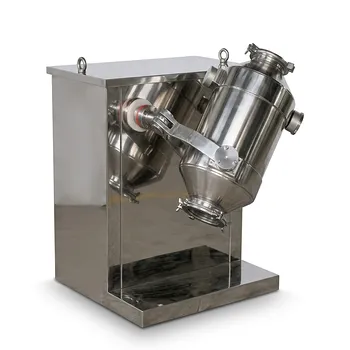
Three-Dimensional Motion Mixer for Laboratory Powder and Granule Blending
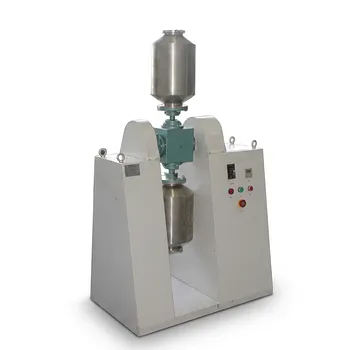
Multi Dimensional Universal Mixer for High Uniformity Powder Blending
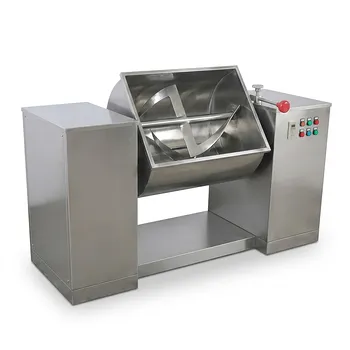
Horizontal Trough Mixer for Uniform Powder and Paste Blending
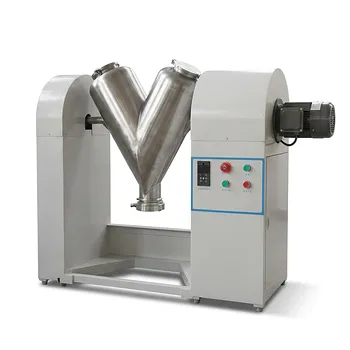
V-Type Powder Mixer for Uniform Blending of Dry Powders and Granules
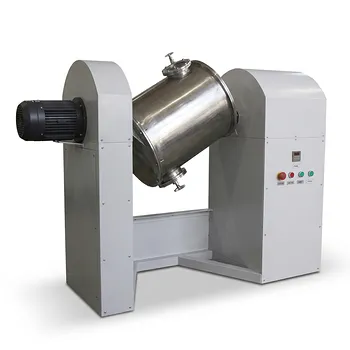
Inclined Mixer for Homogeneous Powder Blending and Grinding
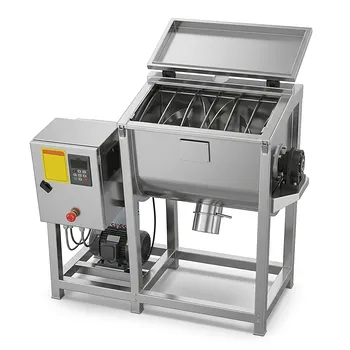
Horizontal Ribbon Mixer for Uniform Powder and Slurry Mixing
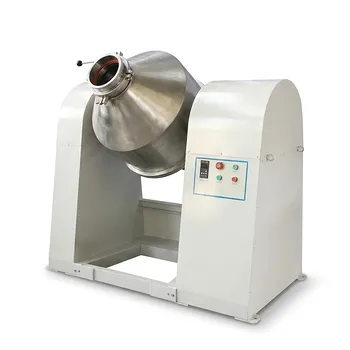
Industrial Double Cone Mixer for Powder Blending and Homogeneous Mixing
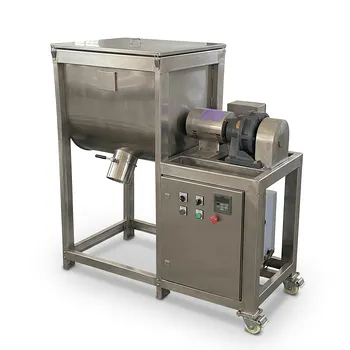
Horizontal Ribbon Mixer for Dry Powder and Slurry Blending
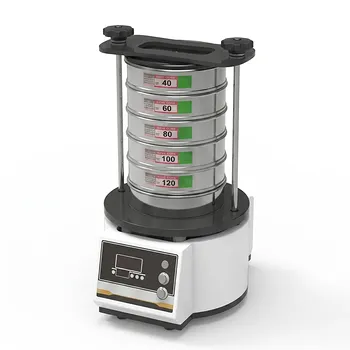
Dry Three Dimensional Vibratory Sieve Shaker
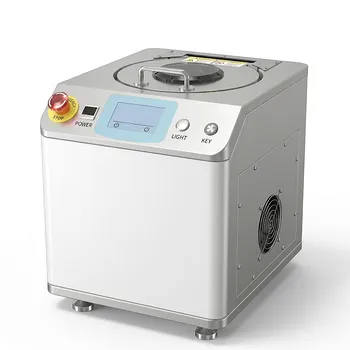
High Efficiency Vacuum Planetary Centrifugal Mixer and Defoaming Machine for Industrial Material Research and Precise Laboratory Powder Dispersion
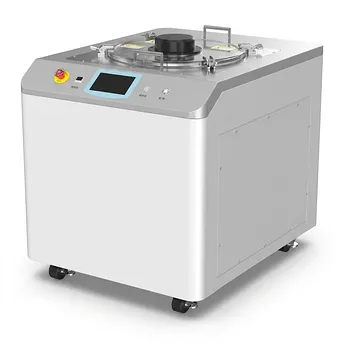
Industrial Planetary Centrifugal Vacuum Defoaming Mixer for High Viscosity Paste and Powder Homogenization
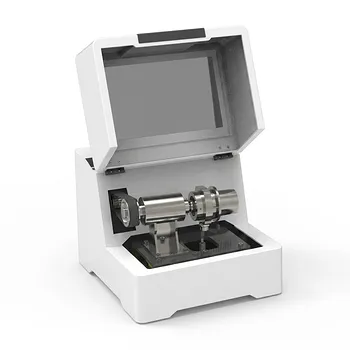
Single Tank High Energy Vibratory Ball Mill for Laboratory Grinding and Mixing
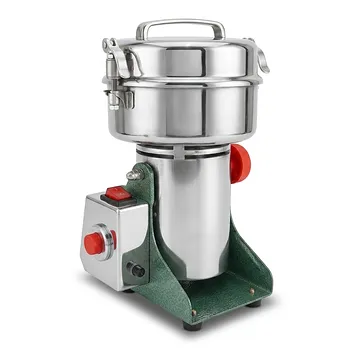
Small High-Speed Laboratory Grinder for Powder Processing
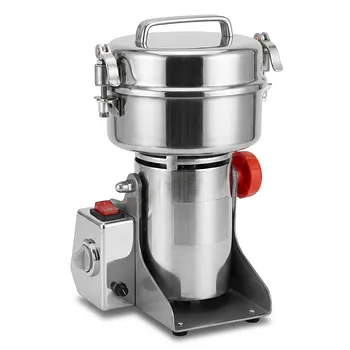
High Speed Laboratory Powder Grinder Small Batch Sample Preparation Mill

Vertical Production Planetary Ball Mill for High Throughput Powder Processing
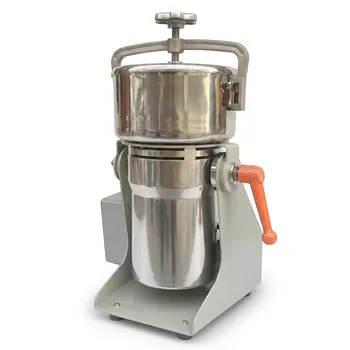
High Speed Laboratory Grinder Efficient Stainless Steel Powder Pulverizer Universal Material Science Mill for Sample Preparation
Automatic Vibrating Powder Feeder for Laboratory Material Processing Precision Vibratory Hopper Feeder for Granular and Powder Material Handling Industrial Grade Vibrating Tray Feeder for Consistent Material Sample Preparation
Industrial Swing Granulator for Powder Processing in Pharma Food and Chemical Industries
High-Speed Simple Disperser for Efficient Mixing, Dispersion, and Emulsification