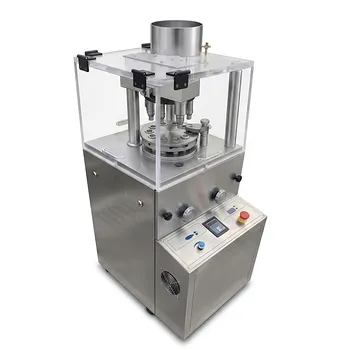
How does a precision laboratory hydraulic press ensure reproducibility of ultra-thin wave-absorbing coatings?
Updated 5 months ago
Precision laboratory hydraulic presses ensure performance reproducibility by strictly controlling molding pressure to maintain consistent coating thickness and internal structural density. Because wave-absorbing performance is highly sensitive to dimensional variations—often within the 2–3 mm range—the press provides a uniform pressure distribution that eliminates internal air bubbles and ensures electromagnetic properties remain identical across every production batch.
A laboratory hydraulic press acts as the physical "standardizer" for composite materials, transforming raw powders or prepregs into dense, uniform structures. By removing human error and environmental variables, it ensures that the physical dimensions and internal microstructure of a coating are repeatable and scientifically valid.
The Criticality of Dimensional and Density Control
Maintaining Consistent Thickness for Electromagnetic Stability
The wave-absorbing capability of a coating is mathematically dependent on its physical thickness. Even minor deviations can shift the absorption frequency or reduce effectiveness, making precise pressure control essential for maintaining a target thickness of 2–3 mm.
Ensuring Uniform Internal Structural Density
Consistent pressure ensures that the internal particles of the composite are packed with the same structural density every time. This uniformity prevents fluctuations in the material’s dielectric constant and magnetic permeability, which are the primary drivers of wave-absorbing performance.
Eliminating Micro-Defects and Air Bubbles
During the curing or molding process, trapped air can create "voids" that scatter electromagnetic waves unpredictably. The high, constant pressure of a hydraulic press expels internal air bubbles, ensuring a continuous, defect-free microstructure that behaves predictably in the field.
Enhancing Material Continuity and Stability
Achieving Microstructural Continuity
A precision press, particularly a vacuum hot press, applies a uniform thermal field alongside pressure to compress blended powders into dense films. This process ensures the continuity of the internal microstructure, which is vital for the mechanical integrity and functional accuracy of ultra-thin coatings.
Standardizing the Initial Bonding of Particles
In semi-dry pressing, the press facilitates the rearrangement and initial bonding of powder particles within the mold. This increases the "green density" of the material, which directly dictates the final shrinkage rate and porosity after the sintering or curing process is complete.
Reducing Batch-to-Batch Variability
By utilizing constant loading rates and preset pressure levels, the hydraulic press eliminates the variability inherent in manual application. This standardization allows researchers to compare different material ratios with the confidence that any performance change is due to chemistry, not fabrication flaws.
Understanding Potential Pitfalls
The Risk of Pressure Gradients
If a mold is not perfectly aligned or if the press lacks precision, pressure gradients can occur across the surface of the coating. This leads to uneven density, where one area of the coating may absorb waves effectively while another reflects them due to localized thickness variations.
Over-Compaction and Material Deformation
Applying excessive pressure beyond the material's structural limit can lead to internal stress or crushed particles. This "over-compaction" can alter the material's intended electromagnetic properties or cause the coating to crack during subsequent thermal cycles.
Impact of Temperature Fluctuations
In processes involving hot pressing, a lack of thermal uniformity can undermine the benefits of precise pressure. If the heat is not distributed evenly across the hydraulic plates, the curing rate will vary, resulting in inconsistent mechanical and wave-absorbing properties.
Applying Precision Pressing to Your Project
Recommendations for Implementation
To achieve the highest level of reproducibility in wave-absorbing coatings, the selection of the pressing method must align with the specific material properties and project goals.
- If your primary focus is consistent electromagnetic characterization: Utilize a press with digital pressure monitoring to ensure every sample reaches the exact same density and thickness within a 0.01mm tolerance.
- If your primary focus is eliminating surface defects: Choose a vacuum hot press to simultaneously apply heat and pressure, which effectively removes micro-pores that interfere with wave absorption.
- If your primary focus is scaling from lab to production: Implement standardized molds and constant loading rates to ensure that small-batch research results can be accurately replicated in larger manufacturing environments.
By treating the hydraulic press as a precision metrology tool rather than just a compaction device, you guarantee the scientific integrity and performance reliability of every wave-absorbing coating produced.
Summary Table:
| Key Feature | Impact on Coating | Benefit for Reproducibility |
|---|---|---|
| Pressure Control | Maintains thickness (2-3 mm) | Consistent frequency absorption |
| Density Uniformity | Standardizes internal packing | Reliable dielectric/magnetic properties |
| Vacuum Capability | Removes voids/air bubbles | Defect-free, predictable microstructure |
| Loading Rates | Controls particle rearrangement | Eliminates human error & batch variance |
| Thermal Uniformity | Ensures consistent curing | Stable mechanical & functional integrity |
Elevate Your Material Research with KINTEK Precision
Precision is the foundation of breakthrough material science. As specialists in powder processing and compaction, KINTEK provides complete laboratory sample preparation solutions designed to guarantee your results are reproducible and scientifically valid.
Our extensive range includes:
- Advanced Pressing: Cold/Warm Isostatic Presses (CIP/WIP), Vacuum Hot Presses, and standard XRF pellet presses for perfect density control.
- Preparation & Milling: Jaw/roll crushers, cryogenic grinders, and planetary ball/jet mills for optimal powder refinement.
- Mixing & Sizing: Powder mixers, defoaming mixers, and precision sieve shakers for uniform composition.
Don’t let fabrication variables compromise your data. Contact our technical experts today to find the ideal solution for your ultra-thin coating projects and experience the difference that precision engineering makes.
References
- Bien Che Dong, Nieu Huu Nguyen. The impact of different multi-walled carbon nanotubes on the X-band microwave absorption of their epoxy nanocomposites. DOI: 10.1186/s13065-015-0087-2
Mentioned Products
- 6-Ton Small Single-Punch Tablet Press — Laboratory Powder & Granule Tableting Equipment / Tablet Forming Machine
- Manual Tablet Press with Dual Scale Pressure Gauge for Pharmaceutical Food Chemical Laboratory Sample Preparation
- 5 Ton Single Punch Tablet Press Laboratory Small Batch Production
- 6 Ton Variable Frequency Single Punch Tablet Press
- Custom Raised Height Laboratory Jaw Crusher for Precision Sample Preparation in Material Science
People Also Ask
- What is the function of a laboratory press in Cr-Ti alloy evaluation? Quantify Fracture Stress & Strength
- What is the function of a laboratory press in assessing the hydrophobic performance of modified vermiculite fillers?
- What is the core function of a laboratory press in the forming of ceramic filter element green bodies? Maximize Density.
- What is the function of a laboratory press in the preparation of ceramic feed rods? Master Density and Precision
- Why is vacuum sealing and flexible packaging necessary for Aluminum Titanate powders during CIP? Ensure Peak Density

Tech Team · PowderPreparation
Last updated on May 14, 2026
Related Products
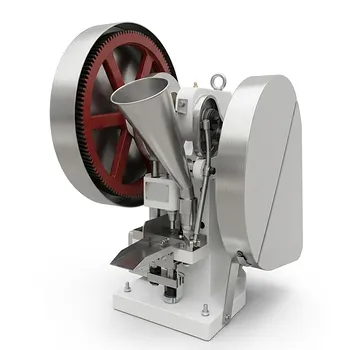
6-Ton Small Single-Punch Tablet Press — Laboratory Powder & Granule Tableting Equipment / Tablet Forming Machine
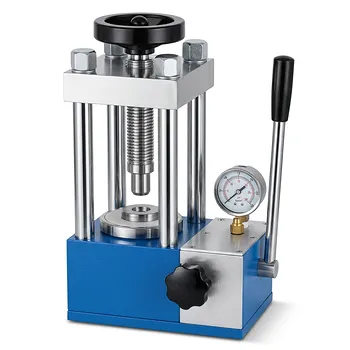
Manual Tablet Press with Dual Scale Pressure Gauge for Pharmaceutical Food Chemical Laboratory Sample Preparation
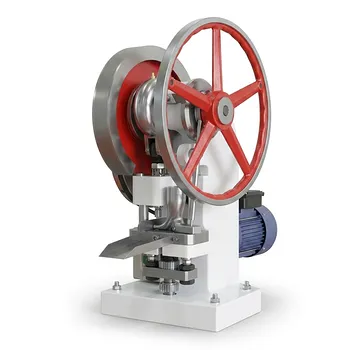
5 Ton Single Punch Tablet Press Laboratory Small Batch Production
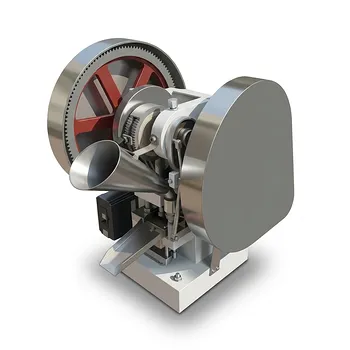
6 Ton Variable Frequency Single Punch Tablet Press
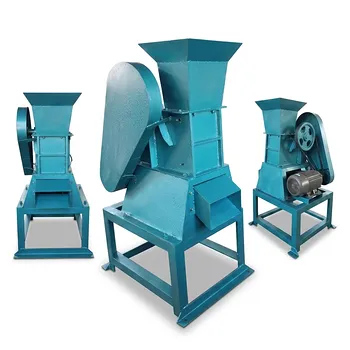
Custom Raised Height Laboratory Jaw Crusher for Precision Sample Preparation in Material Science
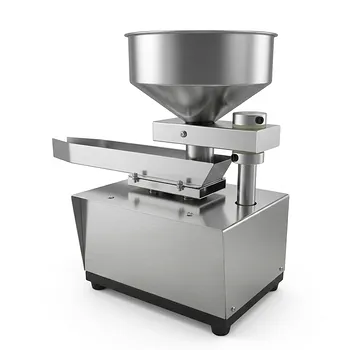
Automatic Vibrating Powder Feeder for Laboratory Material Processing Precision Vibratory Hopper Feeder for Granular and Powder Material Handling Industrial Grade Vibrating Tray Feeder for Consistent Material Sample Preparation