How does a precision laboratory hydraulic press contribute to the forming process of graphite and copper composite powders?
Updated 4 months ago
The precision laboratory hydraulic press is the critical instrument for transforming loose graphite and copper powders into a cohesive, high-density "green compact" through controlled plastic deformation. By applying high-intensity unidirectional pressure—typically ranging from 200 MPa to 1000 MPa—the press forces metal particles to rearrange and interlock while eliminating internal voids. This mechanical consolidation establishes the initial density and structural integrity required for the material to survive handling and undergo successful high-temperature sintering.
A precision hydraulic press serves as the foundation of the powder metallurgy process by mechanically inducing particle alignment and interlocking. It translates raw pressure into a precisely shaped green body with the specific density and microstructural orientation necessary for optimal thermal and electrical performance.
The Mechanics of Powder Consolidation
Plastic Deformation and Void Elimination
A precision hydraulic press applies high-intensity pressure, often around 300 MPa, to overcome the internal friction of the powder mix. This force causes the ductile copper particles to undergo plastic deformation, physically changing shape to fill the gaps between graphite flakes. The result is the systematic elimination of voids, which is essential for achieving a high relative density in the final composite.
Particle Rearrangement and Mechanical Interlocking
Beyond simple compression, the press facilitates the physical rearrangement of the powder constituents. As the pressure increases, irregular particles are forced into a more compact spatial distribution, leading to mechanical interlocking. This interlocking creates a "green body" that possesses enough mechanical strength to maintain its geometric shape without the use of chemical binders.
Air Expulsion and Uniform Density
The steady application of pressure serves to expel trapped air from the loose ball-milled powder. By using precision punches and dies, the hydraulic press ensures that this densification is uniform throughout the specimen. Uniform density is vital to prevent warping or internal cracking during the subsequent thermal densification stages.
Microstructural Control and Conductivity
Anisotropic Alignment of Graphite
In graphite-copper composites, the unidirectional pressure causes flaky graphite or graphene particles to align perpendicularly to the compression direction. This controlled physical alignment is the primary mechanism for inducing anisotropic thermal and electrical conductivity. By managing the pressure, researchers can pre-determine the spatial distribution of the carbon phase within the metal matrix.
Establishing the Diffusion Interface
The high cold-pressing stress creates a dense contact interface between the copper and graphite particles. This intimate physical contact is a prerequisite for atomic diffusion during the sintering process. Without the initial high-pressure consolidation, the distance between particles would be too great for effective mass diffusion, resulting in a porous and weak final product.
Influence of Pressure Holding Time
Precision presses allow for the accurate control of pressure holding time, ensuring the powder has sufficient time to settle and deform. Maintaining peak pressure allows the particles to reach a state of equilibrium within the mold, which maximizes the initial green density. This stability prevents the compact from "springing back" or delaminating once the pressure is released.
Understanding the Trade-offs
Elastic Recovery and Internal Stress
While high pressure is beneficial, it can induce significant internal stress within the green compact. When the pressure is released, "elastic recovery" occurs, where the material expands slightly; if this expansion is uneven, it can lead to micro-cracks. Balancing the compaction pressure is necessary to maximize density without compromising the structural integrity of the part.
Mold Wear and Friction Limits
Applying pressures toward the higher end of the spectrum (e.g., 1000 MPa) significantly increases the wear on precision dies and punches. Excessive friction between the powder and the mold walls can lead to density gradients, where the center of the compact is less dense than the edges. Using lubricants or optimized die materials is often required to mitigate these mechanical limitations.
How to Apply This to Your Project
Optimizing the Pressing Stage for Your Material
To achieve the best results with graphite and copper composites, the pressing parameters must be tailored to the specific goals of the application.
- If your primary focus is Maximum Electrical Conductivity: Use high pressures (above 400 MPa) and extended holding times to maximize the contact area between copper particles and ensure the perpendicular alignment of graphite flakes.
- If your primary focus is Complex Geometric Precision: Focus on moderate pressures (200-300 MPa) combined with high-precision, low-friction molds to ensure uniform density and minimize internal cracking during ejection.
- If your primary focus is High Sintered Density: Prioritize the elimination of voids by reaching cold-pressing stresses that induce intense plastic deformation, aiming for a green density that exceeds 80% of the theoretical limit.
By precisely controlling the mechanical consolidation of powders, the laboratory hydraulic press dictates the microstructural foundation and ultimate performance of the copper-graphite composite.
Summary Table:
| Key Mechanism | Action of the Hydraulic Press | Impact on Composite Performance |
|---|---|---|
| Plastic Deformation | Forces ductile copper to fill gaps | Eliminates voids for maximum relative density. |
| Particle Alignment | Induces anisotropic orientation | Optimizes directional thermal/electrical conductivity. |
| Mechanical Interlocking | Rearranges particles under high pressure | Creates a strong green body without chemical binders. |
| Uniform Densification | Expels air via precision punches/dies | Prevents warping and cracking during sintering. |
| Pressure Holding | Maintains equilibrium at peak stress | Maximizes green density and prevents spring-back. |
Elevate Your Material Research with KINTEK Precision Solutions
Achieving the perfect microstructural foundation for your graphite and copper composites requires more than just pressure—it requires precision. At KINTEK, we provide complete laboratory sample preparation solutions designed specifically for the rigorous demands of material science.
Our extensive equipment line supports every stage of your workflow:
- Powder Processing: High-performance crushers (jaw/roll), liquid nitrogen cryogenic grinders, and an array of mills (planetary ball, jet, sand, disc, and rotor).
- Sizing & Mixing: Vibratory and air-jet sieve shakers for precise particle distribution, alongside advanced powder and defoaming mixers.
- Advanced Compaction: A full spectrum of Hydraulic Presses, including Cold/Warm Isostatic Presses (CIP/WIP), standard lab presses, XRF pellet presses, and vacuum hot presses.
Whether you are aiming for maximum conductivity or geometric precision, our specialized equipment ensures uniform density and superior structural integrity for your samples.
Ready to optimize your powder metallurgy process? Contact our technical experts today to find the ideal equipment for your laboratory!
References
- Min Zhong, Bing Luo. Enhanced mechanical and tribological properties of low-cost core-shell structured microcrystalline graphite/Cu composites. DOI: 10.1016/j.wear.2023.205155
Mentioned Products
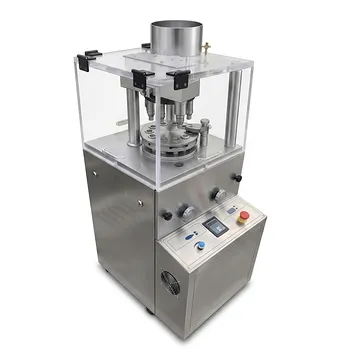
- Enhanced 9 Punch Rotary Tablet Press for Powder Compaction
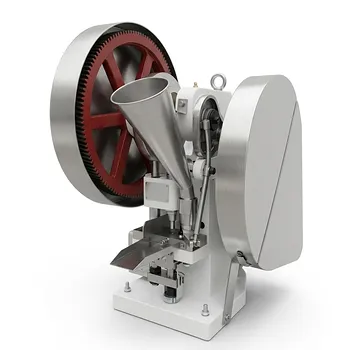
- 6-Ton Small Single-Punch Tablet Press — Laboratory Powder & Granule Tableting Equipment / Tablet Forming Machine
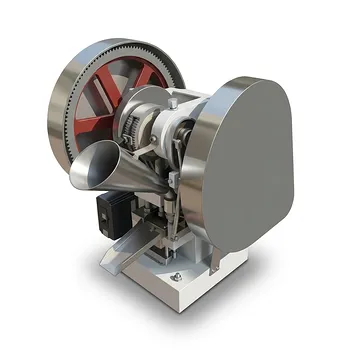
- 6 Ton Variable Frequency Single Punch Tablet Press
People Also Ask
- What is the purpose of adding lubricants like zinc stearate during Al-Al2O3 powder pressing? Achieve Superior Density
- Why is a laboratory hydraulic press required for FT-IR KBr pellets? Achieve Precise Sample Clarity for ZrC–SiC Analysis
- What role does a high-strength stainless steel mold kit play in the uniaxial die compaction process? Ensuring Precision
- Why is a laboratory hydraulic press required to compress oyster shell powder before XRF analysis? Improve Data Accuracy.
- Why is vacuum sealing and flexible packaging necessary for Aluminum Titanate powders during CIP? Ensure Peak Density

Tech Team · PowderPreparation
Last updated on Jun 03, 2026