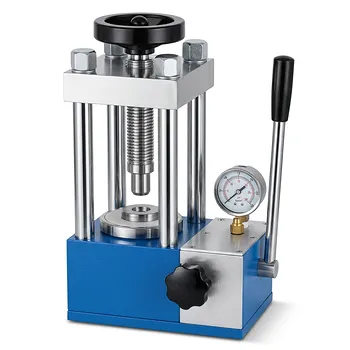
How does a precision hydraulic press contribute to piezoelectric ceramic molding? Ensure Superior Green Body Integrity
Updated 5 months ago
A precision hydraulic press is the foundational tool for transforming loose ceramic powders into high-integrity green bodies. By applying high, constant uniaxial pressure—often reaching 150 MPa—the press forces sieved powders into a dense, rearranged structure within a precision mold. This controlled compaction ensures a high and uniform green density, which is the primary defense against cracking, warping, or deformation during the subsequent high-temperature sintering process.
The precision hydraulic press ensures structural integrity by creating a uniform pressure field that maximizes particle contact and eliminates internal voids. This "green" state foundation is essential for preventing non-uniform shrinkage during sintering and achieving the final dielectric and physical properties required for piezoelectric applications.
The Role of Precision Pressure in Molding
Achieving Maximum Packing Density
Precision hydraulic presses apply high-magnitude axial pressure to force ceramic particles into the tightest possible configuration. This dense packing reduces the initial porosity of the green body, which is critical for producing a final ceramic with low porosity and high dielectric strength.
Defining Geometric Shape and Dimensions
Using high-precision steel molds, the press converts granulated powder or stacked green tapes into specific geometric shapes, such as 13 mm diameter discs. The stability of the hydraulic output ensures that these dimensions remain consistent across multiple production cycles.
Fixing Internal Microstructures
In specialized applications, the stable pressure-holding process helps fix the orientation of flake-like templates within the ceramic matrix. This initial alignment is necessary for developing the specific textures required for advanced piezoelectric performance.
Ensuring Structural Integrity for Processing
Eliminating Internal Density Gradients
One of the most critical contributions of a precision press is the elimination of density gradients within the green body. Uniform pressure distribution ensures that the compact has the same density throughout, which prevents the internal stresses that cause cracking during firing.
Enhancing Green Strength for Handling
The compaction process, often aided by binders, provides the green body with sufficient mechanical strength for handling and turnover. This structural "toughness" allows the fragile, unfired components to be moved into the sintering furnace without chipping or collapsing.
Creating Conditions for Densification
By ensuring close physical contact between powder particles, the hydraulic press establishes the necessary conditions for atomic diffusion. This intimate contact is what allows the ceramic to transition from a pressed powder to a solid, densified mass during the sintering stage.
Understanding the Trade-offs and Pitfalls
Unidirectional vs. Isostatic Pressure
Most precision hydraulic presses use uniaxial (unidirectional) pressure, which is efficient but can occasionally lead to slight density variations between the top and bottom of the mold. For exceptionally tall parts, users must carefully manage the height-to-diameter ratio to avoid structural weak points.
The Risk of Over-Compaction
Applying excessive pressure beyond the material's limits can lead to "capping" or internal laminations. These microscopic cracks occur when trapped air or elastic expansion causes the green body to split upon release from the mold, compromising its structural integrity.
How to Optimize Your Pressing Process
Applying This to Your Project
To achieve the best results with piezoelectric ceramics, your pressing strategy should align with your specific structural requirements.
- If your primary focus is maximizing final density: Use a press capable of maintaining high, constant pressure (e.g., 150 MPa) to ensure the highest possible initial particle packing.
- If your primary focus is preventing sintering cracks: Prioritize a press with precise pressure-holding capabilities to eliminate internal density gradients and ensure uniform shrinkage.
- If your primary focus is geometric precision: Utilize high-quality steel molds in conjunction with the press to ensure the green body meets exact dimensional tolerances.
By mastering the precision of the hydraulic pressing stage, you create the essential physical foundation required for high-performance, defect-free piezoelectric ceramics.
Summary Table:
| Key Factor | Role in Process | Benefit to Green Body |
|---|---|---|
| High Axial Pressure | Forces particles into tightest configuration | Maximizes packing density and reduces porosity |
| Uniform Pressure Field | Eliminates internal density gradients | Prevents cracking, warping, and non-uniform shrinkage |
| Precision Mold Design | Converts powder into exact geometric shapes | Ensures consistent dimensions (e.g., 13mm discs) |
| Pressure Holding | Fixes orientation of internal microstructures | Enhances advanced piezoelectric performance/texture |
| Mechanical Compaction | Increases particle-to-particle contact | Improves green strength for handling and sintering diffusion |
Elevate Your Material Research with Expert Compaction Solutions
Achieving the perfect green body is the first step toward high-performance piezoelectric ceramics. At KINTEK, we provide complete laboratory sample preparation solutions for material science, specializing in high-end powder processing and compaction equipment.
Whether you need to eliminate density gradients or maximize particle packing, our extensive range of equipment is designed for precision and reliability:
- Hydraulic Presses: A full spectrum including standard lab presses, XRF pellet presses, Hot Presses, Vacuum Hot Presses, and Cold/Warm Isostatic Presses (CIP/WIP).
- Powder Processing: Advanced mills (planetary ball, jet, sand, disc, rotor), jaw/roll crushers, and liquid nitrogen cryogenic grinders.
- Sizing & Mixing: Vibratory/air-jet sieve shakers and high-efficiency powder or defoaming mixers.
Ready to optimize your ceramic structural integrity? Contact our technical experts today to find the ideal pressing and processing solution tailored to your specific application requirements.
References
- Hangfeng Zhang, Lei Su. Phase transformation in lead titanate based relaxor ferroelectrics with ultra-high strain. DOI: 10.1038/s41467-025-56920-9
Mentioned Products
- 6-Ton Small Single-Punch Tablet Press — Laboratory Powder & Granule Tableting Equipment / Tablet Forming Machine
- Enhanced 9 Punch Rotary Tablet Press for Powder Compaction
- 5 Ton Single Punch Tablet Press Laboratory Small Batch Production
- Ordinary Type Rotary Tablet Press for Pharmaceutical Chemical Food Electronic Industries
- 6 Ton Variable Frequency Single Punch Tablet Press
People Also Ask
- What is the function of a laboratory press in Cr-Ti alloy evaluation? Quantify Fracture Stress & Strength
- What is the function of a laboratory press in assessing the hydrophobic performance of modified vermiculite fillers?
- What is the core function of a laboratory press in the forming of ceramic filter element green bodies? Maximize Density.
- What is the function of a laboratory press in the preparation of ceramic feed rods? Master Density and Precision
- Why is vacuum sealing and flexible packaging necessary for Aluminum Titanate powders during CIP? Ensure Peak Density

Tech Team · PowderPreparation
Last updated on May 14, 2026
Related Products
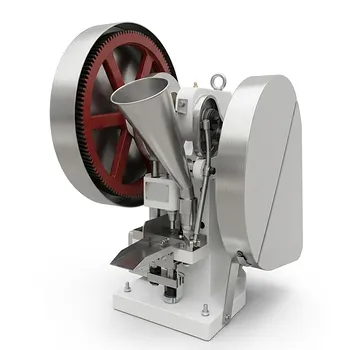
6-Ton Small Single-Punch Tablet Press — Laboratory Powder & Granule Tableting Equipment / Tablet Forming Machine
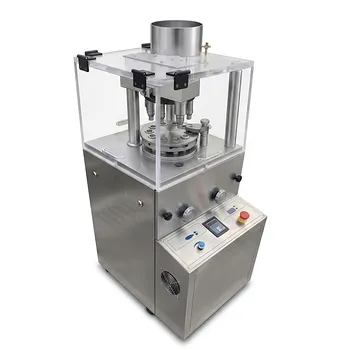
Enhanced 9 Punch Rotary Tablet Press for Powder Compaction
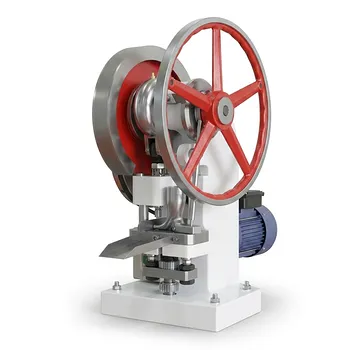
5 Ton Single Punch Tablet Press Laboratory Small Batch Production
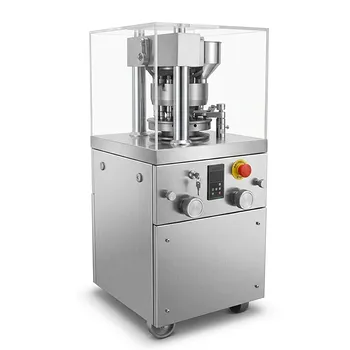
Ordinary Type Rotary Tablet Press for Pharmaceutical Chemical Food Electronic Industries
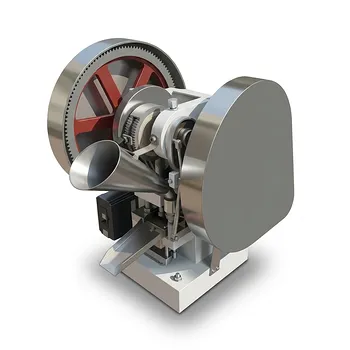
6 Ton Variable Frequency Single Punch Tablet Press