How does a planetary ball mill facilitate GPOFA preparation for ceramics? Optimize Particle Size & Reactivity
Updated 4 months ago
The preparation of ground Palm Oil Fuel Ash (GPOFA) using a planetary ball mill transforms a coarse industrial byproduct into a highly reactive, micro-scale ceramic precursor. By utilizing high-energy impact and shear forces, the mill refines POFA particles to sub-63 micron levels, significantly increasing their specific surface area and ensuring a uniform distribution within the ceramic matrix.
Core Takeaway: A planetary ball mill facilitates GPOFA preparation by converting heterogeneous ash into a homogeneous, high-surface-area powder. This mechanical refinement is essential for increasing chemical reactivity and achieving the densification required for high-quality ceramic applications.
The Mechanics of High-Energy Refinement
Centrifugal and Impact Forces
A planetary ball mill operates through the simultaneous rotation and revolution of milling jars, creating a high-energy environment. This motion generates intense centrifugal forces that cause the grinding media—often high-hardness alumina balls—to collide with the Palm Oil Fuel Ash (POFA) at high velocities.
Attrition and Shear
Beyond direct impact, the mill facilitates attrition and shear forces as the grinding media rub against each other and the jar walls. This combination of forces is more effective than standard milling at breaking down the tough, irregularly shaped particles found in raw ash.
Particle Size Reduction
The primary physical outcome is a reduction of coarse particles to specific micrometer-sized dimensions. In the case of GPOFA, achieving a sub-63 micron profile is a critical threshold that defines its transition from a waste product to a viable ceramic raw material.
Enhancing Chemical and Structural Properties
Increasing Specific Surface Area
As the planetary ball mill pulverizes the ash, it drastically increases the specific surface area of the powder. This larger surface-to-volume ratio provides more active sites for subsequent chemical reactions, such as acid treatments for impurity removal or solid-state synthesis.
Mechanochemical Activation
The high-frequency impacts do more than just break particles; they increase the surface energy of the powder. This "mechanochemical action" makes the GPOFA more reactive during the sintering process, facilitating faster phase transformations and better bonding with other ceramic components.
Molecular Level Homogenization
In ceramic synthesis, the mill ensures that GPOFA is uniformly dispersed at a microscopic or even molecular level. This deep homogenization is vital for preventing local defects and ensuring that the final ceramic product has a stable chemical and mineralogical composition.
Understanding the Trade-offs
Risk of Media Contamination
The use of high-hardness grinding media, such as alumina, can lead to material contamination over long milling durations. As the balls wear down, trace amounts of the media may incorporate into the GPOFA, potentially altering the intended stoichiometric ratio of the ceramic mixture.
Heat Generation and Energy Costs
Planetary ball milling is a high-energy process that generates significant heat during operation. If not managed through controlled intervals or cooling, this heat can lead to the unwanted agglomeration of fine particles or premature phase changes in sensitive raw materials.
Scalability and Processing Time
While excellent for laboratory-scale research and high-precision applications, the batch-processing nature of planetary mills can be a bottleneck. Achieving the necessary refinement often requires long-duration milling, which may increase the overall cost of GPOFA production compared to traditional grinding methods.
How to Apply This to Your Project
Making the Right Choice for Your Goal
- If your primary focus is maximizing chemical reactivity: Utilize longer milling durations at high speeds to maximize the specific surface area and surface energy of the GPOFA.
- If your primary focus is preventing material contamination: Select grinding media (e.g., zirconia or high-purity alumina) that match or exceed the hardness of the POFA to minimize wear-related impurities.
- If your primary focus is achieving high-density ceramics: Employ a wet-grinding process within the planetary mill to ensure the most uniform distribution of GPOFA within the ceramic matrix before sintering.
By precisely controlling the milling parameters, you can turn Palm Oil Fuel Ash into a high-performance additive that enhances the structural integrity and reactivity of modern ceramic materials.
Summary Table:
| Milling Feature | Effect on GPOFA Particles | Ceramic Application Benefit |
|---|---|---|
| High-Energy Impact | Particle reduction to sub-63 microns | Improved densification and structural integrity |
| Increased Surface Area | Higher surface-to-volume ratio | Enhanced chemical reactivity and acid treatment efficiency |
| Mechanochemical Action | Increased surface energy | Faster phase transformations and stronger bonding |
| Molecular Homogenization | Uniform microscopic distribution | Stable mineralogical composition and fewer defects |
Elevate Your Material Research with Precision Sample Preparation
Achieving the perfect particle size and homogeneity is critical for high-performance ceramics and material synthesis. We provide complete laboratory sample preparation solutions tailored for material science researchers and industrial laboratories.
Our extensive equipment line is designed to handle everything from raw waste processing to final pellet pressing:
- Advanced Milling & Grinding: High-energy planetary ball mills, jet mills, cryogenic grinders, and disc/rotor mills for sub-micron refinement.
- Crushing & Sizing: Heavy-duty jaw/roll crushers and precision vibratory/air-jet sieve shakers.
- Mixing & De-airing: Specialized powder mixers and defoaming mixers for uniform precursor blending.
- Professional Compaction: A full spectrum of hydraulic presses, including Cold/Warm Isostatic Presses (CIP/WIP), XRF pellet presses, and vacuum hot presses for superior sintering results.
Whether you are refining industrial byproducts like GPOFA or developing next-generation composites, our expertise in powder processing and compaction ensures your samples meet the most rigorous standards.
Ready to optimize your laboratory workflow? Contact our technical team today to find the ideal equipment solution for your specific application!
References
- A Zainudin, Woon Kiow Lee. Performance Properties Optimization of Triaxial CeramicPalm Oil Fuel Ash by Employing Taguchi Grey Relational Analysis. DOI: 10.30880/ijie.2019.11.01.026
Mentioned Products
- Vertical Semi Circular Planetary Ball Mill for Laboratory Precision Grinding
- High Energy Planetary Ball Mill for Nano Scale Grinding and Mechanical Alloying
- Vertical Production Planetary Ball Mill for High Throughput Powder Processing
- Heavy Duty Horizontal Planetary Ball Mill for Efficient Industrial Grinding and Sample Preparation
- 360° Rotating Omnidirectional Laboratory Planetary Ball Mill for Homogeneous Ultra-Fine Grinding and Mixing
People Also Ask
- What role does a planetary ball mill play in the synthesis of Li6PS5Cl (LPSCl)? Unlock High Ionic Conductivity
- Why is a planetary ball mill essential for SiBCN-rGO wet-spinning? Achieve Superior Dispersion and Spinnability
- Why is an intermittent grinding process required for perovskites in a planetary ball mill? Ensure Stability & Purity
- Why is a planetary ball mill required for PET micronization? Ensure Accurate Chemical Analysis of Reprocessed PET
- How does mechanized planetary ball milling compare to manual agate grinding? Optimize sulfide standard material precision.

Tech Team · PowderPreparation
Last updated on May 14, 2026
Related Products
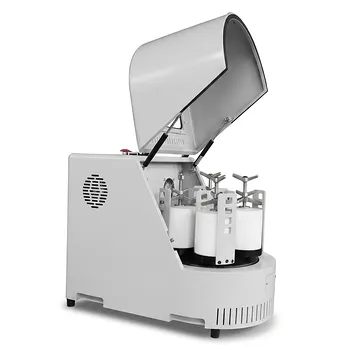
Vertical Semi Circular Planetary Ball Mill for Laboratory Precision Grinding
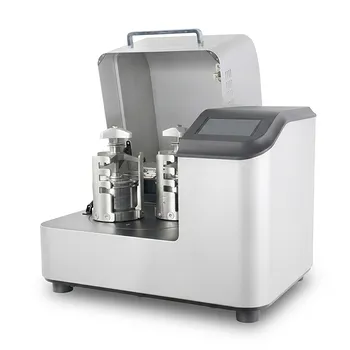
High Energy Planetary Ball Mill for Nano Scale Grinding and Mechanical Alloying
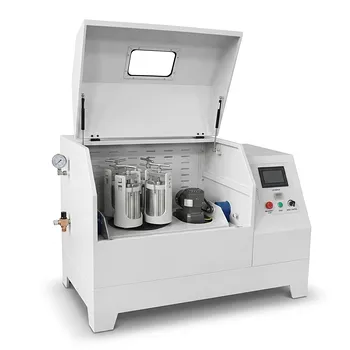
Vertical Production Planetary Ball Mill for High Throughput Powder Processing
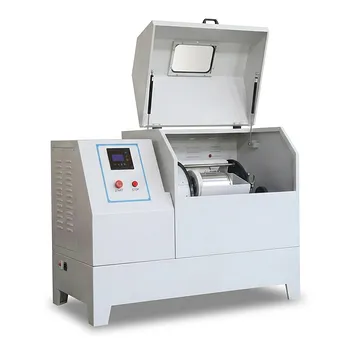
Heavy Duty Horizontal Planetary Ball Mill for Efficient Industrial Grinding and Sample Preparation
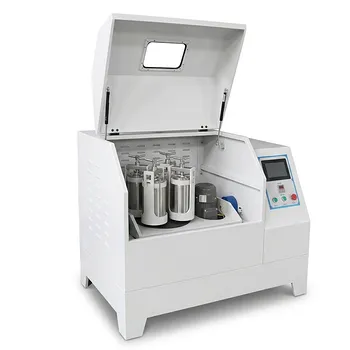
360° Rotating Omnidirectional Laboratory Planetary Ball Mill for Homogeneous Ultra-Fine Grinding and Mixing

Vertical Square Planetary Ball Mill for Laboratory Sample Preparation and Nanoscale Grinding
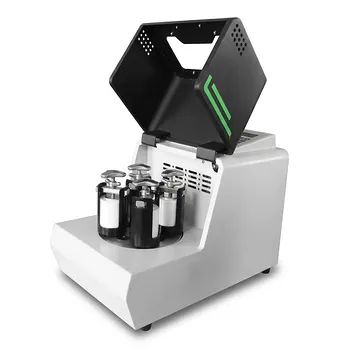
Miniature Planetary Ball Mill with Vacuum Grinding and High Efficiency for Laboratory Sample Preparation

High Energy Laboratory Planetary Ball Mill for Nano Grinding and Material Science Sample Preparation

High Energy Omnidirectional Planetary Ball Mill 16L
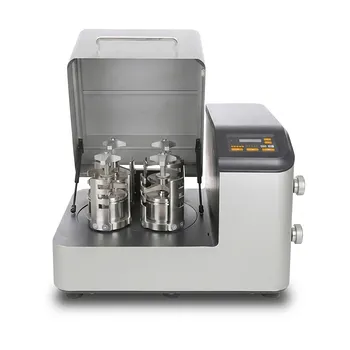
High Energy Planetary Ball Mill for Nano Scale Grinding and Colloidal Mixing in Material Science Research
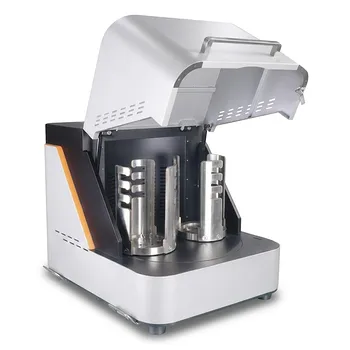
High Energy Laboratory Planetary Ball Mill for Nano Grinding and Colloidal Mixing of Hard and Brittle Materials
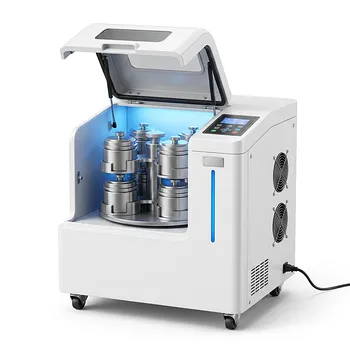
High Energy Omnidirectional Planetary Ball Mill 20L
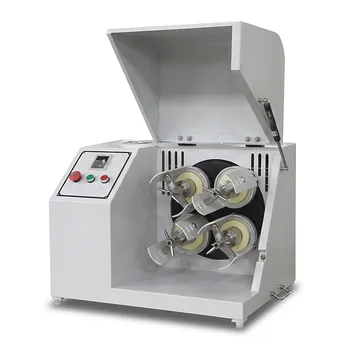
Horizontal Light Duty Planetary Ball Mill for Laboratory Sample Preparation

8L Planetary Ball Mill for Laboratory Grinding and Sample Preparation
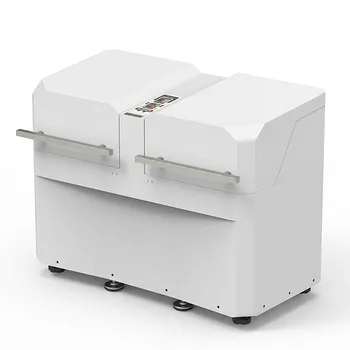
Dual Station Planetary Ball Mill 24L
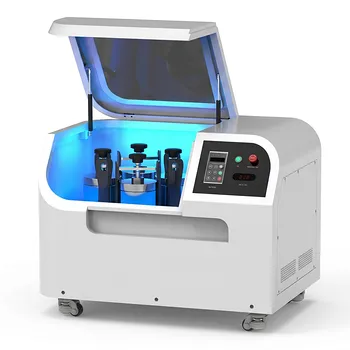
Planetary Ball Mill 12L

Nano High Energy Vibratory Ball Mill for Laboratory Sample Preparation
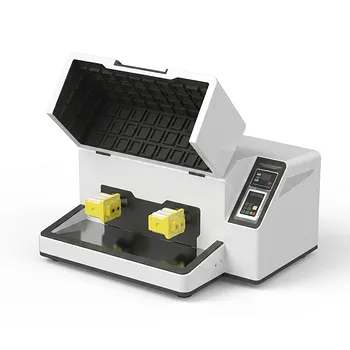
Multi-Platform Nanoscale High-Energy Vibratory Ball Mill
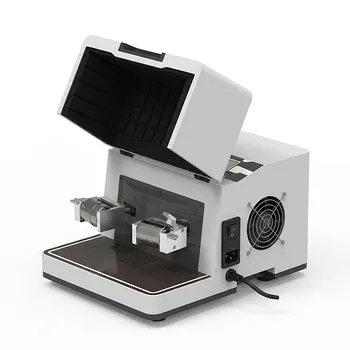
High Energy Hybrid Vibratory Ball Mill for Grinding Mixing and Cell Disruption
