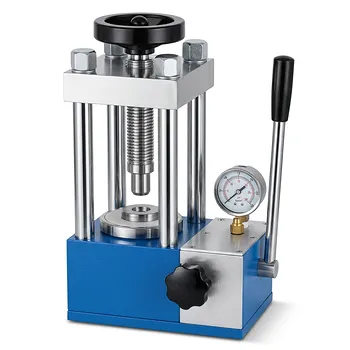
How does a laboratory hydraulic press facilitate the measurement of TRS? Expert Insights for Cermet Reliability
Updated 5 months ago
A laboratory hydraulic press facilitates the measurement of Transverse Rupture Strength (TRS) by serving a dual role in both the preparation of standardized specimens and the execution of controlled mechanical testing. It applies precise molding pressures to eliminate internal defects and delivers quasi-static bending loads to determine the exact point of material fracture.
The laboratory hydraulic press is the foundational tool for assessing cermet reliability; it ensures the material's structural integrity during forming and provides the high-precision load measurement required to quantify its resistance to brittle failure.
The Critical Role in Specimen Preparation
Before testing can occur, the hydraulic press is used to create a uniform material structure from raw powders. This stage is vital because the final TRS value is heavily dependent on the quality of the initial "green body."
Controlling Packing Density
The press applies molding pressures, often ranging from 190 MPa to 466 MPa, to regulate the packing density of ceramic and metal particles. This high-pressure environment forces particles together, effectively eliminating air pockets and increasing the contact area between powders.
Minimizing Internal Porosity
By maintaining constant pressure, the hydraulic press reduces pore size and internal defects within the specimen. A dense, low-porosity structure is necessary for the material to survive the subsequent sintering stage and achieve its maximum theoretical strength.
Ensuring Uniform Green Strength
The application of constant, stable pressure during molding provides the structural strength needed for the green body to be handled without damage. This uniformity ensures that the test results reflect the material's true properties rather than flaws introduced during handling.
Executing the Transverse Rupture Strength Test
Once the cermet is sintered and prepared, the hydraulic press acts as the primary instrument for mechanical evaluation. This process quantifies how the material will behave under the stresses of industrial use.
Applying Quasi-Static Bending Loads
The press delivers controlled, quasi-static loads to the cermet sample until it reaches the point of rupture. This slow, steady application of force is necessary to accurately identify the material's resistance to fracture under bending stress.
Achieving Uniform Stress Distribution
High-precision hydraulic systems ensure that the axial pressure is smooth and constant. This prevents localized stress concentrations that could lead to premature failure and inaccurate data.
Quantifying Load-Bearing Capacity
The press's load measurement system captures the maximum force the specimen can withstand before catastrophic failure. This data allows researchers to calculate the TRS, which directly correlates to the tool's ability to resist chipping or breaking in the field.
Impact on Material Reliability and Analysis
The data gathered via the hydraulic press provides insights into the long-term performance and consistency of the cermet material.
Determining the Weibull Modulus
By providing stable pressure and holding times during the forming process, the press reduces density gradients. This results in a more concentrated strength distribution, or a higher Weibull modulus, indicating more predictable and stable material performance.
Validating Finite Element Models
The press is used to produce standardized pellets for measuring core mechanical parameters like Young's modulus and Poisson's ratio. These physical measurements provide the necessary input data for computer simulations, ensuring that digital models align with real-world performance.
Understanding the Trade-offs
While the hydraulic press is essential for high TRS values, there are critical limitations and pitfalls to manage during operation.
Pressure Saturation and Laminations
Increasing molding pressure generally improves densification, but there is a point of diminishing returns. Excessive pressure can cause "spring-back" effects or internal laminations, which actually decrease the TRS of the final sintered product.
The Brittle Nature of Cermets
Cermets are inherently brittle, meaning they have zero tolerance for non-axial loading. If the hydraulic press is not perfectly aligned, it will introduce shear forces that cause the specimen to shatter prematurely, leading to an underestimation of the material's actual strength.
How to Apply This to Your Project
To maximize the accuracy of TRS measurements, the use of the hydraulic press must be tailored to your specific material goals.
- If your primary focus is improving tool longevity: Use the press to optimize molding pressures that maximize densification, as higher density directly correlates to better resistance against catastrophic brittle failure.
- If your primary focus is manufacturing consistency: Prioritize the press's ability to maintain a constant "dwell time" (holding pressure), which ensures a uniform Weibull modulus across large production batches.
- If your primary focus is research and simulation: Utilize the press to create standardized test pellets that provide the high-fidelity mechanical data required for accurate finite element analysis.
A properly calibrated laboratory hydraulic press turns raw material data into a definitive benchmark for industrial tool reliability.
Summary Table:
| Stage of TRS Measurement | Role of Hydraulic Press | Impact on Cermet Quality |
|---|---|---|
| Specimen Preparation | High-pressure molding (190-466 MPa) | Eliminates air pockets and internal porosity. |
| Structural Integrity | Achieving uniform green strength | Prevents damage during handling and sintering. |
| Mechanical Testing | Application of quasi-static bending loads | Precisely identifies the point of fracture. |
| Reliability Analysis | Improving Weibull modulus | Ensures predictable and stable material performance. |
Elevate Your Material Testing Precision with Our Expert Solutions
Achieving accurate Transverse Rupture Strength (TRS) measurements starts with superior sample preparation. At Laboratory Solutions, we provide complete laboratory sample preparation solutions for material science, specializing in high-performance powder processing and compaction equipment.
Whether you are working with cermets, advanced ceramics, or metal powders, our extensive lines are designed to meet the most rigorous standards. Our offerings include:
- Advanced Compaction: Cold/Warm Isostatic Presses (CIP/WIP), standard lab presses, XRF pellet presses, and vacuum hot presses.
- Preparation & Processing: Jaw/roll crushers, liquid nitrogen cryogenic grinders, and various mills (planetary ball, jet, and disc).
- Finishing & Analysis: Sieve shakers, powder mixers, and defoaming mixers.
Don't let internal defects or inconsistent molding compromise your research. Our equipment ensures maximum densification and uniform stress distribution for reliable, repeatable results.
Ready to optimize your lab’s workflow? Contact our technical team today to find the perfect hydraulic press or milling solution for your specific application.
References
- H. Klaasen, Irina Preis. Durability of advanced TiC-base cermets. DOI: 10.3176/eng.2003.4.05
Mentioned Products
- Ordinary Type Rotary Tablet Press for Pharmaceutical Chemical Food Electronic Industries
- Hydraulic Double Shaft Disperser for High Viscosity Liquid Mixing and Dispersion
- 6-Ton Small Single-Punch Tablet Press — Laboratory Powder & Granule Tableting Equipment / Tablet Forming Machine
- Enhanced 9 Punch Rotary Tablet Press for Powder Compaction
- 5 Ton Single Punch Tablet Press Laboratory Small Batch Production
People Also Ask
- Why is a laboratory hydraulic press required for FT-IR KBr pellets? Achieve Precise Sample Clarity for ZrC–SiC Analysis
- Why is a laboratory hydraulic press required to compress oyster shell powder before XRF analysis? Improve Data Accuracy.
- Why is vacuum sealing and flexible packaging necessary for Aluminum Titanate powders during CIP? Ensure Peak Density
- What are the advantages of using hardened steel molds and graphite spray for titanium powder? Ensure structural integrity
- What role does a high-strength stainless steel mold kit play in the uniaxial die compaction process? Ensuring Precision

Tech Team · PowderPreparation
Last updated on May 14, 2026
Related Products
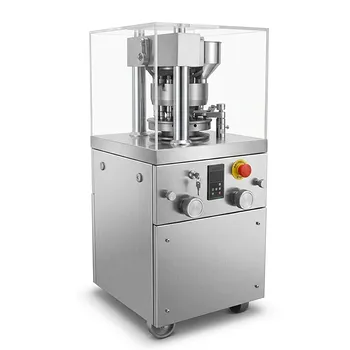
Ordinary Type Rotary Tablet Press for Pharmaceutical Chemical Food Electronic Industries
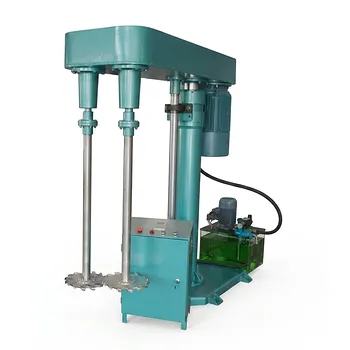
Hydraulic Double Shaft Disperser for High Viscosity Liquid Mixing and Dispersion
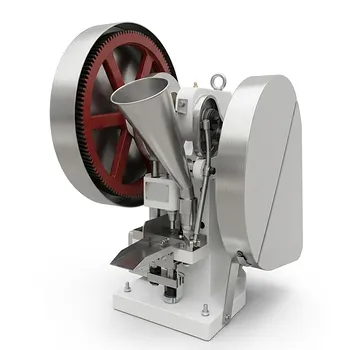
6-Ton Small Single-Punch Tablet Press — Laboratory Powder & Granule Tableting Equipment / Tablet Forming Machine
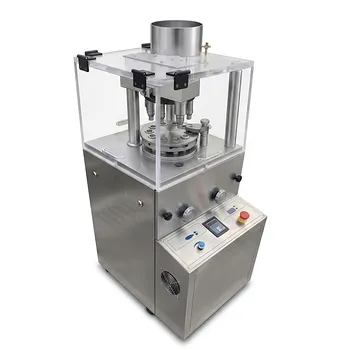
Enhanced 9 Punch Rotary Tablet Press for Powder Compaction
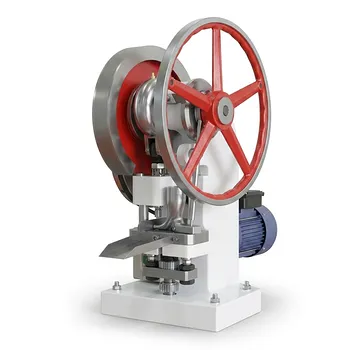
5 Ton Single Punch Tablet Press Laboratory Small Batch Production
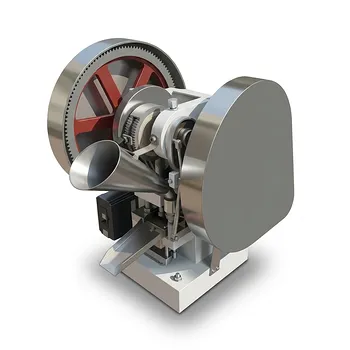
6 Ton Variable Frequency Single Punch Tablet Press